
Table of Contents
- Why Professionals Buy Bulk Quilting Supplies in 2026
- The Core Strategy: Batting Rolls and Thread Cones
- Wholesale Quilting Fabric Distributors: What to Look For
- Essential Quilting Notions for Professionals to Stock Up On
- How to Get a Wholesale License for Quilting Business
- Bulk Storage and Organization for Your Quilting Studio
- Conclusion: Stock Your Studio with the Right Bulk Quilting Supplies
- Frequently Asked Questions
Last Updated: September 7, 2026
The global quilt market is projected to grow from roughly $5.92 billion in 2026 to $9.67 billion by 2035, a 5.6% CAGR according to Business Research Insights market analysis. For professional quilters, that growth signals rising demand for custom work, which means one thing: you need a reliable, cost-effective supply chain. Buying bulk quilting supplies for professional quilters isn't just about saving money; it's about ensuring you never have to turn away a commission because you lack the batting or thread to finish it. This guide from Linda's Electric Quilters walks through the sourcing strategies, licensing steps, and storage solutions that keep a studio running at full capacity.
The quilting fabric market alone was valued at $4.8 billion in 2025 and is climbing toward $7.6 billion by 2034, per Dataintelo's quilting fabric market forecast. Below, we cover the five core areas of bulk purchasing, from batting rolls to wholesale licensing, with specific products and price points you can act on today.
Why Professionals Buy Bulk Quilting Supplies in 2026
Studios that take on multiple commissions need consistent material quality and predictable pricing. Buying in bulk delivers both. When you purchase batting by the 30-yard roll instead of by the yard, you cut per-project costs and eliminate the mid-project scramble to reorder.
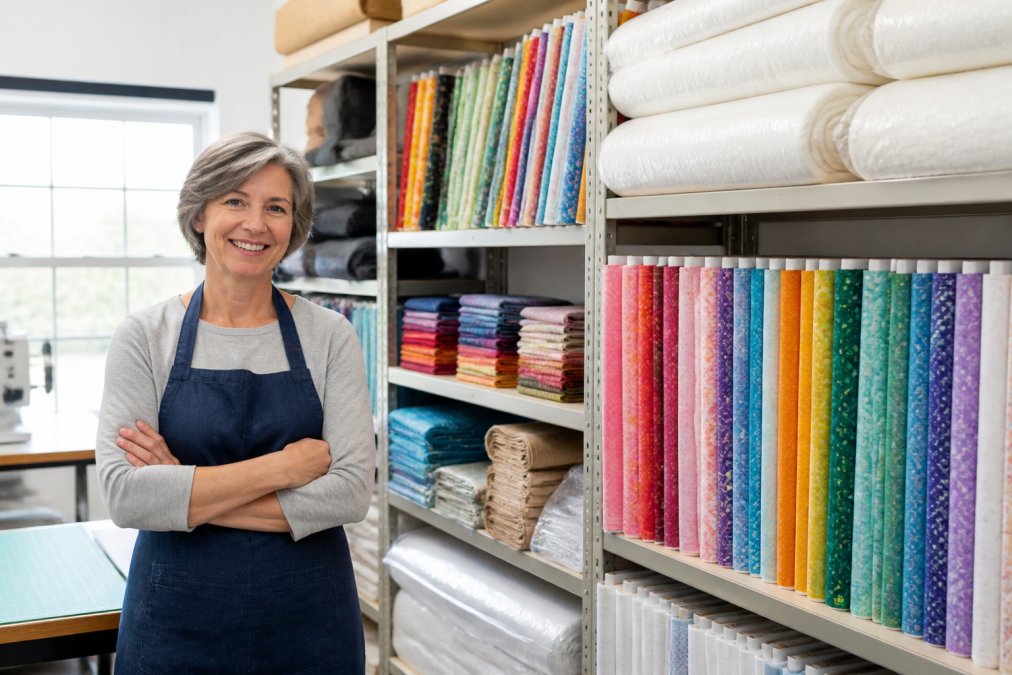
There is also a creative argument for bulk purchasing. Industry trend reports from The Sewing Gallery's 2026 quilting trends analysis note that makers are blending modern and traditional styles, which requires having a wider palette of fabrics and textures on hand. Bulk buying gives you the inventory freedom to experiment without placing a new order for every test piece.
The Core Strategy: Batting Rolls and Thread Cones
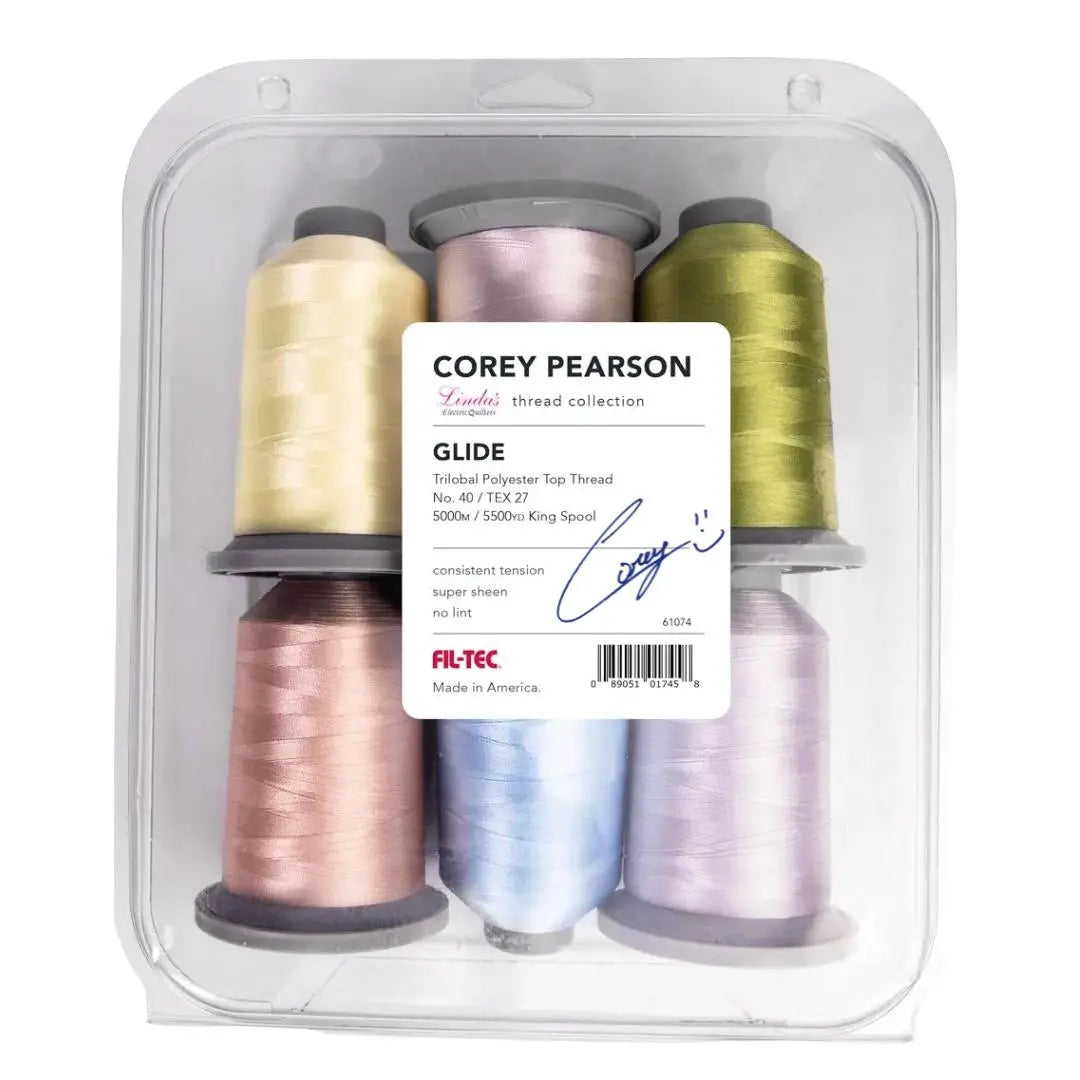
Batting and thread are the two supplies that disappear fastest in a professional setting. The most efficient approach is to pair a wide batting roll with a king spool of thread. The Longarm Quilting Starter Bundle at $229.99 combines a Hobbs 80/20 Heirloom 96-inch wide batting roll (30 yards) with a 5,500-yard White Glide polyester thread king spool, which typically covers two to four queen-size quilts depending on design density.
For oversized commissions, the King-Size Quilt Starter Bundle at $244.99 pairs the Hobbs Heirloom 80/20 120-inch batting roll with the same 5,500-yard Glide thread spool. The 120-inch width accommodates king-size tops on all standard longarm frames, and a single 30-yard roll generally yields three to five king-size quilts.
Thread cones deserve equal attention. YLI Majestic cones, available in shades like Heather and Pinata at $24.99 each, are 40 wt. 3-ply Egyptian-grown cotton with a low-lint, tight-twist construction. For longarm work, low lint means fewer machine cleanings and less downtime.
| Supply | Product Example | Price | Coverage |
|---|---|---|---|
| Batting + Thread | Longarm Bundle (96" roll + 5,500 yd spool) | $229.99 | 2-4 queen quilts |
| Batting + Thread | King-Size Bundle (120" roll + 5,500 yd spool) | $244.99 | 3-5 king quilts |
| Batting (4-pack) | Hobbs 80/20 96" x 30 yd, bundle of 4 | $659.99 | High-volume studios |
| Thread Cone | YLI Majestic Cone | $24.99 | 1-2 large quilts |
Wholesale Quilting Fabric Distributors: What to Look For
Sourcing fabric at scale requires more than a handshake and a price list. True wholesale access, the kind that drops your effective cost per yard by 30% to 50%, depends on a formal business-to-business relationship.
The Licensing Prerequisite: EIN and Resale Certificate
Most professional-grade distributors will not open a wholesale account without two documents: your Employer Identification Number (EIN) from the IRS and a state-issued Resale Certificate or Seller's Permit. The EIN identifies your business entity for tax purposes, while the resale certificate tells the distributor you intend to resell the fabric, which exempts you from paying sales tax at the point of purchase.
When you buy tax-exempt and then sell the finished quilt, you are responsible for collecting and remitting sales tax on the final product to your state's Department of Revenue. If you fail to collect that tax, the liability falls on you, not the distributor. Keep a digital folder with a copy of every resale certificate you submit, along with the date and the distributor's name.
Minimum Order Quantities and Case Pack Math
Wholesale distributors rarely sell single bolts. The standard minimum for a professional account is often one full case pack, which for quilting cotton typically means 10 to 20 bolts of the same fabric in the same dye lot. Some distributors will allow mixed cases, but you will pay a premium for that flexibility.
Before you commit, run the case pack math. A single bolt of high-quality quilting cotton is usually 10 to 12 yards. At a wholesale price of $6.00 to $8.00 per yard, a 10-bolt case runs $600 to $960. Compare that to retail yardage at $11.00 to $14.00 per yard, and the savings are clear, but only if you have the storage space and the cash flow to sit on 100+ yards of a single print. If you are a custom commission studio, a full case of one fabric may take six months to work through; a mid-tier distributor that offers a 10% to 15% discount at 25 yards may be a better fit.
Dye Lot Consistency: The Hidden Cost of Mixing
When you buy wholesale, you must specify a dye lot. Quilting cotton is dyed in batches, and two bolts of the same pattern from different dye lots can differ noticeably in color depth. For a professional quilter delivering a commissioned heirloom quilt, a half-shade mismatch across the backing and the border is a visible defect.
Ask every distributor how they handle dye lot selection. The best ones will confirm that all bolts in a case pack come from a single dye lot and will note the lot number on the packing slip. If you need to reorder the same fabric months later, request the same dye lot number. If it is unavailable, order a sample swatch before committing to a full case.
Payment Terms and Net 30 Accounts
Wholesale accounts often extend Net 30 terms, meaning you have 30 days from the invoice date to pay. That cash-flow flexibility is a major advantage for a studio waiting on a client deposit. However, Net 30 is a privilege, not a right, distributors typically extend it only after you have established a history of on-time payments, often three to six months of COD or credit card purchases.
When you open an account, ask directly: "Do you offer Net 30 terms, and what is the qualification process?" Some distributors require a credit application and a personal guarantee. Others will extend terms after a set number of orders. If you are just starting out, plan to pay by credit card for the first few orders to build a payment history.
Red Flags in Distributor Agreements
Finally, read the distributor's terms of service before you place your first order. Watch for these clauses:
- Freight minimums: Some distributors offer "free shipping" only above a $500 or $1,000 order threshold. Below that, freight costs can add 5% to 8% to your effective cost per yard.
- Restocking fees: If a bolt arrives damaged or with a flaw, a restocking fee of 15% to 25% can turn a return into a loss. Confirm the return window and who pays for return shipping.
- Closeout disclaimers: Closeout fabric is often final sale. If the listing does not specify the dye lot or the exact yardage per bolt, call before you buy. A closeout bolt that is actually 8 yards instead of 10 changes your per-quilt cost calculation.
A distributor that cannot answer these questions clearly is not a wholesale partner; it is a retail site with a login page. Move on to one that treats your studio as a business.
Essential Quilting Notions for Professionals to Stock Up On
Fabric and batting are the headline costs in a quilting studio, but notions are where profit margins quietly leak. Notions are cheap per unit and expensive per emergency order, so the professional approach is to calculate your usage rate per project and stock to a minimum threshold.
The Notion Consumption Model: Track Before You Stock
Before you buy a single box of pins, track your studio's consumption for two weeks. For every project, log how many needles you break, how many bobbins you wind, and how many packages of freezer paper you open. Most working studios find that a single queen-size commission consumes:
- 1 to 2 longarm needles (depending on quilt density and batting type)
- 3 to 5 prewound bobbins (for a densely quilted design)
- 1/4 to 1/2 package of quilting pins (if you pin-baste rather than use a frame)
- 1 to 2 sheets of freezer paper for template work
Multiply those numbers by your average monthly commission volume, then add a 20% buffer for breakage and experimentation. That buffer is your reorder point. When your stock dips below that number, it is time to reorder, not when you run out. bulk packaging supplies.
High-Use Notions with Real Reorder Cycles
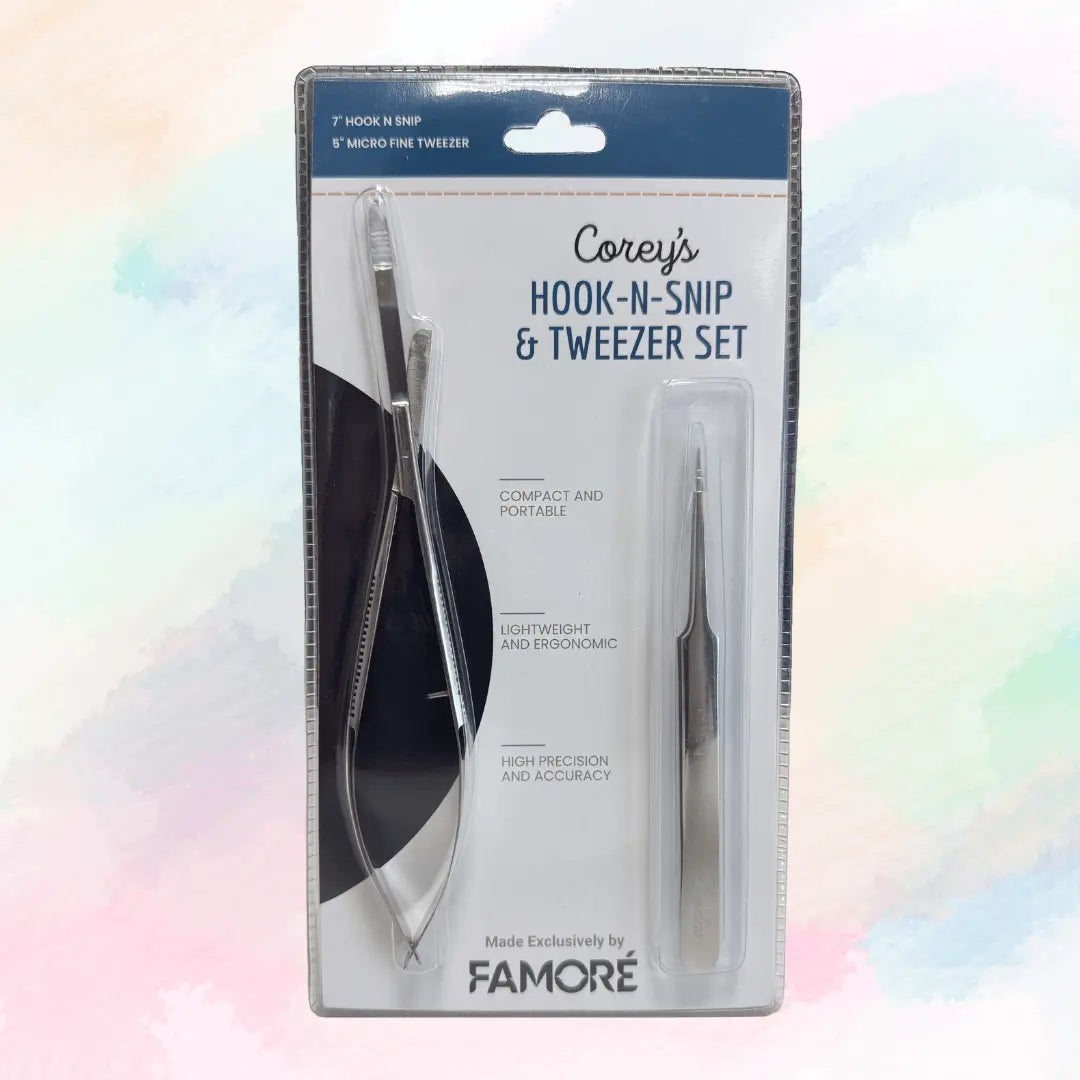
Longarm Needles: The needle is the cheapest part of a longarm setup but the most disruptive when it fails. A bent or dull needle can cause skipped stitches, fabric damage, or thread breakage mid-quilt. Most longarm professionals replace the needle after every 8 to 12 hours of machine time or at the start of each new project. If you run a single longarm for 20 hours a week, that is roughly 2 to 3 needles per week, or 100 to 150 needles per year. Buying needles in bulk packs of 25 or 50 cuts the per-needle cost by 30% to 40% compared to single packs.
Prewound Bobbins: For longarm work, prewound bobbins are a time-saver and a consistency tool. Winding your own bobbins introduces tension variability, especially if your bobbin winder is not calibrated to your top thread. Prewound bobbins from a reputable brand are wound to a consistent tension, which reduces the risk of tension-related defects. A 144-count case of Magna-Glide bobbins can be a time-saver for a high-volume studio.
Pressing Mats and Precision Tools: A 22x60 pressing mat is a professional staple, but it is also a wear item. Wool pressing mats lose their loft and heat resistance over time, especially with heavy steam use. If you press every seam on a production quilt, expect to replace your mat every 12 to 18 months. Track the purchase date on the box with a permanent marker so you know when it is due for replacement.
The Cost-Per-Project Notion Budget
To keep notion costs from becoming a hidden line item, calculate a standard notion budget per quilt. A reasonable benchmark for a queen-size custom quilt is $15 to $25 in consumable notions, covering needles, bobbins, thread for piecing, and pressing supplies. If your actual spending exceeds that range, look for waste: are you using a new needle for every bobbin change? Are you discarding partially used thread cones?
Storage Conditions for Notion Longevity
Bulk buying only pays off if your notions survive storage. Needles and pins are susceptible to rust in humid environments. Store them in sealed containers with a silica gel packet. Thread cones should be kept in a closed cabinet, away from direct sunlight and heat vents, because UV light and heat degrade polyester and cotton thread over time. Bobbin cases and rotary cutter blades should be stored flat, not piled, to prevent warping.
The Case for a Notion Wholesale Account
If your studio consumes a significant amount of notions, opening a wholesale account with a quilting supply distributor can be beneficial. Most require the same EIN and resale certificate you already have for fabric. Wholesale pricing on notions can offer savings, and case-pack quantities align with the reorder cycles described above.
How to Get a Wholesale License for Quilting Business
Before you can access true wholesale pricing from most textile manufacturers and distributors, you need a resale certificate or wholesale license. This is a state-issued document, and the process varies by state, so the first step is checking your state's Department of Revenue or equivalent agency website for the specific application form and fee.
The general process follows this pattern:
- Register your business entity (LLC, sole proprietorship, or corporation) with your state.
- Apply for a seller's permit or resale certificate through your state's tax authority.
- Provide the certificate to each wholesale quilting fabric distributor you work with.
- Pay applicable state fees, which vary widely, and renew as required.
Wholesale accounts typically unlock volume pricing on fabric bolts, batting rolls, and thread case packs. Some distributors also extend early access to new designer fabric lines to their wholesale account holders, which matters if you offer custom quilts using current collections.
Bulk Storage and Organization for Your Quilting Studio
Buying in bulk solves your supply problem but creates a storage one. Batting rolls, fabric bolts, and thread cones each need specific conditions to stay in good shape. Fabric should be stored flat or rolled, never folded long-term, to prevent permanent creases that resist pressing.
For batting rolls, vertical storage on wide shelves keeps the rolls from developing flat spots. Keep them off concrete floors to avoid moisture wicking, and away from direct sunlight to prevent yellowing. Thread cones are best kept in closed cabinets to reduce dust accumulation, which can transfer to your machine's tension assembly.
Inventory management matters just as much as physical storage. Track dye lots when you receive fabric bolts, because the same pattern from different dye lots can vary noticeably. Rotate stock so older purchases get used first, and keep a simple log of what you have on hand to avoid overbuying a color you already stock.
Conclusion: Stock Your Studio with the Right Bulk Quilting Supplies
The professional quilting market is growing, and studios that position themselves with strong inventory and reliable sourcing will capture that demand. Bulk quilting supplies for professional quilters come down to four decisions: choosing the right batting rolls, stocking durable thread cones, vetting wholesale distributors, and securing the proper licensing to access true wholesale pricing.
At Linda's Electric Quilters, we support working studios with over 50,000 products, including specialized batting rolls, wideback fabrics, and thread cones from brands like Hobbs, YLI, and Quilters Dream. Our 700+ educational videos help you refine technique, and free shipping on all batting rolls takes the sting out of large orders. Get started with Linda's Electric Quilters and build a supply chain that keeps your studio quilting without interruption.
Frequently Asked Questions
How do professional quilters qualify for wholesale accounts?
Qualifying for wholesale accounts typically requires a valid resale certificate or tax ID, proof of a registered business, and sometimes a portfolio or website showing your professional work. Wholesale quilting fabric distributors will review your application to confirm you are buying for resale or business use, not personal projects. Contact the distributor directly for their specific requirements, as they vary by company.
What are the benefits of buying quilting fabric by the bolt?
Buying 100% cotton quilting fabric by the bolt ensures dye-lot consistency across your projects, which is critical for professional work. It also reduces per-yard cost, cuts down on waste, and guarantees you have enough fabric for large quilts or future commissions. Buying bolts is a core practice for professional quilters who need reliable inventory.
What essential quilting notions should be purchased in bulk?
Essential quilting notions for professionals include thread cones (like 5,500-yard king spools), freezer paper sheets for pattern making, and magnetic sewing pins for loading longarm quilts. These items are used constantly and have a long shelf life. Stocking them in bulk prevents mid-project delays and often lowers the per-unit price.
How does buying bulk quilting supplies impact profit margins for small businesses?
Bulk purchasing directly improves profit margins by lowering the cost per unit on items like batting and thread. For example, buying batting by the 30-yard roll instead of by the yard reduces the cost per quilt. This strategy allows professional quilters to price their work competitively while maintaining a healthy profit margin on each project.
Where can professional quilters find reliable wholesale fabric distributors?
Professional quilters can find reliable wholesale quilting fabric distributors through industry trade shows, quilting guild networks, and established online retailers that offer wholesale programs. Look for distributors that specialize in 100% cotton quilting fabric and offer case packs or bulk pricing. Always verify their shipping policies and minimum order requirements before committing.