
Table of Contents
- Why High Quality Embroidery Thread Matters
- Types of Embroidery Thread and Fiber Content
- Embroidery Thread Weight Guide
- Glide Thread for Embroidery: Premium Performance
- Top Embroidery Thread Brands and Options
- How to Choose the Right Thread for Your Project
- Common Embroidery Thread Problems and Solutions
- Thread Storage and Maintenance
- Frequently Asked Questions
Last Updated: September 3, 2026
Why High Quality Embroidery Thread Matters
Poor-quality threads fray, break mid-stitch, and fade under sunlight. High-quality embroidery thread delivers vibrant colors, consistent tension, and durability that transforms a project from amateur to professional.
According to Customcy's handmade market analysis, the handmade and craft industry in the U.S. is worth over $343 billion in 2026. Nearly 74% of craft hobbyists in the United States participate in embroidery-related activities at least once per month, according to Market Reports World's embroidery retail analysis.
The real difference comes down to fiber quality, colorfastness, and tensile strength. When you buy high quality embroidery thread online, you're purchasing consistency, the same tension, luster, and performance across every spool. At Linda's Electric Quilters, we've curated a selection of premium embroidery threads that deliver exactly that reliability.
Types of Embroidery Thread and Fiber Content
Embroidery thread comes in three primary fiber types, each with distinct characteristics.
Polyester threads dominate commercial embroidery because they offer superior strength, colorfastness, and sheen. They resist fading and handle high-speed machine embroidery without breaking. The downside: polyester can feel stiff compared to natural fibers.
Cotton threads appeal to purists who want a natural feel and matte finish. Cotton breathes and produces a subtle, sophisticated look. However, cotton is less colorfast than polyester, more prone to breakage on high-speed machines, and requires careful storage to prevent mildew.
Rayon threads deliver silk-like sheen and vibrant colors without the cost of real silk. Rayon is lustrous and smooth but more delicate than polyester, ideal for decorative stitching where visual impact matters.
Polyester vs Rayon Embroidery Thread
Polyester wins for production environments. It handles 1,000+ stitches per minute without breaking and resists color bleeding in washing. When you need thread that won't fail mid-project, polyester is the safer choice.
Rayon delivers superior visual results for decorative work. Colors appear more saturated and the natural sheen catches light beautifully. The tradeoff: rayon requires slower machine speeds (typically 500-800 stitches per minute) and careful handling during washing.
For most embroidery enthusiasts, polyester provides the best balance of reliability and results. For professional designers prioritizing aesthetics over speed, rayon justifies the extra care.
Cotton and Specialty Options
Cotton embroidery thread appeals to hand embroiderers and those seeking a natural aesthetic. Mercerized cotton, treated to enhance luster and strength, offers better performance than regular cotton. Look for 2-ply or 3-ply construction for adequate strength.
Cotton absorbs moisture, which can cause mildew in humid storage conditions. Store cotton threads in cool, dry environments with silica gel packets if you live in humid climates.
Specialty threads (metallic, silk, blended) require specific handling. Metallic threads need compatible metallic needles and slower speeds. Silk threads are delicate and expensive, best reserved for heirloom pieces.
Embroidery Thread Weight Guide
Thread weight, measured in tex or wt numbers, determines how thick the thread is and how it fills space in your design.
40 weight (40wt) is the industry standard for machine embroidery. It's thick enough to fill designs quickly but thin enough to work through standard embroidery needles without tension issues.
30 weight (30wt) is slightly thicker, producing bolder coverage with fewer stitches. Use 30wt when you want impact with faster production.
50 weight (50wt) is thinner, requiring more stitches to fill the same area. This weight excels for detailed, intricate designs where precision matters more than speed.
60 weight (60wt) and finer are specialty weights for ultra-fine detail work. Most hobbyists never need weights finer than 50wt.
Weight also affects needle selection. Thicker threads (30wt) require larger needle eyes (size 100 or 110). Standard weights (40wt) work with size 75 or 90 needles. Finer threads (50wt+) use smaller needles (size 60 or 70).
Glide Thread for Embroidery: Premium Performance
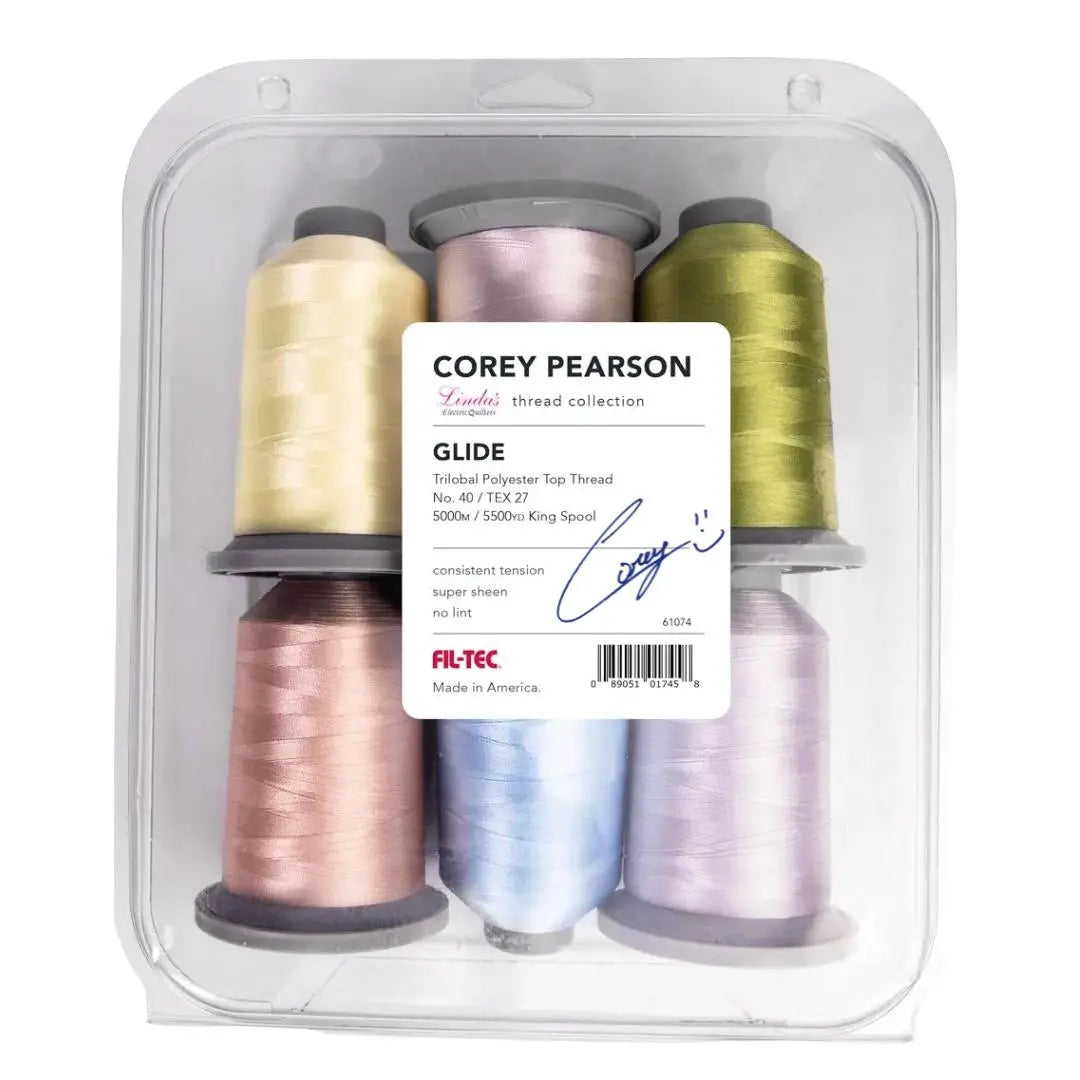
Glide polyester thread represents the premium end of machine embroidery thread. Glide uses advanced trilobal technology, a special fiber structure that captures light and creates exceptional luster. Colors appear more vibrant than standard polyester, and the thread glides smoothly through tensioners and needle eyes, reducing friction and breakage.

The consistency across spools is where Glide excels. Every spool maintains identical tension, so you don't adjust machine settings between color changes. This reliability is why professional embroiderers and production shops rely on Glide for critical orders.
Glide threads are available in king spools (5,500 yards) and mini spools (1,100 yards). King spools offer better value per yard for high-volume users. Mini spools suit hobbyists and those testing colors before committing to larger quantities.
At Linda's Electric Quilters, we stock 10429 Coin Glide Polyester Thread - 5,500 yards King Spool at $13.30, offering professional-grade performance at accessible pricing. For a cooler tone, the 30812 Cadet Glide Polyester Thread - 5,500 yards King Spool ($13.30) provides the same advanced technology in a sophisticated blue-grey shade. If you're new to Glide or testing colors, the 60451 Bagby Glide Polyester Thread - 1,100 yards Mini Spool ($4.23) lets you experience the quality without bulk commitment.


Top Embroidery Thread Brands and Options
The embroidery thread market includes several respected brands, each with distinct strengths.
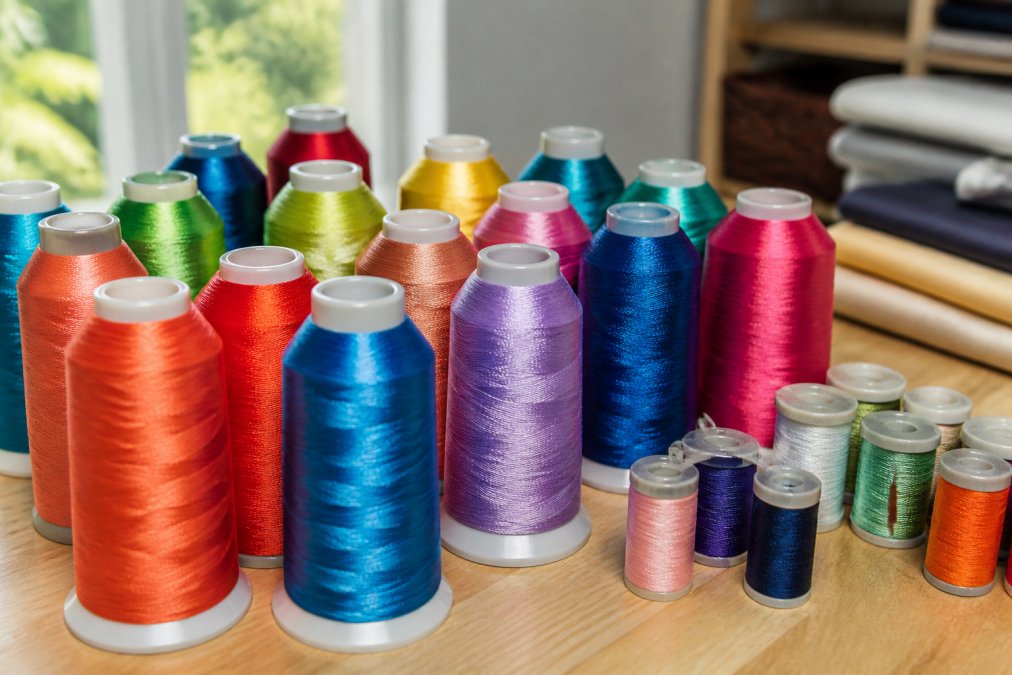
Glide Polyester Thread King Spools
Glide dominates the polyester embroidery market. The advanced trilobal fiber structure creates exceptional luster and smooth performance. Glide threads maintain consistent tension throughout each spool, eliminating the mid-spool tension drift that plagues cheaper threads.
Superior colorfastness means designs retain vibrancy after repeated washing. The lint-free formulation keeps your machine cleaner and reduces maintenance downtime. Glide handles high-speed production (1,000+ stitches per minute) without thread breaks. prepare embroidery artwork.
Best for: Production environments, commercial embroidery shops, and serious hobbyists who value reliability.
Aurifil Cotton Thread for Precision Work
Aurifil's 50wt cotton thread is the gold standard for crafters who prioritize natural fiber and precise control. Made from 100% Mako cotton, an Egyptian long-staple variety, Aurifil delivers exceptional strength for cotton thread. The 2-ply construction creates flat, crisp seams. With 1,422 yards per large spool, Aurifil offers generous yardage for multiple projects.
The silk-like feel and minimal lint make Aurifil ideal for visible hand stitching and detailed embroidery. Aurifil's color palette is extensive, giving you options for nuanced designs.
Best for: Hand embroiderers, quilters, and crafters who value natural fiber and are willing to work at slower speeds for superior aesthetics.
Linda's Electric Quilters carries 2324 Stone Aurifil Large Spool Cotton 50wt ($15.38) and 2562 Lilac Aurifil Cotton 50wt Large Spool ($15.38), among an extensive color range.
Signature Cotton Thread for Durability
Signature cotton thread uses 3-ply, long-staple fiber construction combined with mercerization and finishing processes that enhance strength, luster, and low-lint properties. This thread targets quilters and embroiderers who want cotton durability without premium pricing.
Signature threads perform well on both longarm quilting machines and home sewing machines. The 3-ply construction provides the tensile strength that 2-ply threads sometimes lack. Colors remain vibrant through multiple wash cycles.
Best for: Budget-conscious quilters and embroiderers who want reliable cotton thread without premium pricing.
We stock 302 Soft Orange Signature Cotton Thread ($13.59), 805 Powder Blue Signature Cotton Thread ($14.79), 929 Shamrock Signature Cotton Thread ($13.59), and 919 Sage Signature Cotton Thread ($14.79).
Floriani Thread for Commercial Applications
Floriani is an Italian brand with decades of heritage in embroidery thread manufacturing. Their threads are engineered for professional embroidery shops and high-volume production.
Floriani uses high-sheen, lubricated polyester with high tensile strength.
Best for: Commercial embroidery operations, apparel manufacturers, and professionals who need documented quality and traceability.
005 NEON ORANGE - Floriani Thread 40 weight 5000M ($13.29) showcases Floriani's vibrant color palette and professional-grade performance.
How to Choose the Right Thread for Your Project
Selecting the right thread requires matching fiber type, weight, and color to your specific embroidery method and design goals.
Start with your embroidery method. Hand embroidery? Cotton or rayon threads work beautifully at slower speeds. Machine embroidery on commercial equipment? Polyester 40wt is the standard. Home embroidery machine? You have flexibility, 40wt polyester, cotton, or rayon all work, depending on your machine's specifications.
Match thread weight to needle size. Thicker threads (30wt) require larger needles. Standard weights (40wt) work with medium needles. Fine threads (50wt+) need smaller needles. Mismatching creates tension issues and frequent breakage.
Consider your design's complexity. Intricate, detailed designs benefit from finer thread (50wt) that allows precise stitch placement. Bold, graphic designs work well with thicker thread (30wt) that fills quickly.
Evaluate colorfastness needs. If your finished piece will be washed frequently or exposed to sunlight, polyester's superior colorfastness justifies the choice. For display pieces or hand-embroidered items that rarely wash, cotton or rayon deliver better aesthetics.
Test on scrap fabric first. Before committing a full project to unfamiliar thread, stitch a small sample on similar fabric. Check tension, stitch formation, and how the thread behaves at your machine's typical speed.
Common Embroidery Thread Problems and Solutions
Even experienced embroiderers encounter thread issues. Understanding the cause helps you fix problems quickly.
Thread breakage is the most common complaint. Causes include needle size mismatch (too small for the thread), excessive tension, burrs in the needle, or low-quality thread lacking adequate strength. Solution: Check your needle first, replace if bent or dull. Reduce tension incrementally. Test with premium thread like Glide to isolate whether the issue is your machine or the thread itself.
Looping and puckering indicate tension problems or threading errors. Looping (loose loops on the back of fabric) usually means top tension is too loose. Puckering (fabric bunching around stitches) suggests tension is too tight. Solution: Rethread your machine completely, ensuring the thread seats properly in all guides. Adjust tension in small increments.
Thread fraying during stitching means the thread is too delicate for your needle size or machine speed. This happens frequently with rayon on high-speed machines. Solution: Slow your machine speed, use a needle designed for delicate threads, or switch to a more durable thread type.
Color bleeding or fading indicates poor colorfastness. Cheap threads often use dyes that aren't colorfast. Solution: Always pre-wash finished pieces in cool water with mild detergent. Better yet, use polyester or premium cotton threads with proven colorfastness from the start.
Lint buildup in your machine accumulates faster with low-quality thread. Solution: Clean your machine regularly, every 8-10 hours of embroidery. Use compressed air to blow out lint from the bobbin area and tension discs. Upgrade to lint-free threads like Glide to reduce maintenance frequency.
According to Ningbo MH's embroidery thread quality research, poor-quality threads can fray, break, or fade, ruining hours of meticulous work. High-quality threads with proper colorfastness ensure that colors remain vibrant and do not fade or bleed during washing, offering durability and a smooth finish.
Thread Storage and Maintenance
How you store embroidery thread directly impacts its longevity and performance.
Keep thread in cool, dry conditions. Excessive heat degrades polyester and rayon. Humidity causes cotton and specialty threads to absorb moisture, promoting mildew. Ideal storage is 60-70°F with 40-50% relative humidity.
Protect from direct sunlight. UV exposure fades thread colors over time. Store threads in opaque containers or closed cabinets rather than open shelves exposed to windows.
Use thread organizers that prevent tangling. Vertical thread racks or stackable containers keep spools organized and protected.
Store cotton and specialty threads with silica gel packets. In humid climates, place silica gel desiccants in your thread storage area. Replace them monthly or when saturated.
Label threads with purchase date and dye lot. Thread colors vary slightly between dye lots. Keeping purchase records helps you identify which threads have been stored longest and match dye lots for mid-project purchases.
Avoid storing thread near strong odors or chemicals. Keep threads away from cleaning supplies, perfumes, and other strong-smelling substances that can alter colors or weaken fibers.
Proper storage extends thread life from months to years. A $15 spool of premium thread stored correctly will outperform cheaper thread stored carelessly.
Choosing high quality embroidery thread online transforms your embroidery projects from frustrating to rewarding. The difference between struggling with breakage and watching professional stitches form consistently comes down to fiber quality, weight selection, and understanding your machine's requirements. Linda's Electric Quilters offers an extensive selection of premium embroidery threads from trusted brands like Glide, Aurifil, Signature, and Floriani, each engineered for specific applications. Whether you're a hand embroiderer seeking natural fiber or a production shop requiring industrial-grade reliability, we have threads designed to deliver the results you expect. Shop our curated collection and experience the difference that premium thread quality makes in every stitch.
=== FAQ ANSWERS (audit these too, same rules) ===
[1] Q: What is the highest quality embroidery thread? A: The highest quality embroidery thread combines colorfast polyester or premium cotton with consistent tension, low lint production, and excellent tensile strength. Glide polyester thread stands out for its advanced trilobal technology that maintains uniform tension throughout each spool, reducing thread breaks and machine stops. Cotton options like Aurifil's 100% Mako cotton (50wt) offer superior strength and a silk-like finish. Quality thread prevents fraying, fading, and breakage, essential for professional-looking embroidery that lasts through washing and wear.
[2] Q: What is the difference between polyester and rayon embroidery thread? A: Polyester thread offers superior durability, colorfastness, and strength, making it ideal for high-speed commercial machines and projects requiring longevity. Rayon thread delivers a lustrous, silky appearance with vibrant colors but has lower tensile strength and requires more careful handling. Polyester resists fading and moisture damage, while rayon is more prone to color bleeding and requires gentle washing. For beginners and production work, polyester is more forgiving; for decorative embroidery where sheen matters most, rayon excels. Glide polyester thread combines both durability and a beautiful luster, bridging the gap between the two fiber types.
[3] Q: How do I choose the right weight for embroidery thread? A: Thread weight is measured in tex or weight (e.g., 40wt, 50wt). Lighter weights (50wt and higher) work best for detailed, fine embroidery and hand stitching, creating delicate, precise lines. Medium weights (40wt) suit most machine embroidery, quilting, and general decorative work. Heavier weights (30wt and lower) are ideal for bold designs, 3D puff embroidery, and projects requiring more thread coverage. Match weight to your needle size: finer needles need lighter thread, while larger needles accommodate heavier threads. Check your embroidery machine's manual for recommended weights to avoid tension issues and thread breakage.
[4] Q: Why does my embroidery thread keep breaking? A: Thread breakage typically stems from tension imbalance, using low-quality thread, needle damage, or incompatible thread weight for your needle size. Poor-quality threads have weak fibers and inconsistent ply that snap under machine stress. High-quality thread like Glide polyester, with its advanced trilobal technology and consistent tension, dramatically reduces breakage. Check that your needle is sharp and correctly sized for your thread weight; a dull or undersized needle creates friction that weakens and breaks thread. Also verify your machine's tension settings match your thread type and weight. Lint buildup in the needle area can also cause breakage; clean regularly for smooth thread flow.
Frequently Asked Questions
Q: What is the highest quality embroidery thread?
A: The highest quality embroidery thread combines colorfast polyester or premium cotton with consistent tension, low lint production, and excellent tensile strength. Glide polyester thread stands out for its advanced trilobal technology that maintains uniform tension throughout each spool, reducing thread breaks and machine stops. Cotton options like Aurifil's 100% Mako cotton (50wt) offer superior strength and a silk-like finish. Quality thread prevents fraying, fading, and breakage, essential for professional-looking embroidery that lasts through washing and wear.
Q: What is the difference between polyester and rayon embroidery thread?
A: Polyester thread offers superior durability, colorfastness, and strength, making it ideal for high-speed commercial machines and projects requiring longevity. Rayon thread delivers a lustrous, silky appearance with vibrant colors but has lower tensile strength and requires more careful handling. Polyester resists fading and moisture damage, while rayon is more prone to color bleeding and requires gentle washing. For beginners and production work, polyester is more forgiving; for decorative embroidery where sheen matters most, rayon excels. Glide polyester thread combines both durability and a beautiful luster, bridging the gap between the two fiber types.
Q: How do I choose the right weight for embroidery thread?
A: Thread weight is measured in tex or weight (e.g., 40wt, 50wt). Lighter weights (50wt and higher) work best for detailed, fine embroidery and hand stitching, creating delicate, precise lines. Medium weights (40wt) suit most machine embroidery, quilting, and general decorative work. Heavier weights (30wt and lower) are ideal for bold designs, 3D puff embroidery, and projects requiring more thread coverage. Match weight to your needle size: finer needles need lighter thread, while larger needles accommodate heavier threads. Check your embroidery machine's manual for recommended weights to avoid tension issues and thread breakage.
Q: Why does my embroidery thread keep breaking?
A: Thread breakage typically stems from tension imbalance, using low-quality thread, needle damage, or incompatible thread weight for your needle size. Poor-quality threads have weak fibers and inconsistent ply that snap under machine stress. High-quality thread like Glide polyester, with its advanced trilobal technology and consistent tension, dramatically reduces breakage. Check that your needle is sharp and correctly sized for your thread weight; a dull or undersized needle creates friction that weakens and breaks thread. Also verify your machine's tension settings match your thread type and weight. Lint buildup in the needle area can also cause breakage; clean regularly for smooth thread flow.
This article was written using GrandRanker