Table of Contents
- Essential Sewing Notions Every Modern Quilter Needs
- Marking and Measuring Tools for Precision Cutting
- Pressing and Seam Management Notions
- Stabilizers and Foundation Materials: Understanding Pellon SF101
- How to Organize Sewing Notions in Your Studio
- Budget-Friendly vs. Professional-Grade Notions
- Maintenance and Care of Your Quilting Notions
- Conclusion
- Frequently Asked Questions
Last Updated: September 21, 2026
Essential Sewing Notions Every Modern Quilter Needs
Building a functional quilting studio starts with the right notions. These aren't optional extras, they're the difference between frustration and flow. The best part? You don't need to buy everything at once. Start with cutting tools, measuring equipment, and basic pressing supplies, then add specialized notions as your projects demand.
According to the 2026 Quilting Industry Consumer Survey, 36% of quilters purchase their sewing notions online, while 30% prefer buying locally Craft Industry Alliance 2026 Quilting Consumer Survey. This shift toward online shopping means you can access professional-grade tools without leaving your studio. At Linda's Electric Quilters, we stock over 50,000 quilting and sewing items, including all the notions modern quilters rely on.
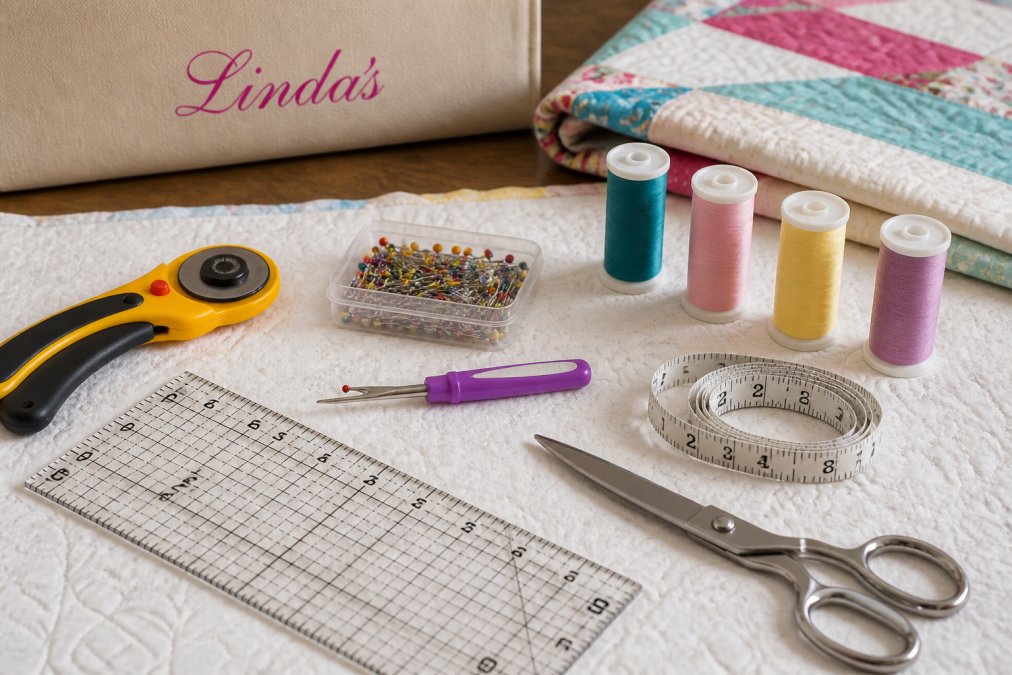
Beginners often buy random notions and end up with unused tools. Professionals curate their kits based on specific project types. You can skip the trial-and-error phase by understanding what each notion actually does.
Essential sewing notions fall into five core categories: cutting tools (precision), measuring equipment (accuracy), pressing supplies (crisp seams), seam management (faster piecing), and organizational aids (productivity).
Marking and Measuring Tools for Precision Cutting
Accuracy in quilting starts with marking and measuring. Imprecise marks lead to misaligned blocks, wasted fabric, and frustration. The right marking tool leaves clean, removable lines. The right ruler keeps those lines true.
Mechanical pencils like the Sewline Fabric Mechanical Pencil ($11.19) offer control and consistency without sharpening. The fine tip prevents the thick, dark lines that traditional pencils create.

Fabric marking pens aren't interchangeable: water-soluble pens can shadow dark fabrics, chalk markers fade quickly, but mechanical pencils work universally.
Acrylic quilting rulers are essential. Look for clear grid lines with 1/8-inch increments. Most quilters need a 6-by-24-inch ruler for strips and a 12-inch square for blocks.
A self-healing cutting mat protects your blade and extends its life. A 24-by-36-inch mat handles most projects; smaller mats suit portable studios.
Pressing and Seam Management Notions
Proper pressing transforms piecing into professional results and ensures blocks square up correctly.
The Wool Iron Pad with Moisture Barrier ($43.19) retains heat for smooth results and protects your workspace. It rolls up easily for portability.
The By Annie's Stiletto & Pressing Tool ($19.19) guides fabric safely and prevents slipping. Professional quilters consider it as important as a rotary cutter.
The Seam Fix Seam Ripper 665 by Dritz ($9.99) features an ergonomic design. Quality matters, cheap seam rippers dull quickly or break mid-project.

Modern quilting trends for 2026 show a shift toward blending diverse fabric substrates, such as pairing cotton with linen, lawn, chambray, or flannel La Bizarra Quilts 2026 Quilting Trends. This mix of fabric weights demands careful pressing and seam management. Heavier fabrics need more heat and pressure. Delicate blends require a lighter touch. The right tools let you adjust your technique without damaging the fabric.
A seam gauge maintains consistent 1/4-inch seam allowances, which separates wonky blocks from perfectly square ones.
Stabilizers and Foundation Materials: Understanding Pellon SF101
Pellon SF101 is a lightweight, fusible stabilizer ideal for foundation paper piecing and appliqué. Understanding when to use stabilizers separates novice from professional results.
Pellon SF101 fuses to fabric with heat, providing structure during piecing. Unlike paper foundations, fusible stabilizers remain in the finished quilt, adding subtle body without bulk, ideal for intricate piecing.
Tear-away stabilizers remove completely, cut-away stabilizers stay permanently, and fusible stabilizers bond to fabric. Fusible stabilizers like Pellon SF101 offer the best balance for modern quilting, providing crisp, accurate blocks without paper removal hassle. Achieving this structural integrity ensures that your finished pieces maintain their shape and professional finish when incorporated into the broader aesthetic of handcrafted modern textiles.
Fuse the stabilizer to the wrong side of your fabric following package instructions. The heat and moisture activate the fusible coating, creating a permanent bond that stabilizes delicate or slippery materials.
Sewline Fabric Mechanical Pencil →
Many quilters overlook stabilizers, but even beginners benefit from them. Stretchy fabrics, tiny pieces, and delicate silks all benefit from stabilization, improving finished quilt quality.
How to Organize Sewing Notions in Your Studio
Organization isn't glamorous, but it's transformative. Wasted time hunting for supplies kills creativity. A well-organized studio means you spend time stitching, not searching.
Start by grouping notions by function: cutting tools together, pressing supplies together, seam management notions together. Within each group, arrange by frequency of use. Daily tools sit at eye level. Weekly tools go in accessible drawers. Occasional tools live on shelves.
The Quilters Select MAGNETIC NOTION MINDER at $14.49 keeps pins and needles organized and visible. Available in three gemstone-inspired designs, Rose Quartz, Sodalite, and Turquoise, these magnetic holders are both functional and beautiful. The strong magnet keeps metal notions securely in place while you work. Place one near your sewing machine for active projects and another on your design wall for reference.

Clear containers work better than opaque ones. You need to see your thread colors, button stashes, and specialty notions at a glance. Label everything, even if you think you'll remember what's in that unlabeled drawer, you won't. Labels save time and frustration.
A notion caddy or rolling cart keeps frequently used supplies portable. When you move between your main sewing area and a design wall, a cart eliminates multiple trips. Include your rotary cutter, ruler, seam ripper, pressing tool, and current project threads.
Wall-mounted pegboards work beautifully for tools you use daily. Rotary cutters, scissors, and rulers hang within arm's reach. This visibility keeps you moving through projects without interruption. A pegboard also makes your studio feel organized and intentional, it's both functional and visually satisfying.
Budget-Friendly vs. Professional-Grade Notions
Not every notion requires a premium investment. Understanding which tools deserve professional-grade quality and which work fine at budget prices saves money without sacrificing results.
Rotary cutters deserve investment. A quality rotary cutter holds its edge longer and cuts more smoothly. Cheap rotary cutters dull quickly, forcing you to press harder, which can lead to slipped cuts and ruined fabric. Investing in a quality rotary cutter can save time and fabric.
Rulers are another area where quality matters. Cheap rulers have printed grids that wear off. Professional rulers have etched or engraved grids that last indefinitely. They also have better grip surfaces that prevent slipping during cutting. Budget rulers cause the same frustration as dull cutters, imprecise cuts that compound through your project.
Thread quality varies wildly. Budget thread breaks easily, sheds lint, and creates tension problems. Professional-grade 50wt cotton thread runs smoothly, breaks rarely, and produces clean stitches. The cost difference is minimal, a few cents per spool, but the frustration difference is enormous. For piecing, always choose quality thread.
Seam rippers and pressing tools can be budget-friendly. A $5 seam ripper works just as well as a $15 version. These tools don't require precision engineering. They just need to be sharp and comfortable. Budget options work fine here.
Marking tools fall in the middle. A quality mechanical pencil costs $10-12 versus a budget version at $3-4. The quality version has a finer tip and better eraser, but the budget version works. Try both and see what feels right in your hand.
Organizing notions is another budget-friendly category. Magnetic notion minders, containers, and caddies don't require premium brands. Function matters more than price.
Maintenance and Care of Your Quilting Notions
Quality notions last for years with proper care. Neglect them, and they deteriorate quickly. A few simple habits keep your tools in excellent condition.
Conclusion
Essential sewing notions for modern quilters aren't complicated. You need cutting precision, measuring accuracy, proper pressing, seam management, and smart organization. Start with the fundamentals, rotary cutter, ruler, mat, seam ripper, and pressing tool. Add specialized notions as your projects demand.
Frequently Asked Questions
What are the essential sewing notions I really need to get started with quilting?
Start with three core categories: cutting tools (rotary cutter and self-healing cutting mat), measuring tools (acrylic quilting rulers and seam gauge), and sewing hardware (quality needles, 50-weight cotton thread, and glass head pins). Beginners should prioritize high-quality rotary cutters, acrylic rulers, and 50-weight cotton thread for reliable results. Add a seam ripper and fabric marking pen as you progress. The Sewline Fabric Mechanical Pencil ($11.19) gives you clean, accurate marking lines for piecing and appliqué work.
How do I choose the right sewing notions for modern quilting projects?
Modern quilting trends emphasize blending diverse fabric substrates, which requires notions that handle varying fabric weights. Select tools based on your specific project type: use quarter-inch feet and walking feet for machine quilting, diagonal seam tape for accurate half-square triangles, and precision glue tips like Fineline ($11.19) for accurate piecing without pin shifting. Consider whether you're doing foundation paper piecing, appliqué, or traditional piecing, as each benefits from different specialized notions.
What is the difference between basic sewing supplies and quilting-specific notions?
Quilting-specific notions are engineered for the precision and scale quilting demands. While general sewing uses standard needles and thread, quilting requires quarter-inch seam allowances, so notions like quarter-inch feet, acrylic rulers with marked grid lines, and diagonal seam tape become essential. Quilting notions also prioritize accuracy tools like seam gauges and specialized marking pens. The Diagonal Seam Tape by Cluck Cluck Sew ($8.39) is a quilting-specific tool that guides diagonal seams on your machine plate, something general sewists rarely need.
Are there specific notions that improve quilting accuracy?
Yes. Precision tools directly impact accuracy: acrylic quilting rulers with clear grid markings, self-healing cutting mats, and the quarter-inch foot on your machine are foundational. For piecing accuracy, Fineline Glue Tips ($11.19) eliminate fabric shift by replacing pins with controlled glue placement. The Diagonal Seam Tape ($8.39) ensures consistent seam angles for half-square triangles. Stiletto tools like By Annie's Stiletto & Pressing Tool ($19.19) help guide fabric under the needle without hand contact, reducing misalignment. Fabric marking pens let you preview seam lines before stitching.