Table of Contents
- Why Quilting Threads Fray During Sewing: The 6 Main Causes
- How to Adjust Thread Tension for Quilting
- Choosing the Best Needle for Quilting Thread
- Glide Thread: What It Is and When to Use It
- Lint Buildup, Burrs, and Machine Maintenance
- Thread Storage and Environmental Factors
- Thread-to-Fabric Compatibility and Stitch Length
- Frequently Asked Questions
Last Updated: September 22, 2026
Why Quilting Threads Fray During Sewing: The 6 Main Causes
Thread fraying happens when the thread rubs against something sharp or rough on its way to the fabric, and thread fraying rarely has a single cause. The fix almost always comes down to one of six things: the wrong needle, bad tension, poor thread quality, a threading mistake, a damaged machine part, or built-up lint.
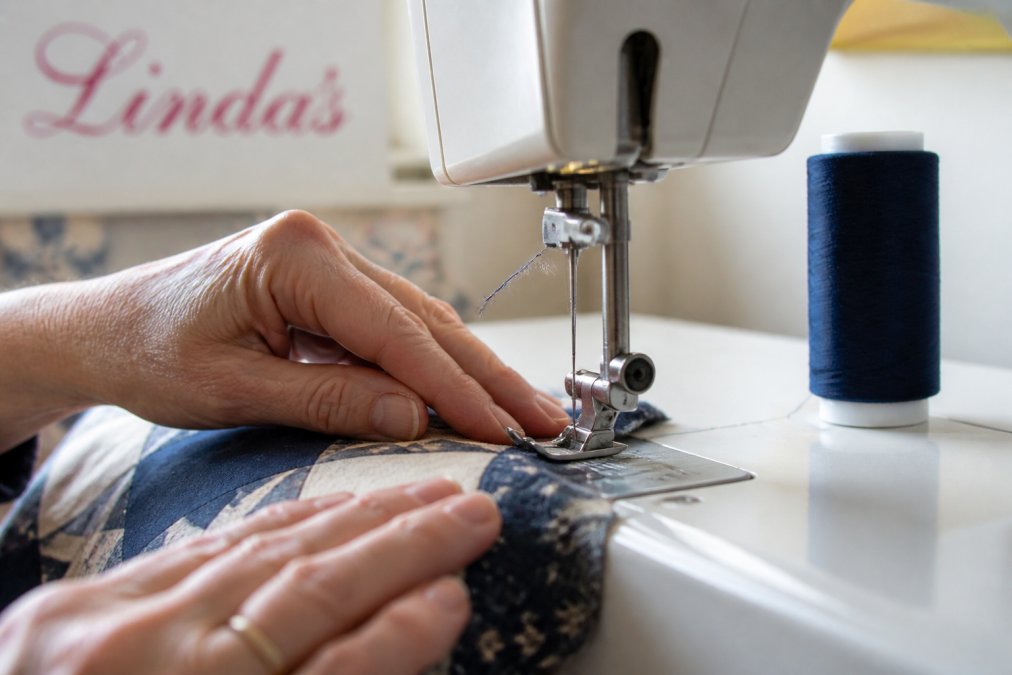
Most quilters blame the thread first. That's usually wrong.
Here are the six causes this guide covers:
- Needle size or type that doesn't match the thread
- Tension that's too tight or a thread path that's misaligned
- Low-quality or damaged thread
- Improper threading
- Burrs on the needle plate or rotary hook
- Lint and debris buildup
Needle Size and Type Mismatches
The needle has to match the thread weight. A needle that's too small forces the thread through a tight space, and the friction shreds it.
Machine Tension and Thread Path Problems
Tension that's too tight pulls the thread thin and makes it fray. The tension discs grip the thread, and if they squeeze too hard, the thread weakens at the needle.
How to Adjust Thread Tension for Quilting
Start with the top tension dial at its midpoint, then test on a scrap of the same fabric and batting. Adjust in small steps until the top and bobbin threads meet in the middle of the layers.
Follow these steps:
- Set the top tension to the middle setting
- Thread the machine with the presser foot up
- Sew a test line on scrap fabric
- Check which thread shows on the top side
- Turn the dial a quarter step and retest
- Repeat until the stitch balances
Testing Tension Before You Quilt
Test on the actual fabric, batting, and thread you'll use. A tension that works on cotton may fail on a thicker quilt sandwich.
Choosing the Best Needle for Quilting Thread
The best needle for quilting thread is a topstitch or quilting needle sized to match the thread weight. Heavier thread needs a larger needle with a bigger eye, while finer thread works with a smaller one.
| Thread Weight | Needle Size | Best Needle Type |
|---|---|---|
| 50-weight | 80/12 | Universal or quilting |
| 40-weight | 90/14 | Topstitch |
| 30-weight | 100/16 | Topstitch |
| 12-weight | 110/18 or larger | Topstitch |
Glide Thread: What It Is and When to Use It
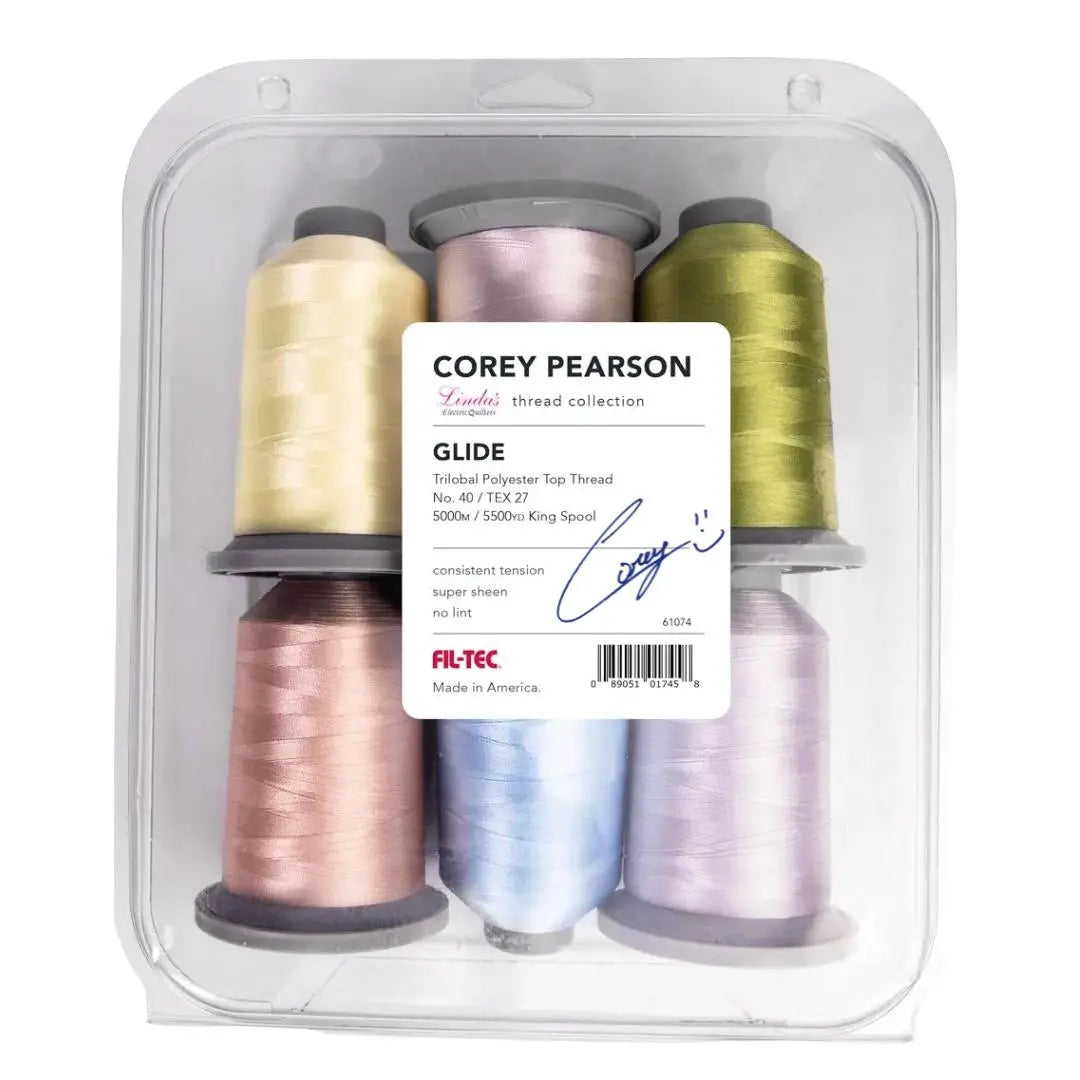
Glide thread is a trilobal polyester thread with a smooth finish that resists fraying and produces little lint. It's a popular pick for longarm quilting and machine embroidery because it runs clean and holds up to speed.
Glide works well for:
- Longarm quilting at high sewing speed
- Dense quilting patterns
- Machine embroidery with lots of stitches
Lint Buildup, Burrs, and Machine Maintenance
Lint and burrs are the two most overlooked causes of fraying, and they fail in different ways. Lint is abrasive and packs into tight spaces, while a burr is a physical edge that cuts. Knowing which one you're dealing with changes the fix.
How lint actually causes fraying
Lint is the fiber dust your thread sheds as it passes through the machine. It builds up in three places that matter for fraying:
- The bobbin case and hook race, packed lint changes the clearance between the bobbin and the hook, so the top thread gets pinched and scraped on every rotation.
- The tension discs, fuzz wedges between the discs and creates uneven pressure, so the thread is gripped harder in one spot than another.
- The needle eye and groove, lint caught in the groove drags against the thread on the way to the fabric.
How to find a burr
A burr is a tiny raised edge or nick on a metal surface the thread touches. It forms when the needle strikes the needle plate, when a pin or scissors nicks the plate, or when the rotary hook wears against the bobbin case. The thread snags on it on every pass, which shows up as shredding in one consistent spot rather than random fuzzing.
The needle burr most quilters miss
A needle burr forms when the needle hits the plate or a pin. It's easy to miss because the needle still looks straight. The tell is a slight pop or tick as the needle enters the fabric, followed by fraying right at the needle eye. Swap the needle the moment you hear it. Needles are cheap; a ripped seam mid-project is not.
A maintenance cadence that prevents fraying
Most fraying from lint and burrs is preventable with a simple schedule:
- Every bobbin change, brush the bobbin case and hook race
- Every 6-8 hours of sewing, change the needle, check the plate and hook for burrs
- Every project, full clean of the bobbin area, feed dogs, and tension discs
- Every 40-50 hours, oil per the machine manual, and inspect the needle plate for nicks
Thread Storage and Environmental Factors
A few storage rules that help:
- Keep thread away from windows and heat vents
- Use a closed container to block dust
- Avoid extreme temperature swings
- Toss thread that snaps easily when tugged
Linda's Electric Quilters carries thread care tools that help here. The Thread Magic Square w Cutter is a thread conditioner with a built-in cutter. It cuts thread drag and hand fatigue, strengthens thread, and fights static to prevent tangling and fraying. It won't melt or freeze, and it's safe for thread and fabric.

Thread-to-Fabric Compatibility and Stitch Length
Thread and fabric have to work together, but the variable most guides ignore is weave density, not just fabric weight. A tight-weave fabric and a loose-weave fabric of the same weight behave completely differently at the needle, and that difference is a leading cause of shredding that quilters blame on the thread.
Why weave density matters more than weight
When the needle punches through a tightly woven fabric, the fibers grip the thread on all sides. The thread has to slide through that grip on every stitch, and the friction builds heat and abrasion. A loosely woven fabric lets the thread pass with far less contact, so the same thread that shreds on batik may run perfectly on flannel.
Matching thread weight to fabric weight
Weight still matters as a starting point:
- Light cotton, voile, lawn, 50-weight or finer
- Standard quilting cotton, 50-weight
- Flannel, linen, canvas, 40-weight or heavier
- Denim, upholstery, 30-weight or heavier
A heavy thread on a light fabric pulls and distorts the weave, which frays the thread as the fabric fights back. A thin thread on heavy fabric snaps under the strain of the denser layers. Match both weight and weave, and most shredding disappears.
Cotton vs polyester, the real trade-off
Cotton thread blends with natural fabrics, takes dye well, and has a matte finish that hides in the quilt. It has less stretch, so it's less forgiving on high-speed machine quilting. Polyester thread is stronger, has more stretch, and resists abrasion better, which suits dense quilting and longarm work. The trade-off is shine and a slightly stiffer hand.
Stitch length and fraying
Stitch length interacts with both thread and fabric. A stitch that's too short punches the needle through the same spot repeatedly, concentrating friction and heat in one area, this is a common cause of shredding on tight-weave fabric. A stitch that's too long leaves loops that catch on the presser foot and feed dogs, which frays the thread from the outside.
Fraying is rarely one problem. It's usually a needle that's too small for the thread plus a weave that's too tight for the stitch length. Fix the needle first, match the thread to the weave, then adjust stitch length. That order saves the most time and the most thread.
Frequently Asked Questions
What causes quilting thread to shred while sewing?
Thread shredding usually traces back to one of six issues: a needle that is too small or the wrong type for your thread weight, incorrect tension settings, a burr on the needle plate or rotary hook, lint packed into the bobbin case, a worn or damaged needle, or thread that has dried out or absorbed moisture. Start by swapping in a fresh needle sized for your thread, then clean the bobbin area and rethread the machine from scratch. If fraying continues, test a different spool to rule out a bad batch.
How do I choose the best needle for quilting thread?
Match the needle to the thread weight, not the fabric alone. A 40-weight quilting thread typically calls for a 90/14 or 100/16 topstitch needle, which has a larger eye that reduces friction as the thread passes through. For 50-weight thread, a 80/12 topstitch or universal needle works well. Always use a topstitch needle for metallic or thick threads. Change your needle every 6 to 8 hours of quilting, or sooner if you hear a thumping sound or see skipped stitches.
Does thread tension cause quilting thread to fray?
Yes, tension that is set too tight is a common cause of fraying because it pulls the thread against the tension discs and needle eye with excess force. To fix it, lower the top tension in small increments, rethread with the presser foot up so the discs stay open, and test on a scrap quilt sandwich. Your goal is a balanced stitch where the top and bobbin threads meet in the middle of the layers. If the thread still frays after adjusting tension, check for a burr on the rotary hook.
Can poor quality thread cause fraying during machine quilting?
Low-quality thread often has inconsistent twist, weak tensile strength, or a coating that flakes off as it passes through the machine, all of which lead to fraying. Long-staple cotton and quality polyester threads hold up better under the speed and friction of machine quilting. Thread that has been stored in direct sunlight or in a humid space can also weaken over time. If a spool snaps repeatedly, try a different brand or weight before assuming your machine is at fault.
Fraying thread can stall a project and cost you hours of rework. The good news is that the causes are simple to find once you know where to look. At Linda's Electric Quilters, we stock the needles, thread, and notions that keep your machine running clean. Browse our thread care tools, topstitch needles, and premium threads, and lean on our 700+ educational videos when you need a hand. Get started with Linda's Electric Quilters and keep every seam strong from the first stitch to the last.