Table of Contents
- What Separates High Quality Quilting Fabric From the Rest
- How to Test Fabric Quality Before You Buy
- Quilting Fabric Thread Count: What the Numbers Actually Mean
- Best Quilting Cotton Brands for Consistent Results
- Choosing Backing Fabric for Quilts Without the Guesswork
- Color Value, Contrast, and Building a Cohesive Palette
- Conclusion
- Frequently Asked Questions
Last Updated: September 24, 2026
What Separates High Quality Quilting Fabric From the Rest
High quality quilting fabric is a 100% cotton material woven densely enough to hold its shape through years of piecing, quilting, and washing, typically with a minimum of 60 threads per square inch in both directions. That density is what separates fabric that survives decades of use from fabric that frays at the seam line.
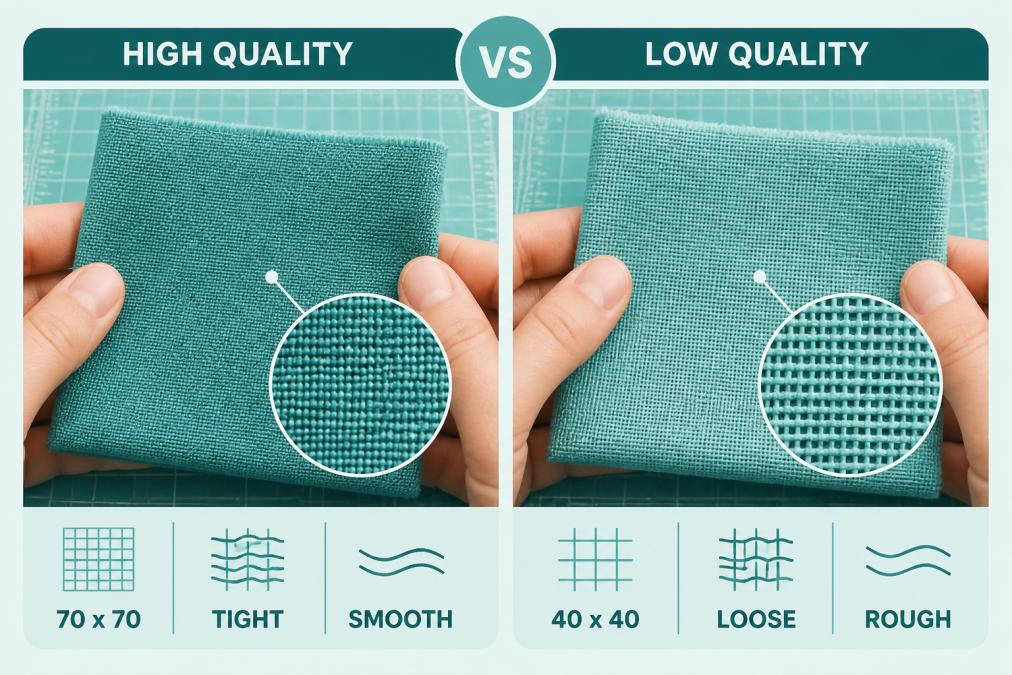
Thread Count, Weave, and Hand-Feel
Thread count tells you how tightly a fabric is woven. Weave structure tells you how it will behave. Hand-feel tells you what it will be like to work with for the next 40 hours.
Shrinkage and Colorfastness
Shrinkage and colorfastness determine whether your finished quilt still looks like your finished quilt after the first wash. Cotton shrinks, and unwashed fabric can move enough to distort points and sashing lines.
How to Test Fabric Quality Before You Buy
Testing fabric quality before you buy comes down to five checks you can do in under five minutes with the fabric in hand, or with a swatch if you're shopping online.
Here's the sequence:
- Hold it to the light. You should not see obvious gaps between threads. Thin, gappy fabric will fray and show batting through the quilt top.
- Check the selvage. Brand names and collection info print along the selvage. A blank or unlabeled edge is a warning sign.
- Rub the surface. Pilling or loose fibers mean the cotton staple is short, which leads to lint buildup in your machine.
- Test the grainline. Tug gently on the bias. Fabric that distorts easily will fight you during piecing.
- Snip a corner and burn it. Pure cotton ash crumbles; blends melt into a hard bead. Fiber content matters for how the finished quilt ages.
Quilting Fabric Thread Count: What the Numbers Actually Mean
Quilting fabric thread count is the number of threads woven per square inch, counted in both the lengthwise and crosswise directions. A fabric labeled 60/60 has 60 threads running each way, and that number is the most reliable quality signal you can check before buying.
Best Quilting Cotton Brands for Consistent Results
"Best" is the wrong question. The right question is which manufacturers hold their specifications steady from bolt to bolt, dye lot to dye lot, and year to year, because that consistency is what lets you order a background fabric six months after your first cut and still match it. Most guides rank brands by popularity. A more useful approach is to rank them by how tightly they control three variables: fiber content, thread count, and color reproduction.
- Fiber content disclosure. A reputable manufacturer states 100% cotton on the bolt and on the product page. Vague language like "cotton blend" or "premium cotton" without a percentage is a warning sign. Blends behave differently through washing and pressing, and they will not match a pure cotton top.
- Thread count specification. Look for a stated number, typically expressed as two figures like 60/60 (lengthwise and crosswise threads per inch). Brands that publish this number are telling you they control the weave. Brands that don't are asking you to trust the hand-feel alone.
- Dye lot tracking. Quality manufacturers assign lot numbers to each dye run and print them on the selvage or the bolt label. If you can read the lot number, you can reorder the same run. If the fabric arrives with no lot marking, matching a future order becomes guesswork.
- Width consistency. Standard quilting cotton runs 44"/45" wide, but the usable width after selvage removal is closer to 42". A brand that consistently delivers the full width gives you more usable yardage per cut, which matters when you're calculating backing and borders.
- Reprint reliability. Core solid and blender lines that stay in production for years are the safest bet for background fabrics. Limited-edition prints may never be reprinted, so buy enough for the whole project up front.
Moda Fabrics Grunge Basics: A Blender Worth Knowing
Grunge Basics solves a specific problem: how to add visual interest to a quilt without introducing a print that fights everything around it. The tonal, mottled surface reads as a solid from three feet away and as texture up close, which makes it useful for backgrounds, sashing, and borders where a flat solid would look lifeless.
Choosing Backing Fabric for Quilts Without the Guesswork
Backing fabric is the layer most quilters under-plan, and it's the one that determines whether your finished quilt drapes well or feels like a tarp. The right backing matches your quilt top in fiber content and weight, not just in color. This is where the content gap in most guides shows up: they tell you to "match the weight" without explaining what that means in measurable terms.
What "Match the Weight" Actually Means
Quilting cotton is typically sold at a weight of about 4 to 4.5 ounces per square yard, which is the standard most piecing fabric is woven to. Backing fabric should sit in the same range. If you back a 4-ounce quilt top with a 6-ounce home-dec weight cotton, the finished quilt will hang stiffly and the quilting stitches will pull against the heavier layer.
Wideback Math and Seam Placement
Standard quilting cotton is 44"/45" wide, which means a queen-size quilt top (roughly 90" x 108") requires piecing the backing from two or three lengths. Wideback fabric, typically sold at 108" wide, eliminates that center seam. The trade-off is cost per yard and limited print selection, but for large quilts the savings in time and the cleaner back are usually worth it.
Sizing for Longarm Quilting
Add at least 4 inches of overhang on every side for longarm quilting, and 3 inches for domestic machine quilting. That means a 90" x 108" quilt top needs a backing at least 98" x 116". The extra margin gives the longarmer room to clamp the layers without the quilting stitches running off the edge. If you're sending the quilt out, confirm the longarmer's preferred overhang before you cut, because some require 6 inches or more.
The Shrinkage Trap
Skipping the pre-wash on backing fabric is the most common cause of a finished quilt that puckers after its first wash. Cotton backing can shrink at a different rate than your quilt top, and the difference shows up as ripples along the quilting lines. The fix is simple: pre-wash and dry the backing the same way you pre-wash the top, using the same water temperature and dryer setting.
Grainline and Directional Prints
Backing cut off-grain will ripple no matter how carefully you baste. Before you cut, check that the selvage runs parallel to the edge you're measuring from. If you're using a directional print, decide whether you want the pattern to run vertically or horizontally across the back, and cut accordingly. For a quilt that will be displayed on a bed, vertical orientation usually reads better.
Color Value, Contrast, and Building a Cohesive Palette
Color value, not hue, is what makes a quilt read as balanced from across the room. Two fabrics can be completely different colors and still work together if their values sit at different points on the light-to-dark scale.
Conclusion
The gap between fabric that survives a decade of use and fabric that fails after three washes comes down to specifications you can check before you buy: thread count, fiber content, weave density, and colorfastness. Most quilters learn this the hard way, after a quilt has already been pieced and quilted.
Frequently Asked Questions
What is the best quality quilting fabric?
High-quality quilting fabric is 100% cotton with a minimum of 60 threads per square inch in both lengthwise and crosswise directions, according to Quilt D Studios. Look for established brands like Northcott and Robert Kaufman, which industry experts recommend for consistent quality. Beyond thread count, check for a tight weave, minimal shrinkage, and a soft hand-feel. The best fabric for your project also depends on your skill level and intended use, not just the price tag.
How can you tell if quilting fabric is high quality?
Start by checking the thread count: hold the fabric up to light and look for a tight, uniform weave with at least 60 threads per square inch. Rub the fabric between your fingers to assess hand-feel; quality quilting cotton should feel smooth and substantial, not thin or stiff. Test for colorfastness by dampening a small corner and pressing it with a white cloth. Also, pre-wash a swatch to check shrinkage. These simple tests help you avoid fabric that frays or loses color after washing.
Why does thread count matter in quilting cotton?
Thread count determines how tightly woven the fabric is, which affects durability, fraying, and how well it holds stitches. Quilt D Studios notes that high-quality quilting cotton requires a minimum of 60 threads per square inch in both directions. Fabric with a lower thread count tends to be looser, causing more lint buildup and seam slippage. A higher thread count also gives a smoother surface for piecing and quilting, leading to cleaner results and a longer-lasting quilt.
How do you test for fabric shrinkage before quilting?
Cut a 6-inch square of fabric, measure it precisely, then wash and dry it using the same method you plan to use for the finished quilt. Measure again to calculate the shrinkage percentage. Most quality quilting cottons shrink 2-5%. If shrinkage exceeds 5%, pre-wash the entire yardage before cutting. Pre-washing also removes sizing and helps prevent color bleeding. Always test dark or saturated colors separately to check for colorfastness.
What is the difference between quilting cotton and craft store fabric?
Quilting cotton is manufactured specifically for piecing and quilting, with a tighter weave and higher thread count than generic craft fabric. Craft store fabric often has a looser weave, which can lead to fraying, stretching, and poor seam accuracy. Quilting cotton also tends to have better colorfastness and less shrinkage. While craft fabric may cost less upfront, the difference in quality shows in the finished quilt's durability and appearance, especially after repeated washing.
How do I choose backing fabric for a large quilt?
For large quilts, wideback fabric (usually 108 inches wide) eliminates the need for piecing the backing. Choose a backing that complements the quilt top without competing with it. A busy backing can hide quilting stitches, while a solid or subtle print lets the quilting shine. Ensure the backing fabric has similar weight and fiber content to the top to prevent uneven shrinkage. Pre-wash both to avoid surprises after the first wash.
Choosing fabric you can trust is the difference between a quilt that gets used and one that gets repaired. Linda's Electric Quilters carries the brand-name cottons, widebacks, and premium batting that hold their quality from bolt to finished quilt, with expert guidance available if you're not sure where to start. Browse the collection, order a swatch, and get started with Linda's Electric Quilters today.