Table of Contents
- Understanding Thread Weight and Thickness
- Embroidery Thread Materials: Polyester vs Cotton and Beyond
- Glide Thread and Advanced Polyester Options
- How to Match Thread to Fabric and Needle Size
- Machine vs. Hand Embroidery: Thread Selection Differences
- Quality Indicators and What to Avoid
- How to Choose Thread for Embroidery: Quick Decision Framework
- Frequently Asked Questions
Last Updated: September 25, 2026
Understanding Thread Weight and Thickness
Thread weight determines how fine or thick your thread is. The numbering system works counterintuitively: higher numbers mean finer thread, lower numbers mean thicker thread. So 100wt cotton is gossamer-thin, while 30wt feels substantial in your hand.
The industry standard dictates that 40wt polyester thread represents the sweet spot for most machine embroidery work. According to B Sew Inn's 2026 embroidery thread guide, approximately 50% of embroiderers prefer 40wt polyester for its balance of durability and thickness. This weight gives you enough substance to show up visually on fabric without overwhelming delicate stitches.

For hand embroidery, the math shifts. Most hand embroiderers work with stranded cotton in 2-6 strand configurations, meaning you're literally splitting a bundle to control thickness. A single strand of embroidery floss is roughly equivalent to 60-80wt in machine terms. Start with 3 strands for general work, drop to 2 for fine details, and go up to 4 or 5 for bold statements.
Embroidery Thread Materials: Polyester vs Cotton and Beyond
Polyester dominates machine embroidery because it's strong, colorfast, and forgiving of tension inconsistencies. It doesn't absorb moisture, so it holds shape and color through washing. The downside: some find it slightly plasticky-looking compared to natural fibers.
Cotton has a matte finish and is the default for hand work. The catch: it's weaker than polyester, more prone to fraying, and can fade if not dyed with quality colorfast dyes.
Rayon has the luster of silk with better durability than cotton, creating rich, dimensional stitches. The trade-off: it costs 30-50% more than polyester and requires lighter tension.
Silk and wool are specialty fibers. Silk gives unmatched sheen but is delicate and expensive. Wool isn't practical for machine embroidery.
Metallic thread adds sparkle but is fragile and requires a larger needle and slower machine speed. Use it as an accent only.
Glide Thread and Advanced Polyester Options
Glide polyester thread represents the current standard for professional results due to its advanced formulation.

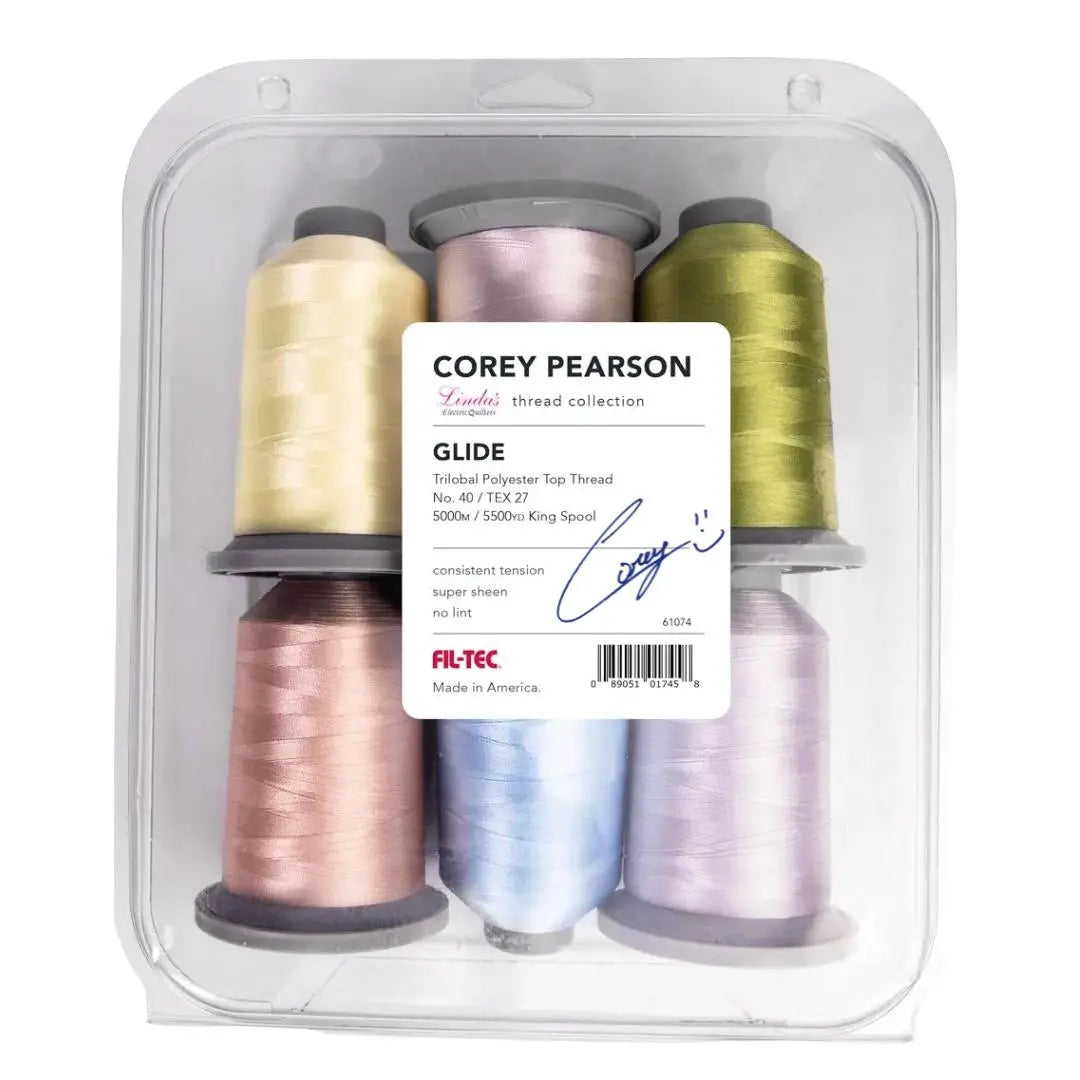
Glide uses trilobal technology, a special fiber structure that captures light differently, creating a subtle sheen that makes stitches appear to melt into fabric.
At Linda's Electric Quilters, we stock Glide polyester in 40wt on king spools, including 11357 Dusk Glide Polyester Thread and 80841 Goldenlight Glide Polyester Thread, both delivering 5,500 yards at $14.96. Consistent tension throughout the spool means fewer thread breaks and machine stops.
Glide's lint-free formulation minimizes fiber shedding in tension discs and needles, extending machine life and reducing maintenance.
How to Match Thread to Fabric and Needle Size
Thread, needle, and fabric form a system, get one wrong and the whole setup fails.
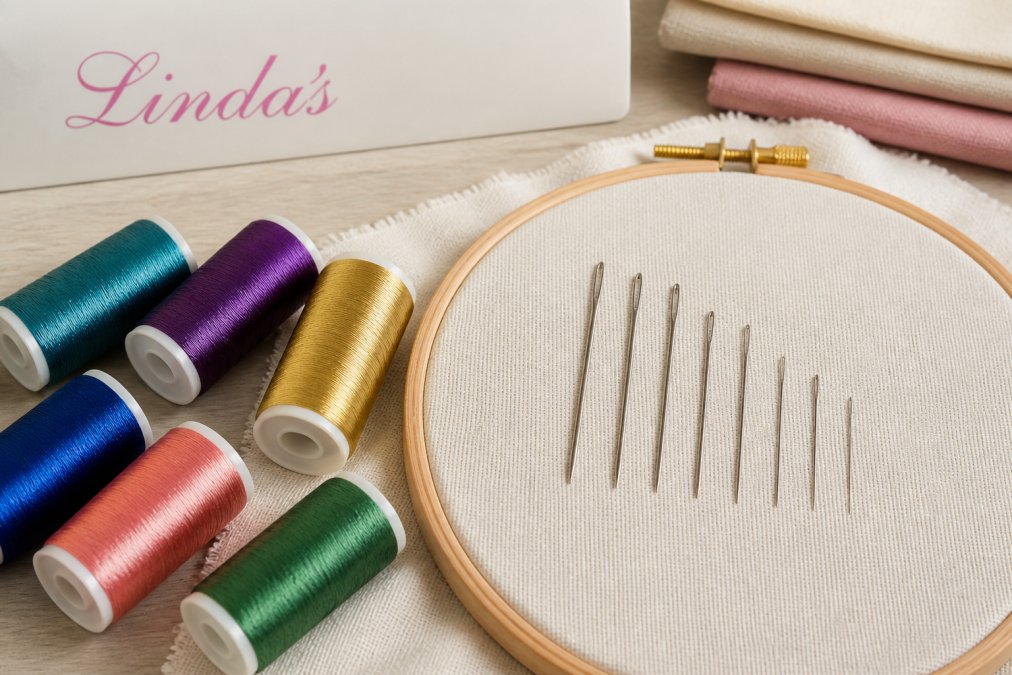
The Mechanics of Thread-Needle Fit
Your thread must slide smoothly through the needle eye without friction, but fit snugly enough that it doesn't wobble. The needle eye diameter directly affects how the thread moves through tension discs.
When thread is too thick for the needle eye, friction heats the thread, weakening it. A 40wt polyester in a size 60/8 needle breaks constantly because the needle is too small.
11357 Dusk Glide Polyester Thread →
Thread Weight to Needle Size Matching
| Thread Weight | Needle Size | Needle Type | Best Fabric Types | Why This Works |
|---|---|---|---|---|
| 40wt Polyester | 75/11 or 80/12 | Machine embroidery | Cotton, linen, blends | Standard balance; thread slides without friction, needle penetrates cleanly |
| 30wt Polyester | 90/14 | Machine embroidery | Heavy canvas, denim, upholstery | Larger eye accommodates thicker thread; stronger needle shaft handles resistance |
| 50wt Polyester | 70/10 | Machine embroidery | Lightweight cotton, silk blends | Finer thread requires smaller eye to prevent wobbling |
| Stranded Cotton (3 strands) | 7-9 | Hand embroidery | Cotton, linen | Needle eye sized for bundled fibers; no tension discs to catch thread |
| Rayon | 80/12 | Machine embroidery | Cotton, silk blends | Rayon is delicate; 80/12 provides adequate eye size without excess friction |
| Metallic | 90/14 or 100/16 | Machine embroidery (topstitching) | Accent work only | Metallic is fragile; larger needle reduces breakage; slower machine speed required |
Diagnosing Thread Failures: Root Cause Analysis
When something goes wrong mid-project, the symptom points to the cause.
Fabric Weight Considerations
Fabric thickness and weave density affect how much thread your setup can handle.
Machine vs. Hand Embroidery: Thread Selection Differences
Machine embroidery uses thread at high velocity through tension discs, requiring durability and consistency. Polyester dominates because it handles stress reliably. Hand embroidery lets you control everything, using multiple thread weights and fibers in a single piece. Hand embroiderers prefer cotton or silk for visual quality.
Quality Indicators and What to Avoid
Quality thread has measurable characteristics you can evaluate before you buy.
Identifying Quality Thread Before Purchase
Fiber content transparency is the first checkpoint. Reputable manufacturers print fiber content, weight, needle recommendations, and tension settings on the spool label.
How Thread Quality Directly Causes Common Failures
When you understand how poor-quality thread fails, you can diagnose problems faster and know whether to adjust your setup or replace the thread.
Professional-Grade vs. Craft-Store Thread: The Tangible Difference
Craft-store polyester ($2-4 per spool) has higher lint content and lower colorfastness. Professional-grade polyester ($6-12 per spool) uses trilobal fiber or lint-free formulations with consistent twist and diameter. For a 500-stitch design, craft-store thread may cause 3-4 breaks; professional thread breaks zero times.
Sustainability and Eco-Friendly Options
Organic cotton is weaker and prone to breakage in machine embroidery but works for hand work. Recycled polyester has the same performance as virgin polyester but reduces landfill waste. Bamboo viscose is delicate and requires careful tension. Recycled polyester offers the best balance of performance and environmental benefit.
How to Choose Thread for Embroidery: Quick Decision Framework
When you're standing in front of a wall of thread options, understanding how to choose thread for embroidery helps you cut through the noise.
Frequently Asked Questions
What type of thread should I use for embroidery?
The best thread depends on your project type and method. For machine embroidery, 40-weight polyester is the industry standard, preferred by approximately 50% of embroiderers for its balance of durability and thickness. For hand embroidery, stranded cotton offers flexibility in strand count (1-6 strands), while perle cotton provides a finished look with consistent sheen. Rayon and silk threads add luster for decorative work. Choose polyester for durability, cotton for traditional projects, and specialty fibers for visual effects.
Which is better, cotton or polyester embroidery thread?
Polyester vs cotton embroidery thread each has distinct advantages. Polyester threads offer superior tensile strength, colorfastness, and resistance to fading, making them ideal for projects that need longevity. Cotton provides a matte finish and works well for traditional hand embroidery, though it's more prone to fraying. For machine embroidery, polyester dominates due to its consistency and performance. Your choice depends on your project's durability requirements and desired aesthetic finish.
How does thread weight affect embroidery results?
Thread weight determines stitch density, coverage, and final appearance. Higher weight numbers indicate finer threads, cotton threads reach up to 100-weight. A 40-weight thread provides balanced coverage for most projects, while heavier threads (20-weight) create bolder, more visible stitches and require larger needles. Finer threads (60-weight) work on delicate fabrics and produce intricate detail. Mismatched thread weight and needle size causes tension problems, breakage, and poor stitch formation. Always verify your embroidery thread weight guide before starting.
Can I use regular sewing thread for embroidery?
Regular sewing thread is not recommended for embroidery. Sewing threads are designed for seaming and lack the sheen, thickness, and tensile strength needed for embroidery work. They produce dull stitches, break more easily under the stress of embroidery machines, and create inconsistent stitch formation. Dedicated embroidery threads are formulated with specific ply counts, twist, and fiber technology to handle the demands of embroidery. Using proper embroidery thread ensures vibrant color, durability, and professional results.
What makes glide thread different from standard polyester?
Glide thread uses advanced trilobal technology to maintain consistent tension throughout the spool, delivering high-quality, uniform stitch formation with fewer thread breaks. The special fiber structure captures a beautiful luster while running virtually lint-free through your machine. Glide polyester threads offer superior strength for production environments and provide excellent coverage that appears to melt into fabric. With these performance advantages, glide thread reduces machine downtime and produces professional-grade results for both hobbyists and professionals.
How do I know if embroidery thread is colorfast?
Colorfast embroidery thread maintains its color through washing, exposure to light, and handling. Quality polyester and rayon threads are typically colorfast, while lower-quality or older cotton threads may bleed or fade. Check the thread's label or product description for colorfastness ratings. Premium brands test for dye lot consistency, ensuring colors match across spools from the same batch. If you're unsure, test a small swatch before committing to a large project, especially for items that will be washed frequently.