Table of Contents
- Why Batting Creases During Shipping (and Why It Matters)
- How to Remove Wrinkles from Quilt Batting
- Does Batting Wrinkle Permanently?
- Packaging Materials That Protect Batting in Transit
- Step-by-Step: How to Pack Batting for Shipping
- Quilting Batting Storage Solutions
- Common Shipping Mistakes That Cause Creases
- Conclusion
- Frequently Asked Questions
Last Updated: September 15, 2026
Why Batting Creases During Shipping (and Why It Matters)
Batting creases in shipping happen when a folded or compressed batt shifts inside its box, and the resulting pressure points leave hard lines that can telegraph through a finished quilt. The good news: creasing is almost entirely preventable with better packing, and the fixes are cheap. This guide from Linda's Electric Quilters walks through why batting wrinkles in transit, how to remove wrinkles from quilt batting when they do appear, and how to pack every roll and package so it arrives flat and ready to use.
Here's the part most guides miss. Search for advice on batting wrinkles and you'll find dozens of threads about ironing and steaming a batt after it arrives. Almost nobody explains how to stop the creases from forming in the first place. That's backwards.
According to Laminations Online's 2026 shipping damage guidance, minimizing movement inside boxes is one of the most effective ways to reduce impact and abrasion damage during transit. Batting follows the same physics as any other cargo: if it can slide, it can crease.
How to Remove Wrinkles from Quilt Batting
The safest way to remove wrinkles from quilt batting is to relax the fibers with low, even warmth and light moisture, never direct high heat. Most creases from shipping are compression folds, and they release once the batt is allowed to loft back up. Work through the methods below in order, stopping as soon as the creases fall out.
Method 1: Air and relax (always start here).
- Unroll or unfold the batting and lay it flat on a clean sheet or quilt frame at room temperature.
- Let it sit for two to four hours. Cotton batts often relax on their own; polyester needs a little longer.
- Smooth by hand from the center outward. Don't tug the edges, which can stretch the scrim.
Method 2: Mist and tumble.
- Fill a spray bottle with cold water. Mist the creased areas lightly. Dampen, don't soak. A batt that feels wet to the touch is over-misted.
- Place the batt in the dryer alone. Do not add a wet towel, which raises humidity too far.
- Run a delicate or air-fluff cycle with no heat, or the lowest heat setting your dryer offers, for 10 to 15 minutes.
- Pull the batt out while it's still slightly warm and smooth it flat by hand.
- Let it finish air-drying fully before you layer it. Any residual dampness can cause mildew once the quilt is basted.
Method 3: Clothes steamer (use with care).
A handheld clothes steamer can release stubborn folds, but batting is not fabric and reacts differently. Hold the steamer head at least six inches from the surface and let the steam drift onto the batt rather than pressing it in. Work in short passes, ten to fifteen seconds per area, and let the batt rest between passes. Test on a corner first. Some practitioners warn that steam and high heat can cause batting to shrink, potentially ruining the dimensions you need for a quilt, as noted by Blue Bear Quilts' 2026 batting care advice. If you see the loft flatten or the edges curl, stop.
What not to do.
- Never press batting directly with a hot iron. Direct heat can melt polyester fibers and scorch cotton, and it flattens the loft you paid for.
- Don't wring, twist, or stretch a damp batt. Wet fibers deform easily and stay deformed.
- Don't use fabric softener or dryer sheets. Residues can interfere with how the batting bonds to quilt layers.
Material-specific notes.
- 80/20 cotton-poly blends relax quickly with mist and a no-heat tumble. They tolerate a low-heat cycle better than 100% cotton.
- 100% cotton batts respond well to air and light misting but can shrink under heat. Keep the dryer on air-fluff only.
- 100% polyester batts are the most heat-sensitive. Even low heat can glaze the surface. Stick to air-fluff and hand smoothing.
- Bamboo and wool batts are the least forgiving. Air them flat and skip the dryer entirely unless the manufacturer's care tag says otherwise.
Does Batting Wrinkle Permanently?
No, batting creases are rarely permanent. Cotton and polyester fibers are resilient, and most shipping folds relax within a day or two of unpacking and light misting. The exceptions are creases that were set under sustained heavy compression for weeks, or creases "fixed" with high heat, which can flatten the loft for good.
The real risk isn't the crease itself. It's the loft. Batting's job is to trap air, and a batt that's been crushed flat in one spot quilts up thin and uneven. That's why prevention beats correction every time.
Packaging Materials That Protect Batting in Transit
The right packaging does three jobs: it holds the batt still, it buffers it from impact, and it keeps moisture out. Most guides stop at the material list. The two things that actually determine whether a batt arrives crease-free are weight and pressure management and moisture control, and almost nobody covers them.
The material kit.
| Material | What It Does | Best For |
|---|---|---|
| Custom-sized box | Stops the batt from sliding | Every shipment |
| Bubble wrap | Cushions against impact | Roll ends, folded packages |
| Acid-free tissue | Pads folds, prevents set creases | Long-term storage |
| Plastic sheeting | Blocks moisture in transit | Humid routes, rainy seasons |
| Packing paper | Fills voids without heavy weight | Filling box gaps |
| Silica gel desiccant packs | Absorbs ambient moisture in a sealed box | Long transit, humid climates |
Weight and pressure management.
Crease severity scales with how much weight sits on the batt and how long it sits there. A batt compressed under ten pounds for three days creases far worse than the same batt under two pounds for a week (Checking your browser). Three rules follow from that:
- Size the box to the batt, not the other way around. A box with two inches of empty space on every side lets the contents shift and grind against the walls. Aim for no more than half an inch of clearance on each side once the batt is wrapped.
- Don't stack. Batting boxes should ride on top of the load, not under it. If you must stack, put the lightest boxes on top and never place a box of books, notions, or fabric on a box of batting.
- Don't overfill. A lid that bows under pressure is compressing the contents. If the box won't close with light hand pressure, go up a size.
Moisture control during shipping.
Batting that takes on dampness in transit can develop musty odors and mildew before it ever reaches your machine, and damp fibers set creases more permanently than dry ones. A simple plastic barrier solves most of it:
- Wrap the rolled batt in plastic sheeting or a sealed poly bag before it goes in the box.
- Add one or two silica gel desiccant packs inside the sealed wrap for shipments longer than a week or routes through humid climates.
- Tape the plastic closed. A loose wrap lets humid air circulate.
- Skip the plastic if the batt will sit in storage for months. Long-term, batting needs to breathe, and acid-free tissue in a ventilated box is the better choice.
A quick test before you seal.
Shake the closed box gently. If you hear or feel the batt shift, add packing paper and try again. A box that doesn't rattle is a box that won't crease.
Step-by-Step: How to Pack Batting for Shipping
Packing batting so it arrives crease-free takes about ten minutes and four steps. The goal is a batt that cannot move inside its box.
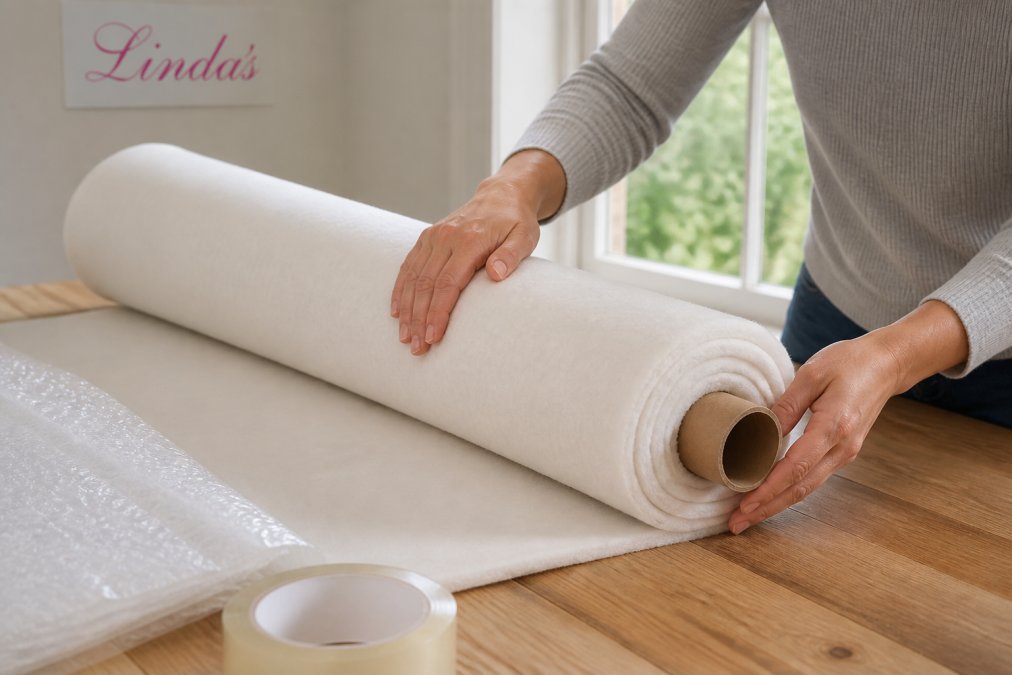
Step 1: Choose the right box. Size the box to the batt, not the other way around. A box with two inches of empty space on every side lets the contents shift and crease.
Step 2: Roll, don't fold. Roll batting around a cardboard tube rather than folding it into quarters. Rolling distributes pressure evenly and eliminates the sharp fold lines that folding creates. Roll ends get an extra layer of bubble wrap.
Quilting Batting Storage Solutions
A few storage habits that pay off:
Common Shipping Mistakes That Cause Creases
Conclusion
Frequently Asked Questions
Does batting need to be ironed before quilting?
No. Ironing batting is risky because direct heat can melt polyester fibers or shrink cotton. Instead, remove wrinkles by misting with cold water and tumbling on low in the dryer for 10-15 minutes, or hang it in a steamy bathroom. Always check the manufacturer's care instructions first.
How do you get deep creases out of quilt batting?
For deep creases, mist the batting lightly with cold water, then tumble dry on a delicate cycle with a clean tennis ball or dryer ball. The gentle agitation helps relax fibers. Avoid high heat, which can shrink batting and ruin its loft. If creases persist, lay the batting flat under a sheet for a day or two.
Is it better to roll or fold batting for shipping?
Rolling is almost always better. Folding creates sharp creases that can become permanent under weight. Roll batting around an acid-free tube or cardboard core, then wrap it in muslin or bubble wrap. This keeps the fiber loft intact and prevents compression damage during transit.
How should I store batting to prevent permanent creases?
Store batting rolled, not folded, in a cool, dry place away from direct sunlight. Use acid-free storage boxes like the PROP-IT Acid Free Quilt/Textile Storage Box (available in multiple sizes) and pad folds with acid-free tissue. Avoid compressing batting under heavy items, which can crush the loft and create hard-to-remove creases.