

Table of Contents
- Measuring Your Quilt Top Width and Length
- How Much Extra Backing for Quilting
- King Size Quilt Backing Yardage: Step-by-Step Calculation
- Choosing Between Standard and Wide-Back Fabric
- How to Piece Quilt Backing Fabric
- Using a Quilt Backing Calculator
- Common Mistakes to Avoid
- Frequently Asked Questions
Last Updated: October 10, 2026
Measuring Your Quilt Top Width and Length
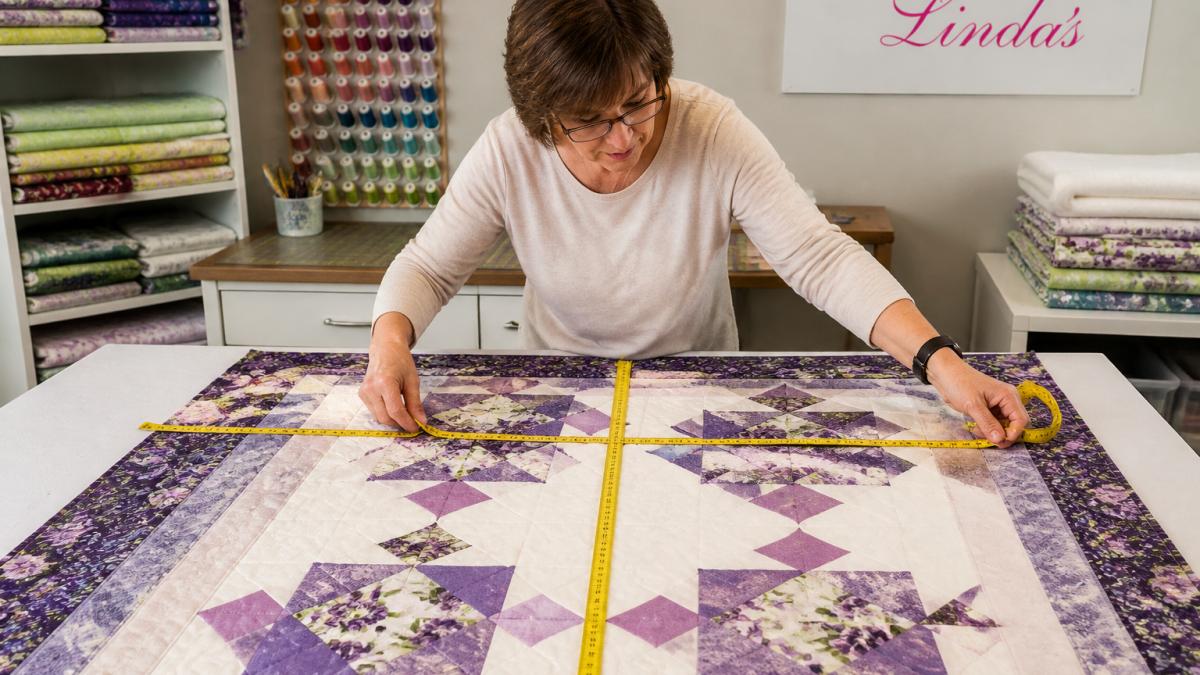
Measure your quilt top at the center (not edges) from left to right for width and top to bottom for length. Write both measurements in inches.
Quilt tops can be uneven; center measurements are most reliable. Typical king size quilts range from 95-105 inches wide and 105-115 inches long.
How Much Extra Backing for Quilting
Quilting causes fabric to shrink and shift due to needle penetration, thread tension, and quilt movement. Extra backing fabric, called overage, accounts for this and gives the quilter working room.
Standard Overage Guidelines
Most quilters add four inches per side (eight inches total) to width and length. This industry baseline works for most machine and long-arm quilting.
Adjust overage based on quilting method: dense machine quilting (six inches per side), long-arm quilting (four to six inches per side), hand quilting (three to four inches per side), or minimal quilting (three inches per side).
King-Size-Specific Considerations
For quilts designed to tuck under pillows or drop down mattress sides, use a longer base measurement (110-120 inches) before adding overage. Example: a 100-inch-wide by 120-inch-long quilt top needs 108 by 128 inches of backing (adding four inches per side).
Directional prints require extra yardage to ensure all panels run the same direction, potentially 0.5-1 additional yard depending on pattern repeat.
Why Eight Inches Is the Safe Starting Point
Eight inches total overage (four per side) is the safe minimum for king-size quilts: it accommodates 2-3% shrinkage, allows squaring up after quilting, provides handling margin, and accounts for piecing variations.
Ask your quilter about overage preferences; many long-arm quilters specify requirements. For home machine quilting, eight inches per side provides a safety buffer.
Accounting for Shrinkage and Fabric Variation
Fabric shrinkage during quilting is typically 2-3%, varying by fiber content, thread type, and quilting density. Most quilters don't prewash backing, so let overage account for shrinkage.
Usable fabric width after removing selvages is often narrower than advertised (42 inches from a 44-45 inch bolt). Overage provides a buffer for this variation.
King Size Quilt Backing Yardage: Step-by-Step Calculation
Here's the step-by-step calculation process:
Step 1: Add overage to your measurements
Take your quilt top width and add eight inches. Do the same for the length. If your quilt top is 100 inches wide by 108 inches long, your backing needs to be at least 108 inches wide by 116 inches long.
Step 2: Choose standard (44-45 inch) or wide-back (108-110 inch) fabric. Use one width of standard fabric for quilts under 44 inches wide; piece multiple widths or use wide-back for larger quilts.
Step 3: Calculate yardage needed
For standard fabric: divide backing width by usable width (42 inches), round up to find number of widths needed. Multiply by backing length in inches, then divide by 36 to convert to yards.
Example: 100-Inch by 108-Inch King Quilt Top
Let's say your king size quilt top measures 100 inches wide by 108 inches long. You decide to use standard 44-45 inch fabric.
Add eight inches overage: your backing needs to be 108 inches wide by 116 inches long.
Usable fabric width after removing selvages is about 42 inches. Divide 108 by 42. That's 2.57, which rounds up to 3. You need three widths of fabric.
Multiply 3 widths by 116 inches = 348 inches total. Divide by 36 = 9.67 yards; round up to 10 yards.
With wide-back fabric, one 108-inch width covers your backing. You need only length plus overage: 116 inches ÷ 36 = 3.22 yards; round up to 3.5 yards.
Converting Your Measurements to Yards
Divide total inches by 36 to convert to yards. Round up to the nearest half-yard or full yard to account for shrinkage and fabric width variation. Check your specific fabric's usable width when ordering online.
Choosing Between Standard and Wide-Back Fabric
Standard quilting fabric is 44-45 inches wide (approximately 42 inches usable width after removing selvages). Wide-back fabric is 108-110 inches wide (approximately 105-108 inches usable width). For king-size quilts, the choice between the two affects yardage, seaming, cost, design options, and construction time.
Yardage and Seaming Comparison
Standard fabric: A 100×108-inch quilt top with eight inches overage needs 108×116 inches backing. Three widths × 116 inches = 348 inches (9.7 yards, round to 10). Requires two seams running the quilt length.
Wide-back fabric: The same quilt needs one 108-inch width × 116 inches = 116 inches (3.2 yards, round to 3.5). No seaming required.
Wide-back saves ~6.5 yards and eliminates two seams, but costs more per yard. The trade-off favors large quilts where seaming is labor-intensive.
Usable Width and Seam Placement
Remove ~1 inch selvage per seam edge (6 inches total across three panels). Three 42-inch panels = 126 inches; minus 1 inch seam allowance = 125 inches final width (sufficient for 108-inch backing).
Wide-back fabric has selvages on the left and right edges, but you typically remove only the selvages you'll be seaming (if any). If you're using the full width without seaming, you keep both selvages, which adds stability to the edges.
Directional Prints and Pattern Matching
Directional prints (stripes, one-way designs, or prints with an obvious nap) complicate the standard-fabric choice. If your backing has a directional print and you're piecing three panels, all three panels must run in the same direction. This may require you to cut all three panels from the same end of the bolt, effectively doubling or tripling your yardage requirement.
Blue Paisley 108” 45" wide fabric per yard →
Example: A directional print that repeats every 54 inches might require you to purchase 30 yards of standard fabric to ensure all three panels align in the same direction, versus the calculated 10 yards for a non-directional print.
Wide-back fabric eliminates this problem because you use only one piece. If you love a directional print for your backing, wide-back is the simpler choice, if that print is available in wide-back width.
Cost and Availability
Wide-back fabric typically costs 20-40 percent more per yard than standard quilting fabric, but you buy far fewer yards. For the 100-by-108-inch example:
- Standard fabric at $10 per yard: 10 yards = $100.
- Wide-back fabric at $14 per yard: 3.5 yards = $49.
Wide-back is cheaper overall, but availability is limited. Wide-back options come in fewer colors, prints, and designer collections than standard fabric. If you have your heart set on a specific print or colorway, it may only be available in standard width. In that case, standard fabric is your only option, regardless of cost or convenience.
Seam Quality and Quilting Considerations
Seams in pieced backing can sometimes create ridges or shadows that show through the quilt front if the seam allowance is not pressed carefully. Open seams (pressed flat on both sides) reduce bulk but require careful pressing. To-the-side seams (both seam allowances pressed toward one panel) are faster but create more bulk.
Wide-back fabric eliminates this consideration entirely. There are no seams to press, and no risk of seam shadows or puckering.
Decision Framework for King-Size Quilts
Choose wide-back fabric if:
- Your backing design is available in wide-back width.
- You want to minimize construction time and seaming.
- You're new to quilting and want to avoid the complexity of piecing and pressing seams.
- Your backing fabric has a directional print or nap.
- You're willing to pay a modest premium for convenience.
Choose standard fabric if:
- Your preferred backing design is only available in standard width.
- You enjoy the process of piecing and want design flexibility.
- You have more time and are comfortable with seaming and pressing.
- You want to minimize material cost (though the savings are modest for king-size quilts).
- You want to match your backing to a specific color or print in your quilt top that may not be available in wide-back.
Measure your quilt top width first. If it's under 44 inches, one width of standard fabric works and wide-back is unnecessary. If it's 44-88 inches, you need two widths of standard fabric or one width of wide-back. If it's over 88 inches (typical for king-size quilts), you need three or more widths of standard fabric, making wide-back the more practical choice if available.
How to Piece Quilt Backing Fabric
If you choose standard fabric, you'll need to piece multiple widths together. Here's how to do it:
Step 1: Cut your fabric lengths
Lay out your fabric and cut it into lengths that match your backing length measurement (including overage). If you need three widths, you'll cut three pieces, each the same length.
Step 2: Remove selvages
Trim off the selvage edges on the sides where you'll be seaming. Selvages are the finished edges that run along the length of the bolt.
Step 3: Piece the panels together
Sew the panels together using a half-inch seam allowance. Press the seams open or to one side, depending on your preference. Open seams reduce bulk.
Step 4: Square up your backing
Trim your pieced backing so it's straight and square. Use a large quilter's ruler and a rotary cutter. Your backing should be at least as large as your quilt top plus overage.
Many quilters press their pieced backing with steam to remove wrinkles before layering it with batting and the quilt top. A smooth backing makes the quilting process easier.
Using a Quilt Backing Calculator
Online quilt backing calculators can speed up your math. These tools ask for your quilt width and length, your overage preference, and whether you're using standard or wide-back fabric. They do the division and rounding for you.
A quilt backing calculator removes the chance of math errors. If you're uncomfortable with conversions or mental math, a calculator is worth the time. Many quilting websites offer them for free.
However, understand what the calculator is doing. It's adding overage, accounting for fabric width and usable width, and converting inches to yards. If you know these steps, you can troubleshoot if a result seems off.
Common Mistakes to Avoid
The most common mistake is forgetting to account for selvage loss. Many quilters subtract only two inches per width for selvages.
Another mistake is not rounding up. If your calculation shows 9.2 yards, buy 10 yards, not 9 yards. Fabric shrinks, and you may need extra for squaring up and trimming after quilting.
Don't assume all fabric is the same width. Check the specific fabric you're ordering. Some manufacturers cut their fabric slightly narrower than others. A half-inch difference per width adds up when you're piecing three or more panels.
Finally, some quilters forget to add overage for quilting movement. Quilting causes fabric to shift and shrink. Without overage, you risk running out of backing before the quilter finishes. Always add at least four inches per side.
Calculating king size quilt backing yardage doesn't have to be complicated. At Linda's Electric Quilters, we stock premium wide-back options like Charcoal Texture Wideback 108" and Textures and Shapes White 108" Wideback to make your king size quilt backing easier.

Frequently Asked Questions
How many yards of fabric do I need for a king size quilt backing?
For a typical 100-inch by 108-inch king quilt top, add 8 inches to each dimension (resulting in 108 inches by 116 inches), then divide by 36 to convert to yards: 12.67 yards. If using 44-inch standard fabric, you'll need approximately 13 to 14 yards. Wide-back 108-inch fabric requires only 3.5 to 4 yards. Always round up to the nearest quarter yard and account for shrinkage.
What is the standard overage for king size quilt backing yardage?
The industry standard is to add 4 to 8 inches to each side of your quilt top dimensions. For king quilts, an 8-inch allowance per side is common, giving you extra fabric for quilting movement, handling, and trimming. This prevents running short during the quilting process and accommodates slight shifts in fabric placement on the frame or machine.
Can I piece quilt backing fabric together instead of buying wide-back fabric?
Yes. Piecing backing allows you to use standard 44-inch fabric widths. Calculate the total backing dimensions needed, then determine how many fabric widths you'll need to piece together. Join panels with a half-inch seam allowance, pressing seams open. Remove selvages before joining to avoid puckering. This method works well for directional prints and offers more design flexibility than wide-back options.
How do I account for fabric shrinkage when calculating backing yardage?
Pre-wash your backing fabric or account for shrinkage in your calculations. If your calculated yardage is 13 yards, add 0.5 to 1 yard extra to compensate for shrinkage. Alternatively, purchase slightly more than your calculation and trim after washing. This is especially important for king-size quilts, where even small shrinkage can affect the final dimensions and fit.


