

Table of Contents
- Why Quilters Choose Alternatives to Professional Longarm Services
- Domestic Machine Quilting on Your Home Sewing Machine
- Hand Quilting as a Traditional Alternative
- Renting Time on a Longarm Machine at a Local Quilt Shop
- Longarm Quilting Cost Comparison: DIY Versus Hiring
- Quilt It Yourself Pros and Cons
- Finding the Right Option for Your Project
- Frequently Asked Questions
Last Updated: October 19, 2026
When you finish a quilt top, you face a decision: send it to a professional longarm quilter, or explore longarm quilting alternatives. Professional longarm quilting services deliver polished results, but they come with costs, wait times, and the challenge of trusting someone else with your work. That's why many quilters are discovering alternatives to professional longarm quilting services that fit their budget, timeline, and skill level.
At Linda's Electric Quilters, we work with quilters at every stage of their journey, from beginners intimidated by the technical side to experienced makers looking to expand their toolkit. We've watched the quilting landscape shift as more people realize they don't need a professional longarm service to finish a beautiful quilt. Some rent time on a machine at a local shop. Others hand quilt or use their domestic sewing machine.
Below, we'll walk you through every realistic alternative, show you the trade-offs, and help you decide which path makes sense for your next project.
Why Quilters Choose Alternatives to Professional Longarm Services
The traditional route, hiring a professional to longarm quilt your finished quilt top, has real advantages. A skilled longarm quilter brings years of experience, access to specialized equipment, and design expertise that's hard to replicate at home. But it also means giving up control, waiting weeks for availability, and paying per square inch for the service.
Many quilters choose alternatives for practical reasons. Machine rental lets you quilt on professional equipment without the service fee. Hand quilting returns you to a slower, more meditative process that some find rewarding. Domestic machine quilting puts the work in your hands using equipment you already own. Each path trades something, time, precision, or cost, for something else you value more.
The decision isn't about finding the "best" option. It's about matching your project to the method that fits your reality right now.
Domestic Machine Quilting on Your Home Sewing Machine
Your domestic sewing machine can quilt. Most modern machines have the features you need: a presser foot designed for free-motion work, adjustable stitch length, and enough throat space to maneuver fabric. You'll sacrifice some of the speed and design precision of a longarm machine, but you gain control, flexibility, and zero outsourcing costs.
What You'll Need
Start with the basics. You'll need a walking foot or free-motion quilting foot (most machines come with at least one). A quilt sandwich, your quilt top, batting, and backing fabric pressed together, is essential. Invest in quality batting; it makes a real difference in how your stitches look and how the finished quilt drapes.
You'll also need thread that won't shred or break under the stress of quilting. Quilting thread is thicker than piecing thread and designed to withstand tension. Fabric spray adhesive helps stabilize your quilt sandwich without pins, though pins work fine if you're patient. A small table or extension table beside your machine reduces strain and gives you better control.
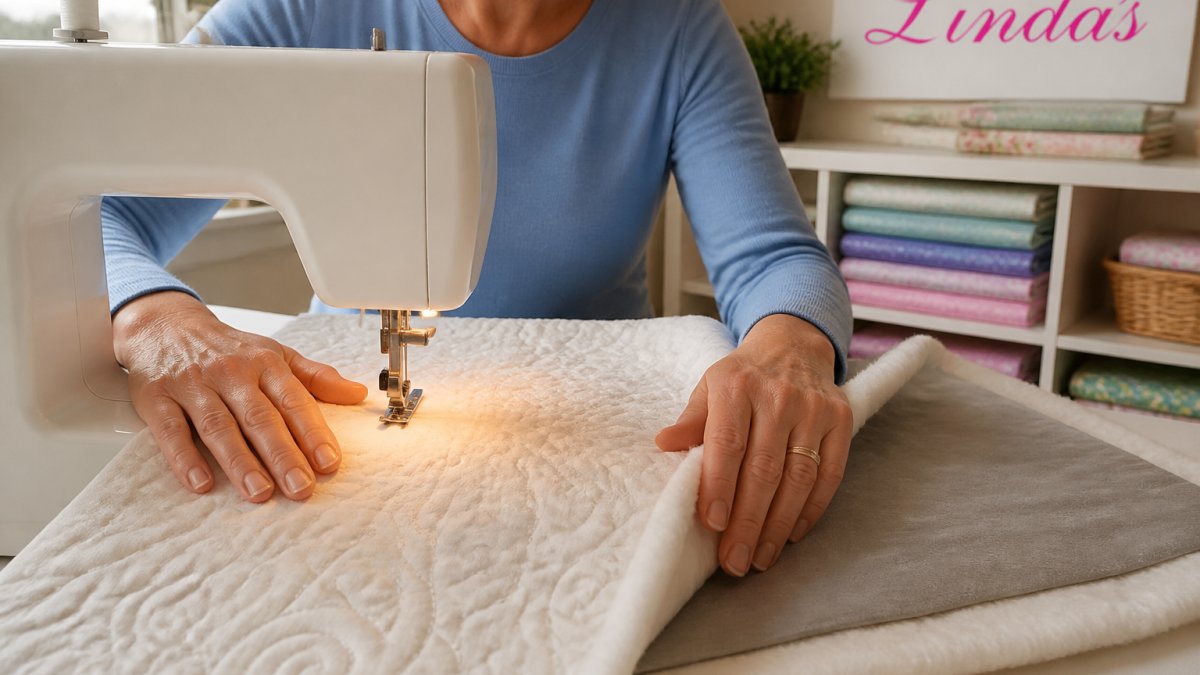
Edge-to-Edge Versus All-Over Quilting Patterns
Two main approaches define domestic machine quilting: edge-to-edge and all-over patterns.
Edge-to-edge quilting follows the seams or outlines of your pieced design. Your stitching traces the shapes you've already created, stitch-in-the-ditch quilting, outline quilting around appliqué, or quilting along block edges. This method is forgiving because your lines have a built-in guide. It works beautifully on traditional pieced quilts and requires less free-motion control.
All-over quilting covers the entire surface with a repeating pattern, stippling, meanders, feathers, or geometric designs, regardless of your piecing. This approach adds texture and visual interest but demands more skill and confidence. Free-motion quilting, where you move the fabric under the needle without a walking foot, is the most common all-over technique.
For your first domestic machine quilting project, edge-to-edge is the safer starting point. Linda's Electric Quilters carries the Visual Guide to Free-Motion Quilting Feathers, a resource by award-winning quilter Natalia Bonner that walks you through 68 modern feather designs, perfect if you want to explore all-over quilting with guidance.

Hand Quilting as a Traditional Alternative
Hand quilting is slower than any machine method, but it offers something machines cannot: a direct, tactile connection to your work. Every stitch is yours. The process is meditative, portable, and requires minimal equipment.
Hand quilting works best on small to medium quilts. A large bed quilt can take months of evening work. You'll need a quilting hoop or frame to hold your quilt sandwich taut, quilting thread, and a short needle designed for hand quilting.
The learning curve is gentler than free-motion machine quilting. If you can sew a running stitch, you can hand quilt. The challenge is endurance and maintaining rhythm over time. Many quilters who hand quilt report it's their favorite part of the process, a chance to slow down and be present with their work.
Hand quilting also gives you complete design freedom. You're not limited by machine capabilities or the width of a presser foot. You can create custom quilting designs tailored to your specific quilt top, adding personalization that mass-produced quilting can't match.
Renting Time on a Longarm Machine at a Local Quilt Shop
Machine rental splits the difference between DIY and hiring a professional. You get access to a longarm quilting machine, equipment far more capable than a domestic machine, without paying service fees. You're responsible for the quilting itself, so you keep full control over design and execution.
Most local quilt shops that offer machine rental charge by the hour. A medium-sized quilt might take 2-4 hours of rental time.
The advantage is clear: professional-grade equipment, professional results, and costs much lower than hiring someone else to do the work. The trade-off is that you're doing the quilting yourself in a shop environment.
Renting is ideal if you want to try longarm quilting before committing to a machine purchase, or if you only quilt a few projects per year. It also builds your skills and gives you a realistic sense of what's involved in the quilting process.
Longarm Quilting Cost Comparison: DIY Versus Hiring
Cost matters, so let's be direct about the numbers. Here's how the main alternatives stack up:
| Method | Upfront Equipment | Per-Project Cost | Time Investment | Best For |
|---|---|---|---|---|
| Domestic machine quilting | $0-$200 (optional presser foot, thread) | $20-$50 (thread, batting) | 8-20 hours | Beginners, small quilts, budget-conscious makers |
| Hand quilting | $30-$100 (hoop, thread, needles) | $10-$30 (thread, batting) | 40-100+ hours | Meditative process, small to medium quilts, patience-rich quilters |
| Machine rental | $0 | $30-$120 (2-4 hours at $15-$30/hour, plus batting) | 2-4 hours | Trying longarm before buying, occasional projects |
| Professional longarm service | $0 | $75-$300+ (typically $0.02-$0.05 per square inch) | 1-2 hours prep | Large quilts, complex designs, time-limited makers |
Professional longarm quilting costs the most upfront but saves time. The turnaround time is typically 2-6 weeks, depending on the quilter's schedule.
Domestic machine quilting costs the least but demands the most time and patience. Hand quilting falls between, low material cost, very high time cost. Machine rental offers a middle ground: moderate cost, moderate time, and the satisfaction of doing it yourself on professional equipment.
Quilt It Yourself Pros and Cons
Quilting your own quilt has clear wins and real challenges. Understanding both helps you make an honest decision about whether DIY quilting fits your situation.
Pros of quilting it yourself:
- Complete creative control over design and execution
- No wait times, you work on your own schedule
- Significant cost savings compared to professional services
- Skill building that transfers to future projects
- Personal satisfaction from finishing your own work
- Flexibility to adjust designs mid-project if inspiration strikes
Cons of quilting it yourself:
- Steep learning curve, especially for free-motion techniques
- Time-intensive, particularly for large quilts
- Risk of mistakes that are harder to fix than on a longarm machine
- Physical strain from hunching over a machine or hand-quilting for hours
- Uneven stitch quality if you're new to the process
- Limited by your machine's capabilities and throat space
Common Mistakes to Avoid When Quilting at Home
New quilters often stumble on the same issues. Knowing what to avoid saves frustration.
Skipping the quilt sandwich prep. Rushing through basting leads to puckering, shifting, and frustration.
Choosing the wrong thread. Lightweight piecing thread breaks under quilting tension. Invest in actual quilting thread, it's thicker and designed for the stress.
Starting too ambitious. Your first project shouldn't be a king-size bed quilt with intricate free-motion feathers. Begin with a small wall hanging using edge-to-edge quilting. Build skills before attempting complex designs.
Ignoring tension and stitch length. Take time to test on scrap fabric before touching your quilt. Adjust tension and stitch length until your stitches look even on both sides.
Fighting the fabric instead of guiding it. In free-motion quilting, you're controlling fabric movement, not forcing it. Let the machine do the work.
Quilting too densely. More quilting isn't always better. Dense quilting can make a quilt stiff. Moderate quilting (typically 1-2 inches apart for all-over patterns) achieves good results without over-working the fabric.
Finding the Right Option for Your Project
Choosing the right longarm quilting alternatives depends on four factors: your quilt size, your timeline, your skill level, and your budget.
Small quilts (wall hangings, baby quilts, table runners): Hand quilting or domestic machine quilting shine here.
Medium quilts (lap quilts, throw quilts): Machine rental becomes attractive at this size. You get professional-grade equipment without the service fee.
Large quilts (bed quilts, king-size quilts): Professional longarm services make the most sense here unless you have significant time.
Tight timeline: Professional longarm service or machine rental. Both deliver fast turnaround. DIY methods require weeks or months depending on size and your experience.
First time quilting: Start with domestic machine quilting on a small project using edge-to-edge patterns.
Budget-conscious: Domestic machine quilting has the lowest total cost. Hand quilting is nearly as cheap but demands more time.
Seeking the meditative experience: Hand quilting is unmatched. It's slow, tactile, and deeply satisfying for quilters who value process over speed.
Choosing an alternative to professional longarm quilting services isn't settling for less.
If you're ready to quilt at home, Linda's Electric Quilters has everything you need. We also carry quality threads, presser feet, and specialized supplies designed for domestic machine quilting.
Frequently Asked Questions
What are the main alternatives to hiring a professional longarm quilter?
The primary alternatives include quilting on your domestic sewing machine, hand quilting, renting time on a longarm machine at a local quilt shop, or asking a quilting friend or local hobbyist for help. Each option has different cost, skill level, and time requirements. Domestic machine quilting works well for smaller quilts and edge-to-edge designs, while hand quilting suits those who enjoy the meditative process. Machine rental offers longarm results without the full service cost, and community help provides both support and social connection.
Is it cheaper to quilt your own quilt or hire a professional longarm quilter?
The cost depends on your quilt size and the quilting design. Domestic machine quilting costs only batting and thread. Hand quilting has similar material costs but requires significant time. Machine rental at a local quilt shop can be economical for smaller projects but potentially expensive for large quilts. Professional longarm services can be a significant investment for a large quilt. For quilters with time and patience, DIY methods save money; for those prioritizing speed and professional results, hiring remains the fastest option.
Can you quilt a large quilt on a regular sewing machine?
Yes, but with limitations. A domestic sewing machine works best for straight-line quilting, edge-to-edge designs, and smaller to medium quilts. Large quilts become difficult to maneuver through a standard machine's throat space. Many quilters use walking feet or free-motion quilting feet to manage larger projects, though handling a full-size quilt sandwich requires creative folding and rolling. For very large quilts, machine rental at a local quilt shop or hiring a professional longarm quilter eliminates these spatial constraints and allows for more complex custom quilting designs.
What supplies do I need to start quilting at home?
For domestic machine quilting, you need a quilt top, batting, quilt backing, thread, and a walking foot or free-motion quilting foot for your sewing machine. A seam ripper, rotary cutter, and ruler help with preparation. For hand quilting, add a needle, thimble, and quilting thread. Many quilters also invest in a design book or tutorial to guide their quilting patterns. Linda's Electric Quilters offers a comprehensive selection of batting, threads, and notions, plus free educational resources like video tutorials to help you prepare your quilt sandwich and choose quilting designs that match your skill level.


