Table of Contents
- What Is Pellon SF101?
- Fabric Compatibility and Weight
- How to Apply Fusible Interfacing
- Recommended Applications and Uses
- Fusible Woven Interfacing vs. Non-Woven Alternatives
- Pellon SF101 vs SF102: Key Differences
- Care and Maintenance Instructions
- Available Sizes and Pricing
- Frequently Asked Questions
Last Updated: October 2, 2026
What Is Pellon SF101?
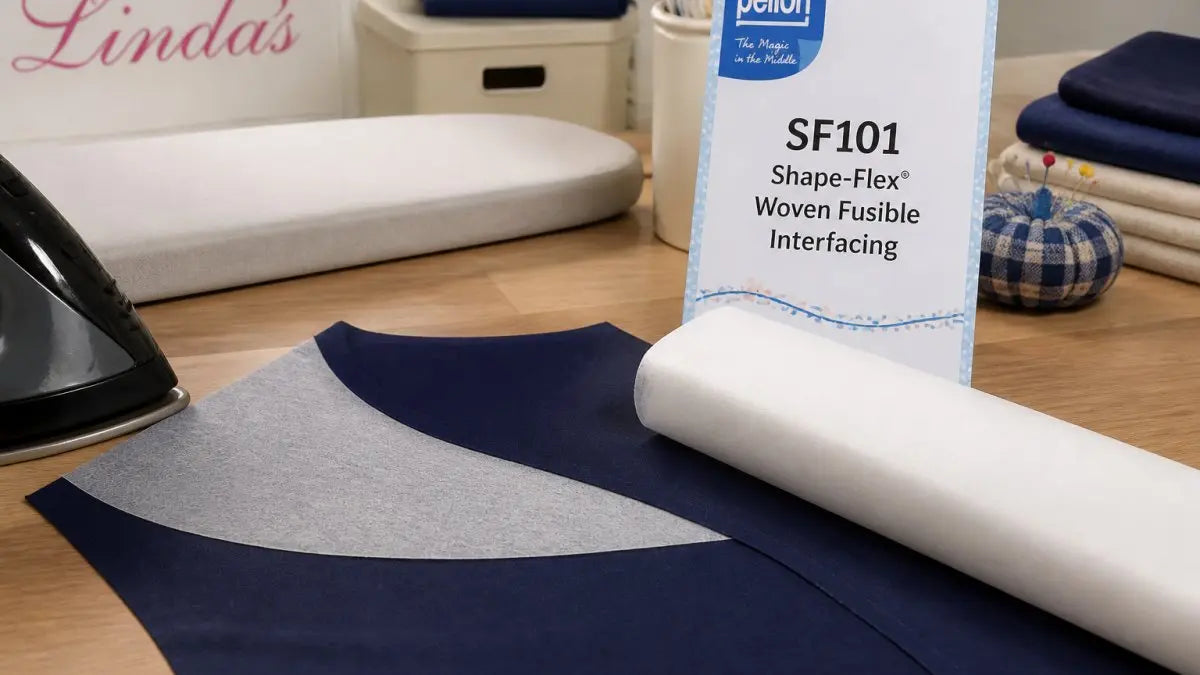
Pellon SF101 is a woven cotton fusible interfacing designed to add crisp, stable support to garment details and structural projects. Unlike non-woven alternatives that can feel stiff or papery, this material moves naturally with your fabric while delivering professional-grade reinforcement. The adhesive side bonds permanently to fabric when fused with heat, making it ideal for everything from collar construction to bag making.

The product specifications are straightforward but critical. According to Pellon's official product documentation, SF101 is 100% cotton with a light to medium weight classification. It comes in a standard 20-inch width, sold both as 10-yard bolts and smaller project packages. The woven construction, as opposed to non-woven stabilizers, allows the material to flex with your fabric rather than fight against it, which is why quilters and garment makers reach for it repeatedly.
Product Specifications and Materials
The fiber content matters more than most sewists realize. A 100% cotton composition means SF101 responds to heat and moisture the way natural fabrics do. This compatibility is what separates it from cheaper non-woven stabilizers, which can crack or peel after washing.
The 20-inch width is the manufacturing standard, though you can purchase it in various yardage increments. Pricing from Linda's Electric Quilters starts at $10.50 for a 15" x 2-yard package and scales to $39.50 for the full 20" x 10-yard bolt.
Why Woven Fusible Interfacing Matters
Woven interfacing performs differently than non-woven because of its thread structure. The interlocking warp and weft threads create a fabric that drapes and moves, rather than a bonded web that stays rigid.
The fusible adhesive on one side activates at heat, bonding permanently to the wrong side of your fabric. Once fused, this connection survives machine washing and normal wear. This permanence is what makes woven fusible interfacing the industry standard for structured details, it's not going anywhere.
Fabric Compatibility and Weight
SF101 works best with light to medium woven and knit fabrics. Think oxford cloth, chambray, gingham, flannel, and quilting cotton. The medium weight of the interfacing pairs well with these fabrics without overwhelming them or creating stiff, uncomfortable garment sections.

Knit fabrics benefit from this interfacing too, though application technique matters more with stretchy materials. The adhesive bonds to the knit structure, but you need firm, even pressure during application to ensure complete contact across the entire piece.
Best Woven and Knit Fabric Pairings
Oxford cloth and chambray are the gold standard pairings. These durable, tightly woven fabrics accept the interfacing without buckling and maintain the crisp support indefinitely.
For knit fabrics, cotton-poly blends work better than pure knits. The blend gives you just enough stability to hold the interfacing while still allowing the garment to move.
Avoid pairing SF101 with delicate fabrics like silk charmeuse or lightweight voile. The medium weight will overpower these materials and create bulky, uncomfortable seams.
How to Apply Fusible Interfacing
Application is straightforward but demands attention to detail. Incorrect temperature, pressure, or timing creates weak bonds that fail during the first wash. The fusible side, marked by tiny adhesive dots, must face the wrong side of your fabric.
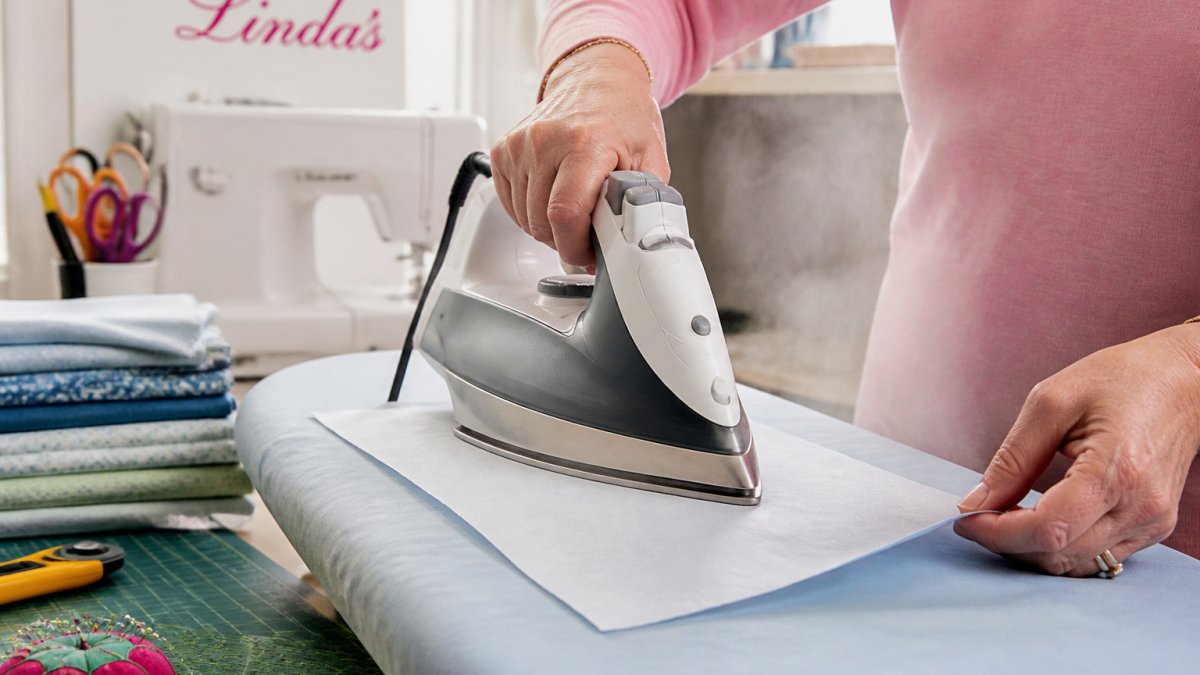
Cut your interfacing to the exact size you need. Larger pieces are harder to position without wrinkles, and smaller pieces won't provide adequate support.
Step-by-Step Iron Temperature Guide
Temperature control separates successful applications from failed ones. Set your iron to the cotton or linen setting, typically 350-400°F.
Press the iron firmly onto the interfacing for 10-15 seconds per section, overlapping slightly as you move across the piece. Don't slide the iron back and forth, this can shift the interfacing and create wrinkles.
Allow the fused piece to cool completely before moving it. The adhesive sets as it cools, and moving it while warm can break the bond.
Pre-Shrinking and Preparation Techniques
Pre-shrinking prevents surprises later. Wash both your fabric and interfacing in warm water before cutting and fusing. Dry them on low heat or air dry.
Some quilters skip this step for quilting cotton, which is already pre-shrunk at the mill. But for garment fabrics like chambray or flannel, pre-shrinking is essential.
Let both materials dry completely and press them flat before measuring and cutting. Damp or wrinkled materials are difficult to measure accurately, and you'll waste product trying to get clean cuts.
Recommended Applications and Uses
SF101 excels in structured details and projects that demand stability. Collars, cuffs, yokes, and facings are its primary use cases. The crisp support these details need is exactly what woven fusible interfacing delivers.
Garment Construction and Detail Support
Collars are the most common application. A fused collar stands properly and maintains its shape through repeated wearing and washing. Without interfacing, a collar droops and loses definition quickly.
Cuffs benefit the same way. A fused cuff maintains its fold and structure, resisting the wear that causes untreated cuffs to become limp and shapeless.
Pellon® SF101 Shape-Flex® Cotton Woven Fusible Interfacing 20" x 10 yards Bolt. →
Plackets and pocket openings are subtler applications. These details don't show on the finished garment, but they support the structure underneath.
Bag Making and Structural Stability
Bag makers rely on SF101 for structured totes and duffles. The interfacing provides enough body to support the weight of contents without making the bag feel stiff or uncomfortable to carry. A fused bag maintains its shape even when empty, which is critical for professional-looking results.
Structured pockets and flaps also benefit from interfacing. These elements need to maintain their shape and support the stress of repeated opening and closing. SF101 delivers that durability without adding bulk.
Fusible Woven Interfacing vs. Non-Woven Alternatives
The fundamental difference lies in structure and feel. Woven interfacing has visible threads interlocked in a warp and weft pattern.
Woven materials move and drape more naturally. Non-woven materials are stiffer and more uniform but can feel papery or plastic-like in finished garments.
Cost is another factor. Non-woven interfacing is typically cheaper than woven alternatives.
Durability differs as well. Woven interfacing maintains its bond through repeated washings and wear. Non-woven interfacing can crack, peel, or separate if the adhesive weakens.
Pellon SF101 vs SF102: Key Differences
Pellon makes several interfacing weights, and SF102 is the heavier cousin of SF101. SF102 is designed for medium to heavy fabrics and provides more structure than SF101.
SF102 works best with heavier wovens like denim, canvas, and heavyweight linen. It's overkill for quilting cotton or chambray.
The weight difference affects how the finished garment feels. SF101 allows natural drape and movement. SF102 creates crisp, structured details that resist folding or bending. For tailored garments, SF102 might be preferred.
Care and Maintenance Instructions
Once fused, SF101 is permanent. Machine wash and dry the garment normally, the interfacing won't separate or peel. The adhesive bond survives detergent, agitation, and heat cycles indefinitely.
Dry cleaning is also safe. Professional dry cleaners handle fused garments regularly without issue. The interfacing doesn't react to dry-cleaning solvents or processes.
Ironing after washing is fine. Use the same temperature you'd use for the fabric itself. The interfacing won't melt or shift at normal ironing temperatures.
Available Sizes and Pricing
Linda's Electric Quilters stocks three primary formats. The 15" x 2-yard package at $10.50 is ideal for small projects, detail work, and testing. The 20" x 10-yard bolt at $39.50 is the standard for quilters and garment makers who work regularly.
According to marketplace data, Etsy retail pricing for small-format cuts shows SF101 starting at $5.16 for 18" x 20" cuts, reflecting the per-unit cost of smaller packages.
| Format | Size | Price | Best For |
|---|---|---|---|
| Package | 15" x 2 yards | $10.50 | Small projects, testing |
| Bolt | 20" x 10 yards | $39.50 | Regular use, quilters |
| Small cut | 18" x 20" | $5.16 | Single detail, samples |
Pellon SF101 is the woven fusible interfacing standard for a reason. It delivers consistent, permanent support across light to medium fabrics without the stiffness of non-woven alternatives. Whether you're constructing garment details, making structured bags, or stabilizing embroidery backing, this material performs reliably.
At Linda's Electric Quilters, we stock SF101 in multiple formats because we know serious sewists reach for it repeatedly.
Frequently Asked Questions
What is Pellon SF101 used for?
Pellon SF101 is a woven fusible interfacing designed to add crisp, stable support to garment details and craft projects. It's ideal for collars, cuffs, yokes, pockets, and facings in garment construction. It's also a favorite for bag making, stabilizing fabric behind embroidery and appliqué, and supporting t-shirt quilts. The woven construction moves with your fabric, delivering a professional finish without stiffness.
Is Pellon SF101 a woven or non-woven interfacing?
Pellon SF101 is a woven fusible interfacing made from 100% cotton. Unlike non-woven alternatives, the woven structure allows the interfacing to move naturally with your fabric, providing flexible support rather than rigid stabilization. This makes it ideal for garments and projects where drape and comfort matter as much as structure.
How do you apply Pellon SF101 to fabric?
Cut the interfacing to size, place the adhesive side (the slightly rough, bumpy side) against the wrong side of your fabric, and fuse with a hot, dry iron using firm pressure for several seconds across the entire piece. Ensure full contact between the interfacing and fabric. Once fused, the bond is permanent and holds through machine washing and normal laundering.
What fabrics work best with Pellon SF101?
Pellon SF101 works best with light to medium woven and knit fabrics including oxford cloth, chambray, gingham, flannel, quilting cotton, and cotton-poly blends. It's compatible with both woven and knit materials, making it versatile for many sewing projects. Avoid using it on delicate or heavyweight fabrics, as the medium-weight interfacing may overwhelm lightweight materials or prove insufficient for very sturdy fabrics.
Does Pellon SF101 shrink when washed?
No, Pellon SF101 does not shrink when washed. Once fused to fabric, it maintains its bond through machine washing and normal laundering. The 100% cotton composition and fusible adhesive create a durable, washable connection that preserves the structure and support of your finished project over time.