Table of Contents
- What Supplies Does a Beginner Quilter Actually Need?
- The Best Quilting Fabric for Beginners: What to Buy and What to Skip
- Quilting Rotary Cutter Safety Tips Every New Quilter Should Know
- Pellon SF101: When Fusible Interfacing Belongs in Your Kit
- Budget-Friendly vs. Premium Tool Tiers: Where to Spend First
- Maintaining Your Quilting Supplies for Years of Use
- Your First Quilt Project: A Step-by-Step Path to a Finished Quilt
- Frequently Asked Questions
Last Updated: September 17, 2026
What Supplies Does a Beginner Quilter Actually Need?
According to the 2026 Quilting Industry Consumer Survey, the quilting industry is projected to reach $5 billion by 2027, and beginners are driving much of that growth by seeking low-cost entry points and welcoming environments. If you're wondering what quilting supplies for beginners actually require, the answer is simpler than the aisles at a big-box store suggest: eight core tools cover roughly 90% of your first projects.
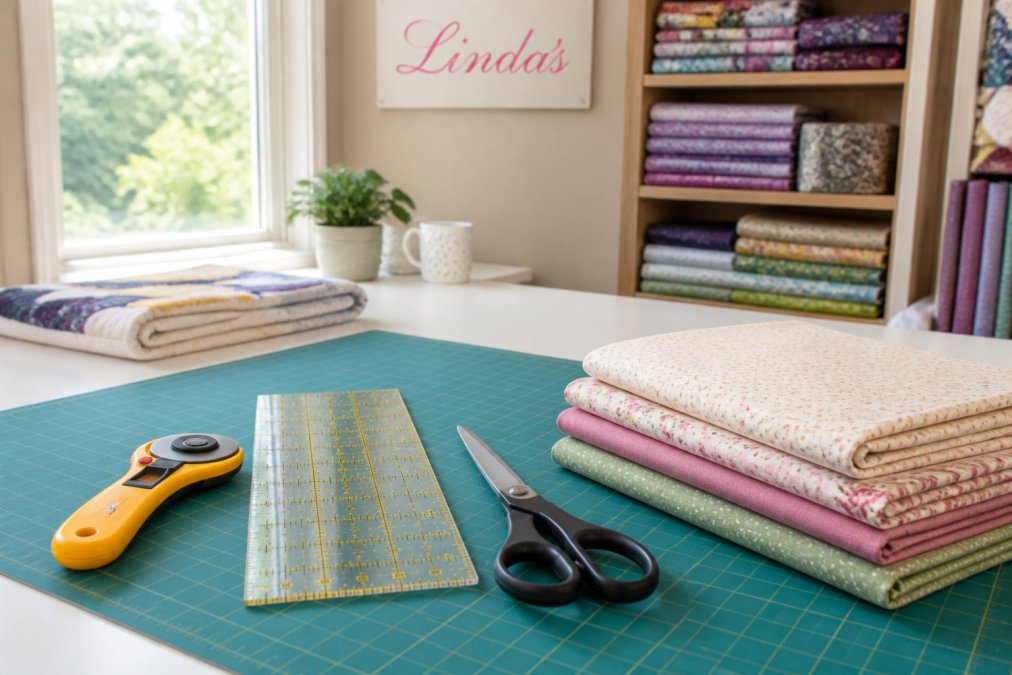
The Core Starter Kit: Eight Tools That Cover 90% of First Projects
Start with these eight items and nothing else:
- Rotary cutter (45mm) with a fresh blade
- Self-healing cutting mat (18" x 24" minimum)
- Acrylic quilting ruler (6" x 24")
- Fabric scissors reserved for cloth only
- Sewing machine with a quarter-inch foot
- Straight pins and a seam ripper
- Iron and ironing board for pressing
- 100% cotton fabric and thread
The beginner tool guidance from Faith and Fabric Design confirms this minimalist approach: buy the core set first, then expand once you know which tools you reach for regularly. A common mistake is buying a full "ultimate kit" before your first quilt top exists.
The Best Quilting Fabric for Beginners: What to Buy and What to Skip
The best quilting fabric for beginners is 100% cotton quilting-weight fabric in a light or medium solid color. Cotton presses crisply, holds a seam allowance, and forgives imperfect stitching far better than slippery blends or stretch fabrics. Quilting-weight cotton typically runs 42" to 44" wide, which is the width most patterns and pre-cut sizes assume.
Fat Quarters, Pre-Cuts, and the Case for Starting Small
Fat quarters (18" x 22" cuts) and pre-cut bundles remove most of the measuring risk from your first quilt. A charm pack (5" squares), a jelly roll (2 1/2" strips), and a layer cake (10" squares) all arrive already cut to consistent sizes, which means your seam allowance stays accurate even before your cutting skills develop.
Preparing Fabric Before You Cut
Wash and dry new cotton fabric before cutting if you plan to wash the finished quilt, cotton can shrink 3% to 5%, and pre-washing prevents a finished quilt from puckering after its first wash. If you prefer crisp fabric for cutting accuracy, skip the pre-wash and accept minor shrinkage later. Either way, press the fabric flat before it meets the rotary cutter.
Budget vs. Premium Fabric: Where the Money Goes
Fabric is the one supply where the budget tier is genuinely fine for a first quilt. Sale cotton and mill-end bundles cut and sew the same as premium quilting cotton for a beginner project. The premium tier earns its price when colorfastness, consistent dye lots, and long-term color retention matter, usually on a quilt you intend to keep or gift for decades.
Quilting Rotary Cutter Safety Tips Every New Quilter Should Know
Quilting rotary cutter safety tips matter more than most tutorials admit, because a rotary blade causes a serious laceration in a fraction of a second. The single most important rule: always cut away from your body, never toward it.
Additional habits that prevent injuries:
- Close the blade guard every time you set the cutter down, even for a second
- Keep your fingers behind the ruler edge, not curled over it
- Use a sharp blade; dull blades require more pressure and slip more often
- Cut on a self-healing mat so the blade has nowhere to travel if it skips
- Replace blades at the first sign of skipping, not when they stop cutting entirely
Pellon SF101: When Fusible Interfacing Belongs in Your Kit
Pellon SF101 is a fusible woven interfacing used to add body and stability to fabric, most often in bag making, appliqué, and quilting projects that need crisp edges. It is not a required supply for a basic pieced quilt, but it becomes essential the moment your project involves fabric that needs to hold a shape.
Budget-Friendly vs. Premium Tool Tiers: Where to Spend First
Spend on the tools you touch every session, and economize on the ones you use occasionally. That's the entire framework.
| Tool | Budget Pick | Premium Pick | Where to Spend |
|---|---|---|---|
| Rotary cutter | Basic 45mm | Ergonomic handle | Premium |
| Cutting mat | 18" x 24" standard | Larger self-healing | Budget |
| Ruler | Single 6" x 24" | Non-slip backed set | Budget |
| Sewing machine | Entry mechanical | Computerized with speed control | Premium |
| Iron | Basic steam | Auto shut-off, precise temp | Premium |
| Fabric | Sale cotton | Premium quilting cotton | Budget |
Maintaining Your Quilting Supplies for Years of Use
Rotate your rotary blades, clean your mat, and oil your machine on a schedule. Most quilting tools fail from neglect, not wear.
Quiltmaking for Beginners Handy Pocket →
- Rotary blades: replace every 8-12 hours of cutting, or sooner if you cut batting
- Cutting mat: wipe with a damp cloth monthly; store flat, never rolled
- Acrylic rulers: clean with mild soap, avoid alcohol which clouds the edges
- Sewing machine: brush out lint after every project, oil per your manual
- Iron: descale monthly if you use tap water; distilled water prevents buildup
- Fabric stash: store away from direct sunlight to prevent fading
Your First Quilt Project: A Step-by-Step Path to a Finished Quilt
Your first quilt should be a small one: a baby quilt or a lap quilt measuring roughly 40" x 50". Smaller projects let you practice every technique without committing to weeks of work. A 40" x 50" quilt needs about 3 yards of backing, a crib-size batting package, and roughly 1 1/4 yards of binding cut into 2 1/2" strips, numbers you can write on an index card before you shop.
Step 1: Cut Your Fabric
Square your fabric first by folding it selvedge to selvedge and trimming the raw edge perpendicular to the fold. Then cut strips with your rotary cutter and acrylic ruler, subcutting those strips into squares or rectangles. Accuracy here determines whether your seams line up later. Cut all pieces before you sew anything, batch cutting keeps your ruler and mat setup in one place and reduces handling errors.
Step 2: Piece and Press
Sew with a consistent quarter-inch seam allowance, then press each seam (not iron) before joining the next piece. Pressing, not ironing, keeps your patchwork flat and square. The distinction matters: ironing drags the fabric and stretches bias edges, while pressing lifts and sets the seam.
Step 3: Layer, Baste, and Quilt
Layer your quilt top, batting, and backing fabric on a flat surface, smoothing each layer from the center outward. Baste with curved safety pins every 3" to 4" in a grid, or use a spray basting adhesive for a faster, pin-free hold. Quilt with a walking foot for straight lines, or hand quilt if you prefer. Straight-line quilting on a 2" grid is the most forgiving first option because it hides wobbles better than free-motion work.
Step 4: Trim and Bind
Square up the quilted layers with your rotary cutter and long ruler, trimming the batting and backing flush with the top. Then attach binding cut into 2 1/2" strips, joined end-to-end on the diagonal, folded in half, and sewn to the front with a 1/4" seam. Wrap the binding to the back and stitch it down by hand or machine.
Frequently Asked Questions
What supplies does a beginner quilter need?
Start with eight core tools: a 45mm rotary cutter, a self-healing cutting mat (at least 18 by 24 inches), a 6 by 24-inch acrylic quilting ruler, fabric scissors, straight pins, a seam ripper, a quarter-inch foot for your sewing machine, and a walking foot for quilting. Add cotton fabric, thread, batting, and backing fabric. The 2026 Quilting Industry Consumer Survey found beginners prefer low-cost entry points, so avoid buying every gadget before your first project.
How do I choose the right fabric for my first quilting project?
The best quilting fabric for beginners is 100% cotton quilting-weight fabric. It presses flat, holds a crisp seam allowance, and does not slip during piecing. Avoid stretchy knits, slippery satins, or loosely woven fabrics for a first quilt. Pre-cuts like fat quarters and charm packs remove the guesswork because the fabric is already coordinated and cut to size. Buy a little extra yardage for binding and backing so you do not run short mid-project.
What are the quilting trends for 2026?
For beginners, bold geometric patterns and low-volume prints are both on trend and forgiving to piece. Sustainable fabric options like organic cotton are also growing. You do not need to follow every trend, but choosing a palette you love keeps you motivated to finish.
Do I need a specialized sewing machine to start quilting?
No. A basic sewing machine with a straight stitch, adjustable stitch length, and the ability to fit a quarter-inch foot and walking foot handles most beginner quilts. The quarter-inch foot keeps your seam allowance accurate, and the walking foot feeds the quilt sandwich evenly during machine quilting. If your machine has these two presser feet available, you can quilt. Upgrade later once you know which features you actually use.
What is the role of Pellon SF101 in modern quilting?
Pellon SF101 is a fusible woven interfacing that adds body and stability to fabric without making it stiff. Quilters use it on tote bags, quilt labels, and garment-weight projects where fabric needs structure. It fuses with an iron and stays put through washing. For a basic pieced quilt top, you do not need it. Add Pellon SF101 to your supplies when your project involves bags, home decor, or any fabric that needs to hold its shape.
How do I maintain my quilting tools for longevity?
Replace rotary cutter blades when they start skipping threads rather than forcing a dull blade through fabric. Wipe your cutting mat with a damp cloth and store it flat, away from heat and sunlight, so it stays self-healing. Clean lint from your sewing machine bobbin case after each project. Oil metal scissors at the pivot point occasionally. Store acrylic rulers upright or flat to prevent warping. These habits keep your quilting supplies working for years.
What is the 60 30 10 rule for quilting?
The 60-30-10 rule is a color proportion guideline: 60% dominant color, 30% secondary color, and 10% accent color. In quilting, it helps you build a balanced palette before you cut fabric. Choose one main fabric family for the largest share of your quilt top, a contrasting secondary, and a small pop of accent. This ratio keeps a quilt from looking flat or chaotic, and it works whether you piece a simple nine-patch or a complex star block.