Table of Contents
- Quick Comparison: Top Threads for Professional Quilters
- Thread Weight Guide for Quilters: Decoding 40, 50, and 60 WT
- Polyester vs Cotton Quilting Thread: Fiber Performance Compared
- Best Quilting Thread for Longarm Machines
- Quilting Thread Tension Troubleshooting
- Cost-Per-Yard Efficiency and Thread Aging
- How to Choose Your Thread: A Decision Framework
- Frequently Asked Questions
Last Updated: September 13, 2026
Quick Comparison: Top Threads for Professional Quilters
The global yarn, fiber, and thread market is projected to grow from USD 102.57 billion in 2025 to USD 108.59 billion in 2026, according to B Sew Inn's 2026 industry report. That growth reflects what professional quilters already know: thread choice is not a minor detail. A quilting thread comparison for professional use comes down to fiber, weight, and how each spool behaves on your specific machine.
At Linda's Electric Quilters, we stock more than 50,000 quilting, sewing, and embroidery products, and thread questions are among the most common we field. This comparison covers the five threads we recommend most for professional work, then breaks down weight, fiber performance, longarm compatibility, and cost efficiency.
Here is the short version before the detail:
| Thread | Fiber | Weight | Yardage | Price | Best For |
|---|---|---|---|---|---|
| Aurifil 50wt Mako Cotton | Cotton | 50 wt | 1,422 yd | $15.38 | Piecing, everyday quilting |
| Signature Cotton Thread | Cotton | Tex 40 | 3,000 yd | $13.59 | Free-motion, high-speed work |
| Glide Polyester King Spool | Polyester | 40 wt | 5,500 yd | $14.96 | Longarm production quilting |
| Madeira Monofil Transparent | Polyamide | 40 wt | Small spool | $5.29 | Invisible stitching, appliqué |
| Glide Orange King Spool | Polyester | 40 wt | 5,500 yd | $14.96 | Color-matched longarm work |
The 50-weight cotton option is the safest all-around pick for most professional piecing, but longarm quilters running production volume will get more mileage from the polyester king spools.

Thread Weight Guide for Quilters: Decoding 40, 50, and 60 WT
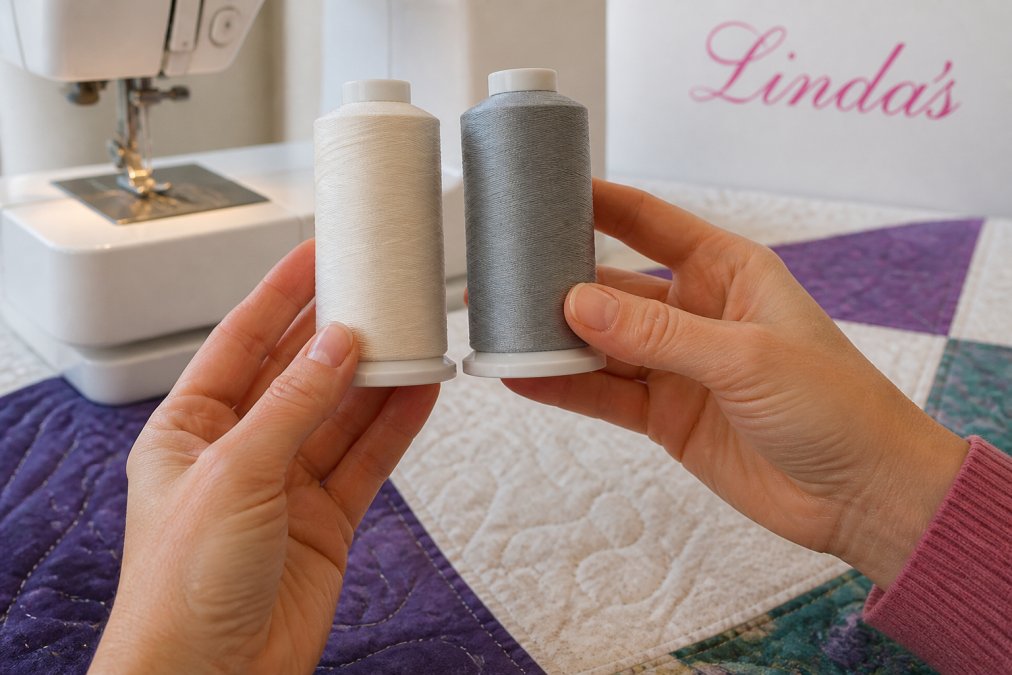
Thread weight works inversely to what most beginners assume: the higher the number, the finer the thread. A 60 wt thread is thinner than a 40 wt, and that distinction drives every tension and stitch-density decision you make.

Thread weight is a numbering system that describes how many kilometers of thread it takes to weigh one kilogram, so a 50 wt thread is finer than a 40 wt.
Weight determines three things at once: how visible your stitches are, how much thread fits on a bobbin, and how the thread behaves under tension. Professional quilters use 50 or 60 weight, two-ply thread for piecing to maintain accurate quarter-inch seams, per Quilting Daily's thread guidance. The finer thread takes up less space in the seam, which keeps your seam allowance honest.
Here is how the common weights map to professional use:
- 40 wt: Visible, decorative stitching. Strong, covers well, ideal for quilting designs you want to showcase.
- 50 wt: The all-around workhorse. Flat, crisp seams and blending quilting.
- 60 wt: Fine blending and detail work. Best for dense quilting where you do not want the thread to dominate.
- 8 to 30 wt: Heavy decorative and topstitching work, rarely used for piecing.
Polyester vs Cotton Quilting Thread: Fiber Performance Compared
Polyester wins on tensile strength, abrasion resistance, and colorfastness; cotton wins on aesthetic finish, heat tolerance, and archival quality. Neither is universally better, and the right answer depends on what the quilt will do after it leaves your studio.
The fiber decision comes down to three measurable properties. Tensile strength determines how much pull the thread takes before it snaps. Abrasion resistance governs how it holds up against the needle and fabric over thousands of stitches. Colorfastness decides whether your color survives washing.
A comparison of cotton versus polyester for professional quilting found that polyester threads are often preferred for professional business use due to performance, while cotton threads are selected for specific aesthetic finishes, per Stitched in Color's fiber comparison. That split is real: polyester filament resists abrasion better and runs virtually lint-free, while mercerized cotton gives a matte finish that many heirloom quilters consider non-negotiable.
The trade-off professionals should watch is shrinkage. Cotton thread and cotton fabric shrink at similar rates, so a cotton-through-and-through quilt ages evenly. Polyester thread does not shrink, which can cause puckering on a cotton quilt after the first wash if your stitch density is too loose.

| Property | Cotton | Polyester |
|---|---|---|
| Tensile strength | Moderate | High |
| Abrasion resistance | Moderate | High |
| Colorfastness | Good | Excellent |
| Lint production | Some | Minimal |
| Shrinkage | Matches cotton fabric | None |
| Finish | Matte | Sheen |
For heirloom and wall quilts where the fabric finish matters most, cotton is the honest choice. For bed quilts that will be washed weekly by a family, polyester filament holds its color and structure longer.
Best Quilting Thread for Longarm Machines
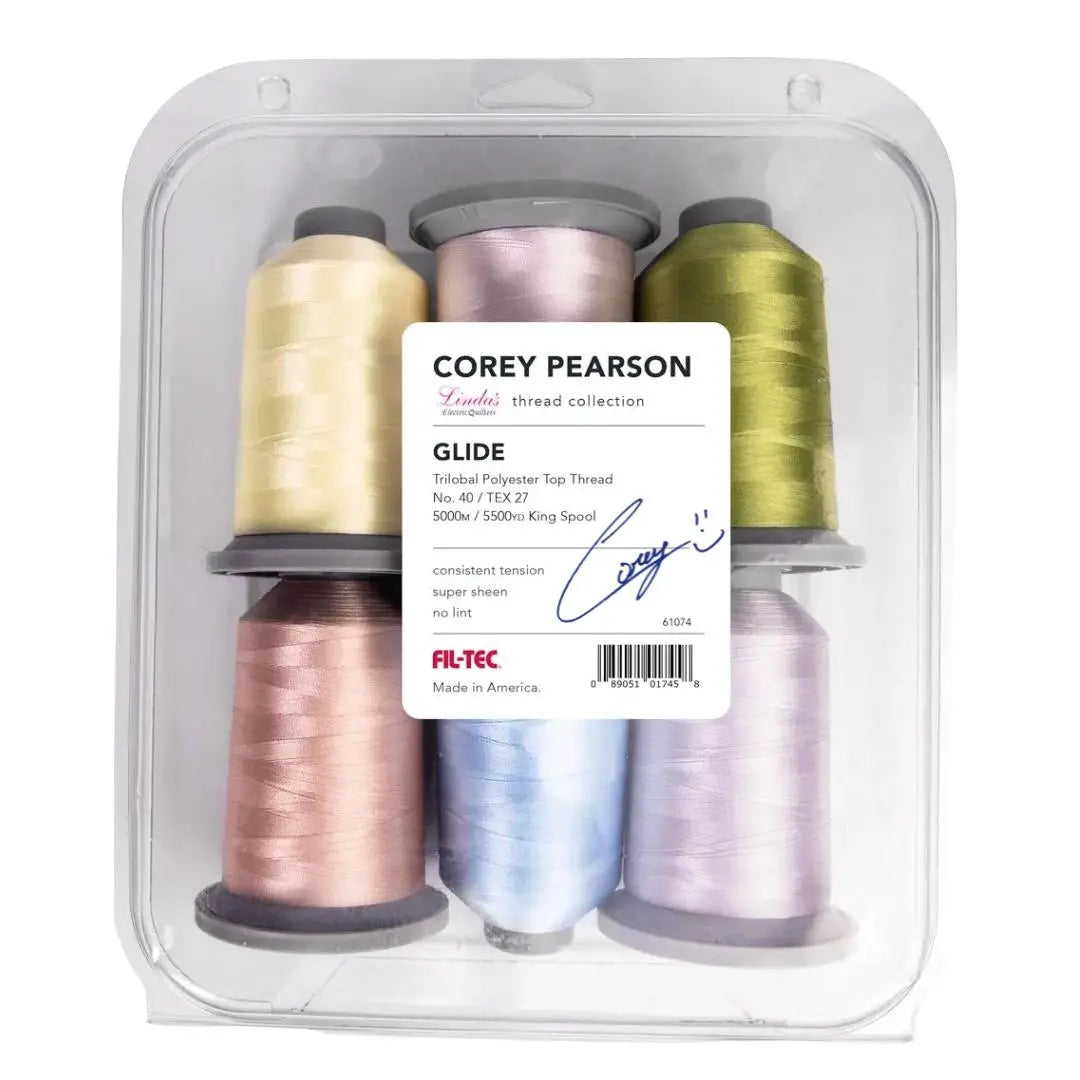
The best quilting thread for longarm machines is a 40-weight, two-ply polyester on a large cone, because longarm machines run at speeds that punish weaker thread and small spools. Fil-Tec Glide in 40 wt is the standard for this reason: the two-ply construction and trilobal polyester maintain consistent tension across a 5,500-yard king spool, so you stop fewer times to rethread.
Longarm work differs from domestic machine quilting in ways that change your thread math. A longarm frame moves the quilt, not the needle, and the machine runs at sustained high speed. That combination demands thread with high tensile strength and low lint accumulation, because lint builds up in the thread path and throws off tension mid-quilt.
For 2026, Aurifil 50 WT Cotton Mako is identified as a top-performing all-around quilting thread for sewing machines, cited for being lint-free and strong, per Missouri Star Quilt Co.'s 2026 thread picks. On a longarm, a 50 wt cotton works well for quilting that should blend into the fabric, while a 40 wt polyester handles the decorative designs. Matching the appropriate thread weight to your project remains essential, especially when transitioning to sewing machines for thick fabrics that require more robust tension settings.
Where domestic machines and longarms diverge: a domestic machine tolerates a 60 wt fine thread for detail work, but most longarms tension more consistently with 40 wt or 50 wt. If you are moving a design from your home machine to a longarm, expect to re-tension from scratch.
Quilting Thread Tension Troubleshooting
Tension problems almost always trace to one of four causes: incorrect bobbin tension, a needle eye too small for the thread, lint in the tension discs, or a thread path that skipped a guide. Work through them in that order before you touch the top tension dial.
Bobbin tension is the tension on the thread coming out of the bobbin case, and it is the setting most quilters adjust last when they should check it first. If your stitches show loops on the top, the bobbin tension is likely too loose. If the bobbin thread pulls to the top, it is too tight.
Professional resources for 2026 emphasize understanding thread weight, fiber content, and cone size for both longarm and home quilting machines to ensure proper machine compatibility, per Linda's Electric Quilters' thread selection guide. That guidance matters because tension is not a single dial. It is the relationship between top tension, bobbin tension, needle size, and thread weight.
Quick diagnostic sequence:
- Check the thread path. Rethread from the spool, confirming the thread passes through every guide and the take-up lever.
- Inspect the needle. A bent or dull needle causes skipped stitches that look like tension problems.
- Match needle eye size to thread weight. Thicker thread needs a larger eye.
- Clean the tension discs. Lint accumulation between the discs changes tension unpredictably.
- Adjust bobbin tension. Small increments, test on scrap after each change.
- Adjust top tension last. Only after the first five steps check out.
Fabric puckering after a perfect test stitch usually means your stitch density is too high for the thread weight, not that tension is wrong. Back off the density before you touch the dial.
Cost-Per-Yard Efficiency and Thread Aging
Cost-per-yard is the metric that separates professional thread buying from hobbyist buying, and it almost never matches the sticker price. A $14.96 king spool of 5,500 yards costs about $0.0027 per yard. A $5.29 small spool of roughly 200 yards costs about $0.026 per yard, nearly ten times more per yard.
Run the math on every thread you buy. The king spool looks expensive on the shelf and is the cheapest thread in your studio per yard. The small spool looks cheap and is the most expensive. For professional quilters running multiple quilts a month, that gap compounds into real money.
Thread aging is the factor almost no guide mentions. Cotton thread degrades over time, especially when exposed to sunlight, humidity, and heat. A spool that sat in a hot car for a summer loses tensile strength you cannot see. Polyester filament resists this degradation far better, which is one reason production quilters standardize on polyester for long-term stock.
If you buy thread in bulk, store it away from direct sunlight and temperature swings. Rotate your stock so older spools get used first. A thread that snaps repeatedly on a project it should handle is often an old spool, not a tension problem.
How to Choose Your Thread: A Decision Framework
Choosing the right thread comes down to four questions in order: what is the quilt's purpose, what machine will quilt it, what finish do you want, and how much will you spend per yard. Answer those and the fiber and weight select themselves.
Use this framework:
- Heirloom or wall quilt, cotton fabric: Choose 50 wt mercerized cotton for piecing and quilting. The matte finish and matched shrinkage protect the quilt long-term.
- Everyday bed quilt, will be washed often: Choose 40 wt polyester filament. Colorfastness and abrasion resistance matter more than finish.
- Show quilt with decorative quilting: Choose 40 wt polyester for the visible design and 50 wt cotton for piecing.
- Appliqué or invisible stitching: Choose a 40 wt monofilament in clear or smoke to blend with any fabric.
- High-volume longarm production: Standardize on 40 wt polyester king spools and buy in bulk.
For most professional quilters, the answer is a two-thread setup: 50 wt cotton for piecing, 40 wt polyester for quilting. That combination covers the widest range of projects without forcing you to keep a dozen weights on hand.
Thread selection is where professional quilting separates from hobby quilting. The wrong fiber or weight shows up as tension problems, puckering, and premature wear, and no amount of machine tuning fixes a thread that was wrong for the job. Linda's Electric Quilters carries the full range of professional threads, from Aurifil 50 wt Mako cotton to Fil-Tec Glide polyester king spools and Madeira monofilament, backed by more than 700 educational videos and the Crafters Roundtable podcast to help you match thread to project. Get started with Linda's Electric Quilters and build a thread inventory that holds up to professional volume.
Frequently Asked Questions
What is the best quality quilting thread for professional longarm machines?
For longarm machines, 40-weight polyester thread is the standard for high-speed stitching because it produces less lint and fewer thread breaks. The 30982 Olympic Glide Polyester Thread is a strong option, offering 5,500 yards per king spool for extended use. For those who prefer cotton, a 50-weight, 2-ply thread like the 1133 Bright Orange Aurifil Cotton 50wt Large Spool provides a flat, crisp seam with low lint. The choice depends on whether you prioritize speed and durability or a natural matte finish.
What is the difference between 30 wt and 50 wt thread for quilting?
Thread weight works inversely to thickness: a lower number means a thicker thread. A 30-weight thread is heavier and creates a bold, visible stitch, often used for decorative topstitching or emphasizing quilting designs. A 50-weight thread is finer and blends more easily into the fabric, making it ideal for piecing and general machine quilting. For professional piecing, a 50-weight, 2-ply thread helps maintain accurate quarter-inch seams and reduces bulk in the seam allowance.
Polyester vs. Cotton: Which thread is better for high-speed professional quilting?
Polyester thread, such as the 30982 Olympic Glide Polyester Thread, is often preferred for high-speed professional quilting because its filament construction resists breakage, stretches slightly with the fabric, and runs virtually lint-free. Cotton thread, such as the 815 Tango Blue Signature Cotton Thread, is favored for its matte finish and natural look, but it can generate more lint and may break under extreme tension. Many professionals use polyester in the bobbin and cotton on top, or choose one fiber throughout for consistent tension.
How does thread weight affect tension and stitch quality in professional quilting?
Thread weight directly influences tension settings and stitch formation. A heavier thread, like 40-weight, requires a larger needle eye and slightly looser tension to avoid puckering. A finer thread, like 60-weight, needs a smaller needle and tighter tension to create balanced stitches. For professional edge-to-edge quilting, a 50-weight thread is a versatile choice that balances strength and subtlety. Always test on a scrap quilt sandwich before adjusting your machine's bobbin tension.
What are the benefits of using monofilament thread in professional quilting projects?
Monofilament thread, such as the Monofil Transparent Quilting Thread, is a 40-weight polyamide thread available in clear and smoke. It is used for invisible stitching, allowing the quilting design to show without the thread color competing with the fabric. This is especially useful for intricate custom quilting where you want the texture to stand out. However, monofilament can be stiff and may require tension adjustments, so it is best used in the bobbin or for specific decorative effects.