

Good morning, quilters! Corey here.
Every quilt tells a story.
Whether it's a treasured heirloom or your latest finish, how you store it matters just as much as how you care for it.
The storage mistake we see most often
One of the biggest mistakes we see is leaving quilts tightly folded in the same position for months, or even years.
Those sharp folds can weaken fibers and leave permanent crease lines over time. The fabric along a hard fold is under constant stress, and stitching that crosses the fold line takes the strain too. Add a little humidity or sunlight and those creases can set for good.
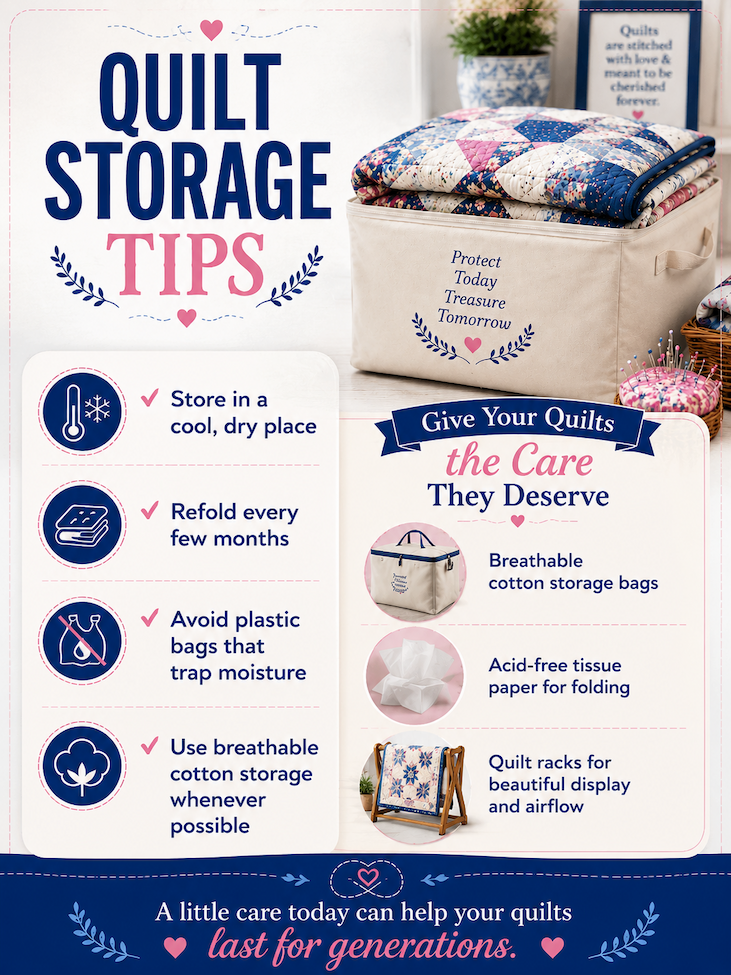
Simple habits that protect your quilts
- Refold on a schedule. Every few months, take stored quilts out and refold them along different lines so no single crease gets a chance to set.
- Fold on the bias when you can. Diagonal folds distribute stress across the weave instead of running straight down a single line of threads.
- Pad the folds. A roll of acid-free tissue or a strip of clean cotton batting tucked inside each fold softens the crease dramatically.
- Skip the plastic bins for long-term storage. Fabric needs to breathe. A clean cotton pillowcase or a cotton sheet keeps dust off while letting air through.
- Keep them cool, dark, and dry. Direct sunlight fades fabric, and attics and garages swing too hot, too cold, and too humid.
- Better yet—display them. A quilt draped over a ladder, rack, or guest bed with occasional rotation is both stored and enjoyed.
The best quilts aren't just blankets...
They're wedding gifts, baby gifts, holiday traditions, and family memories stitched together one block at a time. Give yours the care it deserves, so it can continue warming hearts for generations.
Remember
A little extra care today can preserve your quilt's color, stitching, and memories for decades to come.
Whether it's your first quilt or your fiftieth, proper storage is one of the easiest ways to protect the time, love, and craftsmanship stitched into every square.
Happy Quilting!
From Corey.