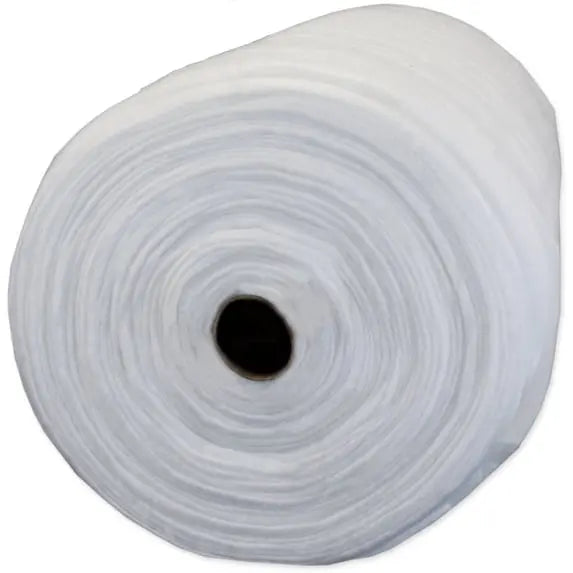
Once you quilt in volume — on a longarm frame, in a studio, or just through a serious pile of UFOs — batting by the roll stops being a luxury and starts being the obvious math. No per-quilt packaging, no unfolding creased batting, no piecing narrow pieces to width. You load the roll, pull what you need, and cut.
The batting itself
All four Pellon polyester rolls share the same batting: 100% polyester, 1/8" loft, 0–3% shrinkage, and a recommended maximum stitch distance of 4". It adds loft, body, softness, and definition to quilting designs, resists moisture, and washes by hand or machine (dry cleanable too). With shrinkage that low there's no prewashing — roll to frame to finished quilt.
Which width do you need?
120" x 30 yards — king width. The only roll here that covers a king quilt without piecing; 30 yards yields roughly ten kings.
96" x 30 yards — the queen-width workhorse. About ten queen quilts per roll; the volume choice for longarmers who quilt for customers.
90" x 9 yards — queen width in a starter-size roll. About three queens; a low-commitment way to test roll batting on your frame.
60" x 20 yards — throw and craft width for lap quilts, baby quilts, runners, wall hangings, and bag work.
Why polyester on the frame?
Polyester batting is light, springy, and forgiving on a longarm — it doesn't drag, it shows off dense quilting with crisp definition, and it keeps finished quilts lightweight and lofty. The 4" stitch-distance rating also gives design freedom that tighter-spacing battings don't.
Quick math per roll
Figure roughly 3 yards of length per bed quilt: a 30-yard roll is about ten quilts, a 20-yard craft roll handles about ten throws, and a 9-yard roll covers about three queens. Buying wider than your usual quilt costs little and saves the day when a customer brings an oversized top.