The smallest details often make the biggest difference.
Fabric marking is one of those details that quietly shapes the outcome of your sewing, quilting, and crafting projects.
Markings guide where fabric is cut. They show how pieces align and where design elements come together. When those marks are clear and reliable, everything that follows becomes more accurate and far less frustrating.fabric
Sewists today have more marking options than ever. Washable fabric markers, precision pens, fabric pencils, and specialty sewing markers are just a click or a store run away.
Each of these products behave differently depending on the fabric, technique, and tool type. Choosing the right one isn’t merely a matter of preference. It’s a practical decision. In fact, it affects your workflow and final result.
This guide is designed to help you make that choice with confidence. We’ll break down the different types of fabric marking tools. We also explain where each one works best. Plus, we share practical insights about where to buy high-quality fabric markers.
Why Fabric Marking Tools Are Essential for Sewing Projects

Every sewing project starts with precision. Marking tools are foundational tools that support exactly that.
Accuracy in Cutting and Sewing
Fabric markers help you:
-
transfer pattern lines accurately
-
mark seam allowances clearly
-
position darts, pleats, and notches
-
align pieces correctly before stitching
Without clear markings, small errors begin to stack up. Eventually, a misplaced dart or uneven seam allowance throws off the entire garment.
Good markings act as your guide. They keep everything aligned, especially as you work with complex patterns or multiple fabric layers.
Improving Quilting and Craft Projects
In quilting and decorative work, marking becomes even more important.
You’ll often need to:
-
draw quilting lines for even stitching
-
map out embroidery placement
-
sketch decorative patterns or motifs
Most markings are hidden in garment sewing. Meanwhile, quilting and fabric art rely heavily on visible guides to create balanced, symmetrical designs.
Types of Fabric Marking Tools Sewists Use

Fabric Markers
Fabric markers come in two main types:
-
temporary markers and pens fade or wash out.
-
permanent types are intended for long-lasting designs.
Best uses:
-
marking patterns on fabric
-
labeling pieces
-
creating fabric art or custom designs
Temporary fabric markers are generally for sewing and quilting. Permanent ones are perfect for crafts and decorative work.
Washable Fabric Markers
A washable fabric marker typically uses:
-
water-soluble ink that washes out easily
-
air-erasable ink that fades over time
Many sewists rely on them because they’re:
-
easy to remove after sewing
-
visible enough for accurate marking
-
safe for most fabrics
Common uses:
-
seam guides
-
quilting lines
-
embroidery placement
They’re especially useful when you need clear markings that won’t leave permanent traces behind.
Fabric Pens
Fabric pens are similar to markers but offer more precision.
They usually feature:
-
finer tips
-
smoother ink flow
-
more control for detailed work
Best for:
-
fine lines and detailed markings
-
labeling fabric
-
permanent designs or writing
If you’re working on intricate patterns, fabric pens are the better choice.
Fabric Pencils
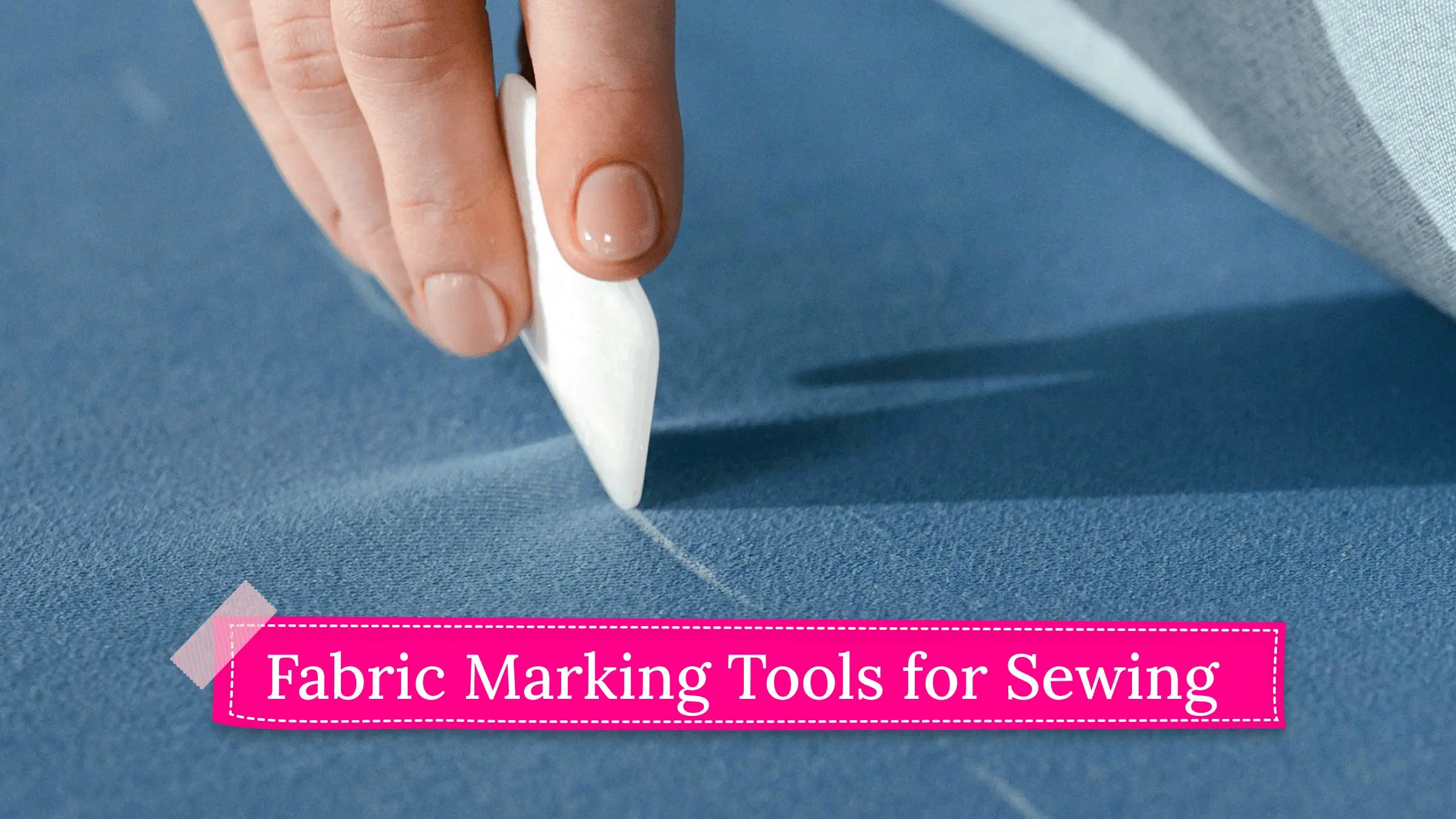
Fabric pencils are a classic pick for sewing. They’re simple and easy to control.
Common types include:
-
chalk pencils make soft, removable marks
-
ceramic pencils offer finer, long lasting lines for more detailed work
Key features:
-
removable markings
-
no ink bleeding
-
good control on textured fabrics
Best uses:
-
marking on dark fabrics
-
quilting lines
-
temporary guides
They’re particularly helpful when working with materials where ink might spread or stain.
Choosing the Best Fabric Marking Tool for Your Project
For Temporary Sewing Marks
When your markings are only meant to guide you, temporary tools are your safest choice. They stay visible while you work but conveniently disappear once the project is done.
For cutting guides, washable fabric markers and chalk pencils are ideal. They create clear, easy-to-follow lines. You can cut accurately without second-guessing. Since these marks are often made along edges, you want something that won’t stain or leave any residue behind.
For quilting lines, washable markers and air-erasable pens are great. They produce smooth, continuous lines across larger sections of fabric. This makes it easier to maintain even spacing and follow stitching paths even on detailed quilting patterns.
For garment construction, fabric pencils and fine-tip washable pens are commonly used. These tools mark darts, pleats, notches, and seam allowances. They give you better control for smaller, more exact markings. Plus, they allow you to remove them later without affecting your output’s final look.
For Permanent Fabric Designs
If your markings are part of the design, you will need the best fabric paint pens, permanent fabric markers, or textile art pens. Their markings manage to stay vibrant after washing. They bond with fabric fibers and resist fading over time.
No wonder, they’re the preferred tools for custom clothing designs, fabric art, and other decorative projects.
For Detailed Fabric Artwork
When you’re working on detailed fabric artwork, control matters just as much as creativity.
Fine-tip fabric pens and markers offer precision tips. They allow you to work on small details like lettering and intricate patterns without worrying about thick or uneven lines.
Meanwhile, high-quality fabric pens and paint markers provide smooth ink flow. They deliver consistent color without skipping or blotching. You get clean, professional-looking results on your projects.
Fabric markers and textile pens have plenty of available color options. As such, they’re highly ideal for decorative projects. Whether you’re adding subtle accents or drawing bold designs, you can easily layer and blend to create visually dynamic pieces.
Washable Fabric Markers: When and Why to Use Them

Fabric washable pens are often the first tool beginners reach for. They strike the perfect balance between visibility and removability.
Why They’re So Popular
-
easy to use
-
widely available
-
suitable for most fabrics
-
clean removal with water
Common Uses
-
marking seam allowances
-
drawing quilting lines
-
outlining embroidery designs
-
transferring patterns
Practical Tips for Best Results
-
Always test on scrap fabric first
-
Use light pressure to avoid ink soaking through
-
Remove markings before applying heat
-
Wash or dab with water as recommended
Remember, not all fabrics react the same way. Testing ensures you don’t end up with unexpected stains.
Best Fabric Markers for Sewing, Quilting, and Craft Projects
When choosing marking tools, it’s less about brands and more about features.
What to Look For
-
Tip size
Fine tips for detail, broad tips for visibility -
Ink type
Washable vs permanent -
Fabric compatibility
Works well with your material -
Fade behavior
Disappears when and how you need it to
Matching Tools to Projects
Having a few different tools on hand gives you flexibility across projects. Here’s a quick guide to give you an overview:
|
Quilting |
Embroidery |
Garment Sewing |
Fabric Design |
|
Washable markers for stitching lines, pencils for dark fabrics |
Fine-tip pens for detailed placement |
Air-erasable or washable markers |
Permanent markers or paint pens |
Where to Buy Fabric Markers and Sewing Marking Tools
If you’re wondering where to buy fabric markers, here are the most common sources:
Online fabric retailers
Web-based sellers usually carry a wide selection of fabric markers, pens, and pencils. They also have detailed product descriptions and customer reviews. Buyers can compare options easier and find tools suited for their specific projects.
Craft supply stores
These stores often stock basic marking tools that work well for general sewing and DIY projects. They’re a good place to explore different types in person. However, selection may be more limited compared to specialized retailers.
Sewing specialty stores
These sources tend to offer the most reliable and high-quality tools. These shops focus specifically on sewing and quilting. Products are usually tested and trusted by experienced sewists. You’re more likely to find professional-grade markers, better-performing inks, and tools designed for specific fabrics and techniques.
Tips for Using Fabric Markers Without Damaging Fabric
A little care upfront can save you from permanent mistakes later.
Here are a few practical tips to keep your fabric safe:
Test before marking
Always test your marker or pencil on a scrap piece of the same fabric. Different fibers, dyes, and finishes react differently to marking tools. What disappears cleanly on one fabric may stain another. This quick step gives you a clear idea of visibility, removal, and overall performance.
Avoid heat on temporary marks
Temporary inks are usually sensitive to heat. Ironing over marks too early can set them permanently, especially with air-erasable or washable pens.
Remove markings first before pressing. Or check the manufacturer’s instructions to avoid locking the ink into the fabric.
Use light pressure
Applying too much pressure can damage fibers or cause ink to bleed into the fabric. This is especially true on lighter or more delicate materials. A gentle hand gives you cleaner lines and reduces the risk of marks spreading beyond where you want them.
Store markers properly
Keep caps tightly closed. Store markers horizontally when possible. This helps maintain consistent ink flow and prevents the tips from drying out.
Follow removal instructions
Not all markings disappear the same way. Some require water while others fade with air exposure. In addition, a few are designed to vanish over time. Follow the recommended removal method and timing. That way, marks come out completely without leaving residue.
Frequently Asked Questions About Fabric Marking Tools
What is the best fabric marker for sewing?
The best fabric marker depends on your project. But for most sewing tasks, washable fabric markers make a reliable choice. They provide clear visibility while you work. Plus, they can be removed easily afterwards. For detailed work, a fine-tip fabric pen offers better control.
Do washable fabric markers really wash out?
Yes, most washable fabric markers are designed to wash out completely. Results may vary depending on the fabric and how long the marks are left in place. Some inks disappear with water. Others simply fade over time. Always refer to the manufacturer’s instructions to be sure.
Are fabric pens permanent?
Some fabric pens are permanent, while others are designed to be temporary. Permanent fabric pens are typically used for decorative work or labeling. Temporary fabric pens are used for sewing and marking guides. Check the product type before using it, especially if you don’t want permanent marks.
What is the difference between a sewing marker and a fabric pen?
The terms are sometimes used interchangeably. But there are subtle differences. Sewing markers often refer to tools designed specifically for temporary markings, such as washable or air-erasable markers. Fabric pens can be either temporary or permanent. They usually offer finer tips for precision work. The big difference comes down to how the tool is used and whether the markings are meant to stay or disappear.
Final Thoughts: Choosing the Right Fabric Marking Tool
Fabric marking tools play a defining role in how smoothly a project comes together. The difference between clean results and constant adjustments often comes down to how clearly you can follow your guides along the way.
Understanding the unique characteristics of each marker, pen, and pencil (how they mark, remove, and interact with different fabrics) helps you use them effectively. You get to move through your project with intention, rather than second-guessing your placement or relying on estimates.
Over time, choosing the right marking tool becomes second nature. You begin to recognize which one fits the fabric in front of you, the type of work you’re doing, and the finish you want to achieve.
When that happens, your process feels more fluid. Your projects become more refined from start to finish.
Check out our collection of marking tools and sewing supplies.