Imagine spending hours piecing together the perfect quilt top.
Much to your surprise, you discover that your strips are slightly off. Next, you start noticing wavy seams and mismatched points. Your final product doesn't lie flat.
Heartbreaking, right? That's the drama of imprecise cutting. Small mistakes can later turn a potential masterpiece into a frustrating redo.
Enter: cutting mats for quilters, rotary cutters for fabric, and reliable sewing cutting tools.
These specialized tools help professional sewists achieve straight lines. They also protect surfaces and cut through multiple layers efficiently.
In this guide, we'll break down why cutting tools matter. We’ll teach you how to choose the right ones for your needs. We’ll even share some practical tips on avoiding common issues.
Whether you're new to quilting or just refining your technique, our tips will help sharpen your skills.
Why Cutting Mats Are Essential for Quilting and Sewing
A good cutting mat is a must-have for any sewist or quilter. It protects your work surface from blade damage. Likewise, a mat improves cutting accuracy through its built-in grid lines and measurements. Its non-slip base keeps fabric from shifting mid-slice. It also extends your blade’s life by reducing wear.
Rotary cutting shines brightest on these mats. The slight give under the blade creates straight edges without snags, especially when cutting multiple layers.
Over the years, we’ve quilted king-size bedspreads without a single skewed block. All thanks to using trusty mats! Skip using them and you risk facing the consequences. Like having uneven hems and puckered seams.
What Makes Self Healing Cutting Mats Different

Sewists love self healing cutting mats for sewing. They are made from layered PVC (polyvinyl chloride). This flexible material “heals” itself after a blade passes through. Tiny cuts in the top layer close up almost instantly, thanks to its elasticity. Cutting leaves very minimal visible damage.
Cheap plastic sheets groove deeply after a few uses. In comparison, self healing mats maintain a smooth surface for hundreds of cuts. They're tougher on wear, too. Blades glide smoothly without dragging. This reduces friction and blade dulling.
A quality self-healing mat handles repeated sessions reliably. It supports consistent precision throughout.
Best Cutting Mat Sizes for Quilters
So, what’s the best cutting mat for quilters? It depends on your project scale and available space. Common sizes suit different needs effectively.
Small Cutting Mats
Small mats (around 6x8 or 8x12 inches in size) are usually for travel sewing. They’re also ideal for coasters, potholders, and other small projects. They work well for sewists and quilters with limited spaces.
Medium Cutting Mats
Medium-sized mats (18x24 inches) provide versatility. They handle garment sewing, fat quarters, and half-yard cuts. They accommodate standard rulers and fit most home setups. As such, they’re perfect for beginners building confidence on lap quilts or dresses.
Large Quilting Cutting Mats
Large mats (24x48 inches or more) excel for full yardage. They handle multiple blocks or long sashing. They reduce repositioning, minimizing errors on bigger quilts. For greater efficiency, larger surfaces are often preferred, paired with a stable table.
Understanding Rotary Cutters for Fabric
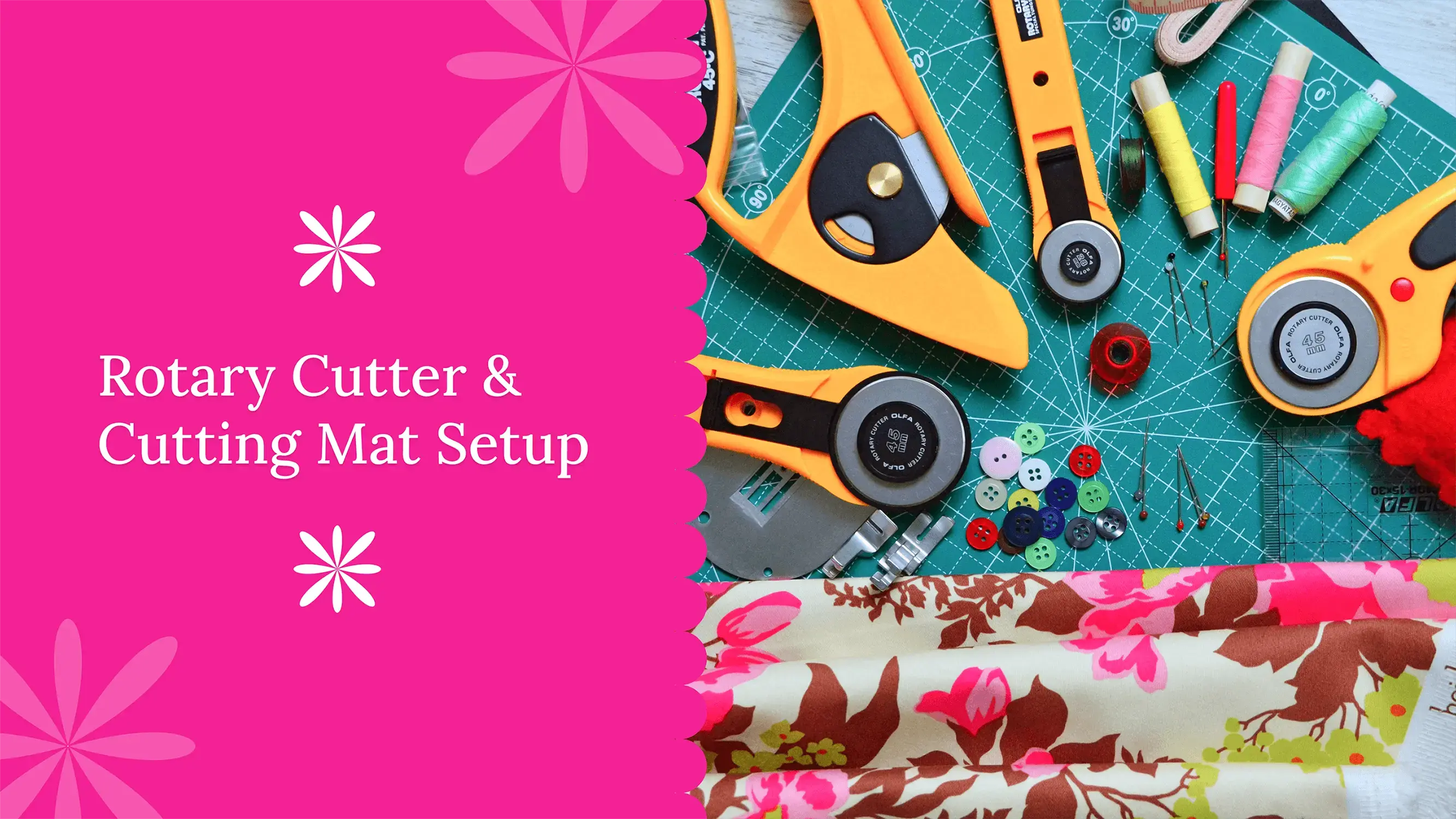
A rotary cutter is a sharp circular blade in a protective handle. This handheld tool rolls smoothly to create clean cuts through single or multiple layers of fabric.
The design excels at straight cuts without the drag of shears. Paired with a ruler and mat, rotary cutters for fabric batch-cuts strips and shapes efficiently. They’ve become essential for modern workflows.
Common Rotary Cutter Blade Sizes

Here's a quick comparison to help guide your choice:
|
Blade Size |
Best For |
Layer It Handles |
Quilting Drawback |
|
28mm |
Curves, details, appliqué |
1-2 thin layers |
Too small for long straights |
|
45mm |
General strips, squares, most quilts |
4-6 cottons |
Less power for thick stacks |
|
60mm |
Thick fabrics, batting, 8+ layers |
8-10+ layers |
Bulky for precision work |
28mm Rotary Cutter
The 28mm size is excellent for curves and intricate work like appliqué or paper piecing. Its petite blade navigates tight turns without overshooting.
45mm Rotary Cutter
At 45mm, this is the most popular for everyday quilting. It does straight strips, squares, and moderate layers with balanced handling. Most quilters prefer to use it for its versatility. Stock multiples and rotate to keep the blades fresh.
60mm Rotary Cutter
The 60mm handles bulky fabrics or thick stacks (up to 10 cottons). It’s perfect for width-of-fabric cuts or batting.
Choosing the Best Rotary Cutter for Quilting
To pick the best rotary cutter for quilting, consider these features:
Blade Sharpness
High-quality cutters use premium steel. Dullness usually creeps in after 50 to 100 hours of use. Test a blade on a piece of fabric to see if it works well.
Ergonomic Handles
A comfortable handle prevents fatigue. It reduces hand strain. Look for padded, contoured grips that fit various hand sizes. Take note that most manufacturers offer options for left- or right-handed users. Also, get one with rubberized coating. They help avoid slips.
Safety Lock Features
Reliable safety locks prevent accidental cuts. Effective ones snap securely with one hand. They cover the blade fully when engaged. Spring-loaded mechanisms hold firm during storage.
Blade Replacement Options
Convenient blade changes extend your cutter's life. Choose models compatible with standard sizes (28mm, 45mm, 60mm) from multiple brands for availability. Quick-swap systems use simple levers or screws.
How Cutting Mats and Rotary Cutters Work Together

When used properly, these tools create an efficient workflow.
Here's the usual process:
-
Lay fabric right-side up on your self-healing mat, folded or unfolded for 4 to 6 layers max.
-
Align an acrylic quilting ruler with mat grids. Press your palm flat for stability.
-
Grip rotary cutter and engage safety lock off. Roll steadily along the ruler's edge.
-
Lift cutter vertically (never drag). Reposition fabric or ruler, and repeat.
-
Stack cut pieces into organized piles for sub-cutting efficiency.
Additional Fabric Cutting Tools Used by Quilters
Your kit should also have these essentials:
-
Acrylic quilting rulers provide see-through guidance for angles and shapes.
-
Fabric scissors handle curves better than rotary cutters.
-
Seam rippers save botched cuts quick as a wink.
-
Fabric marking tools (like frixion pens or chalk wheels) mark lines without residue.
How to Maintain a Self Healing Cutting Mat
Good cutting mats can last for years. However, they are not indestructible.
Here’s how you can make them last longer:
Rotate Your Mat Regularly
Do not cut in the same area every time. If you do, grooves will start forming in those spots. Those grooves will eventually affect cutting accuracy and guide your blade off track.
Make it a habit to rotate your mat 90 degrees after a few projects. Or do it at least once a month. This helps distribute wear evenly across different sides.
Store it Flat to Prevent Warping
Cutting mats warp if they’re not properly stored. Leaning your mat against a wall or storing it upright for long periods can cause it to bend.
Store your mat flat on a stable surface. If space is tight, slide it under your bed or a table. A flat mat ensures your cuts stay accurate.
Keep it Away from Heat and Sunlight
High temperatures can soften your mat’s material. Also, direct sunlight can dry out your mat’s surface. This can lead to brittleness or discoloration.
Avoid placing your mat near windows or in hot cars. Actually, even prolonged exposure to warm rooms can affect its structure. To preserve your mat’s self-healing properties, keep it in a cool, stable environment.
Clean the Surface Gently
Remove buildup by wiping the mat with a damp cloth and mild soap. For stubborn marks or residue, use a soft eraser or a gentle brush. Do not use harsh chemicals or abrasive scrubbers. They can damage your mat’s surface. Let the mat air dry completely before using it again. This helps maintain the material’s integrity.
Precision is crucial in the art of sewing and quilting. Taking care of your tools is definitely part of your job. Consistent maintenance directly impacts your cutting accuracy and tool longevity. A well-maintained mat provides a smooth, stable surface. Moreover, a sharp rotary cutter will make your life easier.
When to Replace a Cutting Mat or Rotary Blade
Worn tools don’t just slow you down. They can also compromise your results. So, know when to replace them by recognizing these signs:
Deep Grooves in the Mat
Get a new mat if deep grooves no longer “heal” or close up. These grooves lead to uneven cuts or jagged edges.
Fabric Shifting During Cuts
You might also notice your fabric shifting more than usual while cutting. A worn mat can lose its grip and stability. If your cuts start to feel less precise, your mat could be the issue.
Dull Rotary Blade Causing Fabric Pulls
A dull blade tends to drag, skip, or pull threads. You may find yourself applying more pressure just to get through a simple cut. That simply means your blade is no longer working efficiently. A quick test is to cut through a piece of cotton fabric. If the blade leaves uneven edges, it’s time to buy a new one.
Ultimately, using a sharp blade directly affects your work’s quality. Fresh blades glide through fabric smoothly. They give you crisp, accurate edges with less effort. This is especially important when working on detailed quilt projects or when cutting multiple layers.
Common Fabric Cutting Mistakes and How to Avoid Them
Many common issues come down to habits that are easy to fix once you know what to look for.
Cutting Without a Ruler
Freehand cutting often leads to uneven edges and inconsistent measurements. Slight variations can add up, especially in quilting where precision is crucial.
Solution: Use a quilting ruler alongside your rotary cutter. That way, you always get straight, repeatable cuts.
Using Dull Blades
A dull rotary blade affects the quality of your cuts. Instead of slicing cleanly, it drags through the fabric. This causes frayed edges or slight distortions.
Solution: Replace your blade as soon as you notice resistance. An effective blade should glide smoothly and maintain accuracy.
Cutting on Uneven Surfaces
Working on an uneven or unstable surface causes fabric to shift. This eventually leads to crooked lines and mismatched pieces.
Solution: Always cut on a flat, stable table with a proper cutting mat. This ensures your fabric stays in place. As a result, your measurements remain true from start to finish.
Using Scissors Instead of Rotary Tools for Straight Lines
Scissors still have their place in sewing. However, they’re not ideal for long, straight cuts. It’s harder to maintain a perfect line, especially across multiple layers of fabric.
Solution: Rotary cutters are designed for this exact purpose. When paired with a ruler and cutting mat, they allow you to cut straight, clean edges with better results.
Why Quality Cutting Tools Matter in Quilting
With quality cutting tools, you enjoy the following advantages:
Improved Cutting Accuracy
Accurate cuts are the secret ingredient to a well-made quilt. High-quality rotary cutters, rulers, and mats work together to give you those clean lines with minimal effort. When your tools are reliable, your fabric pieces come out the right size the first time. As a result, your seams align properly and your blocks fit together without constant adjustments.
Faster, More Efficient Workflow
Good tools speed things up. A sharp rotary blade glides through fabric layers in one smooth motion. Meanwhile, a stable cutting mat keeps everything in place. So instead of re-cutting uneven pieces or correcting mistakes later, you can move confidently from cutting to piecing.
Better Fabric Preservation
Poor cutting habits can lead to unnecessary waste of fabric. Low quality tools like dull blades and uneven mats will distort your fabric before you even start sewing.
Quality tools help protect your materials from those errors. Clean cuts reduce fraying. Stable surfaces prevent shifting.
A More Polished Final Quilt
You can often trace the quality of a finished quilt back to how well it was cut. Precise pieces lead to flatter blocks and a more professional overall appearance.
When everything lines up the way they should, the quilting process becomes easier. The final result reflects that care. It’s one of those behind-the-scenes factors that quietly elevates your work.
That said, quality cutting tools are an essential investment for serious quilters and sewists. They last longer and reduce the need for constant replacements. More importantly, they make the entire experience much more enjoyable.
Final Thoughts
In most sewing projects, precision starts long before the first stitch.
The way you cut your fabric shapes everything that follows.
Cutting mats and rotary cutters play important roles. They’re the foundation that supports every accurate seam and clean edge.
Choosing the right tools makes the process more efficient. When your cuts are consistent and your materials behave the way they should, you spend less time fixing mistakes and more time actually quilting.
That shift alone can transform your entire workflow.
A well-maintained cutting mat and a sharp rotary cutter continue to perform the way you need them to. That reliability builds confidence, especially as your projects become more detailed or ambitious.
Simply said, quilting is a craft built on small, deliberate steps. Investing in quality cutting tools and taking care of them improves your results. And those small upgrades show up in every finished piece you create.