Flannel immediately feels like pure comfort. It’s known for being soft and warm. In fact, it’s a favorite material for quilts, pajamas, and baby blankets.
However, beginner sewists may find them challenging to work with.
Case in point, flannel doesn’t exactly behave like standard quilting cotton. Its looser weave and fuzzy surface can lead to shrinkage, stretching, and fraying.
Well, here’s the good news: flannel is actually very manageable - once you understand how it behaves. With the right preparation and sewing techniques, it can become a practical fabric to sew.
In this guide, we show beginners and experienced sewists how to work with flannel successfully. From cutting and sewing to quilting and finishing, you’ll learn how to confidently use this fabric in your projects.
What Is Flannel Fabric?
Flannel is a soft woven fabric. It’s typically made from cotton or cotton blends. To raise the fibers, flannel is brushed on one or both sides. This process is what makes the fabric feel warm and fuzzy. It also slightly loosens the weave.
Key characteristics of flannel include:
-
Soft, brushed surface
-
Warm and insulating feel
-
Heavier than quilting cotton
-
Medium-weight structure with a relaxed weave
Why Sew With Flannel?
Flannel works well in both clothing and home sewing projects.
Some common examples include:
-
Quilts
-
Baby blankets
-
Pajamas
-
Scarves
-
Casual home décor
In particular, flannel quilts are popular for cooler climates. They feel heavier and warmer than most cotton quilts.
It’s also a forgiving fabric in design. Simple patterns often look richer and more textured when made in flannel.
Common Challenges When Sewing With Flannel
Here are some flannel issues to watch out for:
-
Shrinks Significantly
Flannel shrinks a lot during the first few wash cycles. Uneven shrinkage may affect the overall fit or shape of quilts and garments. -
Frays Easily
Raw edges can begin unraveling during cutting or sewing. This becomes especially noticeable in projects that require multiple pieces or frequent washing. -
Stretches While Sewing
Flannel has a slight amount of give. It may stretch out of shape when pulled during sewing. This may result in wavy seams or misaligned pieces. -
Creates Lint Buildup
The brushed fibers shed small amounts of lint during cutting and sewing. Lint accumulates around the needle area, feed dogs, and bobbin case.
Because flannel has a looser weave, it shifts easily. Without proper handling, seams may lose accuracy. Fabrics may even distort.
The key is preparation. Once flannel is handled correctly, these issues become easier to manage.
Essential Tips for Sewing With Flannel

Always Prewash Flannel
Prewashing helps stabilize flannel before cutting. This also prevents uneven shrinkage once your project is finished. Multiple washes may be needed for higher-shrink fabrics.
Use Sharp Cutting Tools
Clean cuts reduce fraying and improve accuracy.
The recommended cutting tools are:
-
Rotary cutter with a fresh blade
-
Sharp fabric scissors
Remember: Dull blades can pull at the fibers. This may increase fraying and distortion.
Choose the Right Needle
In general, the recommended needle sizes are:
-
80/12 for lighter flannel
-
90/14 for thicker or layered flannel
With a proper needle, you can prevent skipped stitches and fabric damage.
Use a Walking Foot
A walking foot feeds fabric layers evenly through the sewing machine. Take note that flannel tends to shift during sewing. So, using a walking foot reduces fabric slipping, layer misalignment, and puckering seams.
Increase Stitch Length
Flannel benefits from slightly longer stitches. A stitch length around 3.0 mm usually works well. This allows the fabric to move naturally without stressing the seams.
How to Prepare Flannel Fabric Before Sewing

Flannel tends to shrink and stretch easily. So, a little extra preparation can make cutting and sewing much easier.
When starting a project, focus on these 4 key steps:
1. Prewash the Fabric
Prewashing is essential when working with flannel. This allows shrinkage to occur before cutting and sewing. Finished quilts, garments, and blankets do not lose their shape after laundering.
2. Dry Thoroughly
Once washed, dry the fabric completely.
This allows the fabric to reach its final size and texture. It also reveals any remaining wrinkles or distortions that should be addressed before sewing.
For best results, wash and dry the fabric the same way you plan to care for the finished project.
3. Press the Fabric
Flannel often comes out of the dryer with wrinkles and creases. Pressing creates a smooth surface that is easier to work with. It also improves cutting accuracy and helps ensure pattern pieces are measured correctly.
4. Apply Starch for Stability
A light application of spray starch can help stabilize flannel. This step is especially helpful for quilting projects where precision matters.
Benefits of using starch include:
-
Reducing fabric stretching
-
Minimizing shifting during cutting
-
Improving cutting accuracy
-
Creating cleaner piecing and seams
Best Tools for Sewing With Flannel
Having the right tools improves accuracy and reduces frustration.
Helpful tools include:
-
Rotary cutter for clean edges
-
Quilting ruler for precise measurements
-
Walking foot for even feeding
-
Universal or quilting needles (80/12 or 90/14)
-
Spray starch for added stability
These tools help control the flannel’s natural softness and movement.
How to Cut Flannel Fabric Accurately
Accurate cutting is an important step when working with flannel. Taking a little extra care during this stage improves piecing accuracy. As a result, the entire sewing process becomes much smoother.
-
Use Pattern Weights to Keep Fabric Stable
Flannel can move unexpectedly while you cut. Pattern weights help hold the fabric flat against the cutting surface without introducing additional distortion. In addition, weights provide more consistent results than relying solely on pins.
-
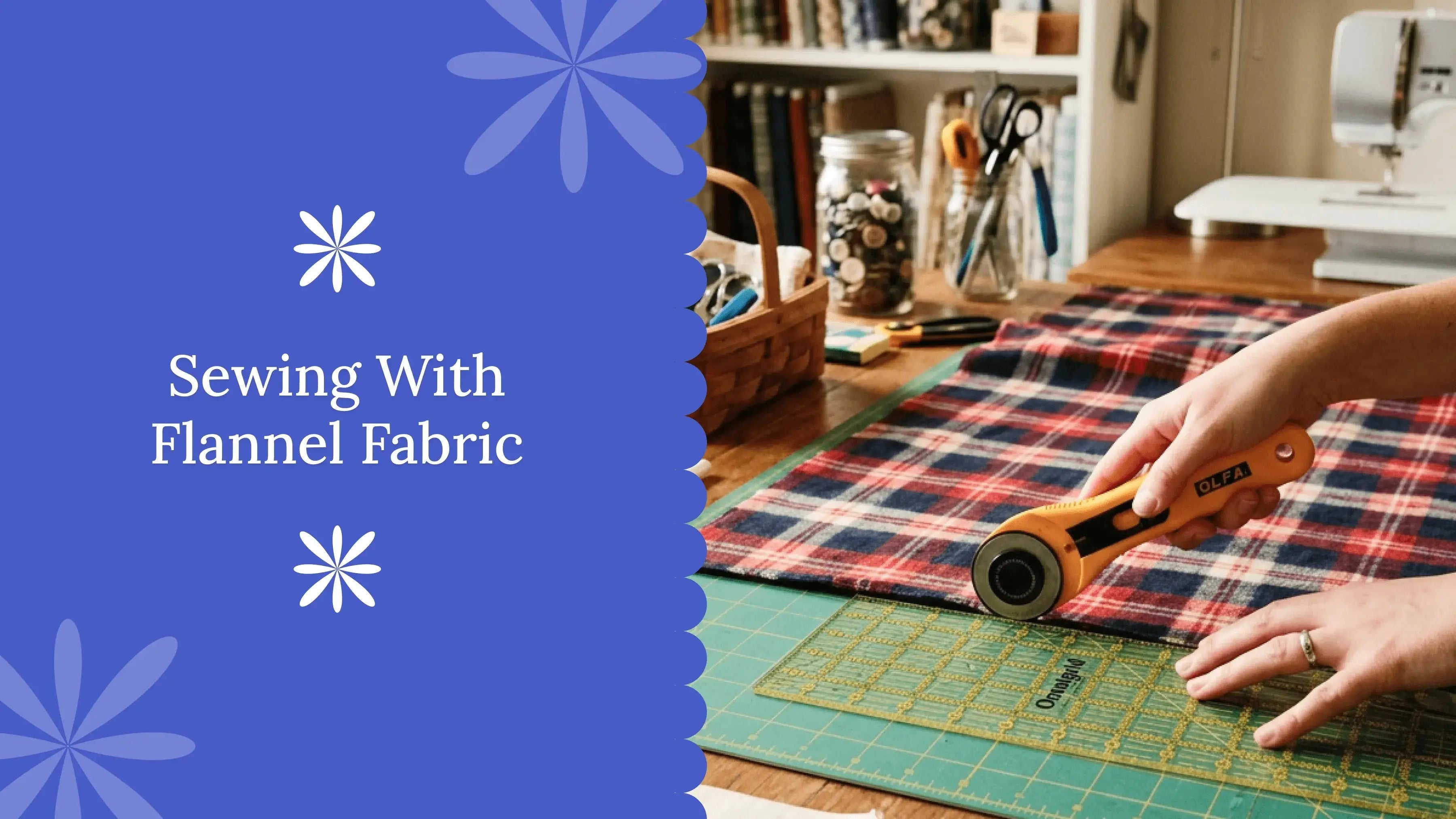
Cut on a Rotary Mat
Using a rotary mat, ruler, and rotary cutter allows you to make clean, straight cuts. It also keeps the fabric flat on the work surface. This minimizes the shifting that occurs when lifting fabric repeatedly with scissors. For quilting projects in particular, rotary cutting helps create more uniform pieces. You get consistent measurements throughout. -
Align the Fabric Grain Carefully
Make sure the fabric is properly aligned before cutting. If the grain is off, pieces may stretch or lose shape during sewing. Straighten the fabric first. Check that the selvages and cut edges are aligned. This helps maintain stability throughout the project. It becomes especially important for quilts where construction depends on consistently cut pieces. -
Use Sharp Cutting Tools
Flannel responds best to sharp cutting tools. A fresh rotary blade or sharp pair of fabric scissors creates clean edges and reduces fraying. On the other hand, dull blades pull at the fibers. Using them results in rough edges and less accurate cuts. To maintain precision, replace rotary blades frequently.
Taking time to stabilize the fabric, align the grain, and use sharp tools helps ensure that each piece is cut accurately. This creates a stronger foundation for sewing, quilting, and achieving a more professional-looking finished project.
Tips for Quilting With Flannel

A few small technique adjustments can make a big difference in helping you achieve the best final result.
-
Use Larger Seam Allowances if Needed
Flannel adds more bulk at the seams than lighter fabrics. Using a slightly larger seam allowance not only improves seam stability. It also gives you more control during assembly. Furthermore, it reduces the risk of seams pulling apart, particularly in high-use items like blankets or baby quilts.
-
Press Seams Open to Reduce Bulk
Pressing seams open helps distribute that bulk evenly on both sides of the fabric. This creates a flatter surface, which makes quilting and layering much smoother. It also helps the finished quilt lie more evenly, reducing raised ridges. -
Use a Walking Foot While Quilting
A walking foot is especially helpful when quilting with flannel. It helps manage fabric movement between multiple layers. Without it, the top layer may shift slightly faster than the bottom layers. This causes puckering or misalignment. A walking foot feeds all layers evenly through the machine, keeping everything aligned as you sew.
Best Sewing Projects for Flannel Fabric

Creating something decorative or giftable? Flannel brings a cozy feel that few fabrics can match.
Some of the most popular flannel projects include:
Cozy Quilts
Flannel's soft surface creates a cozy finished quilt. It feels inviting from the first use. Many sewists use the fabric for the quilt top, backing, or both. It’s also especially popular for lap quilts, winter quilts, and throw blankets.
Baby Blankets
Flannel feels gentle against sensitive skin. Because of this, its softness and warmth make it perfect for nursery projects and handmade gifts. Many baby blankets combine flannel with other soft fabrics. Doing so introduces different textures while maintaining comfort.
Rag Quilts
Rag quilts and flannel are often paired together. The fabric frays attractively along exposed seams. This creates the signature textured appearance rag quilts are known for. Because flannel is easy to handle, the finished quilt is both comfortable and visually appealing.
Pajama Sets
Few fabrics are as closely associated with pajamas as flannel. Its warmth makes it ideal for sleepwear. Pajama pants, sleep shirts, and matching sets remain popular projects for sewists of all skill levels. The fabric is available in countless colors and prints.
Winter Scarves
Flannel scarves are simple projects that showcase the fabric's softness. Moreover, the finished scarves are lightweight and easy to coordinate with seasonal wardrobes. Many require only basic cutting and finishing techniques. This makes them suitable for beginners.
Other Creative Possibilities
Beyond these popular projects, flannel is also commonly used for:
-
Pillow covers
-
Receiving blankets
-
Burp cloths
-
Pet blankets
-
Reusable cloth wipes
-
Cozy home décor accents
No matter the project, flannel's greatest strengths remain the same: softness, warmth, and everyday comfort.
These qualities continue to make flannel a favorite choice for both beginner and experienced sewists.
Beginner Mistakes When Sewing With Flannel
Most issues come down to skipping key setup steps or treating flannel like a more stable fabric than it actually is.
Here are some of the most common errors:
-
Skipping Prewashing
If flannel isn’t prewashed before cutting, the finished project may tighten or distort after laundering. This can be especially noticeable in quilts. In fact, even small amounts of shrinkage can affect the block alignment of your project.
-
Using Dull Needles
Flannel is slightly thicker and more textured than quilting cotton. So, it needs a sharp, appropriate needle. A dull needle can cause skipped stitches or pulled fibers on the fabric surface. It also increases lint buildup. Worse, it may even put unnecessary strain on your machine. Fresh, sharp needles help the machine move through flannel cleanly. -
Stretching Fabric While Sewing
Because flannel has a softer weave, it is easy to accidentally stretch it while feeding it through the machine. This usually happens when the fabric is pulled or guided too firmly. In most cases, this leads to warped seams or pieces that no longer match up correctly. A gentle guiding motion works best. Let the feed dogs do most of the work while you keep the fabric steady. -
Ignoring Seam Allowances
Inconsistent seam allowances are another common issue, especially for beginners. Flannel can shift slightly during sewing. This makes accuracy even more important. If seam allowances vary, blocks may not line up properly during assembly. Keeping a consistent seam allowance throughout the project helps maintain structure. It also ensures all pieces fit together cleanly at the end.
How to Prevent Fraying When Sewing Flannel
Flannel easily frays, a fact that often surprises beginner sewists. Because the fabric has a relatively loose weave, raw edges unravel during cutting and sewing.
While some fraying is normal, it’s actually possible to improve flannel’s durability and neatness. This is especially important for items that will be washed regularly, such as quilts, blankets, pajamas, and baby items.
Use Zigzag Stitching
A zigzag stitch is one of the simplest ways to control fraying. After sewing a seam, stitch along the raw edge using a narrow zigzag pattern. This secures the fibers and prevents excessive unraveling during use and laundering. Many sewists prefer this method. Besides, it can be done on most standard sewing machines without requiring specialized equipment.
Finish Seams With a Serger
A serger provides one of the most effective seam finishes for flannel. It trims and encloses the raw edge. Plus, it creates a clean and durable finish. This prevents fraying while also reducing bulk inside the project. Serged seams are especially useful for garments and pajamas.
Trim Edges With Pinking Shears
Pinking shears create a zigzag edge, which minimizes fraying. While they do not completely prevent unraveling, they slow the process by disrupting the straight edge where fraying typically begins. This makes them a helpful option for quick projects or areas where a full seam finish may not be necessary. Expert sewists use pinking shears in combination with other finishing methods for additional protection.
Why Seam Finishing Matters
Flannel projects are often made to be used and washed regularly. Without proper seam finishing, repeated laundering causes raw edges to deteriorate. A little extra effort during construction can improve the project’s longevity. Strong seam finishes help maintain the fabric's durability for years to come.
Caring for Flannel Projects
Proper care preserves flannel’s softness. While the fabric is known for its durability, the right washing and drying habits help reduce unnecessary wear.
Whether you're caring for a quilt or a garment, here are a few simple tips that can help keep flannel looking its best:
Wash in Cold or Warm Water
Cold or warm water is generally recommended for flannel projects.
Extremely hot water can encourage additional shrinkage. In some cases, it also places extra stress on the fibers. Meanwhile, cooler wash temperatures help maintain the fabric's size and shape. It also preserves the overall softness.
For heavily used items, warm water often provides a good balance between cleaning performance and fabric care.
Use a Mild Detergent
Mild detergents help clean the fabric without being overly harsh on the fibers. Strong chemical cleaners may gradually reduce softness or cause colors to fade more quickly. Using a gentle detergent preserves the comfortable texture that makes flannel so appealing.
Dry on Low Heat
High heat can contribute to shrinkage and unnecessary wear. For best results, dry flannel projects on a low heat setting. This protects the fibers while still allowing the fabric to dry thoroughly.
Air Dry When Possible
While it may take longer, air drying reduces exposure to heat. It minimizes shrinkage over time. This can be especially beneficial for handmade quilts, baby blankets, and other treasured projects.
Avoid Harsh Fabric Treatments
Fabric softeners, bleach, and other aggressive laundry products can affect the performance of flannel. While occasional use may not cause immediate damage, repeated exposure can reduce softness and shorten the life of the fabric. Gentle care products are usually the safest choice for preserving both texture and appearance.
Why Proper Care Matters
One of flannel's biggest strengths is its ability to become softer with use. Proper washing and drying practices help protect that quality while maintaining the fabric's shape and durability. With routine care, flannel quilts, blankets, garments, and other sewing projects remain comfortable and attractive for many years.
Frequently Asked Questions
Is flannel hard to sew?
No. Flannel is generally beginner-friendly. However, it does require a little extra preparation. Its looser weave makes it more prone to shrinking, stretching, and fraying than quilting cotton. Once prewashed and pressed, flannel sews smoothly on most home sewing machines.
Do you need special needles for flannel?
Not usually. Standard medium-weight 80/12 needles work well for most projects. For thicker layers, most sewists prefer a fresh 90/14 needle. The most important factor is using a sharp needle. Dull needles cause skipped stitches and uneven seams.
Should flannel always be prewashed?
Yes. Prewashing is highly recommended because flannel can shrink significantly during its first few washes. Washing the fabric before sewing allows that shrinkage to occur before the project is assembled. This helps prevent puckered seams, distorted quilt blocks, and sizing issues later.
Can you quilt with flannel?
Absolutely. Flannel is commonly used for baby quilts, lap quilts, throw quilts, and winter bedding. Many quilters use flannel for the quilt top, backing, or both. With proper preparation and quilting techniques, flannel creates cozy, durable quilts that hold up well over time.
Final Thoughts
Flannel has earned its place as a staple in sewing rooms for good reason. Its warmth, softness, and versatility make it suitable for everything from quilts and baby blankets to garments and home décor projects.
Like any fabric, flannel has its own characteristics. Learning how it shrinks, stretches, and behaves during sewing allows you to work with it more confidently and achieve better results.
The more you sew with flannel, the more you'll appreciate its comfort and durability. Start with a simple project, practice the techniques covered in this guide, and you'll quickly discover why so many sewists return to flannel again and again.