Browsing an online quilt shop is the easiest way to find inspiration. Coordinated fabric collections make planning a project simpler. New prints and color palettes spark creative ideas.
Then reality hits you.
You realize preparation alone requires a lot of work. Case in point, you’ll need to cut many fabric strips before you can even start sewing.
Accurate cutting takes time. Plus, you’ll need access to specialized quilting tools.
For many quilters, jelly rolls offer a welcome shortcut.
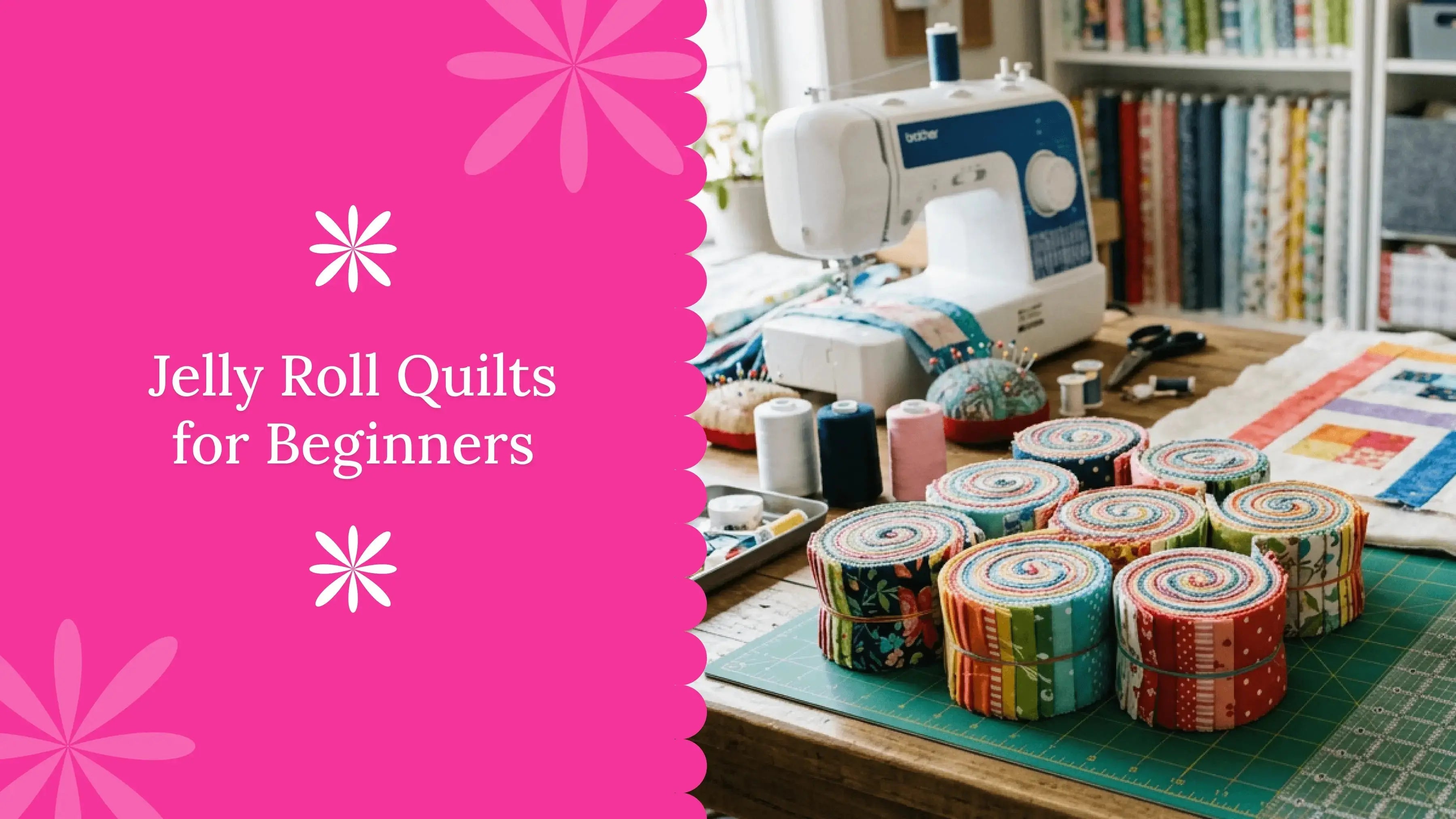
Jelly rolls are pre-cut fabric bundles. They give quilters a ready-to-use collection of coordinated prints and colors. The result? You spend less time at the cutting mat and far more time creating.
In this comprehensive guide, we'll explain exactly what jelly roll fabrics are. We tell you how much fabric is included in a typical roll. We also share why they have become a popular choice for quilters. Finally, we explore beginner-friendly quilt patterns and share practical tips. With this, you can make the most of your upcoming projects.
What Is a Jelly Roll in Quilting?

A jelly roll is a factory-bound, pre-cut bundle of jelly roll material consisting of strips sliced cleanly from selvage to selvage. Because the strips are already cut to standard size, quilters can begin piecing projects almost immediately.
Typical Features of a Standard Jelly Roll
-
The Width: Every single strip is precisely cut to 2.5 inches wide.
-
The Quantity: A standard bundle contains 40 to 42 fabric strips.
-
The Curation: The strips are pulled directly from a curated collection designed by a textile artist.
Instead of hunting through a store trying to guess if a specific floral print matches a geometric dot, the manufacturer handles the color theory for you. The prints, tones, and scales are pre-coordinated. With that, quilters can expect their finished quilt tops to be beautifully harmonized.
How Many Yards of Fabric Are in a Jelly Roll?
You might look at it and wonder: Exactly how many yards in a jelly roll anyway? Will this actually build a whole blanket?
A standard jelly roll with 40 strips is equivalent to 2.5 to 2.75 yards of fabric. Each strip is 2.5 inches wide by the Width of Fabric (WOF), which is typically 44 inches.
Let’s break down the math:
40 Strips x 2.5” Wide = 100” of Fabric Width
100” Divided by 36” (1 Yard) = Approx. 2.75 Yards
For a beginner, this is a generous amount of usable material. If you buy 2.75 yards off a single bolt, you would only have 1 color to work with. If you want 40 different fabrics, you would have to buy a quarter-yard of 40 different bolts. This will cost a lot more money. Plus, it will leave you with tons of leftover waste.
A jelly roll gives you the ultimate variety pack while minimizing fabric waste. It’s the most economical way to get a designer look on your very first try.
Why Quilters Love Jelly Rolls

Pre-Cut Convenience
As mentioned, prep work is the most tedious part of quilting. Slicing dozens of long strips may lead to back pain and eye strain. With a jelly roll, you can start working right away. The cutting is already done with laser-guided machine accuracy.
Perfectly Coordinated Fabrics
Colors, prints, and scale can look very different once they're sewn into a finished project. Jelly rolls simplify the process for you.
Because the strips come from a single collection, they intentionally complement one another. Most rolls include a balanced mix of focal prints and supporting patterns. Quilters achieve a cohesive look with minimal effort.
Great for Fast Quilt Projects
Jelly rolls are built for speed. With the fabric strips already pre-cut, you can move straight into piecing and assembly. There is no need to spend time measuring and cutting fabric.
This makes jelly rolls ideal for quick projects. They work especially well for baby quilts, holiday gifts, charity projects, and weekend sewing sessions.
Easy Jelly Roll Quilt Patterns for Beginners

Jelly Roll Race Quilt
This is one of the most popular quilting projects. Rather than sewing individual blocks, you join the strips together into one continuous length. You also use a series of folds and seams to build the quilt top.
Because the construction process is straightforward, many quilters can complete the quilt top in a single day. It's definitely an easy jelly roll quilt pattern for beginners to try.
Strip Quilt Pattern
A strip quilt is exactly what it sounds like: fabric strips sewn together side by side to create the quilt top. The design is clean and modern.
This pattern is especially useful for practicing consistent seam allowances and improving sewing accuracy. With its simple layout, the fabrics themselves become the focal point of the finished quilt.
Rail Fence Quilt
This is a classic pattern that creates visual interest. The good news? It doesn’t require complicated piecing techniques.
The design is built by sewing several strips together, cutting them into blocks, and rotating those blocks to create different layouts.
Many beginners enjoy this pattern because it introduces basic block construction while remaining forgiving.
Jelly Roll Jam Quilt
This is another beginner-friendly pattern. It creates a traditional patchwork appearance using simple strip sets. The process involves sewing strips together, cutting them into sections, and arranging them into repeating blocks.
The finished quilt has the charm of a classic patchwork design without the extensive cutting and preparation. It's a great choice for baby quilts, lap quilts, and quick gift projects.
Here’s a quick summary of popular jelly roll quilt patterns:
|
Pattern Name |
Best For |
|
Jelly Roll Race Quilt |
Quick projects and first-time quilters |
|
Strip Quilt Pattern |
Practicing straight seams and modern designs |
|
Rail Fence Quilt |
Learning basic block construction |
|
Jelly Roll Jam Quilt |
Traditional patchwork with minimal cutting |
Best Jelly Roll Quilt Patterns to Try
Once you're comfortable with the basics, you'll discover just how versatile pre-cut fabrics can be. Here are some patterns to try:
-
Modern Quilt Layouts: Many modern quilt patterns combine jelly roll strips with solid fabrics to create contrast. The result is a contemporary look that highlights color, shape, and movement. These designs often feature simple geometric layouts.
-
Patchwork Quilts: Jelly rolls can be used to create classic patchwork quilts. By sewing strips together and cutting them into smaller units, quilters can quickly assemble traditional blocks. Examples include Nine-Patches, Four-Patches, and checkerboard designs.
-
Diagonal Strip Quilts: For a more dynamic look, some patterns arrange strips diagonally. The angled layout creates visual movement across the quilt. It also adds interest without requiring complex piecing skills.
Free Jelly Roll Quilt Patterns You Can Try
You don’t need to spend a fortune on pattern booklets to get started. There is a treasure trove of free jelly roll quilt patterns available online from quilting blogs, manufacturer websites, and independent vloggers.
If you're looking for beginner-friendly patterns, consider these:
-
Classic Jelly Roll Race Quilt: This project is widely available across dozens of YouTube channels. Its simple construction and quick assembly make it a favorite among new quilters.
-
Strip Ribbon Quilt: This uses carefully arranged fabric strips to create the illusion of woven ribbons flowing across the quilt top.
-
Scrappy Rail Fence Quilt: This Rail Fence variation embraces a more relaxed, scrappy appearance. It's an excellent project for using leftover strips and experimenting with color placement.
Whether you prefer printable PDF guides or step-by-step video tutorials, free resources can be a great way to build confidence.
Tips for Quilting with Jelly Rolls
Even with pre-cut fabric doing most of the work, a few time-tested strategies can elevate your project.
Here are some expert tips:
Mix Light and Dark Strips
A balanced quilt layout relies on contrast. When similar colors or values are placed next to each other, individual fabrics can lose visual impact.
Try alternating light, medium, and dark fabrics. This creates more definition between strips. Even simple layouts can look more polished when value contrast is used intentionally.
Pro Tip: Take a photo of your layout and use the black and white filter. Without color distractions, the layout is easier to assess. You can quickly see if the values are balanced.
Press Seams Carefully
Accurate pressing plays a major role in the finished appearance of a quilt. Rather than sliding the iron, use a pressing motion by placing the iron on the seam, lifting it, and moving to the next section.
Careful pressing helps prevent stretching and distortion, especially when working with long rows of fabric. It also improves seam accuracy and aligns blocks during assembly.
Pro Tip: Alternate the direction you sew adjoining rows. This helps balance the natural pull of the sewing machine and can reduce bowing across the quilt top.
Plan Your Layout Before Sewing

A planned layout allows you to evaluate color placement, fabric distribution, and overall balance before committing to seams. This step is especially useful when working with bold prints or varied color palettes.
Pro Tip: Step back several feet from your layout. Viewing the quilt from a distance often reveals color clusters, repeated prints, or uneven spacing that may not be obvious up close.
Choosing the Best Jelly Roll Fabrics
When comparing jelly rolls, pay attention to the fabric quality, color coordination, and overall consistency. A well-made jelly roll can make piecing easier. It also helps produce a more polished finished quilt.
The table below highlights a few key features worth looking for:
|
Feature |
What to Look For |
Why It Matters |
|
Fiber Content |
100% quilting cotton |
Durable, easy to sew, and suitable for most quilt projects |
|
Fabric Quality |
Tightly woven fabric with a smooth finish |
Reduces fraying, helps seams stay accurate |
|
Color Coordination |
Fabrics from a single collection or designer line |
Creates a cohesive, professional-looking quilt |
|
Print Variety |
A mix of focal prints, supporting prints, and basics |
Adds visual interest and balance to the design |
|
Consistent Cutting |
Uniform strip widths throughout the roll |
Improves piecing accuracy and assembly |
Practical tip: If you're buying your first jelly roll, pick from an established quilting fabric store. The consistent quality and coordinated fabrics often make the quilting process more enjoyable.
Frequently Asked Questions About Jelly Roll Quilts
What size quilt can you make with one jelly roll?
A standard jelly roll typically contains enough fabric to create a baby quilt, crib quilt, or lap throw. Many projects fall within the 50” x 60” range. For larger quilts, combine multiple jelly rolls or add coordinating yardage to expand the design.
Are jelly roll quilts good for beginners?
Yes. Jelly rolls simplify one of the most time-consuming parts of quilting. They eliminate much of the measuring and cutting. This allows beginners to focus on sewing consistent seams, pressing accurately, and assembling blocks. They're also a great way to build confidence while completing a project more quickly.
Do jelly rolls save time when quilting?
Absolutely. Because the strips are pre-cut and coordinated, the prep work is already done. Instead of spending hours cutting fabric, quilters can move directly into piecing and assembly. This makes jelly rolls especially useful for quick projects and weekend quilting sessions.
Can you mix jelly rolls from different collections?
Yes, provided the fabrics have similar weights and quality. Mixing collections can create a personalized look while expanding your color and print options. Many quilters enjoy combining complementary collections to add greater variety and visual interest to their projects.
Final Thoughts: Why Jelly Roll Quilts Are Perfect for Beginners
Jelly roll quilts make quilting more approachable by simplifying fabric selection. With pre-cut, coordinated strips ready to use, quilters enjoy the convenience of spending more time sewing. They're definitely an excellent choice for beginners learning foundational skills.
That said, jelly roll quilts remain a favorite among experienced quilters. From simple strip quilts to more intricate designs, jelly rolls provide countless opportunities for creativity.
Whether you're making your first quilt or looking for a faster way to start your next project, jelly rolls offer a practical and enjoyable path from fabric to finished quilt. Pairing them with high-quality quilting fabrics can help ensure beautiful results that you'll enjoy for years to come.