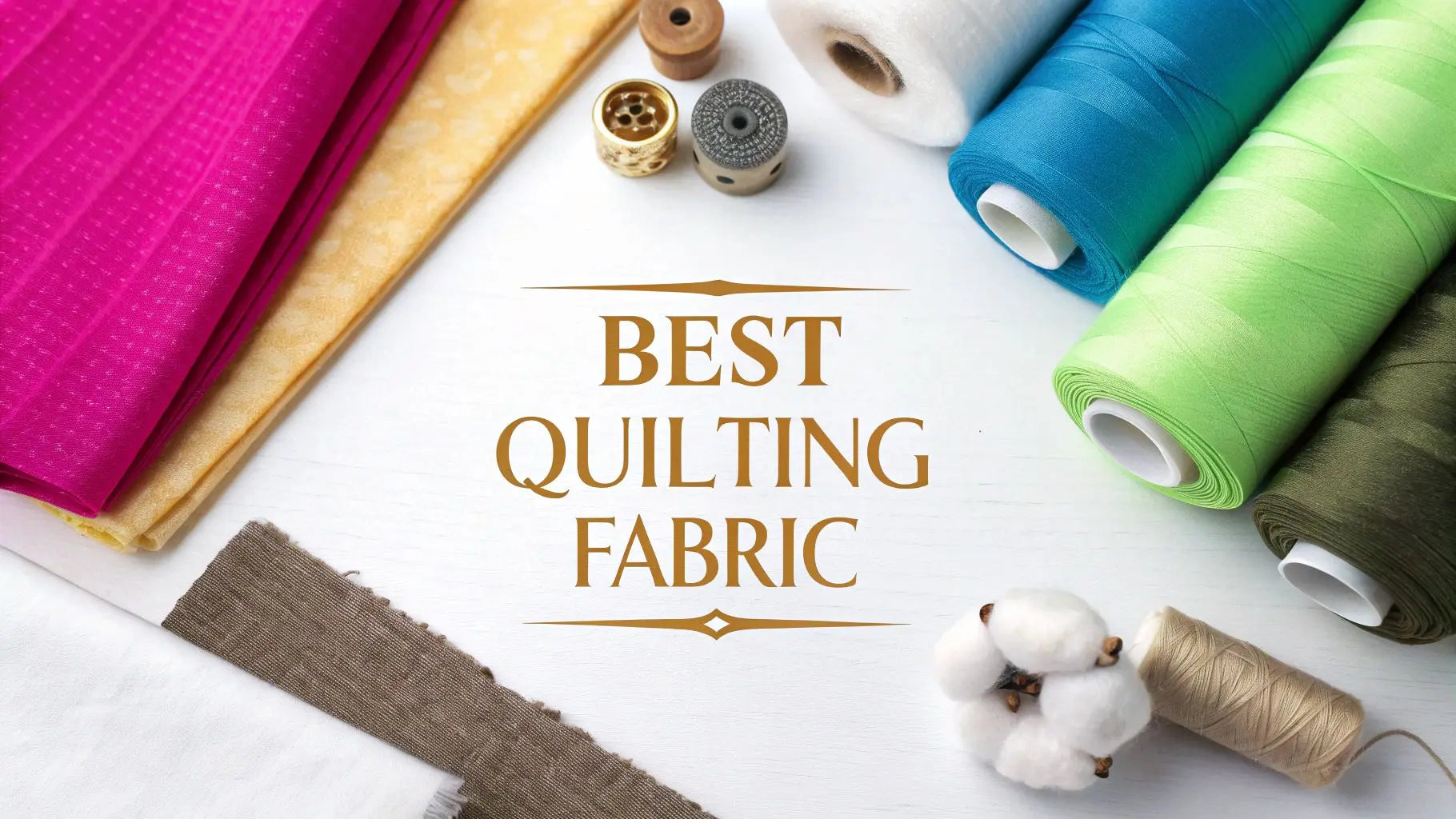
If you ask a dozen seasoned quilters what the absolute best quilting fabric is, you’ll likely get the same answer time and time again: high-quality, 100% quilting cotton. From your very first nine-patch to a complex, prize-winning heirloom, its stability, endless color options, and forgiving nature make it the undisputed champion for any quilting project.
Your Guide to Choosing the Perfect Quilting Fabric
Welcome to the wonderful, creative world of quilting! That first decision you make—choosing your fabric—is truly the first stitch in what will become a beautiful and lasting creation. Think of your fabric like the foundation of a house. The better the materials you start with, the stronger and more beautiful the final quilt will be. This guide will take the mystery out of fabric selection and give you the educational foundation to confidently start your project.
Picking the right material is so much more than just finding a pretty pattern. It has a real, tangible impact on every step of the quilting process and, most importantly, the quality of your finished quilt. When you're ready, Linda's has all the premium fabrics you need to bring your project to life.
Why Your Fabric Choice Matters
The fabric you choose influences everything—from how accurately you can cut your pieces to the final drape and feel of the quilt. High-quality fabric is your best friend for achieving strong seams, sharp points, and a quilt that can stand up to years of cuddles and washes. Investing in good fabric isn't just a matter of preference; it's a critical step toward creating a beautiful, durable quilt you can be truly proud of.
This is especially true when you're just starting out. Beginning with a stable, predictable fabric like 100% quilting cotton is the best way to build confidence. It lets you master the fundamentals of cutting and piecing without having to fight a fussy, difficult material. A great way to see this in action is to start with a simple project, like one from our guide to basic quilting patterns, which are designed to work perfectly with standard quilting cottons.
The Foundation of a Great Quilt
So, what makes 100% quilting cotton the gold standard? It all comes down to how it's made. Its medium weight and tight, even weave give it several key advantages that quilters love:
- Stability: It holds its shape beautifully while you cut and sew, which is absolutely essential for accurate patchwork. No stretching or warping here!
- Durability: It's tough enough to handle dense machine quilting and countless trips through the washing machine without fraying or falling apart.
- Ease of Use: It presses like a dream, making it so much easier to get those perfectly flat seams and crisp, sharp points that make a quilt look professional.
You're part of a huge, passionate community! The quilting industry brings in nearly USD 5 billion a year. That shared passion drives the demand for reliable, top-notch materials, and cotton consistently tops the list because of its unmatched performance. You can learn more about quilting market trends in this insightful 2025 industry report.
At the end of the day, a successful and joyful quilting journey starts with the right materials. By understanding what makes a fabric great, you can walk into Linda's amazing collection with confidence and choose the perfect options to start your next cherished heirloom. Let's get this creative journey started together.
Exploring Common Types of Quilting Fabric
Walking into Linda's can be an inspiring experience, but the bolts of color and texture can also feel a little overwhelming. Each one seems to have its own personality, but not all fabrics are created equal, especially when it comes to the beautiful, precise art of quilting.
Think of this section as your personal fabric guide. We'll walk through the materials you'll see most often, from the tried-and-true classics to some fun alternatives. Picking the right fabric is a huge first step—it affects how you cut, how you sew, and how your finished quilt feels and lasts.
The Gold Standard: Premium Quilting Cotton
If there's one true superstar in the quilting world, it’s premium quilting cotton. This isn't your average, everyday cotton. It's a specific medium-weight, plain-weave fabric designed to handle everything a quilter throws at it.
Imagine it's the perfect artist's canvas. It’s stable, so your carefully cut pieces won’t stretch or warp out of shape. That stability is the secret to getting those crisp, clean points and perfectly matched seams we all strive for. It’s hands-down the best quilting fabric for both beginners and seasoned pros.
There's a reason cotton is king. It's reliable, easy to work with, and gives a beautiful, professional finish every time. The numbers don't lie, either. The global quilt market was valued at around USD 5.61 billion in 2025, and cotton quilts make up a staggering 42.7% of that pie. It just goes to show how much we all trust cotton to get the job done right. You can dive deeper into these numbers in this detailed quilt market analysis.
This simple map shows just how foundational good cotton is to a successful project.
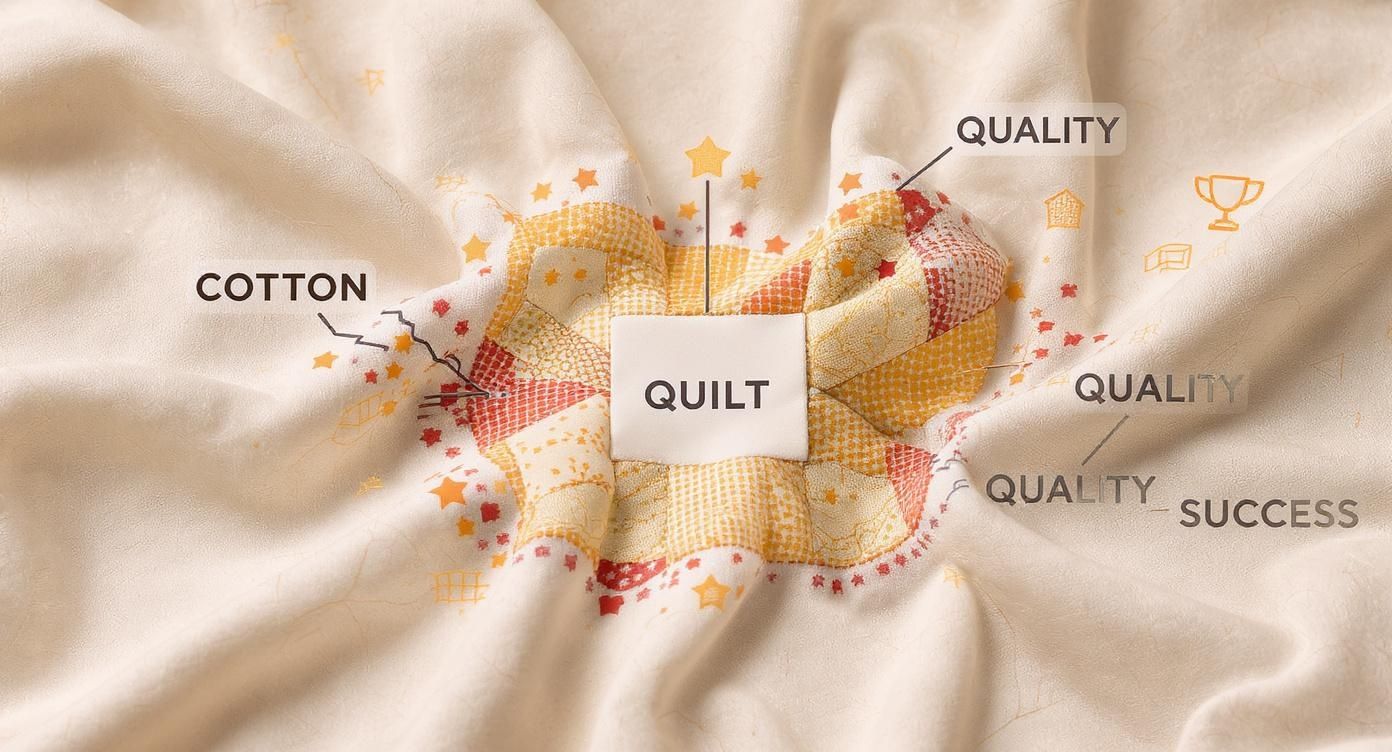
As you can see, starting with high-quality cotton puts you on a direct path to a quilt you'll be proud of.
Other Popular Fabric Choices
While quilting cotton is the reigning champ, don't be afraid to mix things up! Other fabrics can bring wonderful new textures and a unique feel to your quilts. Stepping outside the box is how we grow as artists.
- Flannel: Oh, the softness! Flannel is a go-to for anything you want to be extra cozy, like baby quilts or a warm quilt backing. It's a brushed cotton, which gives it that signature fuzzy texture. Just keep in mind it tends to fray more than standard cotton and shrinks a bit more, too.
- Batiks: These are pure works of art. Batiks are made with a wax-resist dyeing technique that creates stunning, deeply saturated colors and one-of-a-kind patterns. They also have a higher thread count, giving them a silky, crisp hand. Bonus: they barely fray at all, which is a dream to work with.
- Lawn and Voile: These are the lightweights of the cotton family. They're silky-soft with a gorgeous, delicate drape. They can be a tad slippery under the needle, but they are absolutely perfect for adding a touch of elegance, especially in appliqué or for quilts that need a softer, less structured feel.
Quick tip from one quilter to another: If you're mixing different types of fabric in one quilt, always pre-wash them! Different materials shrink at different rates, and pre-washing prevents your quilt top from puckering up after its first wash.
A Quick Comparison of Quilting Fabrics
To make things even easier, here’s a handy little table to help you see the differences at a glance. Think of it as a cheat sheet for your next fabric shopping trip to Linda's.
Here's how some of the most common quilting fabrics stack up against each other.
Comparison of Common Quilting Fabrics
| Fabric Type | Fiber Content | Best For | Handling Tips |
|---|---|---|---|
| Quilting Cotton | 100% Cotton | All-purpose quilting, from intricate piecing to appliqué. It is ideal for beginners and experts alike. | Very stable and easy to handle. Presses crisply and holds its shape well during cutting and sewing. |
| Flannel | 100% Cotton (Brushed) | Creating extra-warm and soft quilts, such as baby blankets or cozy lap quilts for winter. | Pre-wash is essential due to high shrinkage. Use a walking foot to prevent layers from shifting while sewing. |
| Batiks | 100% Cotton | Projects requiring vibrant, saturated colors and minimal fraying. Excellent for detailed appliqué work. | The tight weave requires a sharp, new needle. Use a fine-point pin to avoid leaving permanent holes. |
| Lawn / Voile | 100% Cotton | Adding a delicate, lightweight element to quilts or for creating quilts with a soft, vintage drape. | Starch before cutting to add stability. Handle gently to avoid stretching the fabric out of shape. |
Knowing these little details helps you make smarter choices that match your creative vision. Whether you stick with classic quilting cotton or get adventurous with the rich colors of batiks, you're now set up for success. To get your hands on some of these beauties, check out the amazing fabric collections at Linda's and find the perfect material for your next masterpiece.
Recognizing the Qualities of High-Quality Fabric
So, what really separates a decent piece of fabric from the best quilting fabric? It’s more than just a brand name on the bolt. The answer is in qualities you can actually see and feel. Learning to spot these tells is a lot like a chef learning to pick the freshest produce—it’s a hands-on skill that takes your finished quilt from just "good" to absolutely unforgettable.
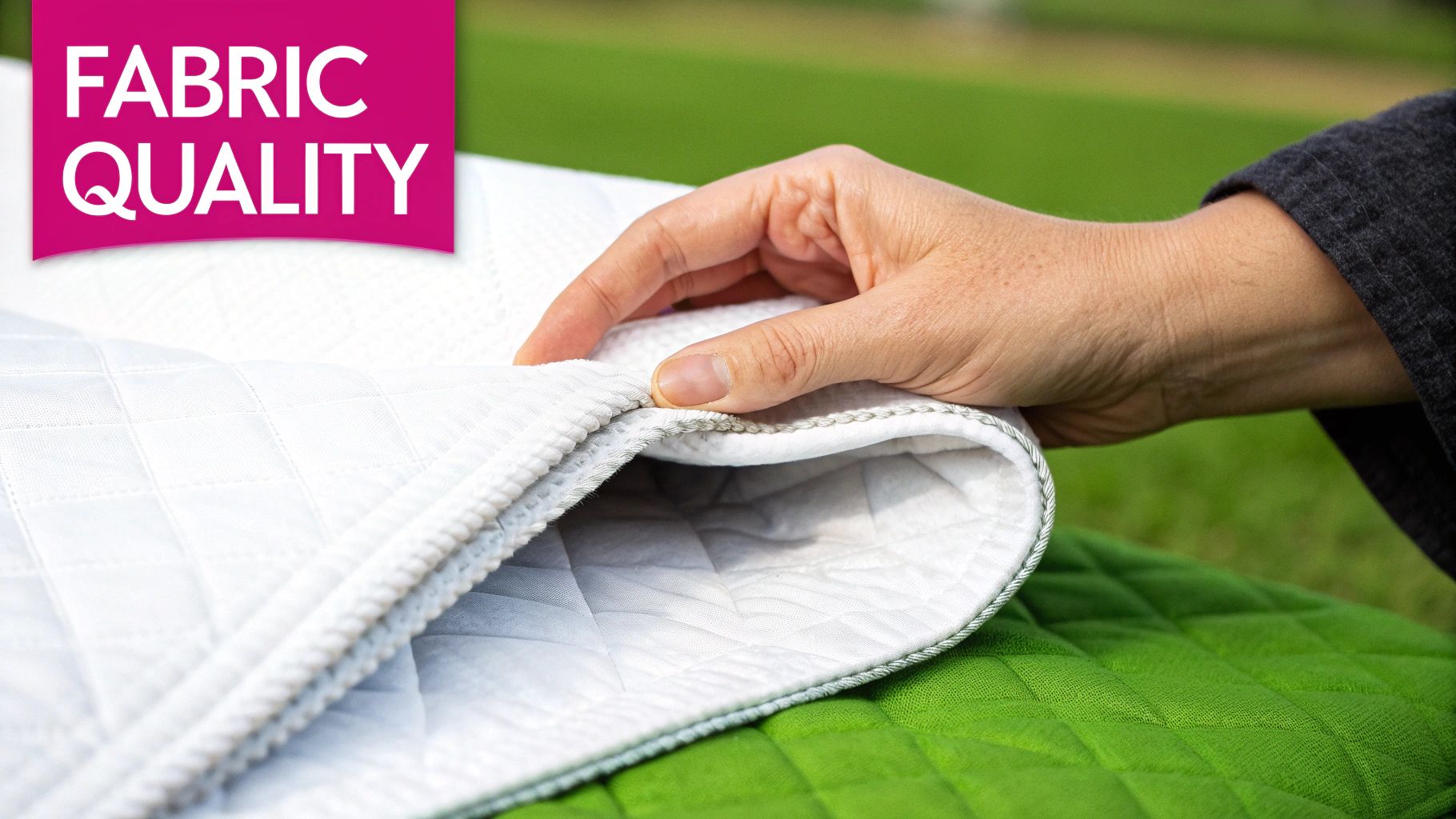
When you’re at Linda's, surrounded by rows of beautiful fabric, your own senses are your most reliable tools. Just picking up a fabric and paying attention to how it feels tells you so much about its quality. This is where you start. It’s the first step in making sure your quilt becomes a true masterpiece.
The Importance of Weave and Thread Count
A fabric's weave is its skeleton. For quilting, you’re looking for a tight, even weave where the threads are packed closely together. Think of it like a finely crafted basket versus a loose, flimsy one. The tight basket is stronger, holds its shape, and is built to last. Same goes for your fabric.
This density comes down to thread count, which is just the number of threads per square inch. You don't need to get hung up on a specific number, but a higher thread count almost always means a smoother, silkier feel and a much sturdier fabric.
A loose weave is a big red flag. It’s a nightmare for fraying, and your seams can pull apart under tension as you quilt. To check it yourself, hold a single layer of the fabric up to the light. If you can easily see through it and pick out individual threads, it’s probably not going to hold up. The best stuff will be almost opaque, telling you it has that dense weave you need.
Performing the 'Feel Test'
Your sense of touch will never steer you wrong. When you run your hand across a high-quality quilting cotton, you'll immediately notice a few key things.
A quick "feel test" right here in the store can tell you everything:
- Smoothness: Great fabric feels smooth and soft, never rough or scratchy. That feeling comes from the long, high-quality cotton fibers used to make it.
- Weight: It should have some real substance to it, a bit of heft. Flimsy, feather-light fabric is a classic sign of a low thread count and a short lifespan.
- Drape: When you unroll a bit from the bolt, it should have a crisp but flexible drape. If it feels stiff and papery, walk away. That crispness is what makes it a joy to cut and press with precision.
Choosing a fabric with a good "hand"—how it feels—isn't just a luxury. It’s a practical decision. It means your seams will hold for decades, your points will line up perfectly, and your finished quilt will hang and feel beautiful.
Assessing Dye Quality and Colorfastness
There’s nothing worse than pulling your finished quilt from its first wash to find that your vibrant red has bled all over your crisp white. It's a quilter's heartbreak. This is why colorfastness—the dye's ability to stay put—is so incredibly important.
High-quality fabrics from brands we trust use superior dyes that are properly set during manufacturing. Cheaper fabrics often cut corners on this step, leaving excess dye that’s ready to run at the first sign of water. While pre-washing is always a smart move, starting with well-dyed fabric is your best line of defense.
Look for deep, rich colors that are totally consistent across the bolt. If the color looks patchy or faded in spots, it could be a sign of a poor dye job. You’re pouring your time and heart into this project; your fabric should honor that effort. And remember, pairing it with the right thread is just as vital. You can learn more in our helpful sewing thread size guide.
By training your senses to spot these signs of quality, you can walk into Linda's and confidently choose materials that won’t just look amazing, but will ensure your quilt becomes a treasured heirloom for years to come.
How to Prepare Fabric for Quilting Success
The road to a beautiful quilt starts way before you even think about making your first cut. Getting your fabric ready is that secret handshake among experienced quilters—it’s what sets the stage for crisp, accurate piecing and a quilt that lasts a lifetime.
Ask any group of quilters if they pre-wash their fabric, and you're bound to start a lively conversation. It’s one of the great debates in our world! There are quilters who swear by it and others who wouldn't dream of it. The truth is, there’s no single right answer; it really boils down to your project, your fabrics, and your personal preference.
The Great Pre-Washing Debate
So, why bother with that extra step? Pre-washing does a few important things. It preshrinks your fabric, which is a lifesaver if you're mixing different materials like cotton and flannel that shrink at different rates. It also washes out any extra dye that might otherwise bleed and ruin your masterpiece, not to mention getting rid of any chemicals left over from the manufacturing process.
On the flip side, there’s a good reason many quilters skip the wash. Fabric straight off the bolt has a certain crispness to it, thanks to the sizing applied by the manufacturer. This stiffness makes for incredibly precise rotary cutting and can help keep your pieces from stretching out of shape as you sew.
To wash or not to wash? It's all about trade-offs. If you’re working with bold reds, deep navies, or any other saturated color, pre-washing is your best insurance against bleeding. But if you adore that slightly crinkled, vintage look, skipping the wash will give your quilt that beautiful texture after its first trip through the laundry.
It's clear that quilting is more popular than ever. The global market for cotton quilting fabric is expected to reach an incredible USD 2.5 billion by 2025! This boom means there are more resources and communities out there to help you nail these techniques. You can learn more about the industry's growth in this in-depth market forecast.
Step-by-Step Fabric Preparation
If you've decided to pre-wash, a little care goes a long way. You want clean, pre-shrunk fabric—not a tangled, frayed mess.
- Test for Bleeding: Got a fabric you’re nervous about? Snip a small piece and soak it in hot water with a scrap of white fabric. If the white scrap picks up any color, you’ll know that fabric needs to be washed on its own.
- Protect the Edges: Before tossing your fabric in the machine, either snip off the corners or run a quick zig-zag stitch along the raw edges. This tiny step makes a huge difference in preventing fraying.
- Wash Gently: Use a delicate cycle with cool water and a gentle detergent. For peace of mind, throw in a color catcher sheet—available at Linda's—to grab any runaway dye.
- Dry with Care: Tumble dry on low and pull the fabric out while it's still a little damp. Trust me, this makes ironing so much easier.
Pressing for Perfect Accuracy
Whether you pre-washed or not, pressing your fabric is a non-negotiable step. Think of it as creating the perfect canvas. A smooth, flat piece of fabric is the foundation for accurate cuts and perfectly aligned seams.
The trick is to press the fabric while it’s still slightly damp. If it’s already bone dry, just spritz it with a little water or a spray starch alternative. Use a hot, dry iron set to the cotton setting, and keep it moving to prevent any scorching. Once it's perfectly flat, you're ready to go! Of course, you need to make sure you have enough fabric to begin with; check out our guide on how to calculate fabric yardage to plan ahead.
Taking the time to prep your materials isn't a chore—it's an investment in the quality and beauty of your finished quilt. Find all the notions you need for perfect fabric prep at Linda's.
Matching the Right Fabric to Your Project
Alright, you've learned how to spot quality fabric from across the room. Now for the really fun part: pairing that perfect material with your creative vision.
Let's be honest, the best quilting fabric for a cozy baby quilt probably isn't the right choice for a detailed wall hanging. Matching the fabric to the project's final destination is the secret sauce for making a quilt that’s not just beautiful, but also perfectly functional.
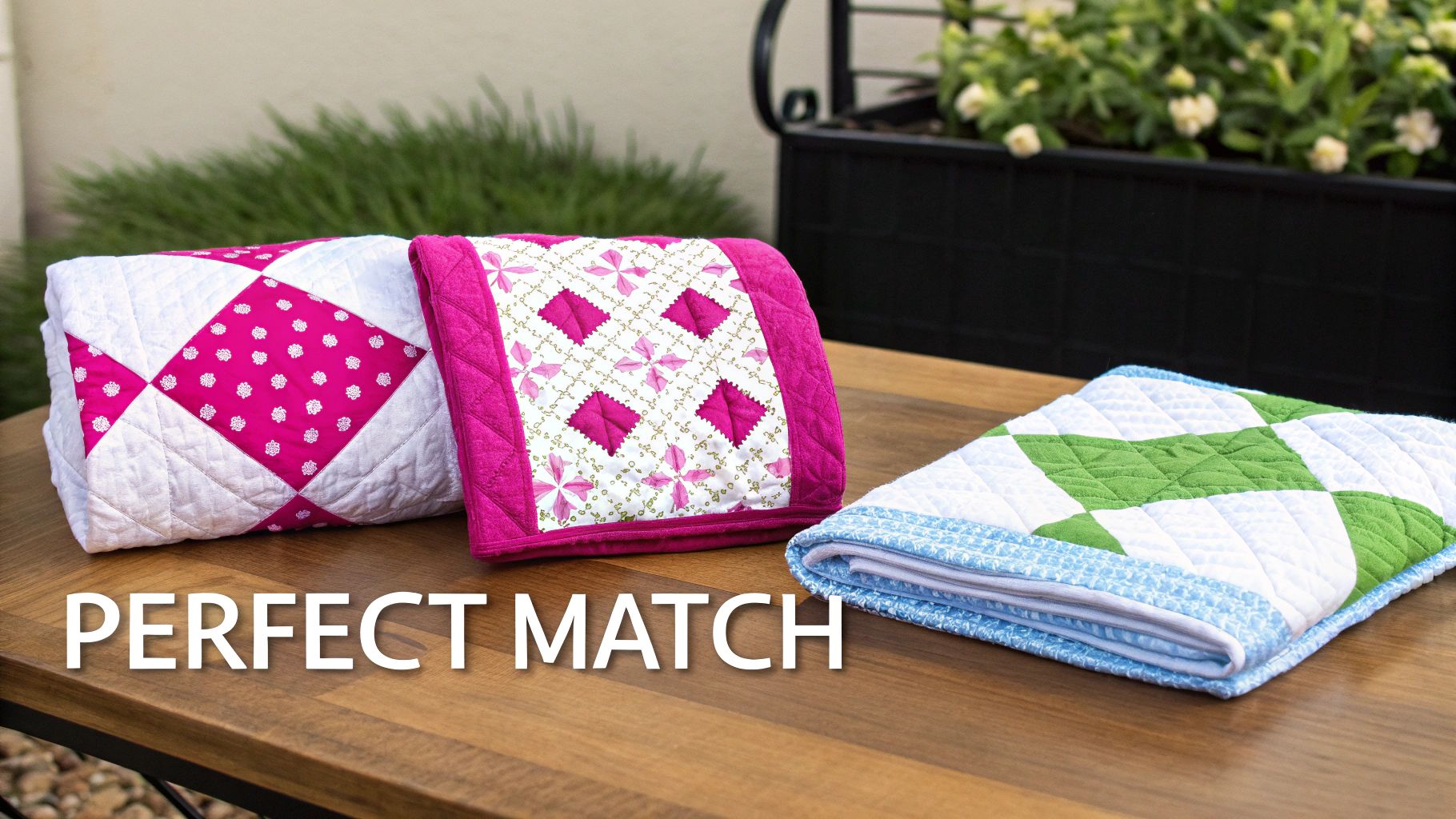
This is where your knowledge truly comes to life. Thinking about how the quilt will be used, who it's for, and the complexity of your pattern helps you make smart choices that guarantee a great result. It's time to move from theory to practice and create something truly special.
Traditional Patchwork and Bed Quilts
For quilts destined for a bed, durability and easy care are your absolute top priorities. These are the quilts that will be loved, used, and tossed in the wash for years to come. That makes 100% premium quilting cotton the undisputed champion.
Its sturdy, tight weave can handle the daily grind, and it holds up beautifully through countless laundry cycles. The fabric's stability is also a quilter's best friend for classic patchwork, where getting those precise points and aligned seams just right is everything. A well-made cotton quilt is an heirloom in the making.
Modern and Minimalist Designs
Modern quilting often leans into bold geometry, negative space, and super clean lines. While quilting cotton is still an excellent choice here, this is a great place to experiment with fabrics that have a bit more structure, like cotton poplin.
Poplin’s crisp hand and slightly denser feel can really make those sharp angles pop, giving your minimalist design a wonderfully clean finish. Its smooth surface also provides a fantastic canvas for intricate machine quilting, allowing your stitch work to stand out against solid colors.
The ultimate goal is to create a quilt that serves its purpose perfectly. A decorative piece can afford to be delicate, but a quilt meant for cuddling needs to be tough enough to withstand a lifetime of love and laundry.
Thinking about what's inside your quilt is just as crucial as the fabric on the outside. The right batting will complement your fabric choice and the quilt's intended use. For a deep dive, check out our complete guide to batting choices for the passionate quilter.
Art Quilts and Wall Hangings
When your quilt is destined for the wall, the rulebook gets a lot more flexible. Since these pieces won't see the inside of a washing machine or get dragged around the house, you have the freedom to play with more delicate and luxurious fabrics.
This is the perfect chance to bring in materials that add unique texture and sheen:
- Silk: Offers an unmatched luster and vibrant color depth, perfect for creating a stunning focal point.
- Linen: Provides a beautiful, slightly rustic texture that adds dimension and a sophisticated feel.
- Cotton Lawn or Voile: These lightweight cottons have a soft, silky drape that is ideal for intricate appliqué or creating a delicate, ethereal look.
These specialty fabrics can elevate a beautiful quilt into a breathtaking work of art. Linda's offers a curated selection to inspire your next masterpiece.
Baby Quilts and Memory Quilts
For baby quilts, softness and safety are everything. You need a fabric that is gentle against a baby's sensitive skin, breathable, and completely machine washable. Organic quilting cotton and soft, cozy flannel are both fantastic choices here.
Memory quilts, which are often made from clothing, require a whole different strategy. The key here is stabilization. T-shirt knits, silks, and other apparel fabrics will stretch all over the place if you're not careful. You’ll need to back them with a lightweight fusible interfacing to prevent this. This gives them the stability of quilting cotton, allowing you to piece them together accurately and create a lasting tribute. Find all the interfacing you need at Linda's.
To help you get started, here's a quick-reference guide for matching fabrics to some common quilt projects.
Fabric Recommendations by Project Type
| Quilt Project Type | Primary Fabric Recommendation | Secondary Fabric Options | Key Consideration |
|---|---|---|---|
| Bed Quilts | 100% Premium Quilting Cotton | Cotton Blends, Flannel | Durability and machine washability are non-negotiable. |
| Modern Quilts | Cotton Poplin, Solid Cotton | Chambray, Linen Blends | A crisp hand helps define sharp geometric lines and negative space. |
| Art Quilts | Silk, Linen | Cotton Voile, Lawn | Focus on texture, sheen, and visual interest over durability. |
| Baby Quilts | Organic Cotton, Flannel | Minky, Cotton Lawn | Softness, breathability, and non-toxic materials are paramount. |
| Memory Quilts | Stabilized T-Shirt Knits | Stabilized Silks, Denim | Must use interfacing to prevent stretching and ensure accurate piecing. |
Choosing the right fabric is one of the most exciting parts of the quilting process. It’s where your unique style starts to take shape and your project truly begins.
Bringing Your Beautiful Quilt to Life
And there you have it! You’re officially ready to walk into any fabric shop and confidently choose the perfect quilting fabric for whatever project you’re dreaming up. We’ve covered everything from fiber types and spotting quality to prepping your fabric and matching it to your unique vision.
The biggest takeaway? The fabric you choose is the very heart of your quilt. It’s the foundation for every single stitch. Picking the right material honors all the time, effort, and creativity you pour into your work, ensuring your quilt will be loved for generations.
A gorgeous quilt top is only half the story. The thread you choose is just as critical in holding your masterpiece together. Selecting the right weight and fiber ensures your seams are strong and your quilting stitches enhance your design.
Now comes the best part—putting all this knowledge to work and letting your creativity run wild! As you start planning your next quilt, remember that the right fabric and thread make all the difference. To nail that perfect pairing, check out our guide on choosing the best thread for quilting.
We’d love for you to come visit us at Linda's and feel the difference that high-quality fabric makes. Our team is always here, ready and excited to help you find exactly what you need to bring your masterpiece to life.
Happy quilting
Your Quilting Fabric Questions, Answered
Once you start diving into the world of quilting fabrics, a few questions always pop up. It's totally normal! We've all been there. To help you build that quilter's intuition, here are some straightforward answers to the questions we hear most often.
Think of this as getting advice from a seasoned quilting friend. We're here to demystify the process so you can choose the best quilting fabric with total confidence for your next project at Linda's.
Can I Mix Different Types of Fabric in One Quilt?
You absolutely can! In fact, mixing textures can lead to some stunning results. But, it does require a little bit of know-how before you start cutting.
The biggest hurdle is that different fabrics—like a sturdy cotton and a cozy flannel—shrink at different rates. If you don't account for this, you could end up with a puckered, wonky quilt after its first wash. The secret? Pre-wash all your fabrics before a single cut is made. If you're just starting out, sticking to 100% quilting cotton for the whole project is the easiest path to a beautifully flat finish.
How Do I Know How Much Fabric to Buy?
Your quilt pattern is your best friend here. A well-designed pattern will always include a detailed materials list, telling you exactly how much yardage you need for every part of your quilt—the top, the backing, and the binding.
Here’s a pro tip: always buy a little extra. Grabbing an additional 1/4 to 1/2 a yard more than the pattern suggests is a smart move. This little bit of "insurance fabric" has you covered if a cutting mistake happens or if your fabric shrinks a bit in the pre-wash.
Trust me, spending a few extra dollars on fabric upfront is way better than the panic of realizing you're short a few inches right at the finish line. It’s a simple trick that saves a ton of stress.
What Is the Difference Between Quilting Cotton and Regular Cotton?
This is a great question, and the difference is huge! While they might look similar on the bolt, quilting cotton is engineered specifically for what we do. It has a much higher thread count and a tight, firm weave that you won't find in regular apparel cotton (like broadcloth).
That dense construction is what makes quilting cotton so durable and resistant to fraying. It gives the fabric a stable, crisp hand that’s a dream to cut and sew with precision. Regular cotton is usually lighter and has a looser weave, designed to drape nicely for clothing, not hold the crisp points of a quilt block.
Why Is Some Quilting Fabric More Expensive?
You've probably noticed that prices can vary quite a bit. It really comes down to quality and artistry. The price tag reflects everything from the grade of the raw cotton fibers and the density of the weave to the complexity of the print and the designer's name.
Higher-end fabrics use premium, colorfast dyes and often feature intricate, multi-layered designs that are more expensive to produce. While there are great budget-friendly options out there, investing in quality fabric means you're investing in your quilt's future. It ensures your hard work will hold up to years of snuggles and washing, preserving the time and love stitched into every seam.
You're now armed with the knowledge to walk into any fabric shop and choose your materials like a pro! For an incredible selection of top-quality quilting cottons, notions, and more for your next project, come see what we have at Linda's Electric Quilters.
Start Your Next Quilting Project with Fabrics from Lindas.com