

A standard quilting cotton bolt typically costs between $120 and $510 in 2026, before discounts, shipping, taxes, and clearance pricing. The true cost depends on the bolt's actual linear yardage, usually 15 to 30 yards, and its usable width.
The popular advice, “just compare the price of one bolt,” will mislead you. A bolt is packaging terminology, not a universal quantity. For a quilter or longarm professional, the useful question is how much usable fabric are you getting for each dollar after selvedge waste, shrinkage, pattern matching, and the extra fabric needed to load a backing squarely on a frame?
The Truth About Fabric Bolt Pricing
A standard quilting cotton bolt commonly measures 15 to 30 linear yards and is usually 44 to 45 inches wide. Representative retail pricing runs around $8 to $12.50 per yard, while premium independent-fabric listings commonly reach approximately $12 to $17 per yard. That produces an estimated bolt value of about $120 to $255 for a 15-yard bolt and $240 to $510 for a 30-yard bolt, before discounts, shipping, taxes, or clearance pricing. See the fabric-width and yardage pricing guide for the underlying retail benchmarks.
That range is wide because “bolt” doesn't tell you how much fabric is present. A $100 bolt could equal about $6.67 per yard at 15 yards, but only $2.50 per yard at 40 yards, so the total price alone can make an ordinary deal look exceptional. The correct calculation is:
Total bolt price ÷ actual linear yardage = effective price per yard
Even that calculation isn't enough for longarm work. A 44-inch quilting cotton has less usable cutting width after removing selvedges, while a wide backing may provide more coverage across the quilt even when its linear yardage is shorter.
Practical rule: Treat “bolt” as a roll format. Treat the bolt-end label as the purchasing specification.
This is similar to comparing other packaged goods by quantity rather than appearance. If you're budgeting for formalwear alongside a quilt project, a full guide on gown costs is useful for the same reason, it separates the package from the actual components and pricing factors.
For Linda's Electric Quilters customers, the sensible starting point is to check the premium quilting cotton category, then compare the listed yardage, width, fiber content, and price per yard before adding anything to the cart.
Decoding Bolt Yardage and Width Standards
Historically, fabric bolts have never followed one global standard. Traditional references commonly associate a bolt with 40 or 100 yards, while canvas has traditionally been sold in bolts of about 39 yards. Modern commercial fabric may still appear in put-ups of roughly 40 to 100 yards, but quilting cotton follows a more practical retail pattern, usually around 15 to 30 yards. The difference comes from fabric category, supplier packaging, weight, and intended use, not from a change in how shoppers calculate price.
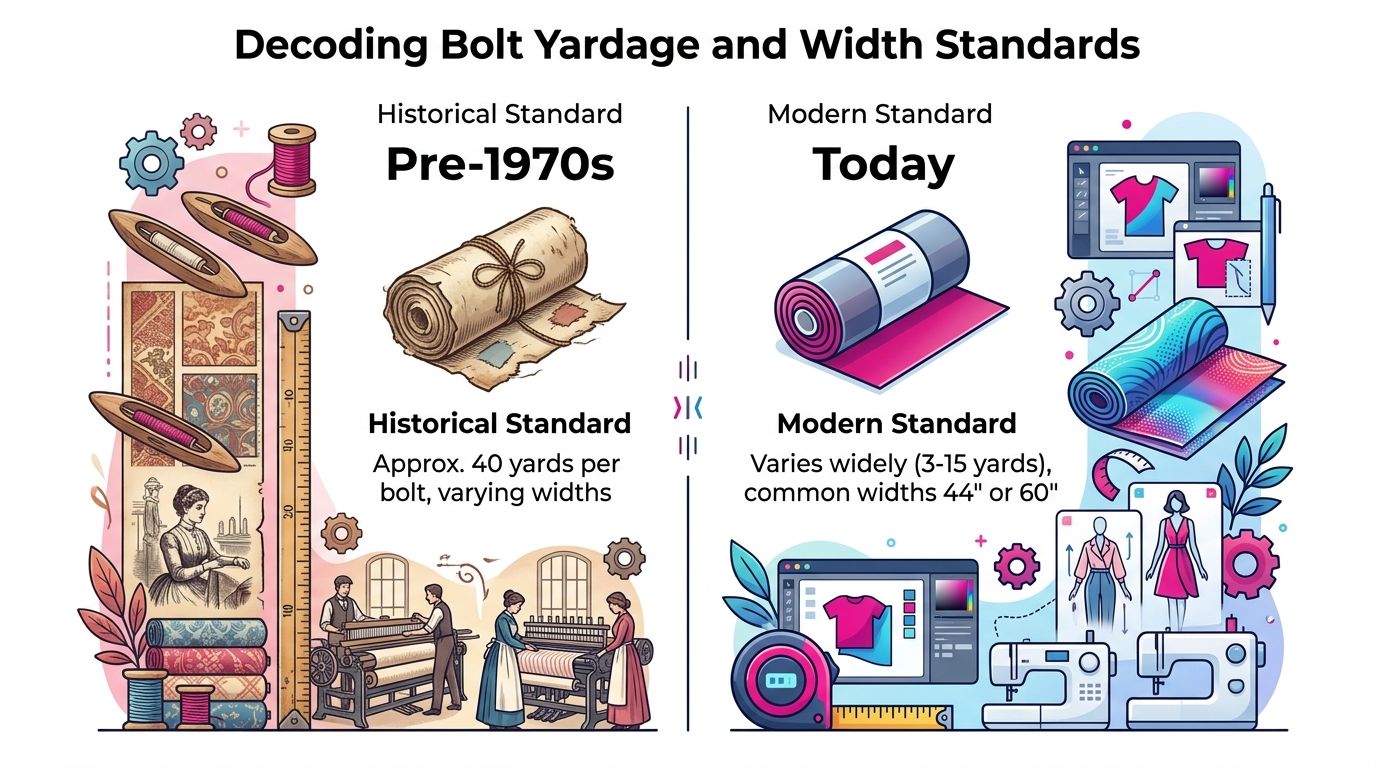
Length is only half the measurement
Quilting cotton is commonly 44 to 45 inches wide, or approximately 112 to 115 centimeters, according to the quilting fabric yardage reference. A practical 15-to-30-yard bolt therefore contains roughly 660 to 1,350 square feet of nominal fabric, before accounting for selvedges, defects, or unusable sections.
That nominal area isn't the same as cutting area. The selvedge is the finished edge along the length of the cloth. It may include printing, pinholes, distortion, or a tighter weave, so strip sets and large backing panels generally use the interior width rather than the full edge-to-edge measurement.
A 20-yard bolt of 44-inch fabric provides about 24.4 square yards of nominal surface area, but the effective cutting width is lower after removing selvedges. A 100-yard bolt at 45 inches wide, by contrast, represents about 125 square yards of nominal material. Those rolls aren't comparable just because both are called bolts. The fabric bolt size overview explains why length and width must be checked together.
Wide backing changes the calculation
A 108-inch backing fabric isn't packaged like ordinary quilting cotton. Its width can eliminate seams in projects that would otherwise require joined panels, but shoppers shouldn't assume the same bolt length, fold, or usable width. A wider fabric can deliver more square footage per linear yard while still arriving in a shorter roll.
Our team in McKinney, Texas, approaches a longarm backing by checking the grain, the folded width, and the available continuous length before considering the price. A loose selvedge or skewed roll can create loading problems, uneven tensioning, and avoidable trimming.
Watch the embedded tutorial before ordering a large roll, especially if you're deciding between standard-width pieced backing and a wide backing:
If your next quilt needs fewer seams and cleaner loading, browse the wide-backing fabric collection and compare usable width rather than board size.
Calculating Your True Cost Per Usable Yard
The most useful figure for a production quilter is often price per usable square yard, not the advertised bolt price. Start with the seller's exact linear yardage and listed width. Then subtract the portion you won't use because of selvedges, damaged sections, crooked grain, pattern repeats, or cutting layout.
The basic process is straightforward:
- Confirm the bolt length. Use the exact continuous yardage on the product listing or bolt-end label.
- Confirm usable width. Measure from selvedge to selvedge, then allow for the interior cutting width.
- Calculate nominal area. Multiply linear yards by width in yards.
- Deduct waste. Account for selvedges, defects, directional placement, and pattern matching.
- Add the project buffer. Buying guidance recommends allowing 10% to 15% for shrinkage, pattern matching, and cutting errors, as discussed in the fabric bolt buying guide.
- Include freight and handling. A low per-yard price can lose its advantage when commercial delivery adds $100 to $300, depending on location.
For international context, 2024 global woven cotton-fabric production was about 20 billion square meters, consumption was approximately 15 billion square meters, and reported market value was roughly $32.7 billion. Average international export pricing was about $2.10 per square meter, while average import pricing was approximately $3.50 to $4.00 per square meter. Those benchmarks indicate the value of the raw fabric, not the final retail price of a designer quilting bolt. The 2024 cotton-fabric market overview details the difference.
Effective cost comparison
| Fabric Type | Nominal Price/Yard | Usable Yield Factor | True Cost/Yard |
|---|---|---|---|
| Standard quilting cotton | $8 to $12.50 | Lower after selvedges and project allowance | Higher than nominal price after waste |
| Premium designer print | $12 to $17 | Reduced further by directional layouts and matching | Highest for short or heavily matched cuts |
| Wide backing | Product-specific | More coverage per linear yard, but loading and edge waste still matter | Must be calculated by usable square yard |
These are planning comparisons, not universal prices. A 44-to-45-inch quilting bolt containing 15 to 30 yards represents approximately 55 to 110 square meters. Its implied international fabric value is about $116 to $231 at average export pricing, or roughly $193 to $440 at average import pricing, before retail markups, licensing, finishing, shipping, tariffs, cutting, and sales tax.
Pro-Tip: Before loading a backing, inspect the grain alignment across the full width. A bolt can have adequate yardage and still load poorly if the crossgrain is skewed. Square the leading edge first, then tension the backing evenly instead of using the frame bars to force a crooked edge straight.
For repeat clients, record the usable square-yard cost in your inventory notes. That figure gives a clearer basis for pricing longarm work, backing bundles, and production runs than the sticker on the bolt.
Comparing Cut Yardage Versus Full Bolt Purchases
A full bolt isn't automatically the economical choice. It works best when you already know how the fabric will be used, especially for repeat-use solids, dependable backgrounds, production backings, or guild projects with consistent color needs.
Cut yardage is safer for a one-off gift or a novelty print. You pay for the amount you need, avoid storing leftovers, and can test the fabric's hand, shrinkage, drape, and tension behavior before committing to a larger quantity. The downside is that a later purchase may come from a different dye lot or may be unavailable.
Three buying scenarios
| Purchase Format | Works Well For | Main Risk |
|---|---|---|
| Cut yardage | One-off quilts, samples, novelty prints | Higher handling cost and possible dye-lot mismatch |
| Half bolt | Medium production runs and coordinated projects | The discount may not offset unusable leftovers |
| Full bolt | Solids, backings, repeated client work | Freight, storage, and dead inventory |
Wholesale guidance notes that full-bolt buying can become attractive at larger quantities, but the break-even point depends on the actual discount, freight, and amount you will use. A full bolt of a repeat-use neutral may move quickly through borders, bindings, and backgrounds. A full bolt of a seasonal novelty print can sit untouched while your cash remains tied up in inventory.
The cheapest checkout total can also create project costs later. A buyer may discover that the width doesn't suit a backing, the print requires matching, the dye lot differs from existing yardage, or the fabric needs more overage than expected. For large projects, allow 10% to 15% for shrinkage, pattern matching, and cutting errors, then check whether the bolt still covers the job.
Linda's Electric Quilters shoppers can also compare BOGO promotions and clearance sales before buying a complete roll. A reduced cut length may beat a full-bolt commitment when the project is small, while a consistent bolt remains sensible for a longarm studio that repeatedly uses the same backing or solid.
Why Fabric Quality and Licensing Drive Price Variations
Two 44-inch cotton bolts can look similar on a shelf and behave very differently under a rotary cutter, sewing machine, or longarm needle. Fiber content, weave density, finishing, print process, licensing, and pattern scarcity all influence the final price. Cotton broadcloth has been cited around $5 to $12 per yard, linen around $10 to $25, and specialized fabrics can cost considerably more, according to the fabric bolt buying reference.
Designer and licensed collections often carry additional costs that utility solids don't. Premium fiber sourcing, organic production, specialty finishing, and limited-run artwork can raise the per-yard price without changing the bolt format. A lower-priced cotton blend may still be perfectly suitable for a craft project, but it can have a different hand, drape, and response to pressing than a tightly woven quilting cotton.
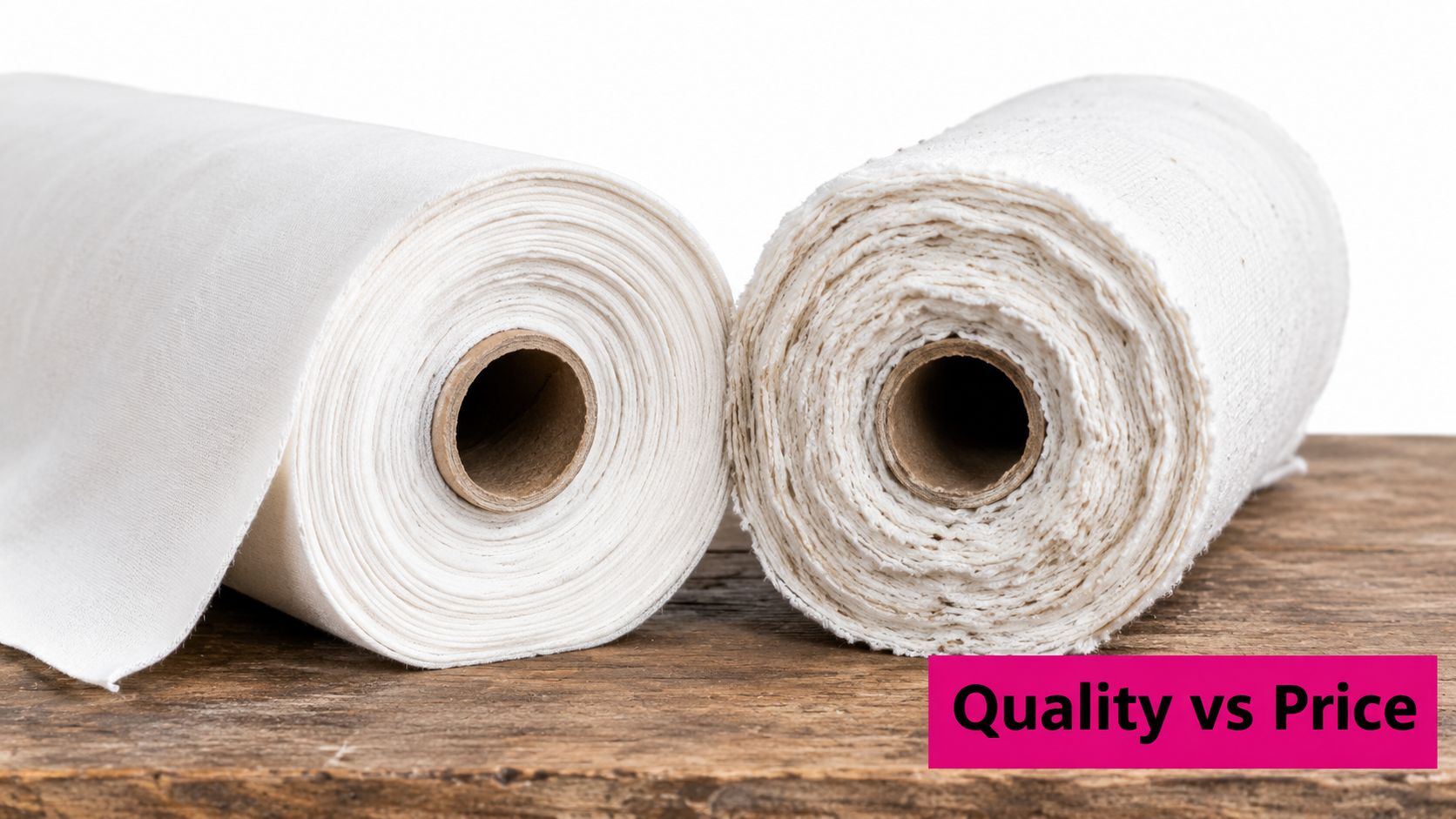
What longarm quilters feel at the frame
Under longarm tensioning, fabric construction matters. A stable quilting cotton usually supports consistent stitch formation when the backing is loaded squarely and the bobbin casing is adjusted correctly. A looser or blended cloth may stretch differently, shift under the hopping foot, or require more careful tension testing.
The hand tells you how the fabric feels and folds. Loft describes thickness or height, a term more often associated with batting but still useful when assessing how a fabric sits in a quilt sandwich. Drape matters when the finished quilt must feel soft rather than rigid. None of these properties can be judged reliably from the total bolt price.
For comparison, a heavyweight tartan intended for structured garments has a different purpose from quilting cotton. If you're researching traditional cloth construction, you can shop Scottish tartan cloth and compare its weight and hand with a quilting substrate. The lesson is practical: price reflects intended performance, not just the number of yards wound around the board.
A high-priced bolt isn't always the right choice. For a quilt backing, stable width and predictable grain may matter more than licensing. For a show quilt, color depth and print registration may justify the premium. For charity quilts, reliable cutting and washable durability may take priority over a limited-run design.
Inspecting the Bolt Label Before You Buy
The bolt-end label is your purchasing worksheet. Don't rely on how full the roll looks, because folded fabric can hide the actual width and a partial bolt can appear substantial on the shelf.
Use this inspection sequence
- Check exact linear yardage. Confirm whether the seller lists the complete bolt, a remaining partial length, or a range. A 15-yard and 30-yard bolt can have radically different total values.
- Verify width. Standard quilting cotton is commonly 44 to 45 inches wide, but commercial fabric can range from roughly 35 to 36 inches to 108 inches. Wide backing deserves its own specification check.
- Note the dye lot. Matching dye lots matters when a quilt needs multiple cuts, borders, or a backing assembled from the same collection.
- Confirm fiber content. Cotton, a cotton blend, linen, canvas, and upholstery fabric behave differently under shrinkage, pressing, cutting, and longarm tension.
- Inspect grain and condition. Look for skewing, crushed folds, fading, shop wear, and defects near the outer layers.
A bolt-end label may tell you what the manufacturer intended, but it won't calculate your project yield. For that, multiply usable linear yardage by usable width. Remove selvedges from the width estimate and allow for the project buffer before deciding whether the roll covers your backing, strip sets, or binding.
If your calculations include a large backing, use the related quilt binding and backing requirements tutorial before placing the order. It can prevent the familiar longarm problem of discovering that the backing is technically long enough but too narrow to load safely.
Common Questions About Buying Fabric Bolts
Can I buy a half bolt?
Often, yes, but the seller must confirm the actual remaining yardage. Half-bolt pricing isn't automatically half the full-bolt value, especially when the cut creates handling, freight, or leftover concerns.
How should I store a large fabric bolt?
Keep the roll clean, dry, and away from direct sunlight. Store it where heavy items won't crush the folded edges, and avoid trapping humidity in airtight plastic. For longarm studios, upright or supported storage helps reduce hard creases that can show during backing preparation.
How do I calculate a king-size longarm backing?
Start with the quilt's finished dimensions, then add loading overage on every side according to your frame and workflow. Next, compare that required continuous length with the backing's usable width and account for shrinkage, pattern matching, and edge defects. A 108-inch backing may avoid a center seam, but its bolt length still needs to be confirmed.
Is the lowest full-bolt price the best value?
Not necessarily. Divide the complete price by actual yardage, then account for usable width, selvedge waste, shrinkage, freight, and leftovers. A cheaper print that needs matching or won't suit your next project can cost more than a higher-priced neutral you use repeatedly.
What should a longarm professional buy in bulk?
Repeat-use solids, dependable backings, batting, and thread usually make more sense than novelty prints. Choose products with predictable width and consistent handling, then test tensioning, bobbin casing settings, and loading behavior before committing to a large production run.
Linda's Electric Quilters carries fabrics, batting, threads, notions, and other supplies for projects that depend on accurate yardage and dependable finishing materials. Visit Linda's Electric Quilters to compare current bolt-sized options, educational resources, promotions, and the supplies you need to finish your next quilt with confidence.


