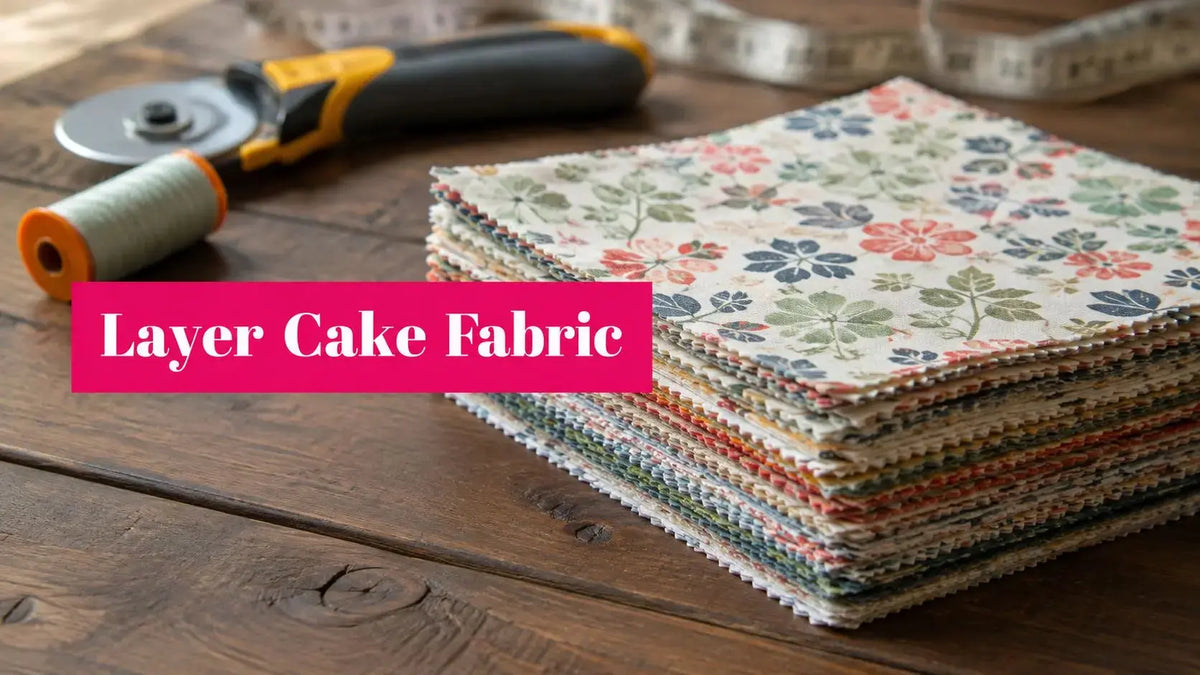
A standard layer cake contains 42 ten-inch squares, equal to about 2.75 yards of fabric, making it a practical choice for throw quilts with borders or smaller projects. The uniform squares speed up cutting, simplify color coordination, and give you a dependable starting point for patchwork without committing to a full bolt of yardage.
You're staring at a tempting stack of fabric collections, trying to decide which prints belong together and how much cutting you can manage before dinner. That's where layer cake quilting fabric earns its place. Instead of measuring every strip from yardage, you begin with coordinated squares that are ready for layout, sub-cutting, and stitching.
In my work with quilters in McKinney, Texas, I've found that pre-cuts are most useful when they match the pattern's construction method. A layer cake can make a fast, confident project, but it isn't automatically the most economical choice for every quilt. The important question is not, “Can I use these squares?” It's “What will each square become after seams, cutting, borders, and quilting?”
What Layer Cake Quilting Fabric Actually Is
A layer cake is a bundle of pre-cut 10-inch by 10-inch fabric squares. Commercial bundles commonly contain 40 to 42 squares, though counts and product names vary by manufacturer. The name is closely associated with Moda Fabrics' pre-cut collections, while other designers offer bundles in the same square format. Missouri Star Quilt Co. describes layer cakes as 10-inch square pre-cut bundles.
The format grew with quilting's shift toward ready-to-use fabric collections. A 2021 University of Minnesota study reports that Moda Fabrics introduced the first major commercial pre-cut fabric bundle in 2006, and that quilters widely adopted pre-cuts within 15 years. Learn more about the history and definition of layer cakes.

Why coordinated squares help
A layer cake removes much of the initial rotary cutting and gives you prints chosen from one collection. Their color, scale, and style usually relate before you place the first square on the design wall.
For a beginner, that coordination reduces common cutting and fabric-selection mistakes. For an experienced quilter, it leaves more time for value balance, block placement, and accurate construction. On a longarm machine, that planning also helps. A quilt built from predictable units is easier to assess for bulky seams, pressing direction, and quilting lines before the top reaches the frame.
The squares can support several construction methods:
- Large patchwork: Sew the squares with limited cutting for a bold, contemporary surface.
- Sub-cut blocks: Divide them into smaller units for half-square triangles, four-patches, and repeated geometric designs.
- Scrappy layouts: Mix prints from one collection while keeping the overall color story controlled.
- Layered projects: Add background yardage, borders, or sashing when the squares alone will not provide the desired finished size.
A layer cake is a consistent building unit, not a fixed fabric amount for every quilt. After seams and sub-cutting, each square yields less usable area, and a large quilt may require background fabric or additional yardage. Yardage can also be the better choice for directional prints, long borders, backing, or designs needing uninterrupted pieces.
Practical rule: Open the bundle and arrange the squares by value before cutting. Coordinated colors can still include light prints that disappear beside the background, especially after quilting compresses the surface.
Understanding Layer Cake Yardage and Cutting Math
At the cutting table, a common layer cake gives you 42 ten-inch squares, or about 2.75 yards of fabric. That comparison helps you weigh a bundle against yardage, but the two options work differently. Yardage is continuous cloth. A layer cake already has cut edges, possible selvage limits, print-direction concerns, seam losses, and leftover pieces after sub-cutting. This layer cake yardage guide explains the difference between 40-square and 42-square equivalents.
Start with the finished unit, not the package count. A 10-inch square sewn with a standard 1/4-inch seam allowance finishes at 9.5 inches. In a straight grid, that half-inch reduction changes the row and column count. On a longarm frame, accurate finished measurements also help you anticipate how the pieced top will load, where bulky seams may sit, and whether quilting lines will cross seams cleanly. See the 10-inch square finished-size calculation.
Cutting yield from one square
One 10-inch square can supply several useful cuts, provided the pattern matches them:
- Four 5-inch squares for smaller patchwork units.
- Sixteen 2.5-inch squares for small piecing and unit construction.
- Four 5-inch sub-blocks when the design repeats larger components.
Those yields explain the appeal of layer cakes for repeated blocks. They also explain the common surprise at the sewing machine: cutting efficiency does not equal the same finished area as uncut yardage. Every seam, trim, and discarded corner reduces the usable surface.
| Pre-Cut Type | Size | Yardage Equivalent | Best For |
|---|---|---|---|
| Layer cake | 10-inch squares | About 2.75 yards for a common 42-square pack | Large patchwork, sub-cut blocks, coordinated modern designs |
| Charm pack | 5-inch squares | Varies by pack count and manufacturer | Small patchwork, compact blocks, scrappy projects |
| Jelly roll | 2.5-inch strips | Varies by strip count and manufacturer | Strip piecing, sashing, borders, and narrow repeated units |
A layer cake can provide the feature fabric for a throw-size top when the pattern uses the squares efficiently. Borders, sashing, or background fabric may still be required, and a larger quilt will not be covered by the bundle alone.
For a baby quilt or small wall quilt, calculate backward from the finished dimensions and the unit size. For a throw, treat the layer cake as the feature fabric, then plan yardage for background, borders, binding, and backing. Twin and queen projects need a cutting chart and supplemental fabric. On a longarm, also check that the final top is square and press bulky seams flat before loading.
Layer Cakes Versus Other Pre-Cut Formats
Layer cakes, charm packs, and jelly rolls all save preparation time, but they solve different construction problems. The 10-inch layer cake square gives you enough area for a substantial block or several smaller units. A 5-inch charm pack square starts closer to the finished patchwork size, while a 2.5-inch jelly roll strip favors strip piecing and long linear designs.

Match the pre-cut to the construction
Choose a layer cake when your pattern needs large squares, dramatic blocks, or flexible sub-cutting. It's particularly helpful when you want to audition the complete print assortment on a design wall before committing to a layout.
Charm packs are a better fit for compact patchwork and patterns designed around small squares. They limit the amount of sub-cutting available, but they can be convenient for small gifts and quick decorative projects. For a related small-format material, #Charms11 July contains hand-dyed, felted wool charms packaged in a clear box with a laser-engraved keepsake, so it belongs to a different material category than cotton layer cake quilting fabric.
Jelly rolls excel when the design depends on long strips, strip sets, narrow borders, or detailed piecing. They can create movement quickly, but they aren't a substitute for layer cakes when the pattern needs broad square units.
| Format | Strongest use | Main limitation |
|---|---|---|
| Layer cake | Large blocks and multiple sub-cut options | May require background and border yardage |
| Charm pack | Small patchwork and compact projects | Less fabric area per piece |
| Jelly roll | Strip sets, borders, and linear patterns | Not suited to broad square units without additional cutting |
Terminology can also cause trouble. “Layer cake” is commonly connected with Moda, while other manufacturers may describe comparable bundles as 10-inch squares or use their own collection language. Check the actual dimensions and count instead of relying only on the product name.
Best Quilt Patterns for Layer Cake Fabric
The most forgiving layer cake patterns use the square as a complete unit or divide it into repeatable pieces. A simple patchwork grid is the cleanest starting point. Arrange the squares in rows, rotate prints for movement, and add a border if the finished top needs more presence. Because each sewn unit finishes at 9.5 inches, count your rows and columns using that measurement rather than the original 10-inch size.

Start with large, repeatable blocks
A nine-patch variation gives you more movement without requiring tiny pieces. Sub-cut selected squares into equal units, keep your seam allowance consistent, and use a design wall to separate strong focal prints. Half-square triangle patterns also work well because a large square provides enough material for paired triangle units, although you should follow the pattern's trimming instructions rather than assuming the raw size equals the finished size.
Rag quilts are another practical choice for layer cake quilting fabric. A typical construction uses matching squares for the front and back with batting between them, then exposes the seam allowances for a frayed finish. The technique suits quilters who want a relaxed, lived-in result and don't want to finish the edge with traditional binding.
For a throw-size top, use the layer cake as the feature fabric and add background yardage, sashing, or borders. A twin or queen design needs a complete fabric plan because the bundle alone doesn't provide enough continuous coverage for the full top. Make a cutting diagram before opening the rotary cutter.
Our team in McKinney, Texas, has tested large-pieced layer cake tops on Innova longarm machines. Broad patchwork generally loads and quilts smoothly, but seams can create height changes that affect tensioning, especially where several pieced units meet. Press seam allowances consistently, check the bobbin casing, and run a test line across a pieced scrap before beginning the main quilting pass.
If you're protecting a work surface or moving a finished quilt between work areas, you may also find it useful to browse white quilted moving blankets as a separate handling resource. They aren't quilting supplies, but clean quilted coverings can help keep fabric away from dusty surfaces during transport.
This video provides a visual reference for working with layer cake projects and can be paused while you check your own layout.
Longarm note: Don't judge a quilt's readiness by the front alone. Run your hand across the pressed top and feel for bulky intersections, then choose quilting density and needle speed that allow the machine to form balanced stitches across those changes in loft.
When Layer Cakes Save Time and When Yardage Wins
Pre-cuts are convenient, but convenience isn't the same as economy. Layer cake quilting fabric saves time when the project depends on coordinated prints and repeated 10-inch units. You avoid measuring and cutting every feature square, and the collection gives you a ready-made color direction.
Yardage can win for large quilts with simple, repeated blocks. If you need many units from one background color, continuous yardage usually gives you more control over cutting direction, print placement, and replacement pieces. Yardage also makes sense when a pattern calls for long borders, large backing sections, or an exact number of identical pieces.

Use the format that fits the layout
A layer cake may include duplicate prints. That's helpful if the pattern needs repetition, but it can restrict a highly custom layout where you want every block to look different. Pre-cuts can also leave you with pieces that don't match the dimensions needed by your preferred pattern, while yardage lets you cut around motifs and orient directional designs.
Pre-cuts occupy a meaningful place in quilting retail. Gitnux reports a global pre-cut quilting segment size of $750 million in 2023, while another industry analysis reports 32.4% pre-cut fabric shipment share in 2023. Review the pre-cut market context. Those figures help explain why the format is widely available, but they don't mean every project should use it.
Make the decision by asking:
- Choose layer cakes when selection and cutting time are your main constraints.
- Choose yardage when the quilt is large, repetitive, or background-heavy.
- Combine both when the layer cake supplies the feature prints and yardage supplies the structure.
- Check waste before buying because a pattern with unusual units may leave more unusable remnants from pre-cut squares.
The most budget-aware plan often uses both formats. A coordinated bundle can establish the visual identity, while solid yardage handles sashing, borders, and the pieces that need dependable continuity.
Choosing and Storing Your Layer Cake Collection
A good layer cake begins with value, not just color. Spread the squares where you can see them together, then separate light, medium, and dark prints. A collection may look harmonious in its packaging but lose contrast once neighboring blocks are sewn.
Inspect the bundle before cutting
Look for variation in scale and texture. Large motifs can become striking focal squares, while small prints often act as visual bridges. If every print sits at the same value, add a background with clear contrast instead of hoping quilting lines will create separation.
I advise photographing the layout in both color and grayscale before cutting. The grayscale view removes the emotional pull of a favorite hue and makes value gaps easier to spot. It also helps if you plan to share the project online, because a balanced arrangement reads more clearly in a quick photograph.
Store unused squares flat, away from direct sunlight and moisture. Keeping the original packaging preserves the collection as a group, but a labeled storage folder or fabric-safe box can work better once you've begun sorting by value. Don't compress the bundle under heavy notions, since sharp folds can become difficult to press out later.
At Linda's Electric Quilters in McKinney, Texas, customers often need help deciding whether a bundle has enough contrast for a longarm design. We look at the pieced top, planned batting loft, thread color, and quilting density together. A dense design can emphasize seams and value changes, while a more open pattern lets the fabric collection remain the main focus.

Layer Cake Projects for Every Skill Level
Beginners often appreciate layer cake quilting fabric because the squares remove much of the anxiety around rotary cutting. Start with a patchwork layout, a simple nine-patch, or a rag quilt, then focus on accurate seams, pressing, and a flat quilt top.
Modern quilters can use the format for oversized-looking geometry, strong negative space, and bold print placement. The square's generous starting size supports both full-square designs and carefully planned sub-cuts, so you can create movement without collecting many unrelated fabrics.
Longarm professionals benefit from predictable unit dimensions during client work. A consistent top makes loading, tensioning, and quilting-path planning easier, although bulky seam intersections still deserve a test pass. Choose batting and thread with the finished drape and quilting density in mind, rather than selecting them separately from the pieced design.
For fabric, batting, thread, and notions in one place, visit Linda's Electric Quilters to explore materials for your next layer cake project. You can also use the store's educational videos and live shopping events to compare project supplies before you cut. Layer cakes make quilting more approachable, but the best results still come from matching the pre-cut to the pattern, the quilt size, and the way you plan to quilt it.
Frequently Asked Questions About Layer Cake Quilting Fabric
What size are layer cake squares?
Layer cake squares are 10 inches by 10 inches before sewing. A common commercial bundle contains 42 squares, although counts and naming can vary by manufacturer. The layer cake definition and format are summarized by Learn How to Quilt.
How much fabric is in a layer cake?
A common 42-square layer cake is treated as about 2.75 yards of fabric. That is an approximate yardage equivalent, not a promise that the squares can replace the same continuous yardage in every cutting plan. See the yardage comparison guidance.
What size does a 10-inch square finish?
With a standard 1/4-inch seam allowance, a 10-inch square finishes at 9.5 inches. Use the finished measurement when calculating rows, columns, and the final size of a patchwork layout. Review the finished-size math.
Can one layer cake make a full quilt?
It can make a small project or support a throw-size quilt top when the design uses the squares efficiently. Larger quilts generally need added background fabric, sashing, borders, binding, and backing. The pattern's cutting chart should determine the final quantity.
Are layer cakes always cheaper than yardage?
No. Layer cakes can reduce cutting labor and simplify coordinated fabric selection, but yardage may be more economical for large, repetitive layouts or projects that need extensive background fabric. Compare the actual cutting plan rather than choosing by format alone.