A Texas summer can make a beautifully lofty quilt feel like too much of a good thing. If you're choosing batting for a warm-weather bed quilt, baby quilt, wall hanging, or quilted garment, lightweight quilt batting gives you a flatter finish, easier handling, and more visible quilting without unnecessary bulk. The right choice depends on more than thickness. Fiber type, shrinkage, drape, warmth, and stitch spacing all change how the finished quilt behaves.
A thin cotton batt may feel soft and breathable, while polyester can provide more loft with less shrinkage. An 80/20 cotton-polyester blend often sits between those two choices, offering support without making the quilt stiff. Before you load your frame, decide whether your priority is drape, warmth, stitch definition, washability, or shape.
What Lightweight Quilt Batting Means
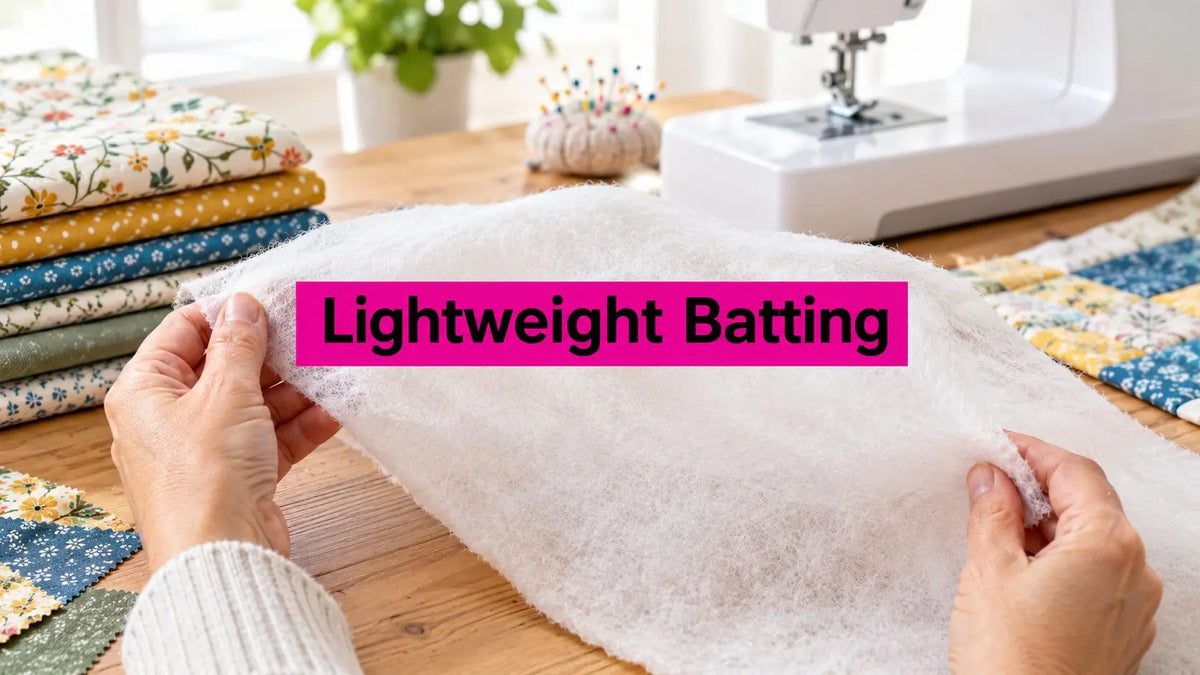
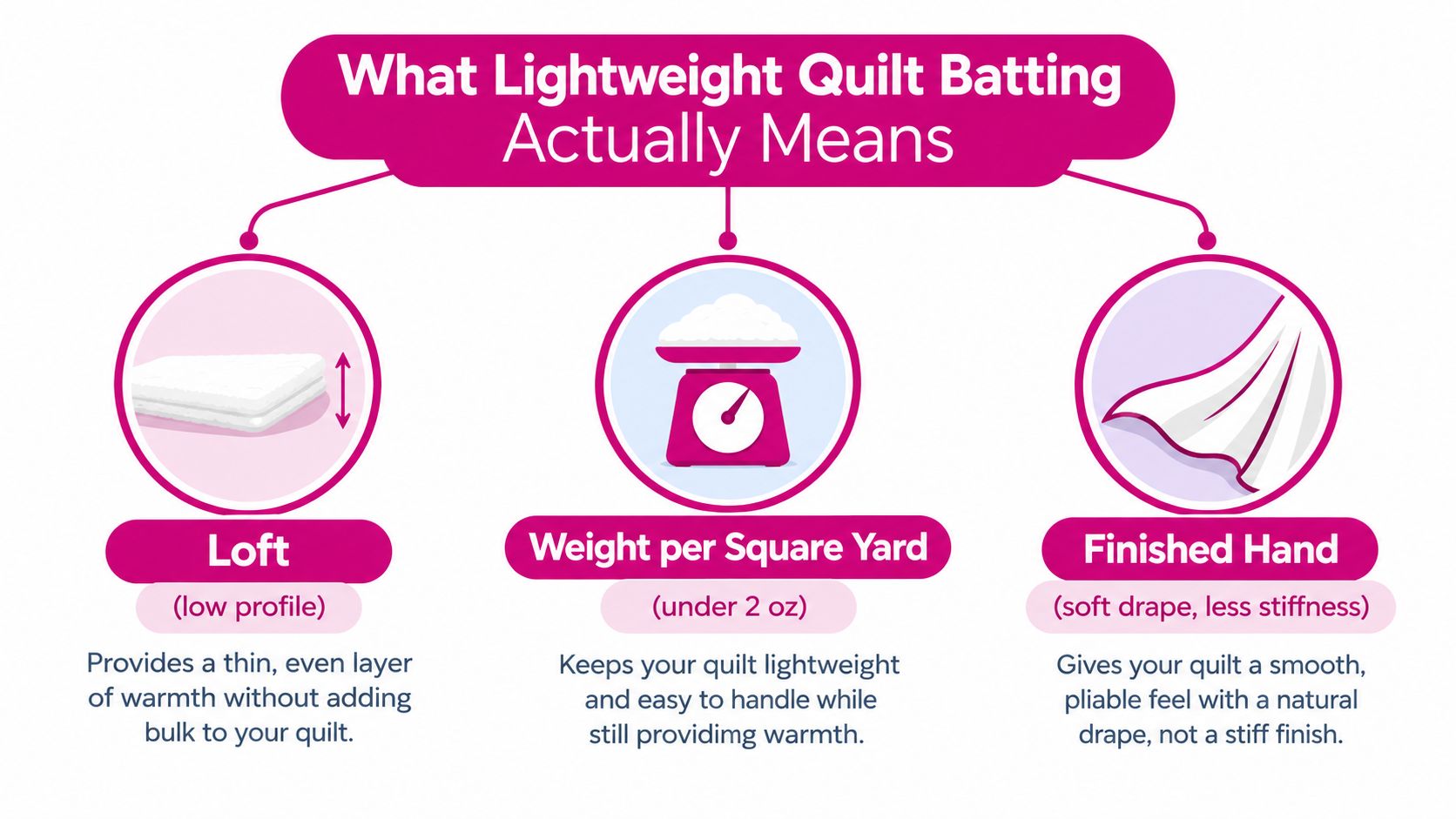
Your quilt top may look airy on the design wall, yet feel heavy once it is layered and quilted. Choosing lightweight quilt batting helps control that result. In practical terms, it has low loft, low mass, and a soft finished hand. Loft is the batting's thickness, weight per square yard indicates how much material it contains, and finished hand describes how the quilt feels and hangs after quilting.
Published quilting guidance commonly places lightweight batting around 2–3 ounces per square yard or roughly 1/8 inch thick. That range works well for summer quilts, table runners, wall hangings, and projects that need a flatter drape. Sewing Bible's batting guidance explains this low-loft range and how a thinner batt changes the quilt's feel.
Low loft is not always the same as thin batting
Quilters often use low loft and thin batting interchangeably, although each term points to a different feature.
- Low loft describes the batting's profile and amount of puff.
- Thin batting describes the physical layer and the bulk it adds.
- Lightweight batting usually combines a low profile, lower mass, and easier drape.
The fiber family and quilting density can change that result. A thin cotton batt may feel soft and flexible, while a synthetic structure can feel springier or hold its shape more firmly. Dense quilting also compresses batting, much like stitching lines press down a soft cushion. Check the label for loft, fiber content, recommended quilting distance, and care instructions instead of judging the roll by appearance alone.
What changes in the finished quilt
Lightweight quilt batting generally creates more drape, less puff, and clearer stitch definition. It provides less insulation than a thicker batt, which suits a quilt that should cover the body without feeling heavy or display a detailed quilting pattern without added bulk.
Fiber content still matters at a similar thickness. Museum reference data lists 100% cotton batting at 1/16 inch with 3–5% shrinkage, 80/20 cotton-polyester batting at 1/16 inch with 2–3% shrinkage, and 100% polyester batting at 1/4 inch with 0–2% shrinkage. The Museum of Fine Arts, Boston's batting reference illustrates why the fiber family deserves as much attention as the word “lightweight.”
Quick rule: For visible quilting without extra bulk or strong added warmth, start with low-loft batting that has a soft drape.
Fiber Types and How They Change the Finished Quilt
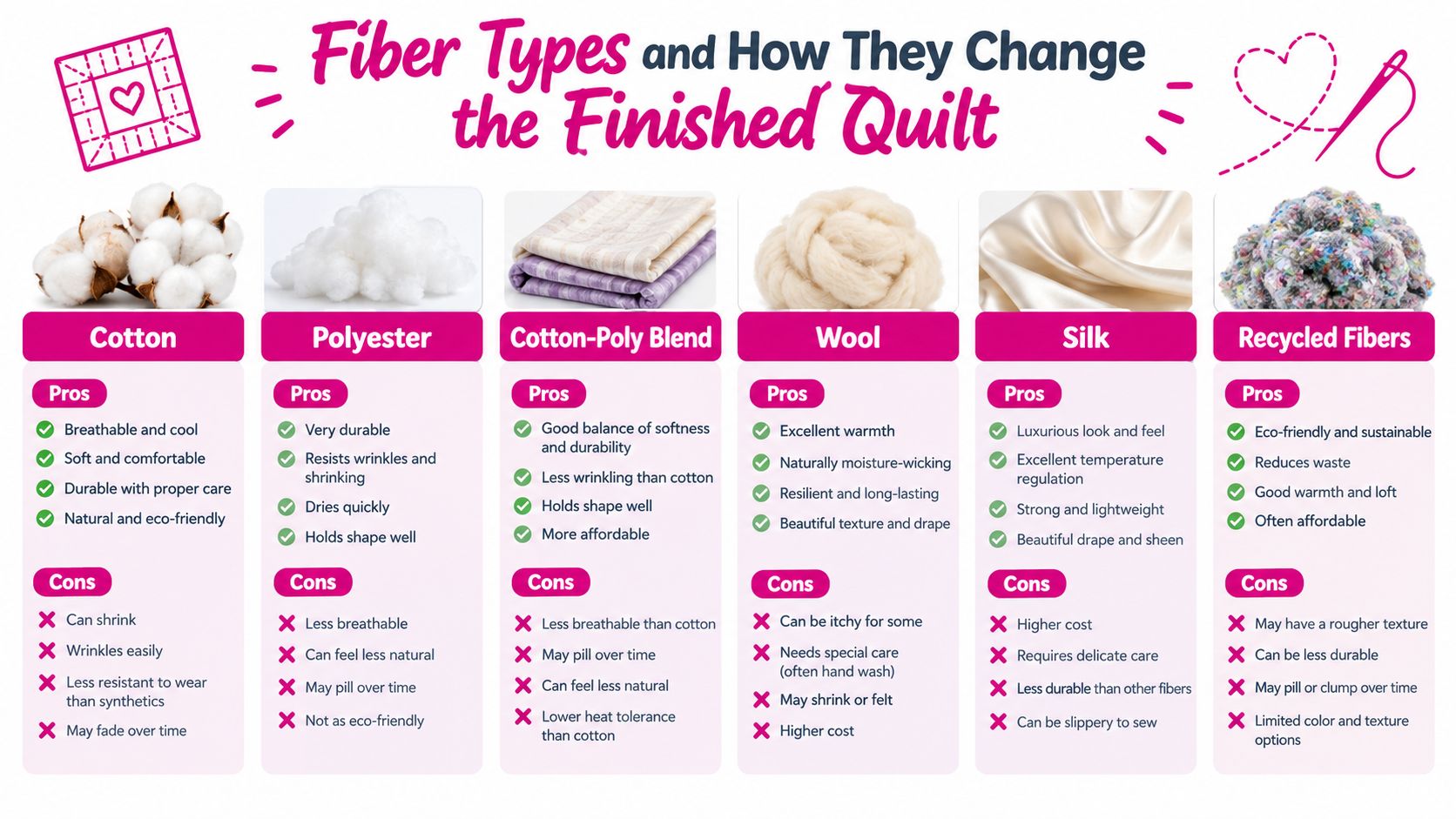
Thin batting doesn't erase the differences between fibers. It makes them easier to notice. When the layer is light, the fiber's natural drape, resilience, wash behavior, and ability to hold loft all influence the finished quilt.
Cotton favors drape and a soft, traditional hand
Cotton is generally lower loft and more drapable than polyester. It breathes well and develops a relaxed, gently puckered appearance after washing, but it can add more weight than an equally thin synthetic option. Its lower loft also makes it comfortable for summer quilts and projects where you want the fabric design to remain the focus.
On a longarm frame, cotton usually feels controlled rather than springy. It doesn't have the same rebound as lofty polyester, so the quilt can lie flatter as you tension the backing and advance the frame. You'll still need to watch for shifting, especially with very thin batting and a slippery backing.
Polyester keeps loft with relatively little shrinkage
Polyester batting is often lighter in weight than cotton while offering more loft. It can wash easily, dries readily, and keeps a puffier appearance when the design calls for visible quilting texture. The tradeoff is that polyester may feel less natural and can behave differently under a needle, particularly when the quilting design is dense.
A thin polyester batt can be a practical choice for a wall hanging or a quilt that needs to retain shape. It may also be useful when you want less shrinkage than cotton provides. Check the label carefully, because polyester products vary widely in thickness and recommended stitch spacing.
Cotton-polyester blends balance support and softness
The familiar 80/20 cotton-polyester blend is a compromise option. The cotton contributes softness and breathability, while the polyester adds resilience and support. Reference material describes this blend as 1/16 inch thick with 2–3% shrinkage, designed to provide strength without excessive stiffness or bulk. The SAQA batting article explains the historical movement from household fill materials to standardized batting types.
Blends often feel stable on a longarm frame. They can be easier to handle than a very soft natural batt, while still giving a quilt more drape than a lofty polyester. If you're unsure where to begin, an 80/20 blend is a sensible middle ground for an everyday bed quilt or machine-quilted gift.
Wool and silk give warmth without a heavy feel
Wool can provide warmth while remaining light in the hand, and silk is valued for a smooth, low-bulk finish. Both fibers suit heirloom projects, garments, and quilts where you want comfort without a thick, puffy profile. Their care requirements deserve close attention, so follow the manufacturer's directions rather than assuming they can be treated like cotton.
Recycled fibers require a practical check
Recycled polyester and recycled-content battings expand the choices for utility quilts and sustainability-focused projects. Recycled denim can also add body and a distinctive textile character, though its feel may differ from a soft quilting batt. Ask whether the product prioritizes drape, warmth, washability, or structure, because “recycled” describes content, not a single finished performance.
For broader fabric behavior and upholstery considerations, Tyner Furniture's fabric advice offers useful background on how fiber choices affect feel, durability, and intended use.
Lightweight Batting Options Compared Side by Side
A comparison table helps you choose by more than loft. Two battings with the same listed thickness can differ in shrinkage, drape, surface texture, and how they behave on a quilting frame. Fiber family and quilting density both shape the finished quilt.
The figures below provide a practical starting point. If the manufacturer does not list a maximum quilting distance, check the product label before loading the quilt.
Lightweight Quilt Batting Options at a Glance
| Batting Type | Thickness / Loft | Shrinkage | Max Quilting Distance | Best Project |
|---|---|---|---|---|
| 100% cotton low-loft | 1/16 inch | 3–5% | Follow manufacturer guidance | Soft summer quilt or baby quilt |
| 80/20 cotton-polyester blend | 1/16 inch | 2–3% | Follow manufacturer guidance | Everyday bed quilt and machine quilting |
| 100% polyester | 1/4 inch | 0–2% | Follow manufacturer guidance | Wall hanging or quilt needing more loft |
| Low-loft polyester | Around 2 ounces per square yard | Product dependent | 2–4 inches in listed guidance | Longarm project needing a thin synthetic layer |
The 100% cotton and 80/20 blend are the closest choices for a flat, fluid quilt. Cotton usually gives more natural drape, while the blend can offer a little more stability and easier handling. The polyester entry belongs in the table because “lightweight” can describe low mass even when the batt looks noticeably loftier. Museum batting data helps distinguish weight from thickness.
Low-loft polyester can suit machine quilting, but its spacing recommendation deserves attention. One listed product specification pairs 2 ounces per square yard with a 2–4 inch quilting distance. That limit does not automatically apply to every thin polyester batt, so use each manufacturer's guidance when setting up a longarm project.
A summer quilt with open quilting may favor cotton's soft drape. A wall hanging may benefit from polyester's higher loft and shape retention. For pre-washing, follow the label. Cotton may shrink more noticeably than polyester, while blends generally fall between them. If the finished size matters, test a small piece or plan for the stated shrinkage before cutting the top.
How Quilting Density Affects Thin Batting
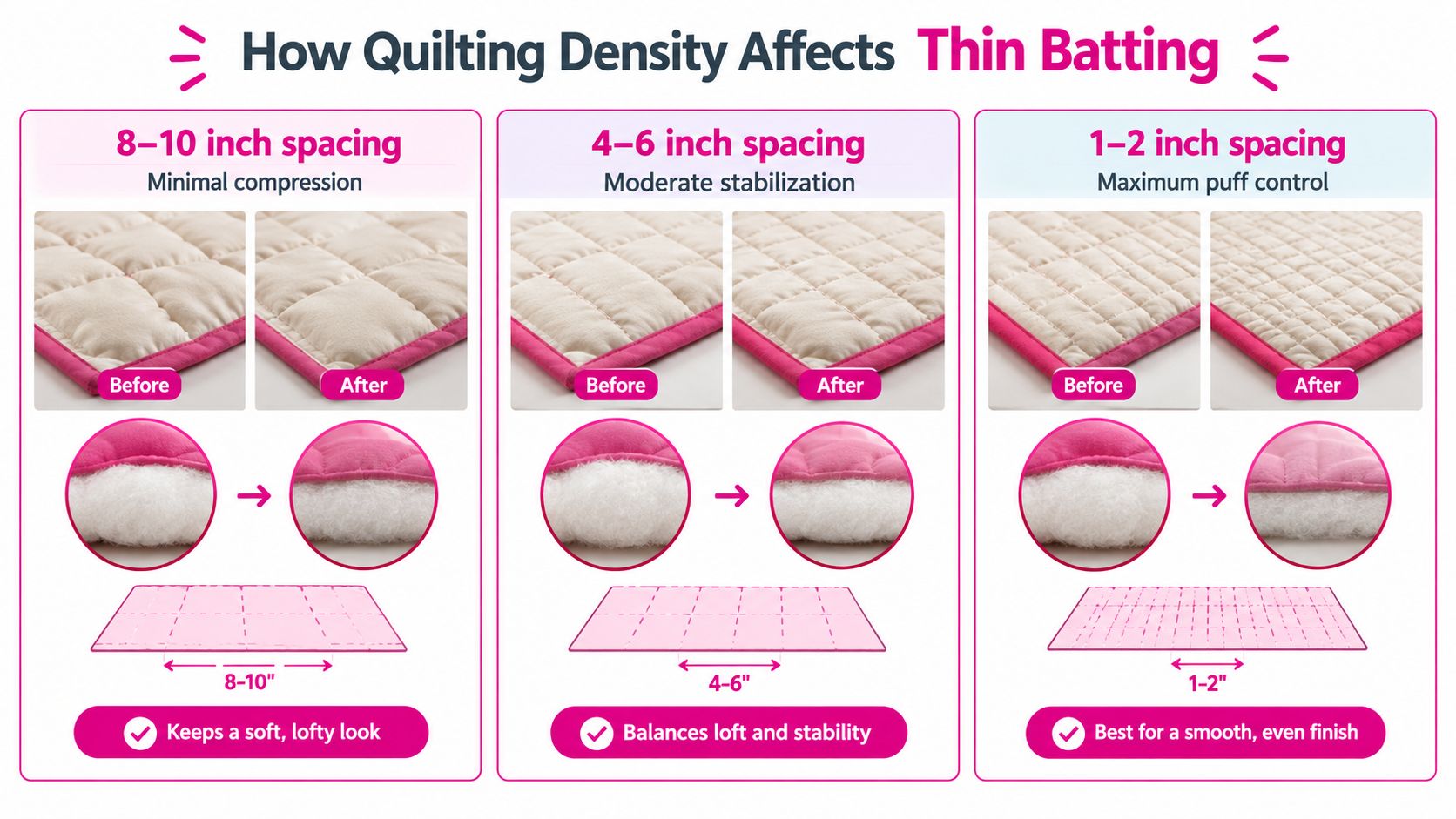
Stitch spacing is the strongest control you have over how much loft remains after quilting. Every line of stitching compresses the batting around it. As the lines move closer together, the quilt becomes flatter, more stable, and often less warm.
A technical evaluation of polyester batting measured a 52% loss in composite thickness and a 35% loss in thermal resistance after quilting. The Defense Technical Information Center evaluation demonstrates that the batting itself can remain unchanged while the finished quilt loses substantial loft and insulating performance through compression.
Open quilting preserves more loft
With wider spacing, thin batting retains more of its airy hand. This works well for a summer bed quilt, a whole-cloth design, or a wall hanging where you want the surface to remain flexible. The quilting design still stabilizes the layers, but it doesn't flatten every area between the stitches.
Moderate spacing gives more control. It can support a geometric design, reduce shifting, and create a neat surface without removing all the batting's character. Always compare your planned spacing with the manufacturer's recommendation, especially when the batt has no scrim or stabilizing layer.
Dense quilting changes warmth and texture
Close edge-to-edge quilting produces crisp texture, but it compresses fibers more aggressively. Cotton can lose its soft loft as the stitches draw the layers together. Polyester can flatten dramatically under dense quilting, even though it began with more loft. Wool and silk also need enough open area to retain the light, resilient hand that makes them attractive.
Thread weight, stitch length, and tensioning influence the result. Heavy thread can pull a thin batt into a pronounced ridge, while excessive needle tension can create puckering. On slippery blends, a walking foot's pressure or the longarm's roller tension may need adjustment so the batting doesn't migrate ahead of the needle.
Pro tip: Before quilting the full piece, stitch a small test sandwich with the same thread, needle, backing, and spacing. Wash or steam the sample if the finished quilt will be washed. The test reveals more than the batting package alone.
Use wider quilting for drapable garments and wall hangings when surface flexibility matters. Choose moderate spacing for everyday bed quilts. If the design depends on very dense texture, accept that the finished piece may feel flatter and provide less insulation, or consider tying the quilt instead of stitching every open area.
The following video can help you observe how quilting motion, tensioning, and spacing affect the fabric sandwich on a machine.
Best Projects for Lightweight Batting
Your summer quilt is pieced, the backing is ready, and the finished bed should feel breathable rather than heavy. That decision starts with the batting. Lightweight batting earns its place when a thick batt would make a project hot, stiff, heavy, or difficult to handle. In a McKinney classroom, I begin by asking what the finished item must do, then match the fiber family and quilting density to that job.
A summer bed quilt usually suits cotton or a cotton blend with a low profile. It can cover the sleeper without the heavy hand of lofty batting. Cotton keeps the feel soft and natural, while a cotton-polyester blend adds stability for machine quilting and maintains a relatively flat finish. Wider quilting generally preserves more drape, while closer stitching creates a firmer, flatter surface.
A baby quilt calls for a balance of softness, wash behavior, and warmth. Soft polyester or an 80/20 blend may fit a family that wants easy care, but the product label should guide washing and maximum quilting distance. A heavy batt can make a small quilt cumbersome and can compete with the simple, graphic stitching common in baby designs.
A quilted jacket or vest needs warmth without excess bulk at seams, facings, and closures. Wool or silk can provide a thin, flexible layer with a refined hand. Match the batting to the garment pattern before cutting. Too much loft can interfere with turning collars, setting sleeves, closing fasteners, or matching seam allowances.
A wall hanging often benefits from thin polyester or another stable, low-loft option. Its flatter profile makes crisp quilting easier to read and keeps the finished piece easier to hang and transport. Dense quilting can strengthen the visual texture, while a more open design leaves the surface softer and more flexible.
Lightweight Batting by Project Type
| Project | Recommended Fiber | Loft | Quilting Distance |
|---|---|---|---|
| Summer bed quilt | Cotton or cotton-polyester blend | Low loft | Follow manufacturer guidance |
| Baby quilt | Soft polyester or cotton-polyester blend | Low to moderate loft | Follow care label and spacing guidance |
| Quilted garment | Wool or silk | Thin, flexible layer | Test the garment sandwich first |
| Wall hanging | Thin polyester | Low loft or flat profile | Use spacing suited to the product |
Caring for Lightweight Batting Through the Wash
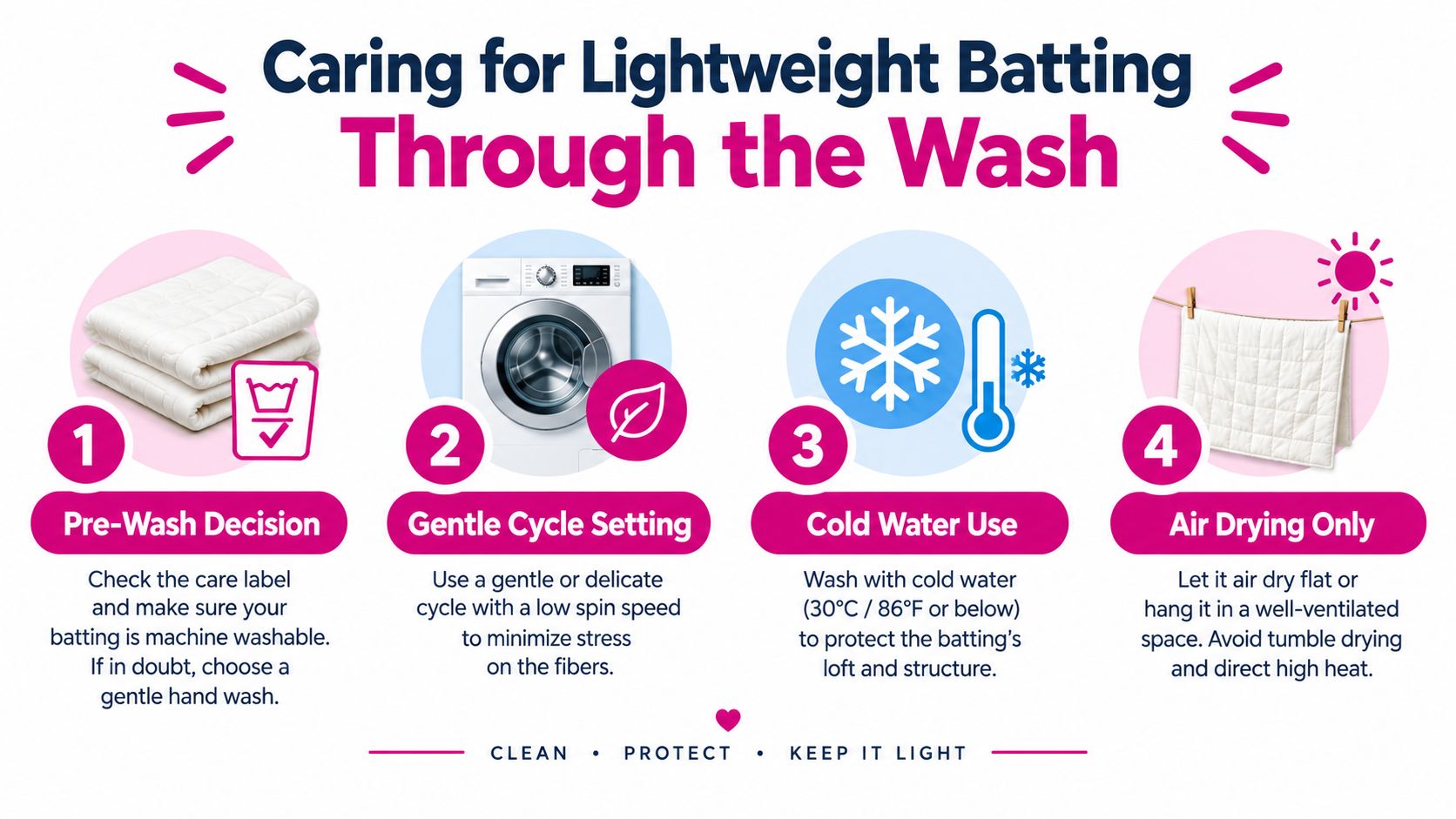
A lightweight quilt can come out of the wash with a different drape, loft, or surface texture than it had on the cutting table. Treat the batting label as your care map. It tells you whether pre-washing will remove sizing, reduce later shrinkage, or change the quilt's finished character.
As noted earlier, cotton and cotton-polyester blends shrink differently, so let the fiber label drive the pre-wash decision. Polyester may respond differently again. If you are unsure, test a small batting sample with the fabric you plan to quilt.
A safer wash routine
- Check the fiber first: Cotton, wool, silk, polyester, and blends have different care requirements.
- Use cool or cold water: A gentle cycle limits agitation that can distort a thin batt.
- Choose mild detergent: Skip bleach and fabric softener unless the product instructions specifically permit them.
- Dry with restraint: Use low heat or flat drying when the fiber allows it, and follow the label for materials that require special handling.
- Inspect before storage: Confirm that the quilt is fully dry before folding or rolling it away.
Thin batting often dries sooner than a thick batt, yet harsh heat can still affect its shape and hand. Dense quilting creates stitched areas that hold moisture longer than open sections, much like closely packed grass stays damp after the surrounding lawn dries. Lay the quilt flat or support it across a broad surface. Avoid hanging a wet quilt from one narrow point, which can stretch the fabric and batting.
For a finished quilt that needs specialized handling, a professional wash and fold service may help you assess options for delicate textiles. At home, store leftover batting loosely rolled rather than tightly folded. Keep it dry and shielded from direct sunlight.
The practical rule is simple: follow the fiber label, control heat, and store batting rolled in a cool, dry place.
Choosing the Right Lightweight Batting for Your Project
If you are choosing batting for a summer bed quilt, a baby quilt, a wall hanging, or a garment, start with the finished item's job. The right lightweight batt balances warmth, drape, structure, and the quilting density your design requires.
A summer bed quilt usually benefits from breathable drape. A baby quilt needs a manageable hand and care instructions that fit frequent washing. A wall hanging needs stable structure and clear stitch definition. A garment needs warmth or shape without bulky seams.
Match the project to the fiber family:
- Cotton or cotton-polyester blend: Choose these for soft drape and everyday quilting.
- Polyester: Choose it for a light synthetic layer, easy maintenance, or more visible loft.
- Wool or silk: Consider these for garments, heirloom pieces, and warmth without a heavy hand.
- Recycled fiber: Consider it for utility projects when recycled content is part of your material priorities.
Next, weigh loft against quilting density. Low loft can suit a summer quilt, but closely spaced stitching may flatten the batt and reduce warmth. A slightly loftier option may work better for a wall hanging or a design that depends on raised texture. Longarm quilters should compare the product's recommended quilting distance with the planned stitch pattern, since distance affects how much loft and warmth remain.
Care requirements can eliminate an otherwise attractive choice. A batting that looks right on the cutting table may not suit a quilt washed often or a garment that must hold its shape.
Use the product details at Linda's Electric Quilters to compare fiber, loft, intended quilting distance, and care guidance before choosing batting for your project.
Lightweight Batting Questions Quilters Ask Most
Should you pre-wash lightweight cotton batting?
Pre-washing is a choice guided by the product label and the finish you want. Cotton batting can shrink 3–5%, so pre-washing can help manage later size change and puckering. If you prefer the traditional washed-quilt appearance, you may choose to quilt first and allow the finished piece to develop that texture during laundering.
Is thin batting hypoallergenic for a baby quilt?
No single fiber label answers every safety or comfort question. Cotton is often selected for a breathable, natural hand, while polyester offers easy care and can retain more loft. Review the product's fiber content, finishing treatments, and care directions, then choose a batting that matches the baby's environment and the family's washing routine.
How do you baste thin batting so it doesn't shift?
Load the backing taut, smooth the batting from the center outward, and use temporary spray adhesive with curved safety pins when appropriate for the project. Keep the basting light and even. Too much adhesive can affect the needle path and leave residue, while too few securing points can allow a thin batt to creep during quilting.
Can you use lightweight batting on a longarm?
Yes. Lightweight quilt batting works well on a longarm when you follow the manufacturer's quilting-distance guidance and adjust the frame setup for the batt's behavior. Loosen roller tension slightly if the batting is being stretched, and test the first pass for puckering, shifting, and thread tension before committing to the full design.
Linda's Electric Quilters carries batting, quilting fabrics, threads, and notions for projects that need a lighter finish and controlled drape. Visit Linda's Electric Quilters to compare lightweight batting options and choose the fiber and loft that fit your next quilt, garment, or wall hanging.