Modern quilt designs become easier to choose when you compare visual impact, piecing precision, fabric behavior, and finishing demands before buying a pattern or cutting fabric. For a beginner, minimalist color blocking is usually the most forgiving starting point. Controlled improv offers more freedom, while ombré and wonky quilts build color confidence. FPP, EPP, fussy-cut, and modern medallion quilts reward careful planning and patience.
The modern movement has a significant institutional history. The 1971 Whitney Museum exhibition Abstract Design in American Quilts helped shift quilts from bed coverings toward art objects, placing them in a fine-art context associated with modern artists such as Picasso, Pollock, and Rothko. Later exhibitions emphasized flat planes, bright colors, abstracted forms, and European design influences, describing quilts as having moved “off the bed and onto gallery walls” (Charleston Museum discussion).
Linda's Electric Quilters supports these projects with fabrics, batting, threads, rulers, templates, notions, and educational resources. Its community includes instructional videos and live shopping events, so you can study a technique before selecting supplies. Before committing to a full quilt, make a small value study and test thread tension on a layered sample.
Pro-Tip: Photograph your fabric layout in grayscale before cutting. If the value structure still reads clearly without color, your modern composition has a stronger foundation.
Which modern quilt design is best for beginners
Minimalist geometric quilts with bold color blocking are often the best first project because they rely on large units, clear value relationships, and straightforward seam construction. A controlled improv quilt is another accessible choice if you prefer creative decisions over exact pattern matching. Choose a design with fewer small points, limited fabric changes, and enough negative space to reveal your quilting.
Your first project still needs professional habits. Press seams consistently, measure each finished unit, and keep the quilt top flat before loading it on a frame. A walking foot can help with straight-line quilting on a domestic machine, while a longarm lets you emphasize open areas with restrained quilting density.
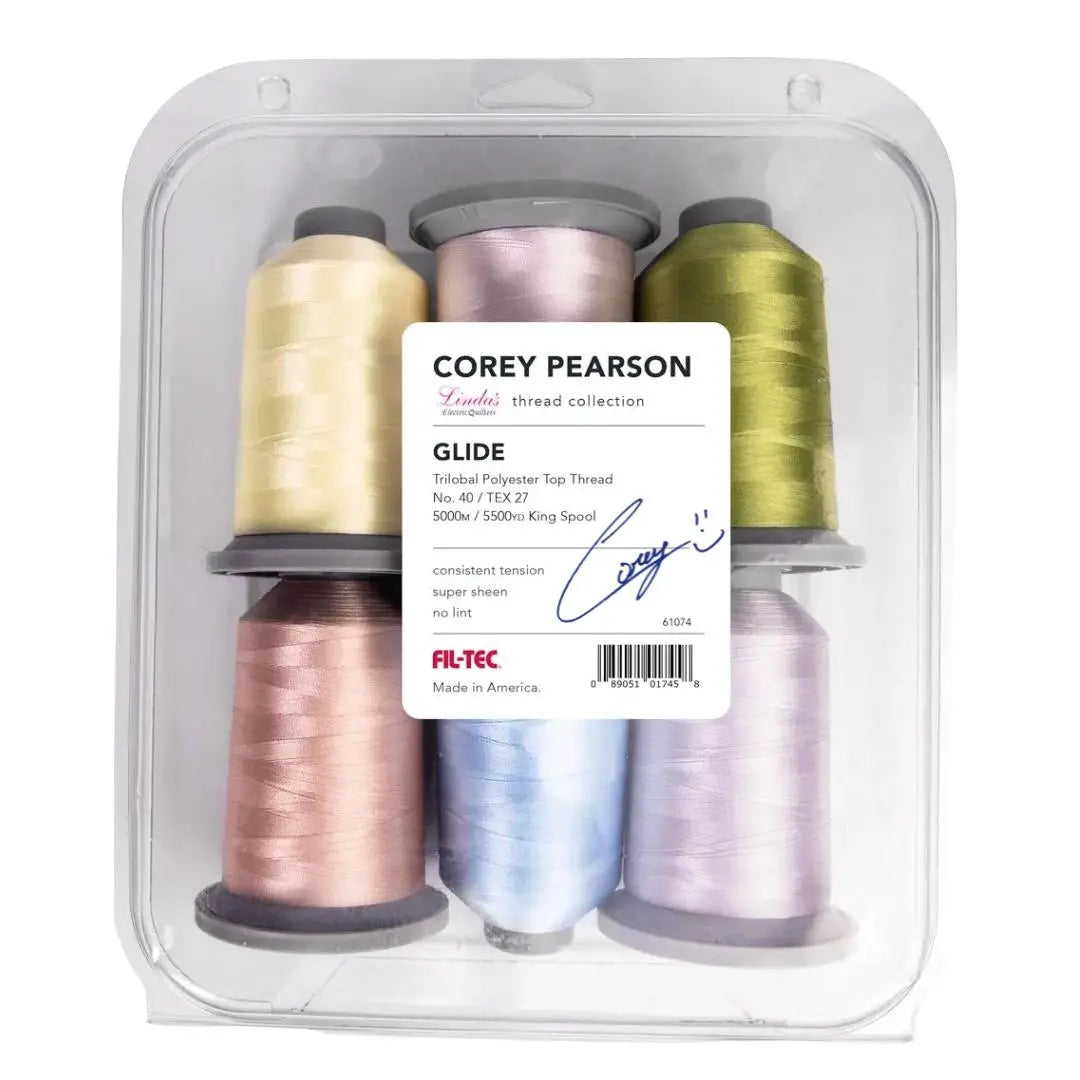
If you're building a supply list, start with a dependable batting collection, a sharp rotary cutter, an accurate ruler, and thread from Linda's quilting thread collection that runs smoothly through your machine. Linda's educational resources can also help you compare loft, drape, and quilting distance before you begin.
1. Minimalist Geometric Quilts with Bold Color Blocking
Large rectangles, squares, triangles, and open background areas give minimalist geometric quilts their impact. These modern quilt designs use shape and value instead of ornament, so fabric placement matters more than the number of blocks. A navy rectangle against terracotta and beige can feel architectural, while a two-tone arrangement can create a quieter wall hanging.
Start on a design wall. Move the blocks until the composition feels balanced, then photograph the arrangement before cutting. A Creative Grids ruler and a well-maintained rotary cutter help keep long cuts square. If a large rectangle drifts off grain, the error can become visible across the entire quilt top.
Fabric and construction choices
Solids make value contrast easy to judge, but subtle prints can add surface interest without overwhelming the layout. Keep the background calm if the feature blocks carry the visual weight. Use nesting seams where possible, and press according to the direction that keeps intersections flat.
For cotton quilting, 008 Sand Dollar Signature Cotton Thread has a three-ply, long-staple cotton construction, with mercerization and finishing processes described as contributing to strength, luster, and low lint. The catalog lists it as Tex 40, with a 3,000-yard cone. Its stated uses include free-motion work, high-speed multidirectional designs, general sewing, longarm quilting, and home sewing.
Longarm finishing
Open negative space exposes every tension issue. Test the top and bobbin thread on a sample that includes the same batting and backing. Straight-line quilting can reinforce the architectural quality, while restrained free-motion lines add movement without filling every area.
A 100% cotton batting can preserve a crisp surface, but the final result depends on loft, quilting density, and the batting's drape. If you want supplies for a clean, high-contrast composition, browse Linda's rulers, cotton fabrics, batting, and quilting thread before cutting.

2. Scrappy Improv Quilts with Controlled Randomness
Controlled improv turns a fabric stash into a composition without requiring a fixed block pattern. The freedom works best when you establish a few boundaries before sewing. You might limit the palette to warm colors, keep strips within a narrow size range, or reserve one neutral fabric for visual breathing room.
Unlike a random scrap quilt, modern improv benefits from editing. Build small units, place them on a design wall, and step back often. A section that looks exciting up close may become too dense when viewed as part of the whole.
Managing fabric behavior
Pre-wash scraps from uncertain sources, especially if they come from mixed collections or repurposed garments. Press each piece before trimming, and remove weak edges before joining them. Irregular seam allowances are common in improv work, so trim units to a stable size before connecting them to the next section.
A modern cotton batting with slight loft can soften small inconsistencies and provide a comfortable hand. Avoid excessive loft if the quilt depends on sharp, graphic transitions. Neutral gray or tan thread often works across a varied scrap palette, but sample the thread against the darkest and lightest fabrics.
Use randomness in the piecing, not in the quality control. Trim, press, and evaluate every section before the irregularity becomes structural.
Longarm considerations
Improv tops may contain seams that don't align in a regular grid. Load the quilt carefully, baste securely, and check for fullness before quilting densely. Organic lines, gentle curves, and spaced geometric motifs tend to support the spontaneous surface better than a rigid motif that expects exact block alignment.
For project supplies, Linda's fabric selections and notions can help you add a controlled neutral or repeat a color family through the top.
3. Foundation Paper Pieced Quilts with Modern Imagery
Foundation paper piecing, or FPP, excels when a modern quilt needs sharp points, narrow sections, or detailed imagery. The method uses a printed paper foundation. You sew fabric to the foundation in numbered order, flip each section, press it, and trim it before adding the next piece.
Modern FPP imagery can include city skylines, abstract florals, animals, and geometric portraits. A skyline quilt, for example, can use a dark solid background with small light sections to suggest windows. The technique makes complex angles manageable, but it demands accurate seam allowances and careful fabric orientation.
Precision from paper to finished block
Use solids or low-contrast prints so the design remains legible. A busy print can hide a tiny point or make adjacent sections appear disconnected. Score the paper lightly along seam lines before removal, then tear it away gradually after the block has been pressed.
Fine piecing benefits from a 50-weight or 60-weight cotton thread. Keep the bobbin thread light when shadowing is a concern, and test tension before producing multiple identical blocks. A small ruler and rotary cutter make trimming the final unit safer and more consistent.
Watch the embedded FPP tutorial before starting, especially if you're new to shortening stitch length or removing paper from tight points.
Quilting multiple layers
FPP blocks can have more seam intersections than a simple patchwork top. On a longarm, test tension on a sample with the same backing and batting. A slightly less aggressive quilting plan can reduce puckering around dense sections, while open background areas can carry longer, sweeping lines.
For your actual quilt, Linda's rulers, fine thread, batting, and backing fabrics can support the precision required by FPP.
4. Ombré and Gradient Quilts with Chromatic Transitions
Ombré quilts rely on ordered color movement. Colors may progress from dark to light, pass through neighboring hues, or form a transition resembling a sunrise or watercolor wash. Simple piecing can work well, because fabric placement carries the composition.
Before cutting, make a swatch board. Arrange each fabric in sequence and check for abrupt value jumps, gaps, or areas that feel too heavy. Repeated half-square triangles or strip units keep construction manageable while the gradient remains the focus.
Choosing fabric and thread
Kona Cotton solids or similar solid quilting cottons show value changes clearly. Prints can interrupt the progression, especially when their motifs or contrast compete with adjacent fabrics. Choose prints with controlled scale and contrast if you want added surface interest.
A monochromatic thread can recede into the color shift. Contrasting thread defines the piecing and makes transitions more visible. Choose batting that supports the top without adding excessive texture. Lower or moderate loft generally preserves the clean color flow better than a highly textured finish.
Longarm quilting and finishing choices
Quilting direction can reinforce the gradient. Straight lines following the color movement create order, while gentle stippling adds softness. Dense edge-to-edge quilting may hide the transition, particularly when thread color changes across the quilt. Test the quilting design on a small layered sample first, then adjust stitch density and thread color before quilting the full top.

Pro-Tip: Let the color sequence lead. Use quilting to support its direction rather than creating a second dominant pattern.
Linda's fabric, batting, rulers, and thread categories can help assemble a coordinated gradient while keeping the quilting pattern subordinate to the color plan.
5. Improper Angles and Wonky Quilts Celebrating Imperfection
Wonky quilts use tilted strips, skewed log cabins, crooked lines, and asymmetrical blocks as deliberate design choices. They aren't careless quilts. The maker controls the degree of irregularity so the finished top feels energetic rather than unstable.
Begin with a simple traditional unit, then alter the angles gradually. A wonky log cabin can shift the center off-axis, or a set of strips can widen and narrow across the block. Keep one element consistent, such as a background fabric or a repeating color, to anchor the composition.
Making irregularity look intentional
Use a design wall to judge balance. A block that seems charming alone can create an unwanted visual cluster when placed beside similar angles. High-contrast thread can celebrate the handmade surface, while a neutral thread keeps attention on the fabric.
Backing deserves attention, too. Skewed seams and uneven fullness can influence how the quilt behaves during loading. Measure the top and backing, secure the layers evenly, and avoid rushing the first pass of basting.
Longarm quilting for a wonky top
A walking foot or controlled straight-line approach can accommodate irregular seams, while organic free-motion shapes can echo the relaxed geometry. Meandering lines, loose loops, and uneven curves often complement the top better than a perfectly symmetrical pantograph.
Longarm rule: Quilt with the movement of the top, but don't use irregular piecing as an excuse to skip a flatness check. Fullness still needs management.
If you're recording your process or sharing a finished quilt, a live shopping clip or instructional video can show viewers how the fabric choices and quilting density change the final texture. Linda's educational community is a useful place to look for that kind of project support.
6. Medallion Quilts with Modern Frame Borders
A modern medallion quilt places a focal block at the center and builds outward with frames. The contemporary update often comes from mixed border widths, asymmetrical color placement, or borders that use different motifs on different sides. This format gives you a strong stage for a special print, appliqué, collage, or detailed pieced center.
The center must be measured before the first border is cut. Measure across multiple points, compare the readings, and cut border strips to the actual center rather than automatically attaching oversized strips. This helps prevent waving and keeps the frame aligned.
Border planning and fabric selection
Odd-width borders can create a more modern rhythm than a series of identical frames. Pair a quiet neutral with one saturated border, or repeat a color from the center at a larger scale. Large-scale designer prints can work beautifully in the center, but they need enough surrounding space to remain visible.
Piece long borders in sections before attaching them. Match the center and quarter points, then distribute any minor difference rather than pushing fullness toward one corner. A cotton batting with slight loft can support the multiple seams without making the quilt feel overly raised.
Finishing the frame
Borders invite custom quilting. Echo the center, add angular lines to a plain frame, or use a variegated thread to create controlled movement. Test the top and bobbin tension on a border sample because the seam density changes as you move outward.
Linda's rulers, templates, batting, and threads can help you build a medallion with measured borders and a finish that gives each frame its own visual role.
7. Hexagon and Non-Traditional Shape Quilts with English Paper Piecing
Hexagons, octagons, diamonds, trapezoids, and custom shapes introduce tessellation, the way units fit together across a surface. English paper piecing, or EPP, wraps fabric around paper templates and joins the units by hand. Modern makers can combine EPP sections with machine-pieced borders or use the shapes as a focused appliqué-like feature.
A hexagon quilt can create flowers, stars, secondary diamonds, or optical effects through color placement. The shape itself is only the framework. The visual result depends on whether neighboring units share value, contrast, or hue.
EPP materials and construction
Lightweight cardstock works well for reusable templates, while pre-made paper shapes can reduce preparation time on a larger project. Baste fabric around each template neatly, clip seam allowances where necessary, and keep the wrapped edges smooth so the units join without bulky ridges.
Use fine 50-weight or 60-weight thread for hand stitching. Matching or low-visibility thread keeps the seams discreet. Lower-loft batting reduces bulk where several shaped seams meet, which can make the finished quilt easier to quilt evenly.
For machine-pieced non-traditional shapes, use rulers and presser feet designed for the selected geometry. Slow machine speed helps on curved or unusual edges, and careful pressing prevents distortion.
For the quilt itself, Linda's templates, fine thread, batting, and notions are practical additions to an EPP workbasket.
Longarm design
Echo quilting can reinforce the tessellated structure. Try repeated hexagons within larger hexagons, spaced lines that follow the shape, or selective quilting that leaves some units more dimensional. Secure the quilt top carefully because dense hand-pieced seams can shift under the needle.
8. Fussy-Cut Quilts Showcasing Statement Fabrics and Thoughtful Placement
Fussy cutting turns a print into the quilt's subject. Instead of cutting randomly from yardage, you center a character, frame a flower, or repeat a small motif in a planned arrangement. The block becomes a window, and the fabric supplies the image.
Choose or draft the pattern before buying the print. Unit size determines whether the motif will fit, while the block's seam allowances affect how much of the design remains visible. A small acrylic window template lets you preview the exact crop before cutting. This extra step protects expensive or irreplaceable statement fabric from misaligned cuts.
Protecting the feature fabric
Create a layout diagram and label each fussy-cut unit. Mark the wrong side with a fine-tipped fabric pen, confirm orientation, then cut. Directional prints require consistent grainline placement so every motif faces the intended way.
Pro Tip: Make one test unit from a paper copy or scrap fabric. Check the motif, seam placement, and value contrast before cutting the full set.
Neutral thread usually recedes when the print contains many colors. Use batting with slight loft for body and definition, but avoid excessive thickness where layered seams could make quilting uneven. Fussy-cut blocks also benefit from careful pressing, since distortion can shift the repeated image.
Quilting around statement motifs
Echo quilt around the motif at a respectful distance, or use restrained background stitching to frame it. Dense lines over a character's face or a delicate flower can flatten the feature and compete with the print. Mark the quilting plan on a photograph or digital mock-up before loading the quilt, especially when the design depends on repeated spacing.
Linda's fabrics, templates, rulers, thread, and batting provide practical materials for preserving print scale from the first cut through the final stitch.
Modern Quilt Designs: 8-Style Comparison
| Style | 🔄 Implementation Complexity | ⚡ Resource Requirements | 📊 Expected Outcomes | 💡 Ideal Use Cases | ⭐ Key Advantages |
|---|---|---|---|---|---|
| Minimalist Geometric Quilts with Bold Color Blocking | Low, large pieces, precise cutting required | Moderate, solid fabrics, rotary cutter, rulers, cotton batting | Strong graphic impact; fast completion; clean drape ⭐⭐⭐⭐ | Beginners to pros wanting bold modern decor or showcase fabrics | Fast build ⚡ · High visual impact · Fewer seams |
| Scrappy Improv Quilts with Controlled Randomness | Medium, flexible rules; improvisational skills needed | Low–Moderate, scrap stash, varied threads, design wall | Unique, highly variable results; one-of-a-kind tops ⭐⭐⭐ | Stash-busting, creative practice, experimental art quilts | Low material cost · Encourages creativity · Waste-reducing |
| Foundation Paper Pieced (FPP) Quilts with Modern Imagery | High, stepwise, pattern-dependent precision | High, printed foundations, fine thread (50–60wt), paper, time | Extremely detailed, sharp points; professional appearance ⭐⭐⭐⭐ | Complex imagery, photorealistic designs, precision-focused makers | Precision control · Enables complex curves/points · Minimal waste |
| Ombré and Gradient Quilts with Chromatic Transitions | Medium, color planning critical; simple piecing options | Moderate, wide value range of fabrics or bundles | Smooth color flow; sophisticated, calming visual impact ⭐⭐⭐⭐ | Color-study projects, gallery pieces, modern home accents | Strong color cohesion · Forgiving piecing · Visually striking |
| Improper Angles and Wonky Quilts Celebrating Imperfection | Low–Medium, intentional imbalance; loose precision | Low, standard tools, flexible yardage planning | Playful, expressive results; artisanal handmade look ⭐⭐⭐ | Beginners easing perfectionism; art quilts; playful gifts | Fast, expressive · Forgiving · Encourages process over perfection |
| Medallion Quilts with Modern Frame Borders | High, careful measurement; sequential construction | High, center focal fabric, multiple border fabrics, planning | Dramatic focal presentation; structured, gallery-ready results ⭐⭐⭐⭐ | Showcasing special prints; ambitious multi-border designs | Excellent showcase format · Customizable borders · Structured planning |
| Hexagon and Non-Traditional Shape Quilts with EPP | High, complex tessellations; hand or machine hybrid | High, templates, specialized rulers/feet, fine thread, time | Intricate geometric patterns; high visual complexity ⭐⭐⭐ | Geometric innovation, portable handwork, mathematically-minded quilters | Unique tessellations · EPP portability · Distinctive aesthetics |
| Fussy-Cut Quilts Showcasing Statement Fabrics | Medium–High, meticulous placement and cutting | High, larger yardage of feature prints, precise rulers | Highly intentional focal motifs; polished designer look ⭐⭐⭐ | Feature-print showcases, heirloom or themed quilts | Highlights designer prints · Highly intentional results · Storytelling through fabric |
Turn Inspiration into Your Next Quilt
Choose the design according to the kind of work you enjoy, not only the finished photograph. Minimalist geometric and controlled improv quilts offer accessible entry points because you can concentrate on value, seam pressing, and a manageable quilting plan. Ombré and wonky quilts suit makers who want to experiment with color movement or controlled irregularity without committing to tiny paper-pieced sections.
Medallion and fussy-cut formats are stronger choices when you already own a special fabric that deserves attention. A medallion gives that fabric a structured center and surrounding frame. Fussy cutting turns a chosen motif into a repeated or isolated feature, but it carries greater cutting risk because placement errors can waste the most valuable part of the print.
FPP and EPP reward precision and sustained attention. FPP is useful for sharp imagery and complex angles. EPP suits makers who enjoy handwork, portable piecing, and geometric tessellation. Both formats need more planning than broad color blocking, and both benefit from fine thread, accurate templates, and a deliberate pressing routine.
Match materials to the visual strategy
Fabric value controls whether a modern composition reads clearly. High-contrast geometric quilts need obvious separation between foreground and background. Ombré quilts need closely managed transitions. Improv quilts can tolerate more variation, but a recurring neutral or color family keeps the surface coherent.
Batting loft changes both appearance and machine behavior. Lower loft tends to preserve crisp negative space and reduce bulk at EPP or medallion intersections. Slight loft can soften irregular improv seams and add body to fussy-cut blocks. Always test drape and quilting distance on a layered sample rather than judging batting from the package alone.
Thread weight and color should follow the design. Fine thread supports FPP points and EPP hand stitching. A stronger visible thread can emphasize geometric lines or custom quilting in a medallion border. Before loading, check upper-thread tension, bobbin casing condition, needle size, and stitch formation on the actual fabric and batting combination.
Quilting density also changes the modern look. Sparse linear quilting keeps negative space open. Echoing can reinforce hexagons and medallion frames. Organic lines can soften wonky angles. Dense quilting creates texture, but it may obscure an ombré transition or compete with a fussy-cut motif.
Final practical comparison
These comparisons are qualitative. Your project size, block count, seam accuracy, machine setup, and quilting density will determine the actual schedule.
The modern quilting movement has grown well beyond a small aesthetic niche. The Modern Quilt Guild reports a community of more than 12,000 quilters across six continents and 39 countries (Whatcom Museum exhibition information). The National Quilt Museum describes a contemporary collection of more than 700 quilts made after 1980, adding quilts each year, and reports exhibition attendance of more than 110,000 visitors per year. QuiltCon 2024 included more than 600 quilts, 90 workshops, 26 lectures, and 92 vendors, with attendance exceeding 15,000 people from all 50 U.S. states and abroad. These figures show why modern quilt designs now support both serious study and a broad maker community.
A 2020 analysis of 309 juried modern quilts found that circles appeared in piecing in 60%, borders in 35%, faced finishes in 28%, improvisation in 27%, patterned fabric on the front in 22%, and hand-dyed fabric in 21% of the quilts studied (University of Nebraska analysis). The same analysis characterized modern quilts through predominantly solid fabrics and large asymmetrical negative space. Use that information as a design benchmark, not as a rulebook.
FAQ about modern quilt designs
What makes a quilt design modern
Modern quilts often use solid fabrics, bold value contrast, asymmetrical layouts, abstracted forms, and generous negative space. They can also include traditional techniques such as FPP, EPP, medallion construction, or appliqué. The modern quality usually comes from how the maker edits scale, color, space, and quilting density.
Which modern quilt design is easiest to machine quilt
Minimalist geometric quilts with open negative space are usually the simplest to plan on a longarm. Straight lines, gentle curves, and restrained edge-to-edge designs can reinforce the layout. Improv and wonky quilts can also quilt well, but the irregular seams require a careful flatness check and controlled loading.
What batting works for crisp modern designs
A lower or moderate loft batting generally supports crisp geometry, clean negative space, and shaped seam intersections. Slight loft can add body to fussy-cut, medallion, or improv quilts. Test the batting with your intended quilting density because loft changes texture, drape, and tensioning.
Should modern quilts use solid fabric
Solids make value structure and negative space easy to read, but low-contrast prints can add subtle surface interest. Busy prints are more difficult to use in FPP, ombré transitions, and minimalist compositions. Choose prints when their scale supports the design rather than distracting from it.
For more project guidance, watch Linda's educational videos or join a live shopping event to compare fabric hand, batting loft, rulers, templates, and thread in context. You can also explore the store's broader resources when you're ready to turn a sketch into a finished quilt.
Linda's Electric Quilters offers fabrics, batting, threads, rulers, templates, notions, and educational resources for modern quilt designs, including longarm and hand-piecing projects. Visit Linda's Electric Quilters to gather the materials for your next quilt and find practical guidance through videos and live shopping events.