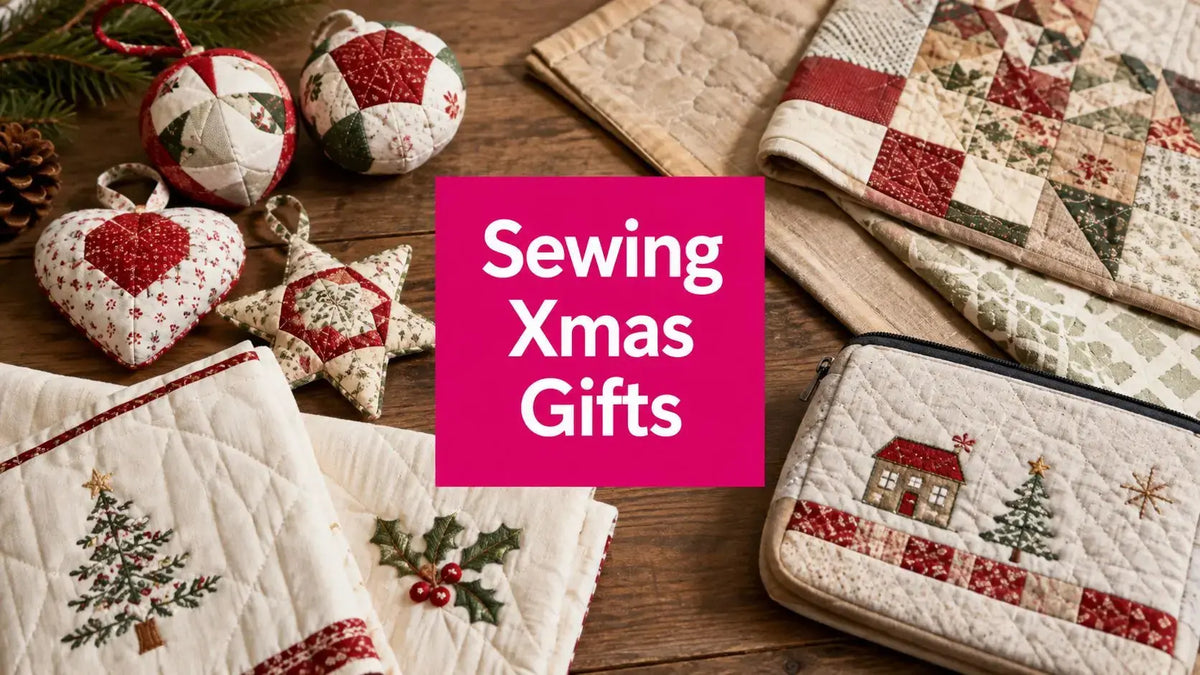
A great handmade Christmas present isn't chosen by technique alone. The right sewing Christmas gift idea depends on the recipient, the time left before Christmas, and your comfort with piecing, applique, embroidery, hand stitching, or basic machine sewing. If you need a fast, low-risk project, choose a felted wool ornament or a practical fabric gift. If you have more time and enjoy accurate cutting, choose the star quilt. Experienced quilters may prefer a thread gift or a marking tool that improves applique work.
The five projects below match wool ornaments, a star quilt, thread-finished quilted gifts, marked applique projects, and useful fabric gifts with a recipient, skill level, realistic timeline, material plan, personalization options, and finishing advice.
Use Linda's quilting and sewing supplies for fabric, batting, thread, and notions. The comparison table will help you choose quickly, and the FAQ at the end answers practical questions about deadlines, skill levels, and finishing.
Choose sewing Christmas gift ideas by recipient and construction demands
The fastest way to choose among sewing Christmas gift ideas is to start with the person receiving the gift, not the pattern. A child or casual crafter may enjoy a small wool ornament that can be stitched by hand. A committed quilter may appreciate a complete pattern, a high-use thread, or a tool that solves an everyday accuracy problem.
Your construction method matters just as much. A project with partial seams needs more concentration than a simple ornament. Applique benefits from careful marking and pressing, while quilted gifts depend on stable batting, reliable tensioning, and a clean finish. Before cutting, check whether the recipient prefers decoration, utility, or supplies for their own sewing room.
The following comparison is designed for quick selection. The time estimates are planning guidance rather than product specifications, since fabric choice, quilting density, hand finishing, and experience all change the schedule.
5-Item Comparison: Sewing Christmas Gift Ideas
| Item | Implementation Complexity 🔄 | Resource Requirements ⚡ | Expected Outcomes 📊 | Ideal Use Cases 💡 | Key Advantages ⭐ |
|---|---|---|---|---|---|
| #Charms11 | Low, pre-felted, ready to stitch 🔄 | Low, basic hand/machine sewing tools; pre-cuts included ⚡ | 11 vibrant wool charms ready for embellishment 📊 | Wool appliqué, embellishments, quick gift projects 💡 | Ready-to-use hand-dyed wool; laser-engraved keepsake ⭐ |
| #Charms11 July | Low, same as core set; seasonal colorway 🔄 | Low, basic tools; pre-cut variant available ⚡ | Same finished charms with a bright seasonal palette 📊 | Seasonal projects, gift sets, small wool accents 💡 | Variant/seasonal colorway; same ready-to-use benefits ⭐ |
| #22 (Pattern) | Medium, partial seams; confident-beginner level 🔄 | Low–Medium, fat quarters, printed pattern, standard sewing machine ⚡ | Star-block quilt in multiple sizes (Baby→King) 📊 | Learning partial seams; fat-quarter quilts; class projects 💡 | Fat-quarter friendly; multiple finished sizes; clear printed instructions ⭐ |
| 001 White Signature Cotton Thread | Low, standard thread use; machine-friendly 🔄 | Medium, cone holders for 3,000/6,000 yd options; requires quality thread handling ⚡ | Strong, low-lint stitches; smooth sewability for longarm & home machines 📊 | Longarm quilting, high-speed multi-directional designs, general sewing 💡 | Mercerized long-staple cotton; high strength and low lint ⭐ |
| "Hera" Marker for Applique & Sewing | Low, simple manual marking/creasing tool 🔄 | Minimal, handheld tool, no consumables ⚡ | Precise creases and seam-marking for small applique work 📊 | Applique, reverse applique, seam allowance folding on small pieces 💡 | Fine tip for detailed marking; doubles as crease/fold tool; durable material ⭐ |
1. #Charms11 for a wool-loving recipient
For a wool enthusiast, the material can be part of the gift before the project is finished. #Charms11 includes 11 hand-dyed wool charms in a clear box with a laser-engraved keepsake. Because the wool is felted and ready to stitch, the recipient can start with appliqué, embroidery, ornaments, needle books, or other small seasonal decorations without cutting or preparing yardage.
The varied colors leave the design open. Instead of choosing one fabric collection for someone else, you give a compact palette they can arrange themselves. The pre-cut pieces also suit scrap-friendly projects, much like a small set of building blocks that can become several different ornaments or textile accents.

Planning card for wool ornaments
- Recipient: Choose this for a wool collector, hand-stitcher, embroidery fan, or quilter who enjoys compact projects and creative control.
- Difficulty: Basic blanket stitch, whipstitch, or simple embroidery keeps the project beginner-friendly. Several appliqué layers or detailed motifs require steadier hand sewing.
- Timeline: One small ornament can fit a short seasonal making window. A coordinated set needs more time for layout, stitching, and hand-finishing.
- Materials: Plan for felted wool, embroidery floss, a sharp hand-sewing needle, backing fabric, stuffing when needed, and ribbon or a hanging loop.
- Personalization: Match the palette to the recipient's home, then add an initial, date, favorite motif, or meaningful color.
- Finishing: Keep edge stitches even, bury thread tails, and press with care suitable for wool. A small label adds a keepsake detail without changing the construction.
Practical rule: Let the color arrangement guide the design. Strong contrast keeps small blanket stitches visible, while related shades create a quieter heirloom effect.
Give the set with a printed sketch, a few motif suggestions, or a project card. Leave the final object open if the recipient prefers designing their own piece. Linda's pre-cut fabric selection can supply complementary materials for a wool project.
2. #Charms11 July for bright seasonal creativity
A Christmas sewing gift can feel seasonal without relying on traditional red and green. For a recipient who prefers bright color, modern decoration, or projects useful beyond December, #Charms11 July offers a focused starting point with 11 felted, hand-dyed wool pieces in a clear box with a laser-engraved keepsake.
This format suits a confident beginner who knows basic hand stitching but has not built a large wool stash. The pieces are ready for arranging and sewing, so the maker can spend more time choosing a composition, planning applique placement, and adding embroidery. Pre-cut shapes also make it practical to test a small motif before committing to a wall hanging or seasonal panel.

Planning card for a marked applique project
- Recipient: A sewist who enjoys bright color, small applique, embroidery, or creative projects with a contained material plan.
- Difficulty: Beginner to intermediate. A simple motif is approachable, while layered shapes and detailed stitching require more control.
- Timeline: A compact project can fit a close Christmas deadline, provided the plan allows time for hand stitching, pressing, and attaching a hanging sleeve.
- Materials: Felted wool, background fabric, embroidery floss, needles, scissors, a marking tool, and backing or interfacing suited to the finished object.
- Personalization: Connect the motif to the recipient's hobby, pet, initials, or favorite holiday tradition. Let the wool colors lead the palette, then add only the details the design needs.
- Finishing: Stitch through stable layers, trim the edges carefully, and choose a hanging loop, finished edge, or backing that matches the intended use. A tidy reverse side matters when the piece may be viewed from more than one angle.
Wool does not fray like woven cotton, which simplifies small applique shapes, but placement still needs accuracy. Mark each position before stitching, especially where layers overlap. If embroidery is included, test the floss on a scrap first. The sample shows whether the color supports the wool or draws attention away from the motif.
A clear use turns a material set into a complete gift idea. Suggest a tree ornament, mug mat, needle book cover, or small framed textile, while leaving room for the maker's own design choices. Add a suitable background, backing, or coordinating notion from Linda's sewing supplies only after checking what the recipient already owns.
3. #22 for a confident beginner who wants a quilt
A quilt becomes a strong Christmas gift choice when the recipient values warmth, meaningful colors, and the time behind a handmade project. #22 is a scrappy, fat-quarter-friendly pattern based on a star block. Its partial seams introduce a new construction skill for a confident beginner, while the rest of the work uses familiar machine-piecing methods.
The pattern includes Baby at 45 by 45 inches, Lap at 54 by 72 inches, Twin at 72 by 90 inches, Queen at 90 by 108 inches, and King at 108 by 108 inches. Use these finished dimensions to match the quilt with its recipient and your available sewing time. A smaller quilt may suit a near deadline. Larger sizes require protected time for cutting, piecing, quilting, binding, and checking the finished work.
Planning card for the star quilt
- Recipient: A baby, lap-quilt user, new homeowner, or family member who would appreciate a substantial handmade gift.
- Difficulty: Confident beginner. Partial seams depend on accurate alignment, marked stopping points, and consistent pressing.
- Timeline: Select the finished size after reviewing your available sewing days. Piecing is only one stage, followed by quilting and binding.
- Materials: Fat quarters, background fabric, batting, backing, binding fabric, sewing thread, rotary-cutting tools, and a machine suited to the construction.
- Personalization: Choose colors for the recipient's room, school colors, favorite season, or meaningful fabric prints.
- Finishing: Press seams consistently, square the quilt before binding, test the quilting design, and hand-finish the binding for a neat edge.
Partial seams work like building a star one controlled section at a time. Sew only the stated portion, stop at the marked point, and press before attaching the next piece. Rushing the sequence can shift the star points and soften the center's geometry, so a test block is useful before cutting the complete fabric set.
Supply decisions that protect the finish
Batting affects loft, drape, warmth, and how the quilt responds during quilting. A flatter option may suit a wall display or lightweight lap quilt. A loftier option changes the texture and may call for a different quilting approach.
Plan the backing around your quilting method and equipment, then allow enough fabric for secure handling. Test the seam allowance on scraps before cutting all the fat quarters. Check that the machine feeds evenly, the bobbin casing is clean, and the upper tension forms balanced stitches on the selected cotton.
4. 001 White Signature Cotton Thread for quilted gifts
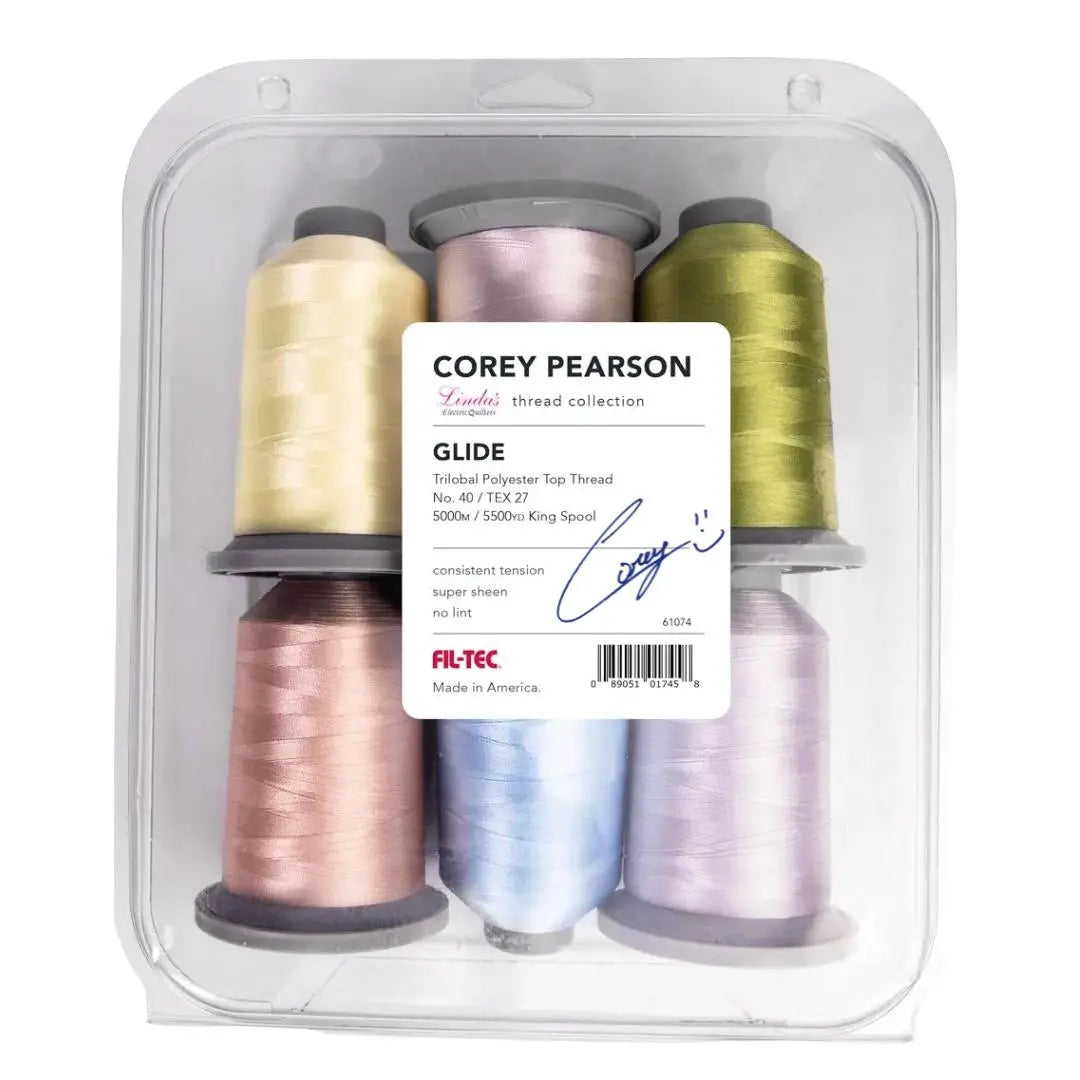
Thread is a practical Christmas gift for an experienced quilter who already has fabric, rulers, and basic notions. 001 White Signature Cotton Thread is a three-ply, long-staple cotton thread with mercerization and finishing processes intended to support strength, luster, and low lint. The product is described for general sewing, free-motion techniques, high-speed multidirectional designs, longarm quilting, and home sewing machines.
White can work for piecing, quilting, and light or neutral projects, yet thread color remains a personal choice. Check the recipient's usual palette before buying. Someone who quilts mostly on dark backgrounds may need another shade, while a maker who likes visible white quilting lines may use this color often.
Planning card for a thread-based gift
- Recipient: A longarm quilter, free-motion maker, or sewist working on demanding quilted projects.
- Difficulty: The gift needs no sewing skill. Setting it up does require attention to needle size, tension, spool orientation, and bobbin compatibility.
- Timeline: Easy to purchase close to Christmas, with no construction deadline.
- Materials: Cotton thread, a compatible needle, a bobbin-thread plan, test fabric, and the recipient's preferred batting.
- Personalization: Match the thread to the recipient's machine, quilting method, and usual fabric colors.
- Finishing: Wrap the cone securely, add a small test swatch, and remind the recipient to check tension before quilting.
A thread spool works like one part of a larger recipe. The needle, bobbin, batting, fabric sandwich, and machine settings all influence the final stitch. For longarm quilting, test a short section before starting the full quilt. Inspect both sides for balanced stitches, skipped stitches, loops, or excess lint. The bobbin casing, needle condition, and thread path can change the result, so thread alone cannot guarantee a flawless finish.
Pro-Tip: Save the first tension test. Label the fabric with the needle, upper tension, bobbin setup, batting, and thread combination. The swatch becomes a useful reference when the same materials are used again.
Linda's thread and quilting supplies can help you build a gift around the recipient's workflow. Choose the spool size according to quilting frequency, machine type, and available storage. A large cone may suit regular longarm work, while a smaller option can be easier for occasional sewing or a domestic machine.
5. “Hera” Marker for applique and sewing accuracy
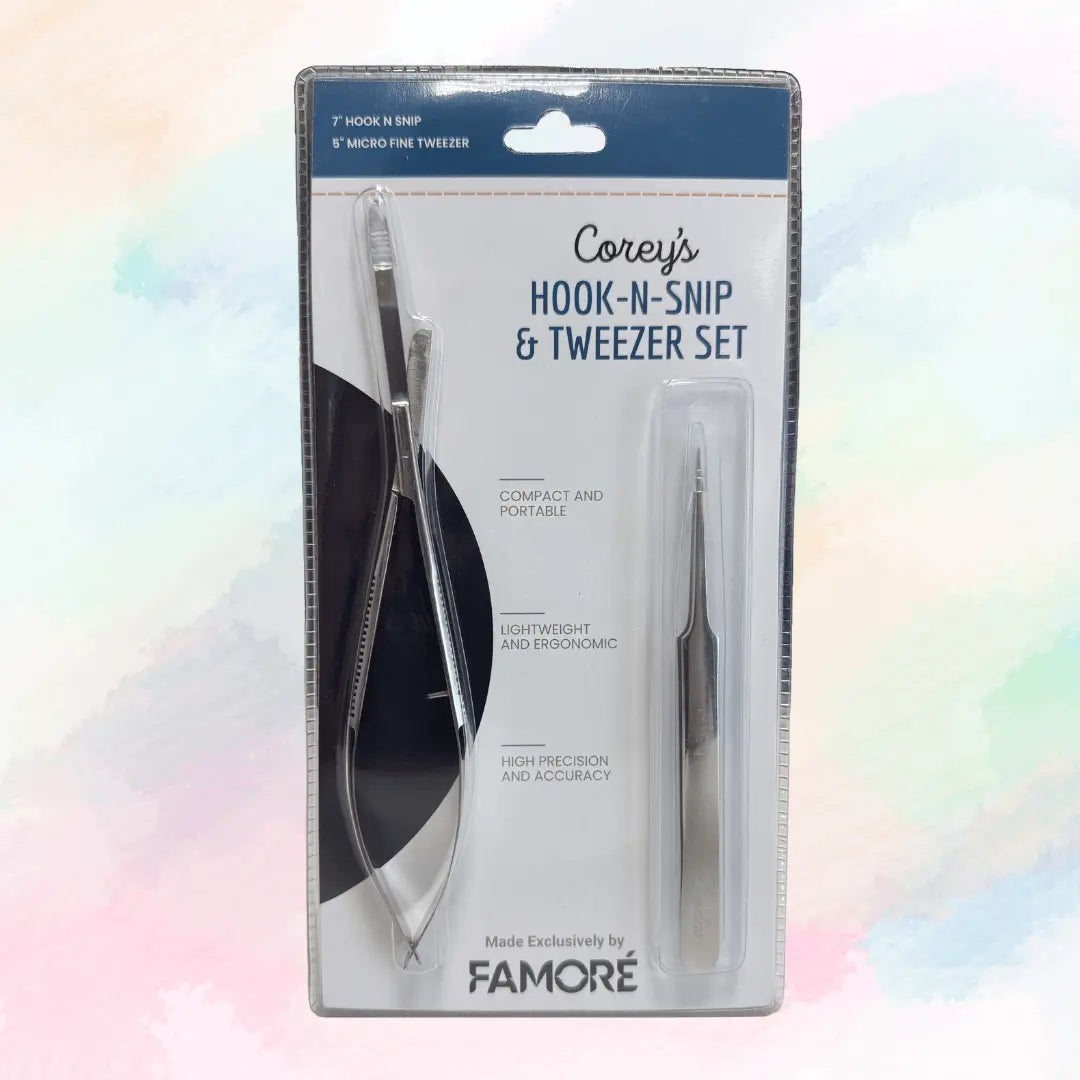
Small tools often make the best gifts for sewists who already own the basics. The “Hera” Marker for Applique & Sewing is designed for marking and creasing in patchwork, quilting, and sewing. Its small tip suits seam-allowance marking for small applique and reverse applique, while the thinner end helps fold back applique pieces.
Because it creates a crease rather than relying on a conventional ink mark, the tool can support careful placement when visible marks would be distracting. That makes it relevant to makers who work with small shapes, layered applique, or precise reverse-applique openings. It's also compact enough for a sewing-room gift box or a stocking for an experienced quilter.
Planning card for a precision notion
- Recipient: An applique artist, patchworker, teacher, or quilter who values accurate folds and repeatable marking.
- Difficulty: Beginner-friendly as a tool, with the greatest benefit appearing in intermediate applique and reverse-applique work.
- Timeline: A quick gift choice with no project assembly required.
- Materials: The marker, practice fabric, an applique template, and a small project that demonstrates its use.
- Personalization: Pair it with a pattern style the recipient already enjoys, such as floral applique, small motifs, or reverse applique.
- Finishing: Add a labeled pouch or notions case if you're making a larger gift bundle, and explain where the fine tip is most useful.
Use the marker first on a scrap that matches the project fabric. Confirm that the crease is visible enough for accurate folding, then test the seam allowance before applying it to the final piece. Pressing remains important. A good crease guides the fold, but it doesn't replace careful fabric handling or a consistent allowance.
The tool is especially useful for a sewist who has plenty of fabric but keeps postponing applique because the preparation feels fiddly. Linda's applique and sewing notions offer a practical place to find complementary supplies.
Turn one project into a gift-ready plan
Choose the wool charms for a recipient who enjoys hand stitching and small seasonal makes. Choose the star pattern for a confident beginner who wants a quilt and has enough time for partial seams, quilting, and binding. Choose cotton thread for a longarm or free-motion quilter who uses consumables regularly. Choose the Hera marker for an applique maker who appreciates a precise, low-clutter notion.
Practical sewing Christmas gift ideas also depend on honest scheduling. A compact ornament, applique panel, or notion can be finished close to Christmas. A quilt requires a longer plan because cutting, piecing, pressing, basting, quilting, binding, and labeling each deserve attention. If the deadline is uncertain, give the supplies as the present and include a note describing the finished project you had in mind.
Before assembly, test the seam allowance on scrap fabric. Check upper-thread tension, the bobbin casing, needle condition, and stitch length. For quilted gifts, test the complete sandwich with the chosen batting, backing, and thread. For applique, test the marking method and pressing response before working on the final piece.
Gift-ready finishing checklist
- Add a label: Include the maker's name, recipient's name, date, or a short message.
- Personalize the palette: Choose colors that suit the recipient's room, wardrobe, hobbies, or holiday style.
- Inspect the back: Trim loose threads, secure thread tails, and check that the backing is clean.
- Finish the edge: Use a stable binding, turned edge, blanket stitch, or suitable facing for the project.
- Wrap with context: Include care guidance and a sentence explaining why you chose the design.
- Plan the presentation: A clear box, fabric pouch, ribbon, or folded project bundle can make supplies feel gift-ready.
Frequently asked questions
What is the easiest sewing Christmas gift idea for a beginner?
A small felted wool ornament is usually the simplest starting point because the material is ready for stitching and the finished object can remain compact. Basic blanket stitch, whipstitch, or simple embroidery is enough for many designs.
Which sewing Christmas gift idea suits a confident beginner?
The #22 star quilt pattern suits a confident beginner who understands standard machine sewing and is ready to practice partial seams. Start with a smaller finished size if the Christmas deadline is close.
What can I give a sewist who already owns the basics?
Choose a high-use consumable such as cotton thread or a problem-solving notion such as the Hera marker. Match the gift to the recipient's machine, preferred techniques, and usual project scale rather than buying a novelty tool.
How should I test thread before quilting a gift?
Use a scrap sandwich made from the project's fabric, batting, backing, needle, thread, and bobbin setup. Check the front and back for balanced tension before quilting the main piece.
Should I make a quilt as a last-minute Christmas gift?
Only if the size and finishing plan match the time available. A small quilt may be realistic, but a larger quilt can require substantial time for accurate piecing, quilting, binding, and labeling.
Linda's Electric Quilters offers fabrics, batting, threads, notions, and quilting supplies for both quick handmade gifts and more involved Christmas projects. Visit Linda's Electric Quilters to choose the materials and tools that fit your recipient, technique, and holiday timeline.