

Is your thread collection easy to admire but difficult to use? Dust, UV light, and tangled spools are the enemies a useful sewing thread organization system needs to address. When you're hunting for the right 50wt Aurifil mid-project, clear pockets and sensible sorting help more than a decorative rainbow on the wall.
Choose a zippered clutch for a smaller working collection or a handled organizer for a larger spool library. Keep either away from sunlight, and don't assume a spool case will accommodate longarm cones. For quilters visiting our shop in McKinney, Texas, or shopping online, the practical question is the same: can you find, protect, and transport the thread your project needs? Pair your reorganization with one of our instructional videos, then pack an active project rather than rearranging colors.
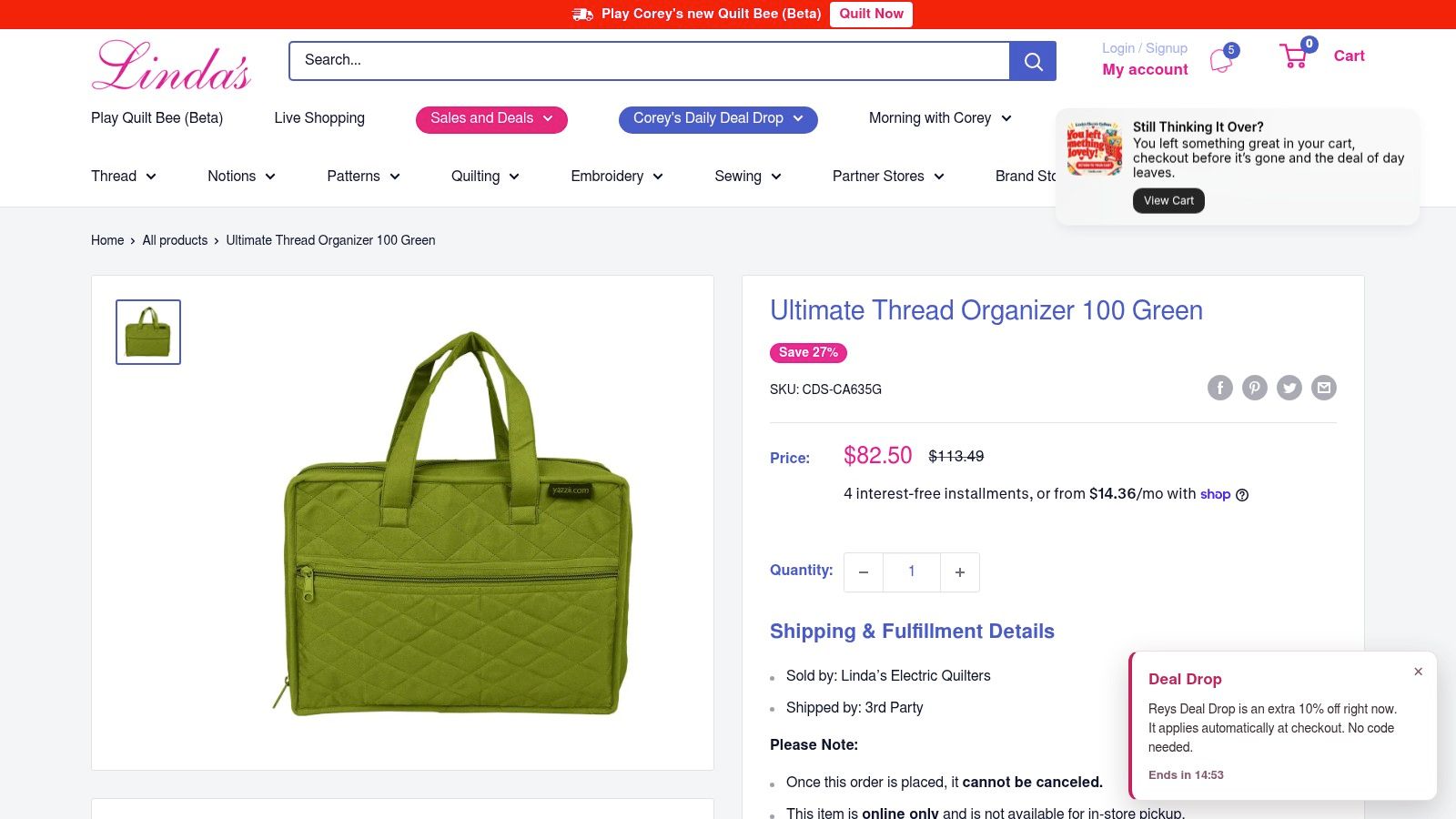
1. Ultimate Thread Organizer 100 Green
Packing a hundred spools for a retreat is a different problem from organizing them on a shelf. This handled carry bag is built for the travel version: the "100" in its name is the spool capacity, and a run of zippered, see-through pockets shields thread from dust while keeping colors readable at a glance. A top handle makes the full case easier to move than pulling a fixed rack apart.
The pocket layout is the main attraction. You can separate piecing cotton, quilting thread, and decorative thread without emptying a loose bin to find a color code.
How should you organize a large thread collection?
Sort by fiber and thread size before color. Labels use several sizing systems, and a higher number can mean a heavier thread on one scale and a finer thread on another. Match spools by brand, fiber, and labeled weight, since numbers that look alike may come from different scales.
Give each pocket a job. Keep piecing thread together, separate decorative metallics, and reserve an easy-reach pocket for current-project colors. A removable inventory card with brand, fiber, labeled size, color code, and purchase date saves a second hunt later.
- What works: Clear pockets let you inspect a group without unloading the whole bag.
- What doesn't: A larger carry bag takes more storage space than a clutch, especially when you only need a project palette.
- Fit limitation: The capacity figure assumes compatible spools. Tall cones and oversized longarm reels may not sit flat in the pockets.
Practical rule: Treat each pocket as storage only. Pull the spool out before sewing, because thread drawn through a half-open pocket picks up drag that can show up in your tensioning.
Choose a case this size when volume and portability are the actual problem. If most of your spools stay parked beside the machine, a smaller organizer leaves more room in the sewing space.
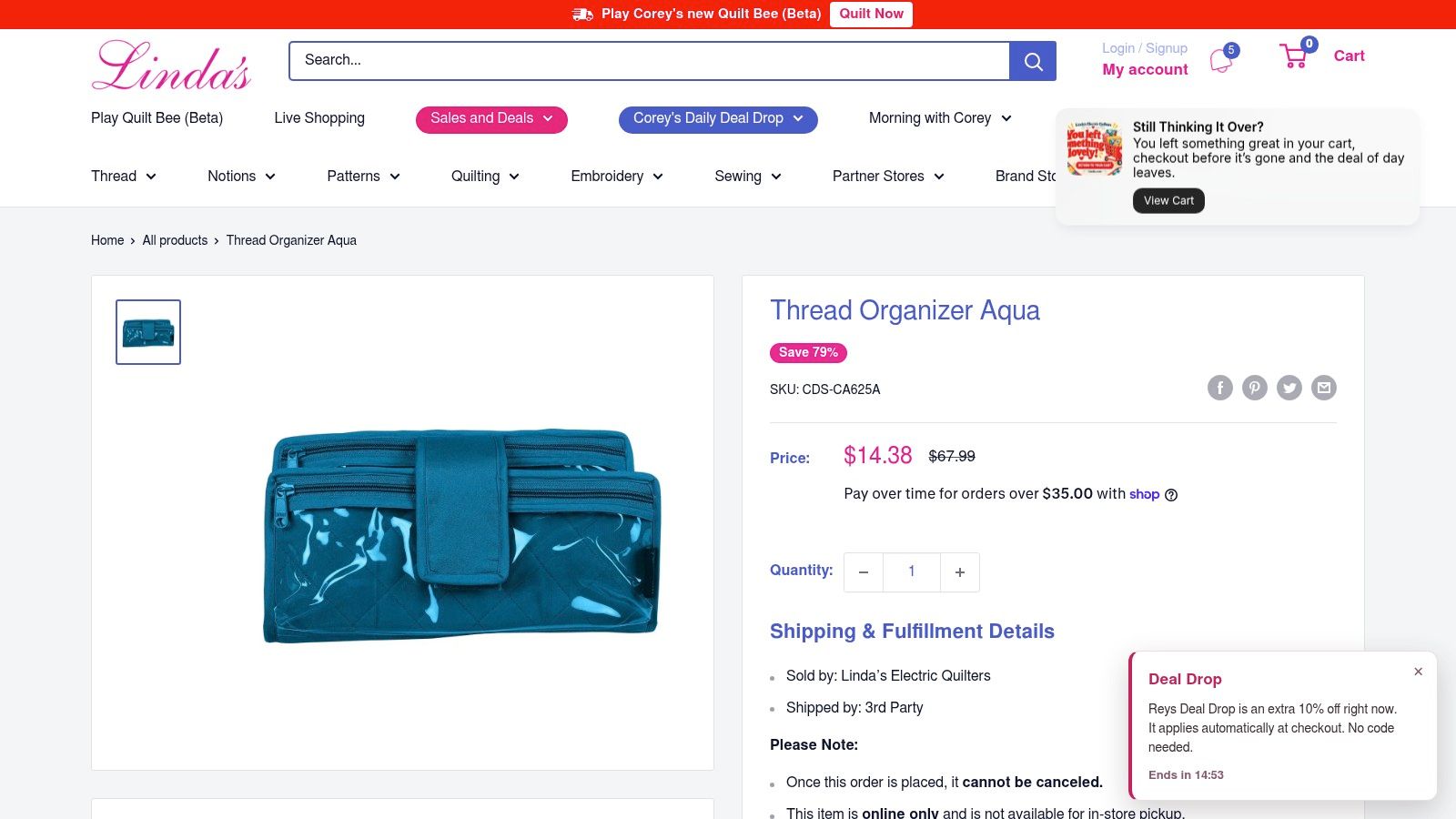
2. Thread Organizer Aqua
A clutch earns its place in a retreat bag through access. This case opens flat, so your working palette is on view the moment it reaches the table. Each side carries two gusseted, zippered, see-through pockets, with center elastic straps for scissors, tools, or pens and a hook-and-loop closure. Priced at $14.38, it is also a clearance-friendly way to build a dedicated class kit.
What's the best thread storage for classes and retreats?
Take a working palette, not your entire thread library. This case suits a piecing class, appliqué session, or decorative-stitch project where you already know the likely colors. The center straps keep snips and a marking pen riding with the thread rather than loose in a tote.
For an embellishment project, Metallic Thread 800M AQUA BLUE 33 supplies 800 meters of aqua-blue metallic thread. A metallic this close in shade to ordinary aqua cottons deserves its own side of the case, so a specialty fiber never ends up running through the tensioning discs where piecing thread belonged.
Embroidery thread also needs a suitable room, not just a suitable bag. Brother's storage guidance recommends a stable environment of 15–25°C and 40–60% relative humidity, with protection from heat, light, moisture, smoke, and fumes.
The honest limit shows up mid-retreat: the pockets hold a planned palette well, so a project that outgrows your pre-selected colors sends you back to the supply tote.
For better sewing thread organization, put piecing colors on one side and embellishment spools on the other, so each face of the case answers one job. Cover sharp scissor tips before strapping them down, and leave enough loft in the pockets to close the zippers without force. Packed once, it rides to every class without a single spool needing to be re-sorted.
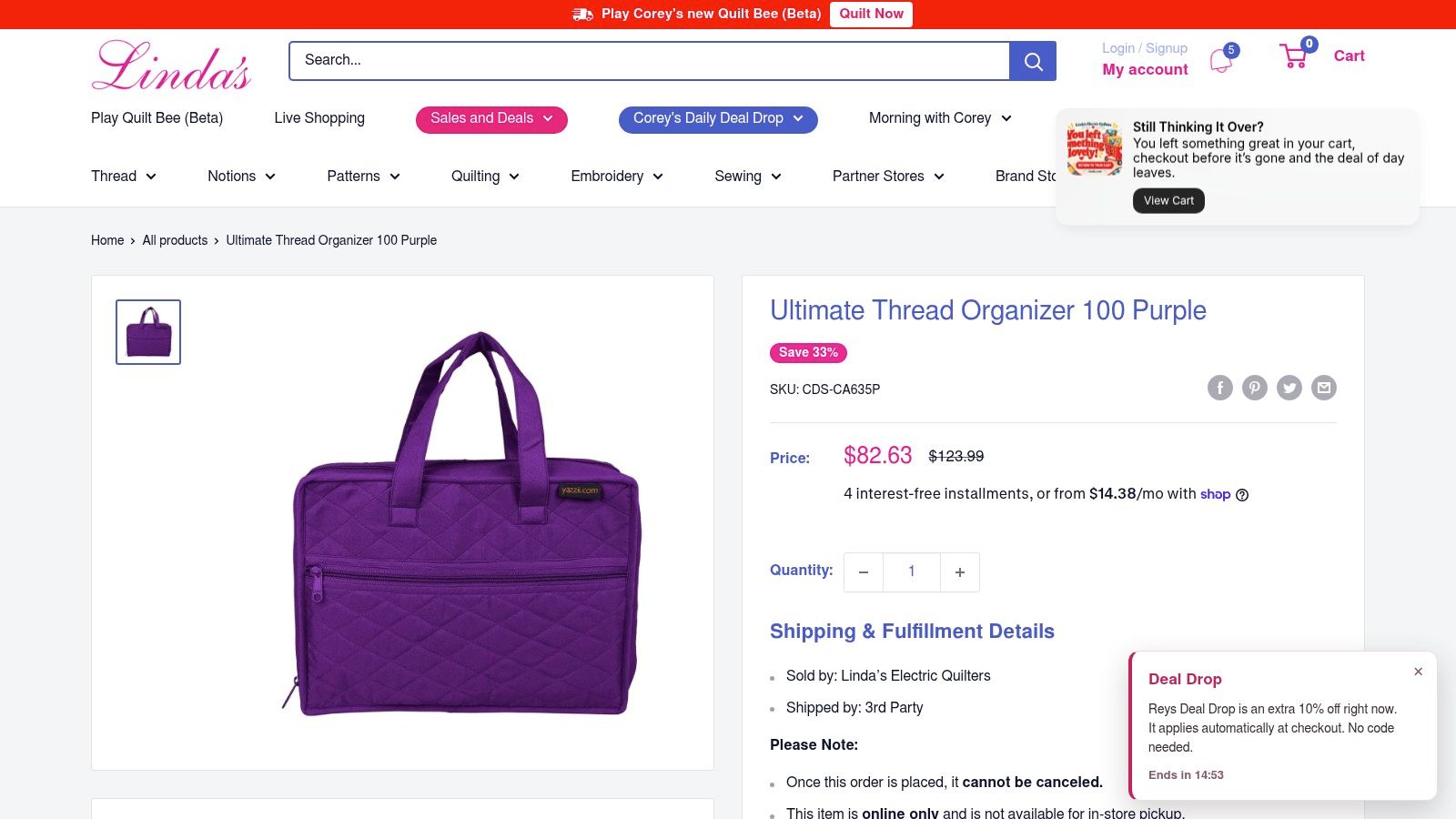
3. Ultimate Thread Organizer 100 Purple
Two identical bags in different colors solve a real problem on a crowded shelf. This purple version shares the same storage format as the green one, so the deciding factor is the exterior color and what you assign it to hold.
Give each color a job. Everyday piecing thread in one bag, reserve or specialty spools in the purple one, and you can pull the right library before a single pocket gets unzipped.
How do you keep stored thread ready for longarm quilting?
Treat reserve storage as an inventory system. AMANN's thread-storage guidance recommends cool, dry, dark, dust-free conditions, original packaging, and first-in, first-out rotation. A zipped bag helps with orderly handling, and a stable storage environment does the rest.
Put older compatible stock toward the front of each group. Keep purchase information and dye-lot details when available, and flag questionable spools for testing before loading a customer quilt.
- Where it helps: Separate pockets let a reserve collection be divided by fiber, weight, or intended use.
- Honest limitation: A deep purple shell hides scuffs well, yet dark fabric makes handwritten tags hard to read. Use light-colored labels or a contents card so the identification system works.
- Important boundary: The stated reel format isn't proof that large cones will fit. Keep those upright in suitable dedicated storage.
Keep a project card with the top thread, bobbin thread, needle choice, and tensioning notes. Record the batting and loft too, because repeating the thread alone doesn't recreate the whole quilt sandwich.
Clip a small card inside the front pocket listing each spool's brand, weight, and dye lot. When a quilt runs short of a shade mid-project, that card tells you exactly what to reorder instead of matching by eye under shop lighting. It also prevents an unidentified spool from reaching the machine, where a burr or a worn finish would show up only after the stitching starts.
Build the purple bag around a single clear purpose, such as embroidery stock or older spools awaiting a stitch test, and pull only what the current quilt needs into your active workspace.
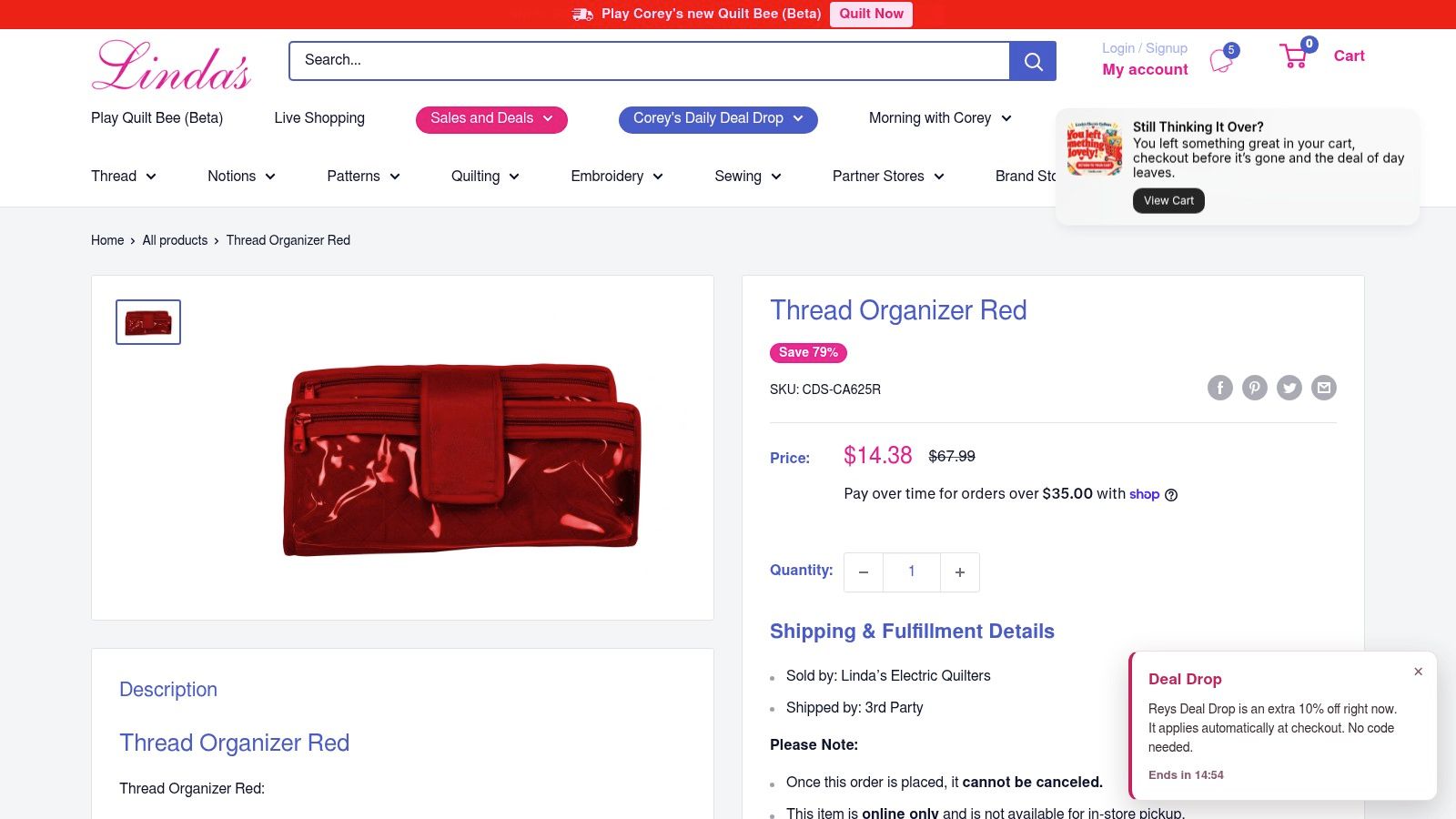
4. Thread Organizer Red
A red case earns its place in a thread room for one reason: instant identification. This clutch shares the flat-opening layout, see-through pockets, and portable format of the aqua version covered in section 2, so everything said there about pocket access and handling applies here. What the red shell adds is a visual category you can spot across the room or buried in a retreat tote.
Is a smaller organizer better for clearance thread?
It can be, provided you're buying useful thread rather than filling empty pockets. Clearance-friendly means comparing current offers, checking spool dimensions against the pockets, and choosing storage based on the thread you'll sew.
Where this clutch really pays off is as a use-first queue for older or inherited stock. Because it's a distinct color from your main storage, anything inside it carries one instruction: test me and sew me before you buy more.
Rank the queue in two stages. Unwind a length from each spool and inspect it for abrasion, discoloration, or unevenness. Then stitch a sample with the intended needle and fabric sandwich. Don't diagnose thread failure from a hand-pull test alone; thread that snaps cleanly under steady hand tension has earned its retirement, but a weak tug tells you nothing about how it behaves under machine tensioning.
From there, fill one side of the case with spools that passed and the other side with stock still waiting for its sample. Each time a spool runs out, pull the next candidate from the untested side and give it the same check. When the untested side empties, the queue has done its job.
Open beside the machine, a small case shows you a whole project palette at a glance. Photograph it before shopping so you don't bring home a near-duplicate red or gray. Choose this clutch when a portable, color-coded kit solves the problem more directly than another large container, and let the color itself be the label.
Sewing Thread Organization Solutions Compared
Capacity decides shelf footprint; closure decides how much lint reaches the thread.
| Item | Capacity | Best For | Portability | Dust Protection |
|---|---|---|---|---|
| Ultimate Thread Organizer 100 Green | 100+ 3-inch reels | Large thread collections | Carry handle | Use covered storage in dust-prone rooms |
| Thread Organizer Aqua | Compact clutch load; count shifts with spool diameter | Classes, retreats, or home storage | Clutch style | Closed format controls lint better than a rack |
| Ultimate Thread Organizer 100 Purple | 100+ 3-inch reels | Large thread collections | Carry handle | Use covered storage in dust-prone rooms |
| Thread Organizer Red | Compact clutch load; count shifts with spool diameter | Classes, retreats, or compact home storage | Clutch style | Closed format controls lint better than a rack |
Pick the handled organizers for a main reel library, and the clutches for a project palette that travels cleanly.
Match the Organizer to Your Stash and Start Today
Count your spools, separate the oversized cones, and decide whether you need home storage, travel storage, or both. A reel library belongs in a larger handled bag; a working palette belongs in a clutch that opens flat beside the machine. Give thread its own closed container. Batting keeps its loft in a separate bin, and notions stay in their own organizer, even when all three are headed for the same quilt.
Pro tip: Store thread away from direct sunlight to protect fiber and dye. Canadian textile-conservation guidance also identifies humidity extremes as preservation risks, so a clear pocket shouldn't become a permanent sunny-window display.
Is a wall rack better than a closed organizer?
A rack puts every color in sight, and that open display collects household dust and airborne lint right on the spool tops. Plan on wiping the pegs and reels every week or two in a busy sewing room, more often if the rack hangs near a cutting table where fabric dust is constant. A closed organizer is the better pick when dust protection and portability matter.
Should thread be sorted by color or weight?
Sort by fiber, labeled size, and use first, then color. Two spools can share a shade and still differ in fiber and weight, and the wrong one in the bobbin casing changes your tension. Color order comes last, once the threads that sew alike are grouped.
Will a longarm cone fit in these cases?
Run a sizing check before you buy. The organizers in this list are built around standard spools and 3-inch reels, so measure your tallest cone against the case's listed reel format. Oversized cones stay upright in dedicated cone holders, where the thread feeds cleanly off the top.
What about bobbins that are already wound?
Store each wound bobbin with its parent spool so fiber and weight stay matched. A labeled bobbin box keeps those pairs together inside the same case, and a stray bobbin of unknown origin gets test-stitched before it goes near a real project.
Finish the session by stitching a short sample from each spool group onto a labeled card: brand, weight, needle size, and the tension setting that behaved. Tuck the card into the case with the spools, and the dial-in work is already done next time you load the bobbin casing. Our instructional videos pair well with that first test pass.
Linda's Electric Quilters offers thread, batting, and storage notions, with thread brands including Aurifil, Glide, Superior Threads, and Floriani to help you finish your next project. Visit Linda's Electric Quilters to shop thread storage, compare current clearance offers for an organizer that fits your stash, and catch a live shopping event for more project inspiration.


