A good sewing thread sizes chart is a quilter's best friend. It’s what helps you match the perfect thread to your fabric and project every time, turning a good project into a great one. With the right thread, your seams will be stronger, your stitches more beautiful, and your finished quilt a true masterpiece.
As a general rule of thumb, a standard 50 weight (wt) thread is your go-to for piecing quilts and most general sewing. If you need something a bit stronger for machine quilting, a 40 wt is a great choice. And for those beautiful, bold hand quilting stitches or decorative topstitching that really make a project pop, a chunky 12 wt is absolutely ideal. Let's dive in and make sure you have everything you need to finish your next project with confidence.
Why Your Thread Size Matters
Picking the right thread size is one of the most critical decisions you’ll make for any project. Think of it as the foundation of every seam—it holds everything together! Choosing the correct thread isn't just about strength; it's about achieving a professional, flawless finish.
Using a thread that's too thick for a lightweight fabric can cause ugly puckering and create bulky, stiff seams. On the flip side, a thread that's too thin might just snap under pressure, which means your beautiful creation could fall apart. It's all about finding that perfect balance to ensure your project not only looks amazing but also stands the test of time.
The Foundation of a Flawless Finish
The right thread doesn't just make your project strong; it makes it look professional. It can either blend in seamlessly with your fabric or pop right off the surface for a stunning decorative effect, depending on what you're trying to achieve. This guide is all about clearing up the confusion around those numbers on the spool so you can sew with confidence.
Getting a handle on thread weight helps you:
- Create flat, beautiful quilt seams that press perfectly.
- Avoid the frustration of constant thread breaks and skipped stitches.
- Make sure your finished projects are durable enough to be loved for years.
Ready to find the perfect thread for your next masterpiece? We've got you covered. Explore our amazing collection of high-quality sewing threads at Linda's Electric Quilters and get the right materials to finish your project today!
Understanding Different Thread Sizing Systems
Ever picked up a spool of thread and felt like you needed a secret decoder ring to understand all the numbers on the end? You're not alone. But figuring out what those numbers mean is a game-changer. They tell you everything you need to know about a thread’s thickness, which is key to picking the right one for your project.
Let's break down the main systems you'll see: Weight (Wt), Tex, and Denier. Getting comfortable with these will make you a much more confident quilter.
For most of us quilters, Weight (Wt) is the system we see the most. It’s a bit quirky because it works in reverse: a lower weight number means a thicker, heavier thread, while a higher number means the thread is finer and lighter.
Think of it this way: a beefy 12 wt thread is thick and perfect for bold, decorative topstitching that you want to stand out. On the other end of the spectrum, a delicate 100 wt thread is super fine, almost like a strand of hair, making it ideal for invisible appliqué where you don't want the stitches to show.
The Direct Measurement Systems: Tex and Denier
While Weight is common in the quilting world, the official international standard is actually Tex. The great thing about Tex is that it's a direct numbering system, which is much more straightforward. The Tex number tells you the weight in grams of 1,000 meters of thread. So, a higher Tex number means a thicker thread. Simple, right? A Tex 24 is a pretty fine thread, while a Tex 100 is quite heavy.
Denier (d) works the same way. It's another direct system you'll often see on synthetic threads like polyester and rayon, especially those used for machine embroidery. Denier measures the weight in grams of 9,000 meters of thread. Just like with Tex, a higher Denier number signals a thicker thread.
Pro Tip: Here’s my little mental trick to keep it all straight. For Weight (Wt), think "big number = tiny thread." For Tex and Denier, "big number = beefy thread." It's a quick check that can save you from accidentally grabbing the wrong spool.
Where It All Started: The Cotton Count System
A lot of these sizing conventions come from old-school textile manufacturing. The cotton count system, for example, was based on how many 840-yard hanks of cotton it took to weigh one pound. You might still see this written with two numbers, like 50/3. The first number is the size, and the second tells you how many plies (strands) are twisted together to make the thread. If you're a history buff, you can dive deeper into the history of thread sizing on Wikipedia.
Getting a handle on these systems is the first step to building a thread stash that can tackle any creative idea you dream up. Here at Linda’s Electric Quilters, we pride ourselves on having a massive selection of threads covering all these sizing systems. Whether you need a strong 40 wt for piecing or a shiny, high-denier rayon for embroidery, we have the perfect product to help you complete your project.
Ready to find that perfect thread? Shop our amazing collection of premium threads at Linda's and see what a difference the right size makes.
Your Go-To Thread Conversion Chart
Okay, enough with the theory—let's get to the tool you'll actually use. I've put together a comprehensive sewing thread sizes chart that’s designed to be your trusted resource. It’s all about taking the guesswork out of switching between different brands or figuring out what a project calls for. No more confusion, just clear, practical data you can rely on.
This chart bridges the gap between the four main sizing systems: Weight (Wt), Tex, Denier (d), and Number Metric (Nm). I've also added our expert recommendations for matching needle sizes, because the right pair is key to getting those perfect stitches. Go ahead and bookmark this page. You’ll be glad you did the next time a new project lands on your sewing table!
This quick visual guide really helps clarify the relationship between Weight (Wt) and the direct measurement systems like Tex and Denier. It's a bit counterintuitive at first, but it clicks once you see it laid out.
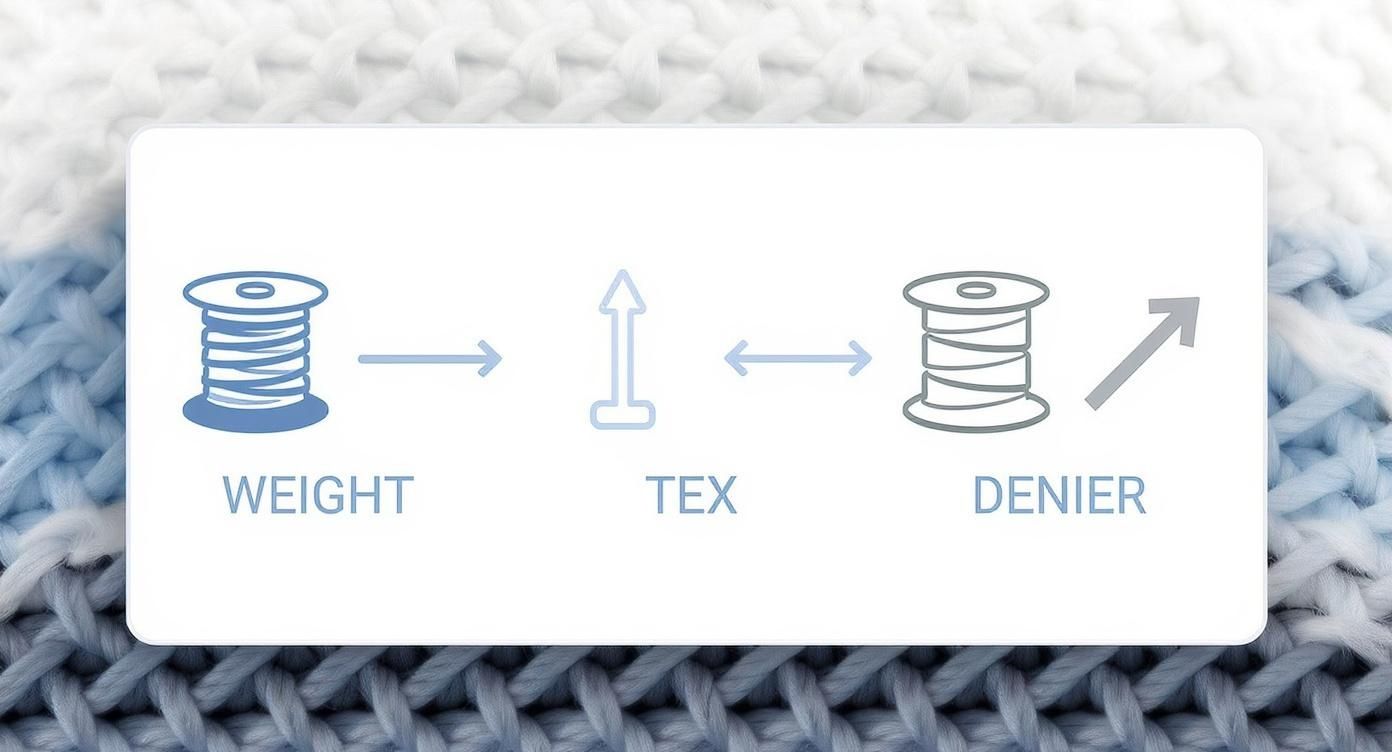
As you can see, a lower Weight number means a thicker thread. It’s the opposite for Tex and Denier, where a higher number means a thicker thread. Keep that in mind, and you'll never get tripped up again.
Comprehensive Thread Size Conversion Chart (Wt, Tex, Denier, NM)
Here it is—the heart of our guide. This table is built for quick lookups and accurate conversions. Whether you're piecing a quilt with a standard 50wt cotton or topstitching denim with a heavy-duty 12wt thread, you'll find the exact equivalent you're looking for right here. This is the key to getting the professional results your project deserves.
| Weight (Wt) | Tex | Denier (d) | Number Metric (Nm) | Recommended Needle Size (US/EU) |
|---|---|---|---|---|
| 100 | Tex 12 | 108d | Nm 85/1 | 60/8 or 70/10 |
| 60 | Tex 25 | 225d | Nm 40/2 | 70/10 or 80/12 |
| 50 | Tex 30 | 270d | Nm 33/2 | 80/12 |
| 40 | Tex 40 | 360d | Nm 25/2 | 80/12 or 90/14 |
| 30 | Tex 60 | 540d | Nm 17/2 | 90/14 or 100/16 |
| 12 | Tex 105 | 945d | Nm 9.5/2 | 100/16 or 110/18 |
A Quick Tip From Our Experience: For the vast majority of quilting and garment projects, you really can't go wrong with a 40wt or 50wt thread paired with an 80/12 needle. It's a flawless combination that we use all the time to get professional results. If you want to get even more specific, check out our complete sewing thread size guide for more project-based advice.
Getting comfortable with different measurement systems is a skill that serves you well beyond just thread. If you want to expand your knowledge, a great next step is mastering international size chart conversion for patterns and fabrics.
Ready to put this chart to the test? Stop by Linda's Electric Quilters and find the perfect thread from our amazing collection to finish your next masterpiece and see just how much of a difference the right size can make.
How to Match Your Needle to Your Thread
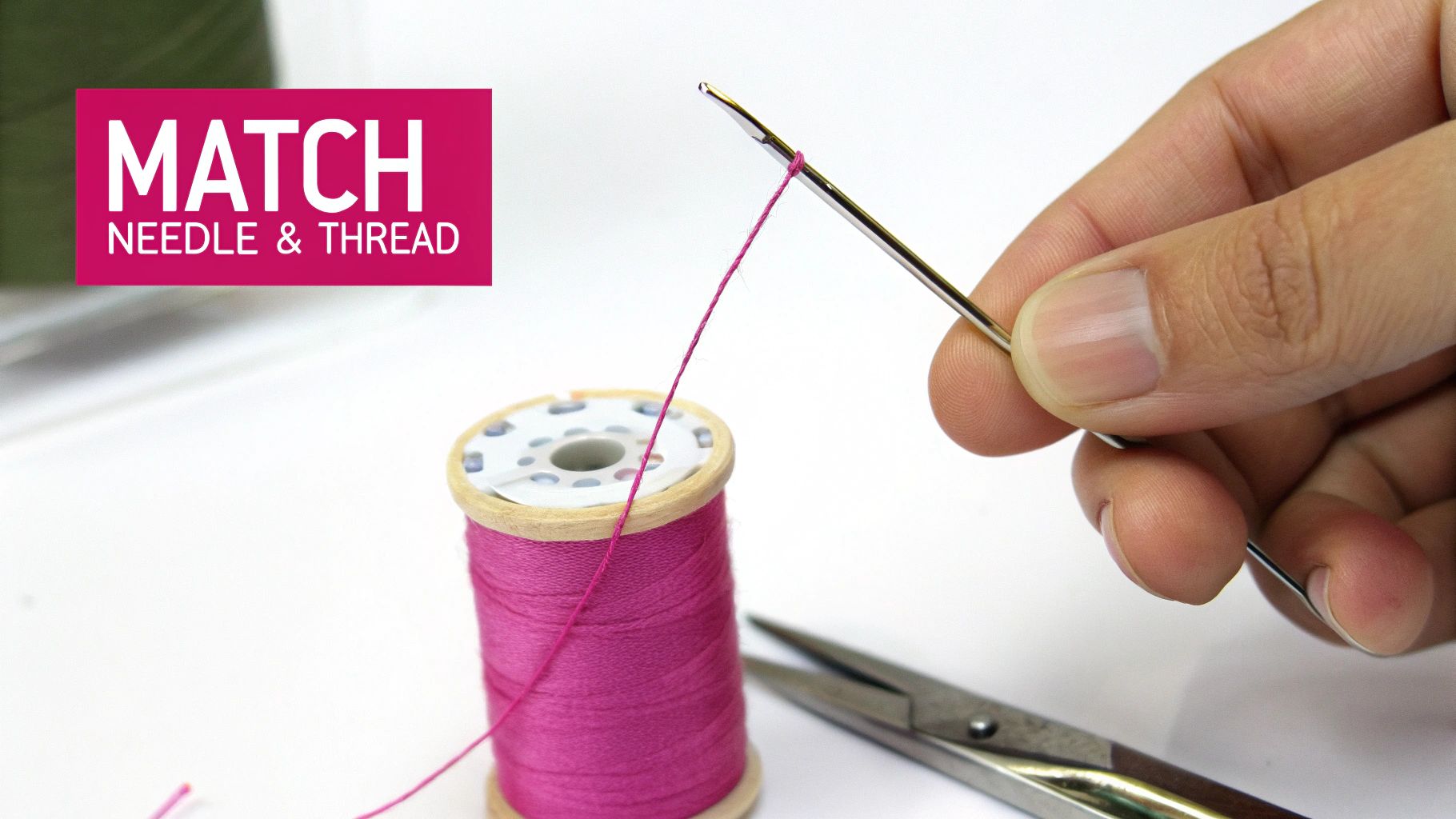
Picking out the perfect thread is only half the battle. To really make your project sing, you have to pair it with the right needle. It's best to think of them as partners—when they work together, your machine just purrs along, leaving a trail of flawless stitches.
Get the pairing wrong, though, and you’re in for a headache. A needle with an eye that’s too small will pinch and squeeze the thread, causing it to shred, fray, and eventually snap right in the middle of a seam. On the flip side, a needle with an oversized eye creates sloppy holes in your fabric and can lead to skipped stitches or wonky tension. Nobody wants that.
The 40 Percent Rule for Perfect Pairings
Here’s a fantastic little trick that the pros swear by: the 40 Percent Rule. The idea is simple. Your thread should fill up about 40% of the needle's eye. This gives the thread just enough room to glide through smoothly without causing friction, but not so much space that it wobbles around and messes with your stitch quality.
You don’t have to get out a magnifying glass to measure this, of course. Just do a quick visual check. Thread the needle and hold it up to the light—the thread shouldn't look like it's being strangled, nor should it look lost in a giant hole. This simple test can save you from a world of sewing machine troubles. If you want to explore different thread types in more detail, you might find our guide on choosing the right thread for sewing helpful.
Quick Matching Guide
To make things easy, here’s a straightforward guide for pairing common thread weights with the right needle sizes. I recommend keeping a copy of this near your sewing machine for quick reference. Having the right tools on hand is the key to finishing any project successfully.
- For Fine 60-100wt Thread: Reach for a smaller 70/10 or 80/12 needle. This combo is perfect for delicate fabrics, heirloom sewing, and those nearly invisible stitches.
- For Standard 40-50wt Thread: An 80/12 or 90/14 needle is your everyday workhorse. This is the most versatile setup and handles the vast majority of quilting, piecing, and garment projects.
- For Thick 12-30wt Thread: You'll need to size up to a 90/14 or even a 100/16 needle. These are what you want for bold topstitching, decorative quilting, and sewing on heavy-duty fabrics like canvas or denim.
Getting your thread and needle combination right from the start is the first step to a beautiful, stress-free project. Here at Linda’s, we have a massive selection of both, so you can always find your perfect match. Find your perfect match at Linda's Electric Quilters today!
How to Choose Thread for Quilting Projects
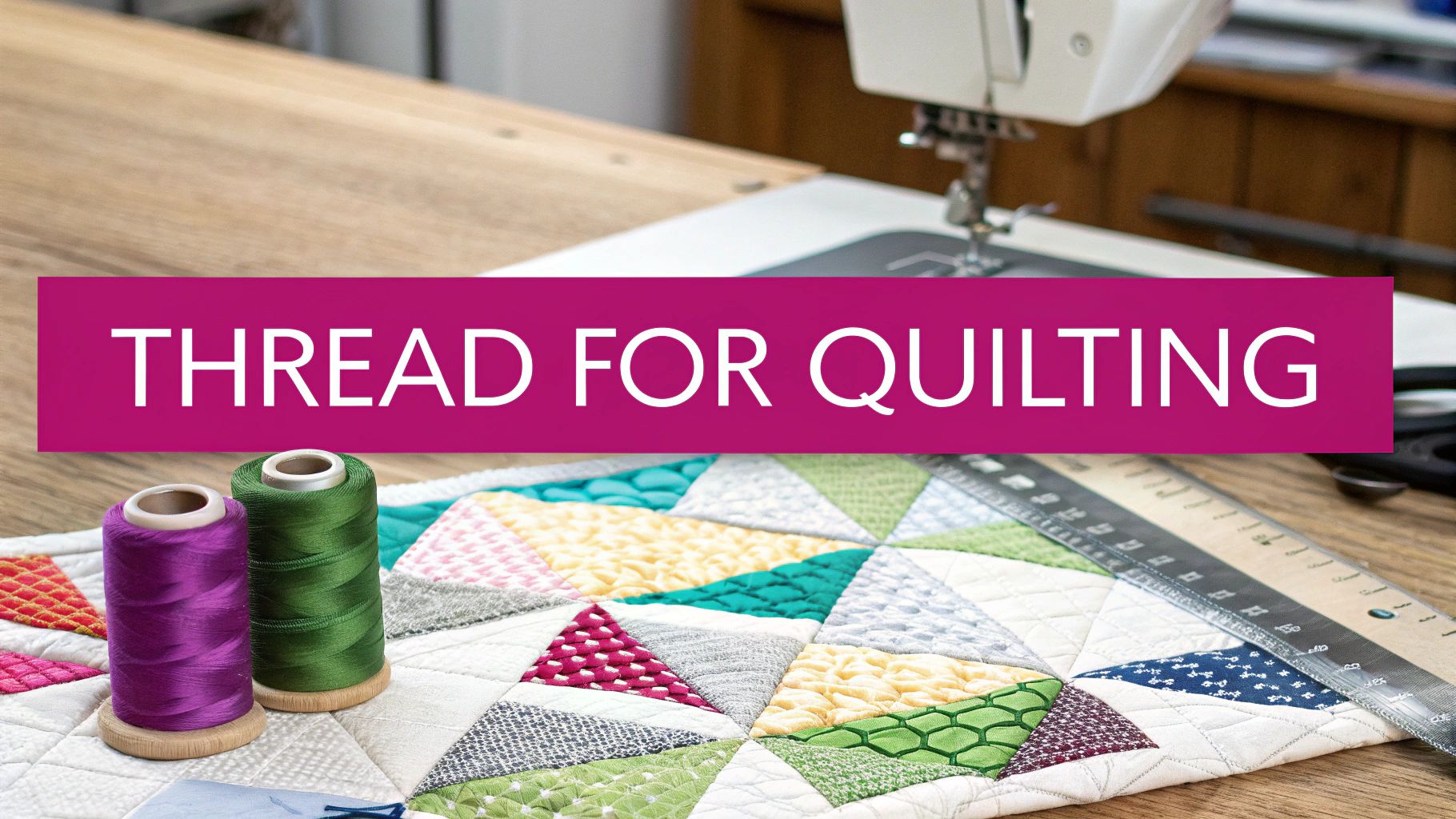
For any quilter, thread is so much more than what holds the fabric together. It's a key design element, a piece of the story woven into every stitch. Choosing the right thread for each step—piecing, quilting, and binding—is absolutely crucial for turning your project into a beautiful, lasting heirloom.
Each part of the process has different needs. If you match the thread's strength, visibility, and fiber to the job at hand, you'll get seams that lay flat, quilting stitches that look just right, and a finished quilt that's built to be loved for years.
Thread for Piecing Your Quilt Top
When you're piecing a quilt top, your goal is to create strong seams that disappear into the fabric. You need them to press nice and flat without adding any extra bulk. This is why a 50wt cotton thread is the industry gold standard. It’s fine but surprisingly strong, sinking right into the fabric to create a tight, clean seam.
Using a 50wt thread is a game-changer for accuracy. It helps your points match up perfectly and ensures your blocks finish at the right size. And since it's cotton, it has the same laundry-care needs as your quilting fabrics, meaning everything will wash and wear beautifully together.
Thread for Machine Quilting
This is where the real fun begins! Your thread choice here can make or break the final look of your quilt. It can either be a quiet, supporting player that adds texture or a show-stopping star that steals the scene. This is a chance to elevate your project from simple to stunning.
-
For Blending In: Want the quilting texture to be the main event without competing with your fabric? A 50wt thread is the perfect choice. It creates a subtle, elegant stitch that adds dimension without being distracting.
-
For a Little Definition: To make your stitches pop just enough to add another layer of design, a slightly thicker 40wt thread works wonders. It gives beautiful definition to both straight-line quilting and flowing free-motion work.
-
For Bold, Decorative Quilting: When you want your stitches to be a major design feature, go big! A 30wt or even a 12wt thread creates a stunning, highly-textured effect. These thicker threads are fantastic for modern quilting or any time you want your quilting to make a statement.
Want to go deeper? We have a complete guide on finding the best thread for quilting that covers different materials and techniques.
No matter what you're working on, the right thread makes all the difference. Here at Linda's Electric Quilters, we’ve hand-picked a premium selection of threads perfect for any quilting project you can dream up.
Ready to finish your masterpiece? Shop our collection of high-quality quilting threads at Linda’s today!
Best Thread Sizes for Garment and Craft Sewing
While quilting certainly has its own set of demands, stepping into the world of garment and craft sewing brings a whole new rulebook for picking the perfect thread. When you move away from standard quilt cottons and into apparel fabrics, the approach changes slightly. Still, the fundamental idea of matching your thread weight to your fabric type holds true.
Nailing these little details is what separates a good project from a great one, giving you durable, beautiful pieces that hang and wear just right.
For most garment projects you'll tackle, a high-quality 40wt or 50wt all-purpose polyester thread is going to be your absolute best friend. This is the workhorse of your sewing room! It hits that sweet spot of strength and fineness, making it perfect for construction seams on light- to medium-weight wovens like cotton lawn, poplin, linen, and rayon challis. Because it has a little bit of stretch, it’s also a solid choice for knit fabrics. Of course, getting the fabric right is half the battle; our guide on the best quilting fabric has some great principles that apply to all kinds of sewing projects.
Specialty Threads for Specific Garments
Of course, not every garment is made from basic cotton. Different fabrics and techniques often need a more specialized thread to get that professional finish and make sure your creation lasts. To finish your project properly, consider these options:
Here are a few common situations you'll run into:
- Heavy-Duty Topstitching: If you're sewing denim, canvas, or sturdy twill, you need a thread that can stand up to the job. A 30wt thread is perfect for creating strong, visible topstitching that really defines seams and pockets on jeans and jackets, giving them that classic, store-bought look.
- Delicate and Sheer Fabrics: For those beautiful, floaty projects using silk, chiffon, organza, or voile, you need a thread that won’t overpower the fabric. A fine 60wt or even an 80wt thread will create nearly invisible seams, preserving the fabric's natural drape without causing puckers.
- Lingerie and Swimwear: When you're working with delicate stretch lace and mesh for lingerie, a fine 60wt polyester thread does the trick beautifully. For swimwear, where you need both strength and stretch, using a woolly nylon thread in your serger's looper is a fantastic choice.
Choosing the right thread is a vital step in bringing your design to life. It’s what ensures every seam isn't just held together, but is beautifully crafted to complement the fabric and style of your garment.
Ready to stitch up your next wearable masterpiece? Linda’s has a huge collection of threads perfect for any apparel or craft project you can dream up. Take a look at our selection and find the ideal product to get started.
Frequently Asked Questions About Thread Sizes
Even with a handy conversion chart, you're bound to run into some specific questions when you're in the middle of a project. Let's tackle some of the most common ones so you can get back to sewing with confidence.
What Happens If I Use the Wrong Thread Size?
Oh, the frustration! Using the wrong thread size is a classic recipe for sewing headaches. If your thread is too thick for your fabric, you'll see puckering and bulky, ugly seams. On delicate fabrics, it can even cause damage and leave holes.
On the other hand, if your thread is too thin, it just won't have the strength to hold your seams together. This can lead to broken stitches and a project that falls apart after the first wash. This mismatch is also a major cause of tension troubles, like skipped stitches and those dreaded "thread nests." If you think tension is the real problem, our guide on how to change bobbin tension can walk you through the fix.
Can I Use Embroidery Thread for Construction Seams?
This is a big one, and the short answer is no—it's not a good idea. Embroidery thread, which is usually a shiny rayon or polyester, is made to look beautiful, not to be strong.
It simply lacks the muscle of an all-purpose polyester or cotton sewing thread. If you use it to piece a quilt or construct a garment, you're setting yourself up for weak seams that can easily pop under stress. All your hard work could literally unravel! Save the pretty stuff for decoration and stick to proper construction threads for everything else. Your project deserves the right materials to last.
Key Takeaway: The strongest seam comes from a balanced stitch. You've nailed it when the top and bobbin threads lock perfectly between the fabric layers, and that only happens with the right thread, needle, and tension settings working together.
How Does Thread Ply Affect Thickness?
You’ve probably seen numbers like 50/2 or 40/3 on a spool and wondered what they mean. "Ply" is simply the number of individual strands twisted together to make a single thread.
- The first number (50 or 40) is the thread weight.
- The second number (2 or 3) is the ply, or how many strands are twisted together.
So, a 50/2 thread is made of two 50wt strands, and a 40/3 thread is made from three 40wt strands. While more plies can create a stronger and rounder thread, the final thickness is still mostly determined by that first weight number.
Ready to put all this knowledge to good use? The team at Linda's Electric Quilters has you covered with the best threads out there for whatever you're creating next. We have the amazing products you need to finish your project with professional results.
Explore our amazing collection of premium threads at Lindas.com!
Once you have matched the size, choose the fiber: our polyester sewing thread guide explains when polyester beats cotton.