
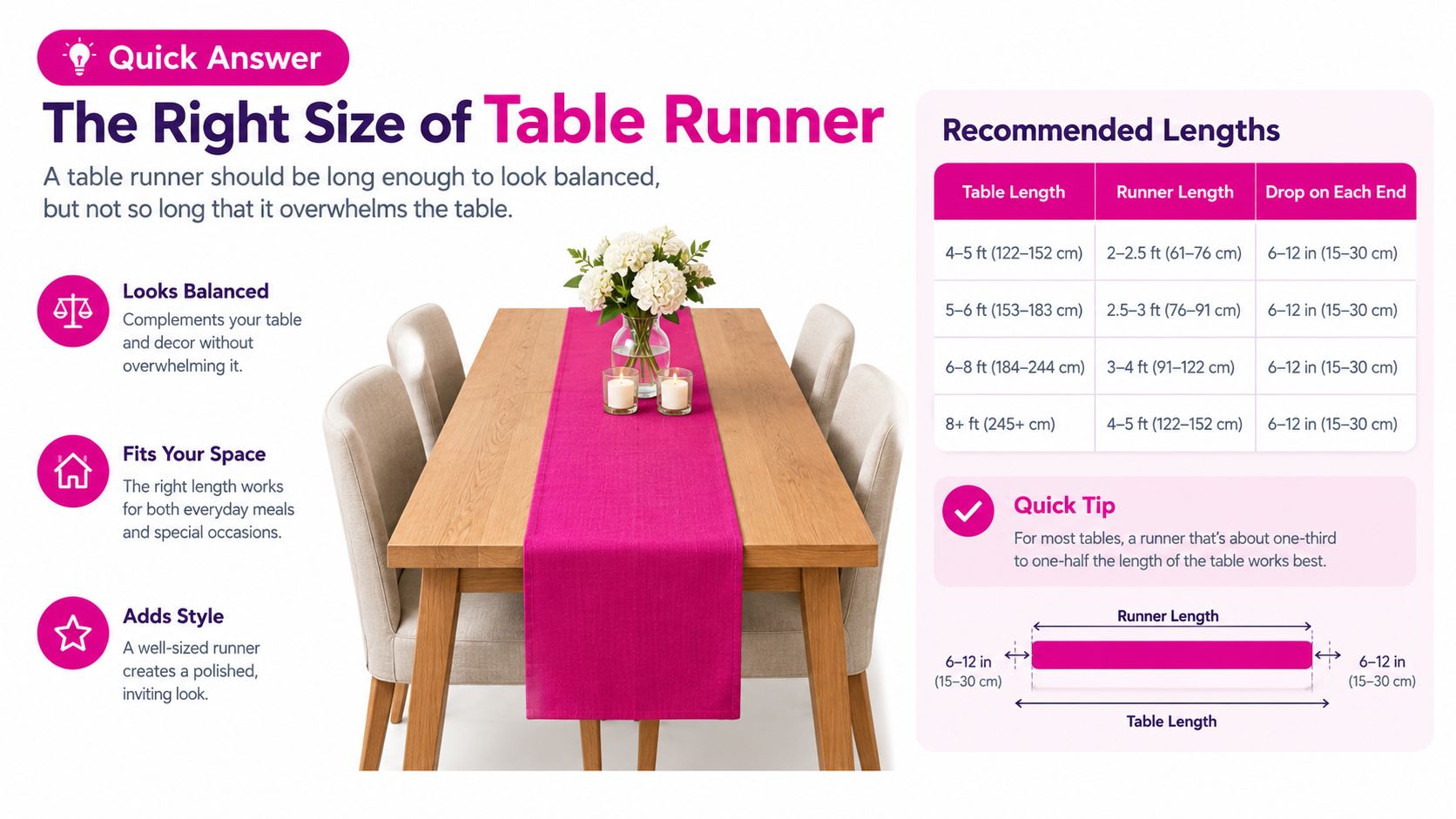
A table runner should be about one-third the width of the table and extend 6 to 12 inches beyond each end. Common market sizes range from 12 to 18 inches wide and 72 to 108 inches long.Kim Seybert's table runner sizing guide
You're probably here because a runner looked perfect in the shop, then seemed too short, too wide, or awkwardly crowded once it reached your dining table. I've seen that happen in quilting rooms and dining rooms around McKinney, Texas. The fix usually isn't a different pattern. It's a better measurement before the first cut.
Quick Answer to the Right Size of Table Runner
A runner that fits well begins with the tabletop, not the number of chairs. Measure the usable surface, then make two calculations:
- Width: Divide the table width by three.
- Length: Add 12 to 24 inches to the table length, allowing 6 to 12 inches per end for the drop, as outlined in Wayfair's table runner size guide.
For example, a 48-inch-wide table suits a runner about 16 inches wide. A 72-inch-long table generally takes an 84- to 96-inch runner. Kim Seybert's table runner sizing guide offers the same practical sizing approach.
The width keeps the runner visible without crowding plates, glasses, serving pieces, or a centerpiece. The length creates enough drape at both ends to look intentional rather than leaving the fabric floating in the middle. For quilting, batting loft, fabric hand, and binding can slightly change how that measurement behaves, so treat the finished dimensions as a working target.
Common market sizes range from 12 to 18 inches wide and 72 to 108 inches long, while some sampled product lines use widths from 15 to 22 inches. A pieced or heavily quilted runner may need a little extra length to show its design, while a narrower width can help control bulk and keep place settings comfortable.
Practical rule: Measure the actual tabletop. Extension leaves, thick edges, and rounded corners can reduce the usable surface.
Before shopping at Linda's Electric Quilters, keep those finished dimensions beside your fabric choices. Tensioning during quilting can also affect the final size, so measure after quilting before trimming and binding.
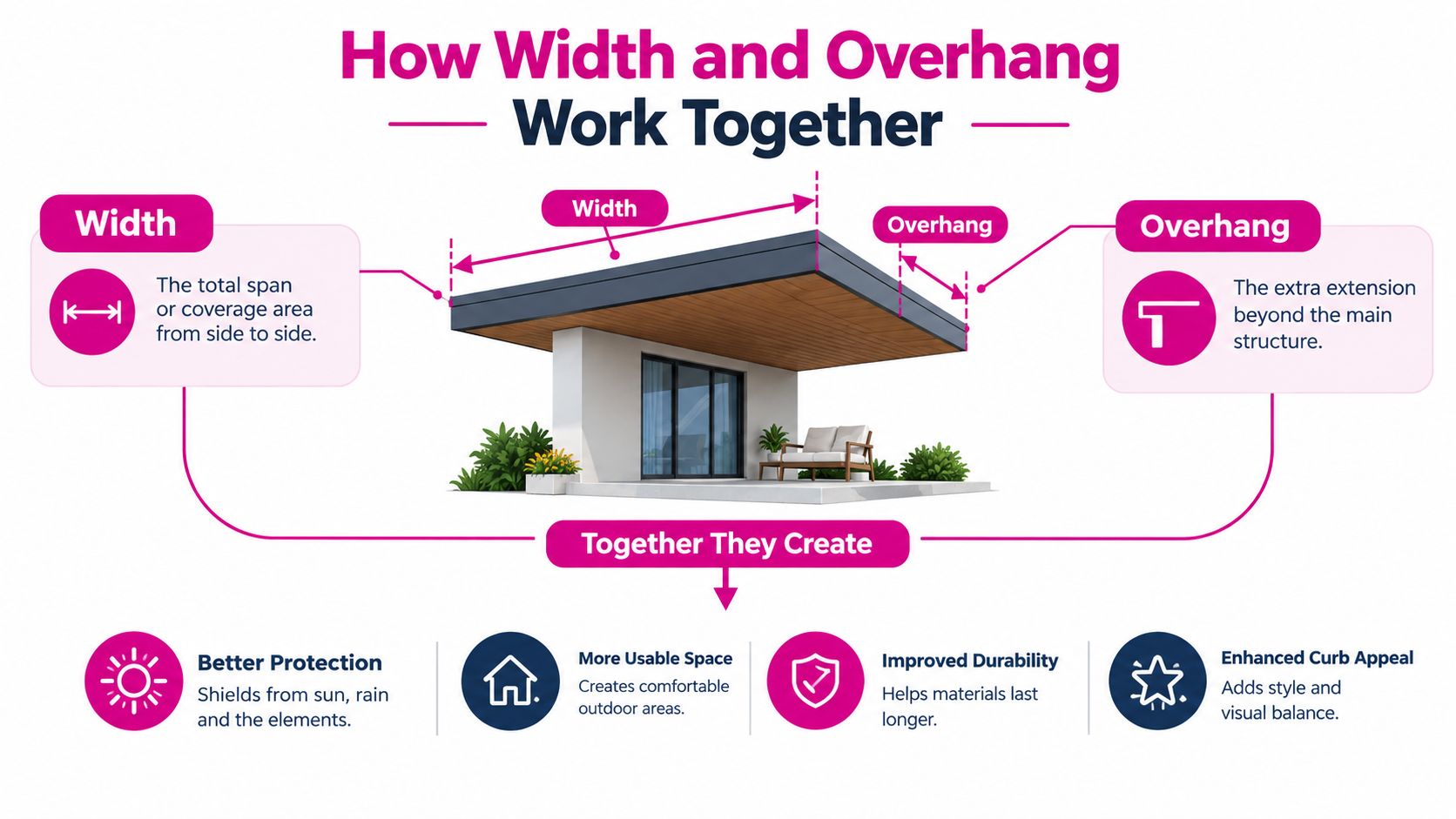
How Width and Overhang Work Together
A runner can fit the table length yet still feel awkward if its width ignores the tabletop and the quilt's structure. Width sets the visual proportion across the surface. Length sets the end drape. Calculate them separately, then check how the finished quilt behaves.
Use a one-third width starting point
Measure the tabletop from side to side and divide by three. For a 42-inch-wide table, that gives a finished runner width of about 14 inches. A 48-inch-wide table points to roughly 16 inches, while a 60-inch-wide table points to about 20 inches. This starting point aligns with Birch Lane's runner sizing guidance, but the quilted result matters more than strict division.
A finished width in the common 12- to 18-inch range often keeps plates, glasses, and serving pieces comfortable. On a wide table, extra width can give a centerpiece a steadier visual base. On a narrow table, trimming the width prevents the runner from crowding place settings. Kim Seybert's table runner sizing guide provides another reference for this proportion.
Turn the finished target into a cut-and-sew plan. For a 14-inch finished width, add both binding allowances to the quilted panel, then add the seam allowance needed for the chosen binding method. If the design includes blocks, borders, and binding, place the pieced width inside that target rather than treating the raw fabric width as the final size.
Add overhang for the fabric you are quilting
Add 12 to 24 inches total to the table length, creating 6 to 12 inches of overhang at each end. Missouri Star Quilt Co.’s runner length guide describes this as a practical range. A soft cotton has a fluid hand and settles into a gentle drape. A thick quilt with generous loft may stand away from the edge, making the drop appear shorter. Tensioning during quilting can also pull the panel inward, so measure after quilting before trimming and binding.
Standard Dimensions by Table Shape and Seating
A runner's cut size should follow the tabletop's geometry, seating pattern, and the way the quilt will hang. Use the table shape to choose the measuring line, then turn that measurement into a finished panel before adding piecing, quilting, and binding allowances. Mon Crochet's table cover and runner size chart offers a useful comparison for common table arrangements.
Rectangular tables
For a rectangular table, use this finished-size formula:
Runner length = tabletop length + total end drop
Runner width = tabletop width ÷ 3
The total end drop is shared between both ends. For example, a 60-inch table with a 16-inch total drop needs a finished runner length of 76 inches, or 8 inches hanging at each end. A 42-inch-wide tabletop gives a width target of 14 inches, which leaves room for a centerpiece while keeping plates and glasses outside the runner's edges.
If the table seats more guests, check the end drop against the chair backs and anyone's knees. A longer runner can look balanced on a large dining table but become awkward when the fabric catches as people sit down. For quilting, treat the target as the finished size after quilting. A high-loft batting or dense quilting tension may draw the panel inward, so leave enough construction allowance before trimming.
Round tables
A round table needs a different length calculation because its usable span is the diameter, not a long and short side. For a runner crossing the tabletop:
Finished runner length = table diameter + 2 × desired end drop
A 48-inch round table with a 6-inch drop at each end needs a 60-inch finished runner. Center it across the diameter so both ends fall evenly. The runner width can still begin with the tabletop's diameter divided by three, but reduce it if the strip crowds place settings or makes the centerpiece appear boxed in.
A centered strip works well with a low bowl, vase, or single quilt block. If the design is shorter than the calculated length, center it on the tabletop and treat it as a decorative panel rather than a runner with end drape. That distinction prevents confusion when choosing a pattern.
Square tables
A square table supports two layouts, and each requires its own measurement.
For an edge-aligned runner, use the side length:
Finished runner length = table side + 2 × desired end drop
A 42-inch square table with a 6-inch drop at each end needs a 54-inch finished runner. Align the strip with two opposite edges and keep the centerpiece within its central area.
For a diagonal layout, calculate the tabletop diagonal first:
Diagonal = side length × 1.414
Finished runner length = diagonal + 2 × desired end drop
A 42-inch square table has a diagonal of about 59 inches. With a 4-inch drop at each end, the finished runner is about 67 inches. This layout uses more surface area, so a narrower strip may preserve space for place settings.
After selecting the finished dimensions, compare them with the pattern's stated size. Linda's Hot Pad Table Runner and Straight & Easy Table Runner & Place Mats projects can help when planning coordinated pieces, but the measured tabletop should control the final cut list.
How to Measure Calculate and Cut Your Runner
A reliable cut list starts with the table you use. Extend the leaves if they will stay in place, account for a thick apron, and check whether the top is rectangular. Measure the usable length and width, then record those figures before choosing fabric.
For a round table, measure across its widest point. Mark the centerline with removable fabric marker or painter's tape. Lay muslin or paper on the tabletop as a temporary pattern. This quick mock-up shows whether the runner crowds place settings or leaves the centerpiece feeling boxed in.
Use the formula from the Quick Answer for finished width and length, then select the shorter or longer end drop for the intended drape. The finished dimensions come first. Construction allowances come afterward.
Convert finished size into a cut list
Quilting changes the measurements. Piecing, pressing, dense quilting, batting loft, binding, and fabric shrinkage can all reduce the final size. Make a small test sandwich from the same fabric, batting, and thread. Quilt it, measure it before and after, and use the result as your shrinkage check.
For a simple runner with a finished width of W and finished length of L, a practical planning formula is:
- Cut top width = W + 1 inch for 1/4-inch side seams + binding allowance + 2% quilting draw-in
- Cut top length = L + 1 inch for 1/4-inch end seams + binding allowance + 2% quilting draw-in
Adjust the seam allowance to match your pattern. If the runner will be faced rather than bound, replace the binding allowance with the amount required by that finish. The test sandwich gives you a better draw-in figure than a blanket assumption.
A quilted runner should retain a natural drape rather than stand stiffly at the ends. Batting with more loft can provide softness and texture, but it may also increase quilting draw-in. During loading, use even tensioning. A bobbin and top thread with balanced tension, steady feeding, and moderate loading pressure help the runner settle consistently after quilting. Pulling the sandwich too firmly can change how it relaxes once removed from the frame.
Check the plan with examples
For a 72-inch table, apply the finished-size formula from the Quick Answer, then add the construction allowances above. A 60-inch table with 6 inches of overhang at both ends has a 72-inch finished runner before those allowances are added. The finished measurement is the target that controls the cut.
International charts may list widths of 25, 30, 33, 35, and 38 centimeters, with lengths of 130, 180, 230, and 270 centimeters.Interior Design Info's table runner dimensions guide Compare those finished dimensions with your tabletop rather than relying on a size label.
After writing down the finished dimensions, choose fabric, batting, and notions from Linda's batting category. The batting affects loft, stability, and how the runner settles on the table.
Styling and Placement That Keeps the Table Functional
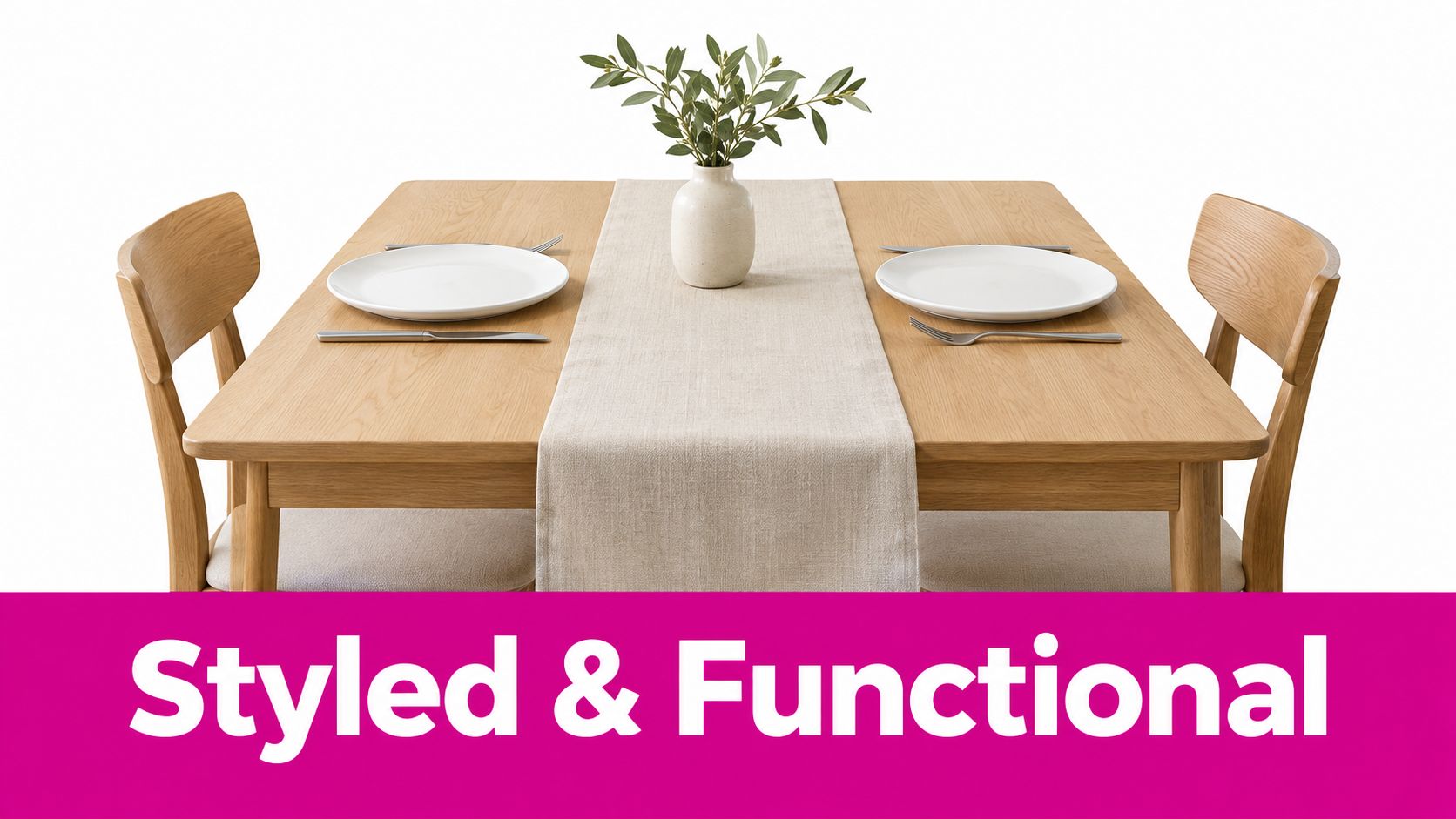
A runner can look balanced and still interfere with dinner. After quilting, place it on the table, smooth it from the center outward, and check the drape from a seated position. The end drops should hang evenly, while the side edges should stay flat enough for plates and glasses. Traditional styling often uses 6 to 10 inches of overhang, as noted in Wayfair's table runner size guide.
Use a hands-on place-setting test before binding. Set 12-inch dinner plates 1 inch from the runner edge, then confirm about 2 inches of clear tabletop space for glasses. Check whether the batting's loft lifts a plate edge or makes it wobble. If it does, press the runner, review the quilting draw-in, or adjust the edge finish before adding more tableware.
Layer with intention
A runner may sit on wood, stone, or glass, or over a tablecloth. Keep layers distinct through color, texture, or scale. A heavily pieced runner already has visual movement, so a simpler centerpiece usually keeps the table from feeling crowded.
Low pieces work best for shared meals. Trays, shallow bowls, and low floral arrangements anchor the center without blocking conversation or catching sleeves during serving. Ideas from Suburban Furniture dining accessories can help you coordinate nearby pieces without adding unnecessary objects.
Pro tip: Check the runner after quilting, not only before. Watch for ends that spring upward, curled edges, or a center that no longer lies flat. Those signs can point to uneven tensioning, excess loft, or binding that needs easing.
For finishing support, Linda's Innova quilting accessories can help with loading, tensioning, and edge work. Choose tools that suit the runner's thickness and construction, then test the setup on a sample before working on the finished piece.
Choose Sew and Style With Confidence
A finished runner should pass two tests: it must look balanced across the table, and it must stay practical when plates, chairs, and serving dishes are in use. Use the earlier shape chart and sizing guidance as your starting point, then make a sample from fabric and batting before cutting the final top. The sample reveals how quilting, loft, and tensioning affect the drape.
Your cut-and-sew checklist is simple: confirm the finished width, confirm the finished length, add the seam or binding allowance, and test the batting loft for the drape you want. Record the target measurements beside your cutting mat. Measure the quilted top before binding, then check the completed runner again after the edge finish.
A well-sized runner gives the quilting room to show without crowding place settings. It also gives a centerpiece a clear visual path. For general length guidance, compare your plan with Missouri Star Quilt Co.’s runner length guide, then adjust for your table shape, fabric weight, and preferred overhang.
Frequently asked questions
How should I measure a table with extension leaves?
Measure the table in its shortest and longest configurations. If the runner will stay on the table while the leaves are opened, size it for the extended length and check that the ends still sit safely above chair backs or serving areas. If you use the leaves only occasionally, a second runner or a reversible design may work better than forcing one length to suit both setups.
Will washing change the finished size?
It can. Cotton fabric and batting may shrink, and quilting can draw the layers inward. Prewash and dry the materials according to their care requirements before cutting when you want more predictable measurements. A small test sandwich also shows whether the fabric changes in hand, loft, or edge behavior.
Can I use a runner on a round table?
Yes. Center it across the diameter and keep the centerpiece low enough for the quilting to remain visible. The table's curve makes small placement errors more noticeable, so smooth the runner before setting the table.
What should I do if the finished runner is smaller than planned?
Check whether quilting draw-in, seam width, binding, or shrinkage caused the change. A narrow border, adjusted binding, or a revised centerpiece arrangement may restore balance without hiding the quilted design.
Linda's Electric Quilters offers fabric, batting, thread, and sewing notions for runner projects. Visit Linda's Electric Quilters to select supplies that suit the intended thickness and drape. For sizing comparisons, Kim Seybert's table runner sizing guide provides another reference point.