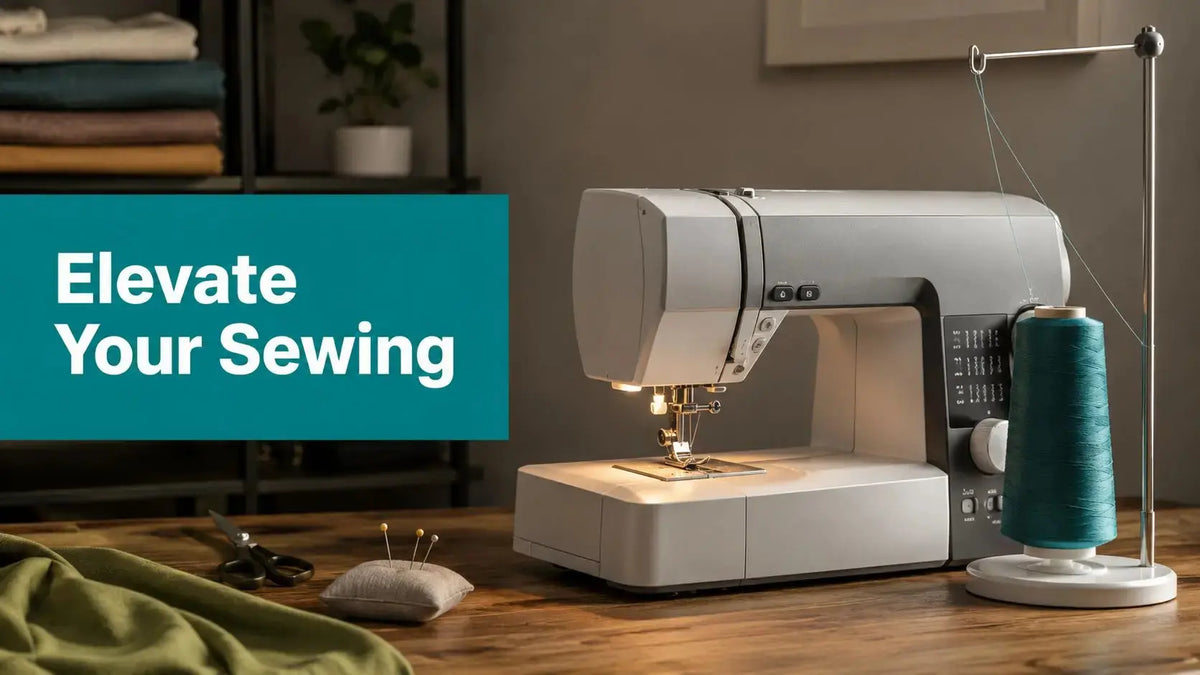
If you've ever battled another tangled mess of thread or wondered why your stitches are inconsistent, you're not alone. The solution is often a simple one: a thread stand for your sewing machine. This small tool makes a massive difference, especially for quilters and embroiderers, by delivering thread perfectly to your machine. It’s the first step to eliminating breakage, improving tension, and achieving professional-looking results.
Ready to elevate your sewing projects? You can browse our amazing selection of thread stands at Linda's to find the perfect one for your setup.
Why Do I Need a Thread Stand for My Sewing Machine?
Let's be honest—nothing is more frustrating than when your thread snaps mid-project or a brand-new cone gets hopelessly tangled. When this happens, it’s easy to blame the thread or the machine. But the real culprit is usually just physics. A thread stand fixes the mechanical problem that occurs when you try to use large, economical thread cones on a standard sewing machine.

Here at our shop in McKinney, Texas, we tested this on an Innova longarm and found that a weighted thread stand is an absolute must-have. The reason is simple: it works. It allows the thread to pull vertically off a cross-wound cone, which is exactly how those big cones are engineered to be used. This simple change prevents the thread from twisting on its way to the needle, which is the primary cause of friction that leads to poor tensioning and breakage.
This isn't just a theory; we see the results every day. You can discover more insights on why you need a thread stand to see just how much it can help.
By adding this one simple tool to your setup, you can:
- Finally say goodbye to your biggest thread frustrations.
- Start producing more consistent, beautiful stitches.
- Confidently buy and use those large, budget-friendly thread cones from our extensive thread collection.
Once you understand how a thread stand for a sewing machine works, you’ll see how it can completely change your sewing for the better. If you want to see it in action, you can even watch our experts demonstrate how to use one in our live shopping clip tutorials.
What Does a Thread Stand Do?
Have you ever wondered why you can't just pop one of those big, economical cones of thread onto your machine's regular spool pin? The answer comes down to a bit of simple physics and the way thread is wound. A thread stand for a sewing machine is the elegant solution to this very common mechanical problem.
Think of it this way: trying to unroll a huge paper towel roll by pulling it from the side is a messy, frustrating affair. The paper catches, tears, and spools out unevenly. But pulling a single sheet straight up from a countertop dispenser? That's a smooth, controlled, and predictable process.

A thread stand essentially becomes that perfect dispenser for your thread cone, allowing it to feed into your machine the way it was designed to. This is crucial for proper tensioning and stitch formation.
The Problem with Cross-Wound Cones
Most home sewing machines are designed to use small, "stacked" spools. These spools sit on a horizontal or vertical pin and are meant to spin as the thread unwinds. For their size, this system works perfectly.
The large, money-saving cones, however, are "cross-wound." The thread is wrapped in a crisscross pattern specifically so it can be pulled vertically, straight off the top of the cone without the cone itself moving.
When you try to force one of these cross-wound cones onto your machine's standard spool pin, it has to tumble and jerk around to release the thread. This tumbling action puts a massive amount of extra twist into the thread before it even enters your machine. This twist creates friction, leading to inconsistent tension, skipped stitches, and the dreaded thread break.
The Anatomy of a Solution
A thread stand is a brilliantly simple device. Its purpose is to create a clean, friction-free path for the thread. The basic components work in harmony to deliver thread to your machine just the way it needs it.
Here’s a look at the essential parts:
- Weighted Base: This provides the stability you need. A heavy base ensures that even a big, full cone of thread won’t wobble or tip, which is especially important during high-speed sewing or longarm quilting.
- Tall Vertical Rod: This pole gives the thread stand the necessary height, lifting the thread high above your machine so it has a clear path.
- Overhead Guide Arm: This is the real magic. The guide arm positions the thread directly over the center of the cone. This creates the ideal, straight path for the thread to travel up and off the cone before it ever heads toward your machine.
It’s this exact principle that our technicians in McKinney, Texas, use when setting up every Innova longarm for flawless, high-speed performance. For essential items like these, feel free to explore our complete machine parts category.
What Are the Different Types of Thread Stands?
When it comes to picking out a thread stand for a sewing machine, you'll find two main types: freestanding and machine-mounted. The one that's right for you really comes down to your setup, the machines you own, and the kinds of projects you love to do.
Freestanding vs. Machine-Mounted Thread Stands
A freestanding thread stand is the undisputed heavy-hitter in the sewing room. We love these for their incredible versatility. Since they don't attach to your machine, you can pair them with practically anything—a standard home sewing machine, a serger, an embroidery machine, or even a massive longarm quilter.
Their biggest plus is a heavy, weighted base that keeps them rock-steady. This stability is absolutely essential when you're working with those big, economical cones of thread. Our team at Linda's Electric Quilters always points serious quilters toward a freestanding model with a solid metal base. It’s simply the most reliable way to get a smooth, frustration-free stitch.
A perfect example is the Superior Thread Holder, a top-quality freestanding stand that our experts rely on every day.
On the other hand, machine-mounted stands are designed to attach right onto your sewing machine's body. They’re a tidy, space-saving option, but that convenience can come with trade-offs. They're often built for a specific machine model and usually don't have the strength to handle larger thread cones.
To help you decide, this table breaks down the key differences.
Comparison Table: Freestanding vs. Machine-Mounted Thread Stands
| Feature | Freestanding Thread Stand | Machine-Mounted Thread Stand |
|---|---|---|
| Versatility | High (Works with any sewing machine, longarm, or serger) | Low (Often model-specific) |
| Cone Size Capacity | Excellent (Handles large industrial cones) | Limited (Best for small to medium spools) |
| Stability | Superior (Heavy, weighted base prevents tipping) | Good (Relies on the machine's own stability) |
| Placement | Flexible (Can be positioned for an optimal thread path) | Fixed (Limited to the mounting point on the machine) |
| Best For | Longarm quilters, embroiderers, users with multiple machines | Casual sewers, small sewing spaces, brand-specific setups |
Ultimately, a freestanding model offers far more flexibility, while a machine-mounted one can be a neat solution for a compact space. Shop our thread stands today to complete your project.
Pro-Tip From Our Longarm Experts When using tricky metallic or slippery rayon threads, slip a thread net over the cone, even when it's on a stand. This adds just a touch of resistance to stop the thread from pooling at the base when you pause. That little pool of thread is a guaranteed way to get a nasty tangle when you start stitching again. It's a simple trick we use on our Innova longarms in the shop to get flawless results with specialty threads.
How to Set Up Your Thread Stand for Perfect Tension
Getting your thread stand set up correctly is the single best thing you can do to improve your stitch quality. A good setup creates a flawless path for your thread, which is the secret to getting rid of puckering, reducing breaks, and achieving perfect stitches. Think of it as creating a smooth on-ramp for your thread before it hits the highway of your sewing machine.
Your goal is to create a long, gentle curve for the thread to travel. This minimizes friction and helps normalize the tension before the thread even gets to your machine's first tension disc.
This guide walks you through the simple, four-step process for a perfect thread stand setup.

The right placement and height create an ideal, low-stress environment for your thread. This is how you prevent frustrating issues when feeding thread from a cone.
Creating the Optimal Thread Path
First, let's talk about placement. Position your freestanding thread stand about 12 to 18 inches directly behind your sewing machine. Our McKinney team found this "buffer zone" is non-negotiable for high-speed quilting on an Innova longarm; it gives the thread space to relax and straighten out.
Next, adjust the height. Extend the telescoping arm so the final thread guide is noticeably higher than your machine's built-in thread guide. This creates a gentle downward slope, letting gravity help feed the thread smoothly.
Finally, pull the thread from the stand's arm and guide it directly to your machine's first thread guide. Bypass the machine's built-in spool pin entirely. The thread should form a long, graceful arc with no sharp angles.
Why Stability Is Non-Negotiable
That heavy, weighted base isn't just for show. It's absolutely essential for keeping the stand from tipping over when thread is being pulled off a cone at high speed. This is especially true with big cones, which can be 10 inches tall. You can see how much stability matters when watching high-speed machines work in this detailed video on thread delivery.
By following these steps, you ensure your thread stand is actively improving your stitch quality. If you still have issues, it might be time to look at other factors. Our guide on troubleshooting machine tension can help pinpoint the real problem.
How a Thread Stand Can Transform Your Stitch Quality and Efficiency
A thread stand for a sewing machine is one of the most impactful tools for improving your stitch quality and sewing efficiency. By giving your thread a smooth path, it solves a host of common problems, from puckered fabric to those dreaded "railroad" tracks in your stitches.
It all comes down to how the thread comes off the spool. A thread stand allows the thread to unwind vertically, the way it was wound at the factory. This eliminates the twisting that happens when you use a horizontal spool pin, which in turn prevents tension spikes and breakage. The difference is night and day. This one simple tool can reduce your thread breaks by up to 65%.

Taking Your Work from Hobbyist to Professional
For those who rely on their machines for income or are serious about their craft, that boost in efficiency is a game-changer. Nowhere is this more obvious than in professional machine embroidery. You can see a detailed breakdown of these findings and how they translate to real-world sewing.
On top of performance benefits, a thread stand opens the door to huge cost savings. It gives you the freedom to buy thread on large, economical cones. These cones, which are almost impossible to use with a standard machine spool pin, offer a much lower cost per yard, letting you build a vibrant thread collection without draining your wallet. Our extensive thread collection is a great place to start.
As our experts in McKinney often say, "When you're quilting a king-size quilt on a longarm, a single thread break can cost you 10 minutes of production time. A thread stand nearly eliminates these breaks, saving hours on a large project."
The small investment in a thread stand pays for itself almost immediately. It saves time, drastically reduces frustration, and noticeably elevates the quality of your work, making it an indispensable tool.
Choosing the Best Thread Stand for Your Sewing Needs
So, you're ready to add a thread stand to your sewing room? That's a great move. Picking the right one isn't complicated, but knowing what to look for will make all the difference.
First, think about how many spool pins you'll need. For most sewing, a single-pin stand does the job. But if you do twin-needle sewing or like having your next color queued up, a double-spool holder is a fantastic upgrade.
Evaluating Key Features
The next thing to look at is the base. For anyone running a longarm or doing high-speed machine embroidery, a heavy, metal-based stand is essential. A weighty base is what keeps the whole thing from tipping over. Trust us, you don't want it dancing across your table.
Also, look for a stand with an adjustable height. This lets you create that perfect, gentle arc for the thread as it travels to your machine, which is key for smooth, even tensioning.
Finally, double-check that the stand can handle the different types and sizes of cones you use. A truly versatile stand should accommodate everything from small spools to large industrial cones. You can learn more about the rise of thread stands and why they’ve become so popular.
At Linda’s Electric Quilters, every thread stand we carry has been personally vetted by our team for stability, performance, and durability. An investment in the right stand is an investment in better, more enjoyable sewing.
Now that you know what to look for, we invite you to shop our curated collection of thread stands and check out our other essential notions to help you finish your projects like a pro.
Frequently Asked Questions About Thread Stands
Here at our shop in McKinney, Texas, we’ve heard just about every question. We’ve gathered the most common ones here to help you get back to stitching without a single snag.
Can I Use a Thread Stand for Any Type of Thread?
You absolutely can. While a thread stand for a sewing machine is a must-have for large, cross-wound spools, it's also your best friend when dealing with fussy specialty threads like metallics, silks, or delicate rayons. A thread stand feeds them smoothly from above, preventing the twisting that leads to frustrating snaps and shredded thread.
How Many Spools Does My Thread Stand Need?
This depends on your work.
- Single-Spool Stand: For most piecing, quilting, and general sewing, one spool pin is all you’ll need.
- Multi-Spool Stand: If you love twin-needle sewing, like to blend thread colors for embroidery, or use a serger, a stand with two or more spool pins is a massive time-saver. We usually point people toward a two-spool stand here at Linda's for its versatility.
Will a Thread Stand Work with My Specific Machine?
Yes, this is the best part about a freestanding thread stand—it’s truly universal. Because it sits independently behind your machine, it’s compatible with practically any sewing machine, embroidery machine, serger, or longarm out there, including all Innova models. You simply bypass your machine's built-in spool pin.
My Thread Still Breaks. What Should I Check?
It's the worst feeling when you've done everything right and the thread still snaps. Run through this quick checklist:
First, make sure the guide arm is high enough. You're looking for a gentle, downward angle. Next, check your needle. Is it fresh? Is it the right type and size for your thread? A dull or slightly bent needle is the number one culprit. Our team finds that a new needle fixes over 90% of stubborn thread-break issues.
At Linda's Electric Quilters, we know that the right tools make all the difference. Explore our collection of high-quality notions to find everything you need for a smoother, more joyful creative process.