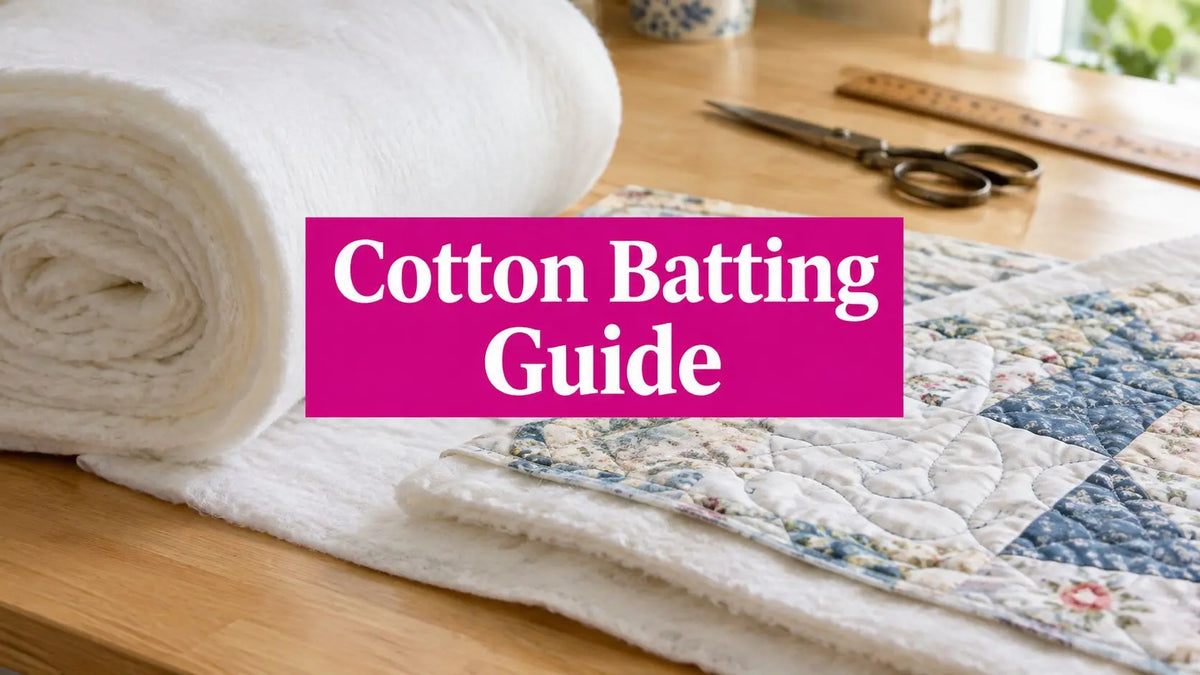
Cotton batting is a low-loft, natural-fiber layer placed between a quilt top and backing, and it's typically about 1/16 inch to 1/8 inch thick, depending on construction. It's breathable, soft, and drapable, so it feels flatter and more flexible than springy polyester batting.
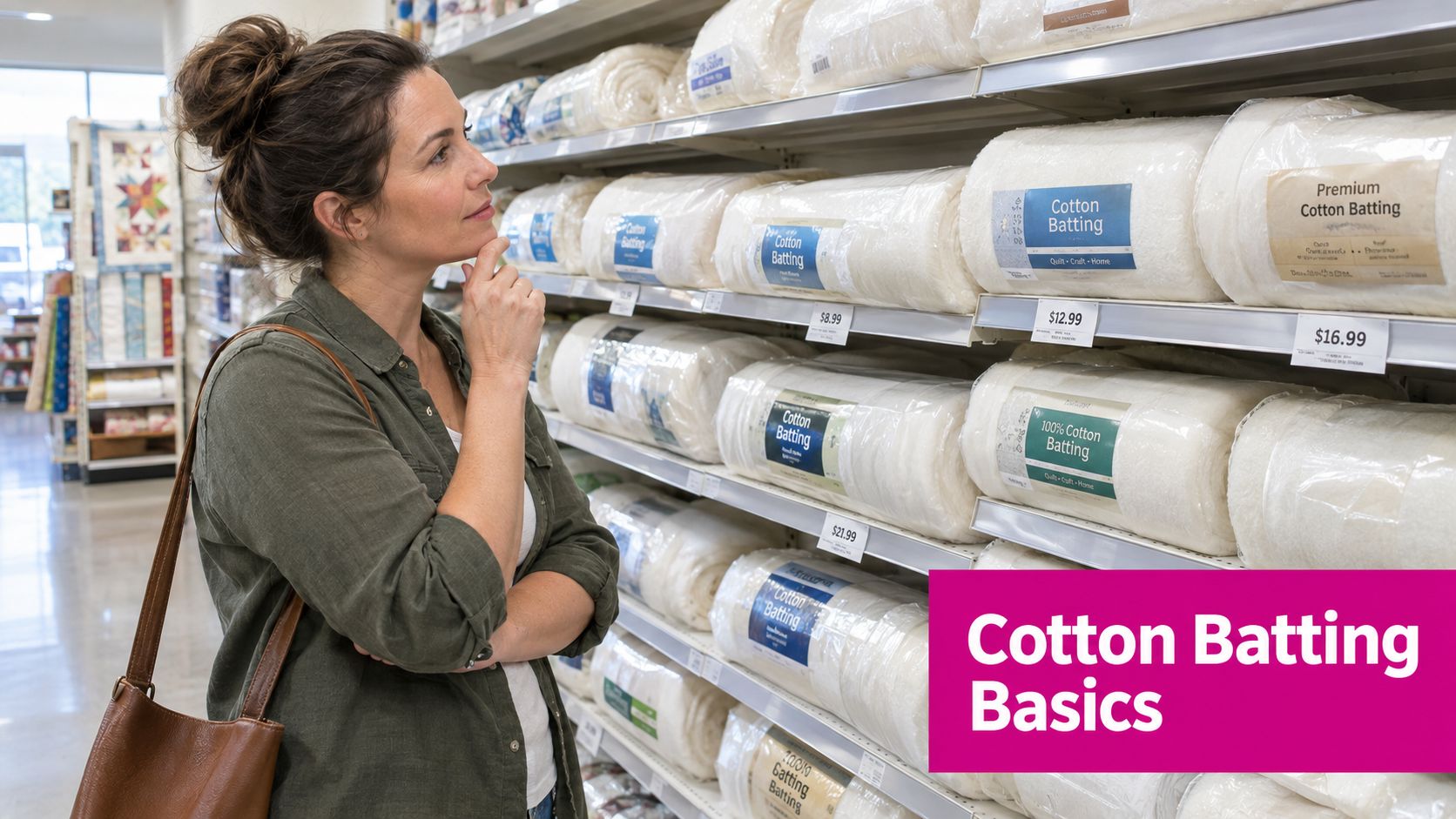
You're standing in the batting aisle, looking at rolls that seem nearly identical. One says cotton, another says scrim-backed, and a third promises easy machine quilting. The label matters because batting changes how your quilt feels, how it behaves during tensioning on a frame, and how much quilting distance the fibers can handle.
The right choice depends on more than fiber content. Loft, stabilization, shrinkage, drape, width, and your quilting design all affect the finished quilt. This guide will help you choose cotton batting with the confidence of someone who has already loaded it onto a longarm.
Cotton Batting Explained for Modern Quilters
At its simplest, cotton batting is cleaned cotton fiber formed into a soft sheet. You place it between the pieced or appliquéd quilt top and the backing, then secure all three layers with quilting stitches. Cotton is usually low loft, which gives the finished quilt a flatter profile, clear stitch definition, and natural drape.
Many quilting references describe cotton batting as breathable and comfortable for quilts used in warm weather. That breathability can make a cotton batt appealing for a summer bed quilt, while a thicker or higher-loft fiber may feel more suitable when you want added warmth. Cotton also has a different hand from polyester. Polyester tends to feel springier and puffier, while cotton settles closer to the fabric layers.
What loft means on the quilting frame
Loft is the thickness of the batting. A low-loft cotton batt usually compresses easily under the presser foot and doesn't create the tall, rounded texture associated with high-loft polyester. That lower profile can make ruler work and detailed free-motion designs feel more controlled.
On a longarm, pay attention to how the batt responds as you advance the quilt. Cotton can grip the fabric layers instead of sliding freely, so careful roller tensioning and a smooth hand across the take-up area matter. If the quilt sandwich feels tight, loosen the frame tension before assuming the batting is the problem.
Frame rule: A low-loft batt can still produce beautiful texture, but it won't hide uneven tension or oversized thread loops.
Cotton batting also comes in natural and bleached versions. Natural cotton can add warmth to very light fabrics, while bleached batting keeps white or pale quilt tops looking cleaner. Before you buy, check the label for loft, stabilization, quilting-distance guidance, and care instructions.
From Hand-Carded Fiber to Commercial Cotton Batting
Long before packaged batting appeared in quilt shops, quilters prepared their own filling. They cleaned raw cotton, separated the fibers, carded them into a more even mass, and spread handfuls across the backing. The process took patience, and the loose fibers could shift while the quilt was being assembled.
The cotton gin became an important upstream milestone. Eli Whitney invented the cotton gin in 1793, and the machine sped up the removal of seeds from cotton fiber, as documented in this history of cotton batting. Cleaner, more accessible fiber made cotton easier to prepare for textile use, although home quilting still relied heavily on hand labor.
Why early quilts needed dense quilting
When loose cotton was spread by hand, stitches did more than decorate the quilt. They held the filling in place. Dense quilting helped prevent the batt from migrating into empty areas, especially when the quilt was handled, folded, or washed.
Commercial production changed the workflow. Stearns & Foster began manufacturing cotton batting in Cincinnati in 1846, and historical records note that early cotton batting was sold in 32-inch or 36-inch widths, which often meant piecing the batt for a larger quilt. The factory-made sheet offered more consistency than a layer assembled from loose handfuls.
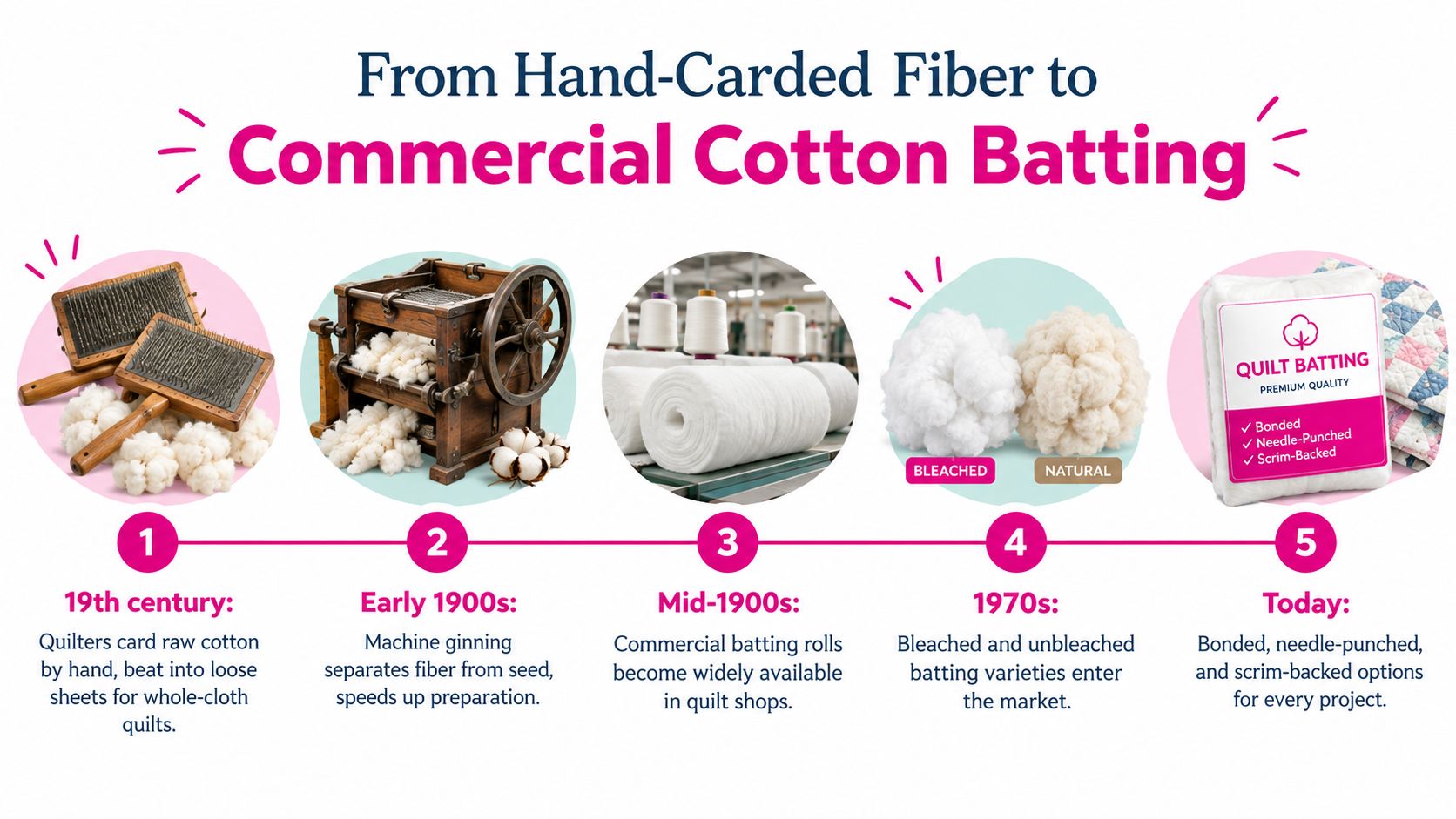
Modern cotton battings use processes such as needle punching, bonding, and scrim stabilization to control fiber movement. Products such as Warm & Natural and Heirloom represent the kind of consistent, packaged batting that lets a quilter focus on design rather than preparing raw cotton.
That history still explains a practical rule you'll notice today. The looser and less stabilized the cotton batt, the more closely your quilting may need to be placed.
Loft Construction and Stabilization in Cotton Batting
Two cotton battings can contain similar fibers and still behave very differently. The difference often comes from how the fibers are held together.
Think of the construction like household materials:
- Bonded batting resembles a dense kitchen sponge. Fibers are held together with bonding agents or heat, creating a more uniform sheet that can feel firmer or slightly paper-like.
- Needle-punched batting is closer to a loofah. Barbed needles mechanically tangle the fibers, creating a felted web with a softer, more textile-like hand.
- Scrim-backed batting adds a thin stabilizing mesh to the fiber web. That mesh helps resist stretching and fiber migration, which can be useful while the batt travels across longarm rollers.
How to identify needle-punched batting
Needle-punched batting commonly has a right and wrong side. The side where the needles enter can show dimples, while the exit side can show nubs, according to this needle-punched batting reference. If the package doesn't clearly identify the right side, inspect the surface before loading the quilt.
The difference isn't merely cosmetic. A needle-punched batt can have a directional feel, and placing it consistently can help the layers feed more smoothly. Run your hand over the surface before you attach the quilt top, especially if you're working with a large frame and a dense design.
Why scrim changes longarm handling
Scrim adds stability, but it can also reduce the loose, fluid feel some quilters want for hand quilting or softly draped quilts. Product charts indicate that plain cotton batting may tolerate quilting spacing of about 4 inches, while scrim-backed options can be engineered for spacing up to 8 to 10 inches, depending on the product. Check the manufacturer label rather than treating those distances as universal.
| Construction Type | Stitch Distance | Hand Feel |
|---|---|---|
| Bonded cotton | Follow the product label | Firmer and more uniform |
| Needle-punched cotton | Often closer spacing, product dependent | Soft, flexible, lightly textured |
| Scrim-backed cotton | Often up to 8 to 10 inches, product dependent | Stable, less prone to stretching |
On an Innova-style longarm, scrim-backed batting can feel easier to tension because it resists distortion as you advance the quilt. Unscrimmed cotton may feel more relaxed and drapable, but it rewards even roller tension and a quilting plan that keeps the fibers secure.
Cotton Batting Compared to Polyester Wool and Blends
Fiber choice affects loft, warmth, drape, stitch definition, and the way your machine responds. Cotton isn't automatically the right answer for every project, especially if you need a lofty bed quilt or want to space quilting lines widely.
The table below keeps the comparison practical. Precise quilting distance and care instructions vary by product, so use the manufacturer's label as the final authority.
| Property | Cotton | Polyester | Wool | Cotton-Poly Blend |
|---|---|---|---|---|
| Fiber | Natural cotton | Synthetic polyester | Natural wool | Cotton and polyester |
| Typical loft | Low, commonly about 1/16 inch | Usually higher and puffier | Often medium | Low to medium |
| Weight per square yard | Product dependent | Product dependent | Product dependent | Product dependent |
| Breathability | High | Different hand and airflow characteristics | Warm and lightweight | Balanced |
| Stitch definition | Flat, clear definition | Emphasizes raised quilting | Soft, visible texture | Controlled definition |
| Maximum quilting distance | Product dependent, often tighter | Product dependent | Product dependent | Product dependent |
| Care demands | Follow label, expect possible shrinkage | Follow label, generally dimensionally stable | Follow label carefully | Follow label |
| Price tier | Product dependent | Product dependent | Product dependent | Product dependent |
Match the batt to the project
Cotton suits heirloom quilts, summer quilts, and projects where a flatter profile and breathable hand matter. Its natural grip can help the quilt layers stay together while you stitch, but that same grip may require more deliberate movement during free-motion quilting.
Polyester gives you more loft and bounce. It can suit a quilt where you want puff, visible quilting texture, or a resilient feel. The added spring changes tensioning, so test your thread path and stitch formation on a scrap sandwich before committing to the quilt.
Wool offers warmth without the dense feel of some heavier battings. It can be a thoughtful choice for show quilts and lap quilts where gentle drape and warmth matter more than a flat antique profile.
Cotton-poly blends occupy the middle ground. They retain some of cotton's familiar hand while adding stabilization and resilience from polyester. If you're also weighing fiber behavior for garments or other sewn projects, this practical guide on how to choose fabric for custom apparel offers useful background on cotton and polyester characteristics.
For a traditional heirloom finish, choose cotton. For an everyday quilt that needs a forgiving frame experience, consider a blend. For warmth-to-weight performance, wool deserves a test sample.
Shrinkage Drape and the Antique Look
Unwashed cotton batting typically shrinks about 3% to 5% after washing, according to quilting care references such as this cotton batting shrinkage guide. That contraction pulls gently against the quilting stitches, creating the puckered texture many quilters call an antique or crinkled finish.
The final appearance depends on the whole quilt sandwich. Thread density, top-fabric construction, and batting stabilization all influence how the surface gathers. A closely quilted area has more points holding the layers together, so the shrinkage forms smaller, more controlled texture. A widely spaced area can show larger movement.
Should you prewash cotton batting?
For most longarm projects, I don't prewash the batting. Wet batting can stretch during handling, and that can make it harder to maintain even frame tension when you load the quilt. Instead, I let the finished quilt experience its first wash after the quilting has secured the layers.
Prewashing may make sense when you're matching a vintage quilt top whose proportions are already established, or when you're using a coverlet fabric with uncertain colorfastness. Test the fabric first. Press a damp white cloth against an inconspicuous area and look for transferred dye.
A spray-bottle test offers a useful compromise. Mist a small batting sample, let it dry flat, and compare its hand and size before deciding whether the full batt needs washing. Always follow the specific product instructions, because bonded and stabilized battings may respond differently from loose, needle-punched cotton.
Buying Cotton Batting by Weight Width and Scrim
A batting label should answer more than “Is this cotton?” Before you put the package in your cart, check the weight, loft, scrim, width, quilting distance, and care instructions.
Weight descriptions help you imagine the finished object. A lighter batt can suit a wall hanging or a quilt where drape matters. A standard batt may feel more appropriate for a bed quilt, while a heavy batt can add body to utility projects. Product labeling isn't perfectly uniform, so compare the manufacturer's stated weight rather than assuming that every “light” or “standard” label means the same thing.
Width affects both waste and seam planning. A wider roll can reduce the need to join batting sections, which is especially helpful when you're preparing a large quilt for a longarm frame. Measure your quilt top and allow enough batting beyond the edges for loading and quilting.
A practical shelf checklist
- Weight: Decide whether the project needs a light, standard, or heavy hand.
- Loft: Choose low loft for a flatter profile and clearer traditional stitch definition.
- Scrim: Select stabilization when your design needs wider spacing or the batt must resist stretching.
- Width: Choose the widest practical option to reduce piecing.
- Brand and construction: Compare bonded, needle-punched, and scrim-backed options.
- Pre-shrunk status: Confirm whether the product has already been treated or whether shrinkage remains part of the finished look.
Scrim-backed batting can support quilting distances around 8 to 10 inches, while some plain cotton products require much closer quilting. One cotton batting guide lists recommendations ranging from 1.5 to 2 inches for certain products, while another reference permits spacing up to 8 inches, showing why the individual label matters. See this cotton batting quilting-distance reference before you plan your pantograph or custom design.
For a domestic machine, a flexible batt may be easier to manage under the throat space. On a midarm or longarm, scrim can make rolling and tensioning more predictable. If you're shopping for batting, compare available cuts in Linda's cotton batting category before you finalize the quilt sandwich.
Washing Care and Long-Term Storage
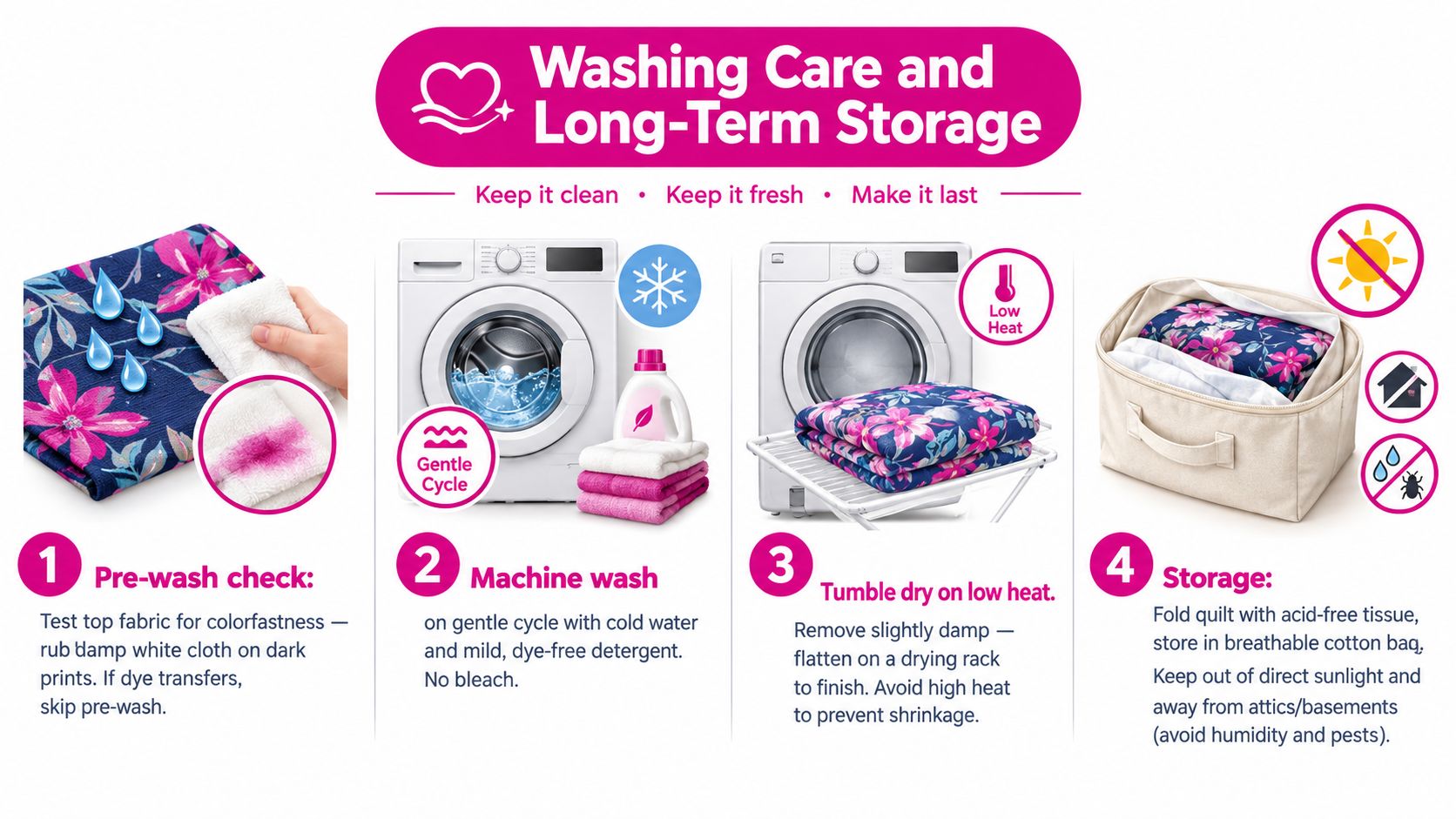
Cotton batting care starts before the quilt enters the washer. Check the quilt top for unstable dyes, especially dark prints and hand-dyed fabrics. A damp white cloth test can reveal whether color may bleed into a natural cotton batt.
A careful washing routine
Use a gentle cycle with cold or lukewarm water and a mild, dye-free detergent. Avoid bleach and harsh agitation, which can weaken fibers or disturb the bonds that hold stabilized batting together.
For drying, choose low heat or dry the quilt flat. If you use a dryer, remove the quilt while it's still slightly damp and finish it flat on a drying rack or clean surface. This gives you more control over the final shape and reduces the risk of excessive heat affecting the batting.
You may choose to skip a separate batting prewash when the batt is scrim-backed, bonded, or otherwise stabilized for use inside a completed quilt. In that case, quilting stitches secure the layers before washing, and the first wash creates the final surface character.
Storage that protects the quilt
Spot-clean a finished quilt when possible, and wash it only when the fabric and batting instructions support machine washing. For long-term storage, fold the quilt loosely with acid-free tissue and place it in a breathable quilt bag. Avoid vacuum-sealing it for long periods, because compression can create persistent creases.
Keep quilts away from direct sunlight, humidity, pests, attics, and damp basements. Refold or rotate stored quilts every few months so the same fold lines don't carry the weight indefinitely. Linda's care and storage notions can help you gather gentle cleaning and storage supplies alongside your batting.
Choosing the Right Cotton Batting and Where to Shop
A confident batting decision can follow four questions:
- How much loft do you want? Low loft gives a flatter quilt and crisp stitch definition.
- How far apart will you quilt? Match your design to the product's spacing recommendation.
- How will the quilt be used? Consider warmth, washing, drape, and the wear expected from the finished piece.
- How will it load on the frame? Scrim can help resist stretching, while softer needle-punched batting may provide a more relaxed hand.
Linda's Electric Quilters carries cotton batting and cotton-poly blend batting in packaged sizes and rolls. Product availability can change, so verify the listing for the exact construction, width, loft, and care instructions before ordering. Heirloom, Hobbs Tuscany, and Warm & Natural are useful names to compare when you're deciding between a traditional cotton hand and a more stabilized machine-quilting experience.
| Product | Loft | Width Options | Best For |
|---|---|---|---|
| Heirloom cotton | Low, product dependent | Check current product listing | Traditional quilts and clear stitch definition |
| Hobbs Tuscany cotton | Low to medium, product dependent | Check current product listing | Quilters comparing soft drape and warmth |
| Warm & Natural | Low, product dependent | Check current product listing | Machine quilting and stabilized cotton projects |
Widths may include craft, queen, and king formats, but you should confirm the current package dimensions before cutting. A wide batt can simplify preparation for a large quilt and reduce the need to seam sections.
Pro tip: A lighter cotton-poly blend can behave more like cotton on the frame while adding stability. It's a useful bridge if you're comfortable with natural fibers but want a little more forgiveness during tensioning.
If you're still asking what is cotton batting for wall hangings, the short answer is yes. Choose a low-loft batt when you want the hanging to remain relatively flat, and secure it according to the product's quilting-distance guidance.
Visit Linda's Electric Quilters to compare cotton batting, cotton-poly blends, widths, and quilting notions for your next project. Choose your batting before loading the frame so you can match the loft, scrim, thread tension, and quilting design from the start.