
Hey everyone. Today you'll learn how to recover a tired lampshade with fresh fabric — and keep it smooth.
We all have that shade.
It leans a little.
It sags a little.
The fabric looks tired every time the lamp comes on.
Here's the fix.
Back your new fabric with lightweight fusible interfacing first.
That one layer changes everything.
The fabric stops stretching out of shape.
It wraps the frame evenly instead of puckering.
And light passes through soft and even, with no thin spots showing.
We're not reinventing the wheel here — just giving fabric a little backbone.
What You'll Need
- An old lampshade with a sound frame — wire or hardback style both work
- Lightweight cotton or linen fabric, enough to wrap the shade plus 2 inches all around
- Lightweight fusible interfacing, the same size as your fabric piece
- Large paper, pencil, and ruler for a template
- Scissors or a rotary cutter, mat, and straight edge
- Iron and pressing cloth
- Binder clips or clothespins
- Fabric glue or double-sided lampshade tape
- Trim or ribbon for the top and bottom edges (optional)
- An LED bulb for the finished lamp
Before You Start: Two Safety Notes
Use an LED bulb — LEDs run much cooler than old-style bulbs.
Keep fabric on the outside of the frame, never touching the bulb.
If the frame is bent or cracked, start with a different shade.
How to Recover the Shade
- Strip the old shade. Remove the old cover and trim carefully. Save the pieces if you can. They make a handy rough pattern. Clean dust off the frame with a dry cloth.
- Make a paper template. Lay the shade on its side on the paper. Roll it slowly across the paper, tracing the top edge, then the bottom edge, until you return to the seam. Add 1 inch at the seam end and 1/2 inch at the top and bottom. Cut the template out and test-wrap it. It should overlap about 1 inch at the back.
- Fuse the interfacing. Lay your fabric wrong side up. Place the interfacing glue side down on it. Press in sections, about 10 seconds per section, with a pressing cloth between the iron and the interfacing. Let it cool flat for a full minute. Cooling is when the bond really sets.
- Test the light. Hold the fused fabric up to a lit lamp before you cut. Too dark? Try a lighter fabric. Seeing blotches? Press once more, slowly. This test has saved me more than once.
- Cut with the template. Pin or weight the template on the fused fabric and cut cleanly. Fused fabric cuts like a dream. No fraying, no shifting. Just like that.
- Dry-fit first. Wrap the fabric around the frame and hold it with binder clips. Check the pattern direction and the seam position. Put the seam at the back. Adjust now, while nothing is glued.
- Attach the cover. Work in short sections. Apply a thin line of fabric glue or tape along the top inside edge, roll the shade a few inches, and smooth the fabric down with your palm. Repeat at the bottom edge. Thin glue is key — thick glue soaks through and leaves shiny spots when the lamp is on.
- Close the seam. Fold the raw seam edge under 1/2 inch, press the fold, and glue it down over the starting edge. Clip it and let it dry flat for at least 30 minutes.
- Fold the edges in. Trim any excess to about 1/2 inch. Fold the top and bottom allowances inside the frame and glue them down. Clip as you go.
- Add trim if you like. A simple ribbon or braid along the top and bottom edges hides the folded edge and looks store-bought. Completely up to you.
Tips and Variations
Start small. Your first shade should be a little drum shade. Straight sides, no taper, very forgiving.
Mind the weight. Lightweight interfacing is the sweet spot. Heavy interfacing blocks too much light and fights the curve — save the firm stuff for tote bags.
Try a lining glow. Pale gold or blush fabric gives warm light. White gives the brightest, cleanest light.
Fix bubbles fast. Re-press that spot for 10 seconds and cool it under a book. Nine times out of ten, it's gone.
And listen — your seam may not land perfectly straight.
You're your own worst critic here.
Turn the seam to the wall, light the lamp, and enjoy it.
It doesn't have to be perfect. It just has to glow.
If I can do this, y'all can do it.
Take your time. It's not a race.
Thanks so much for sewing along with me today.
We'll see you next time. Bye.
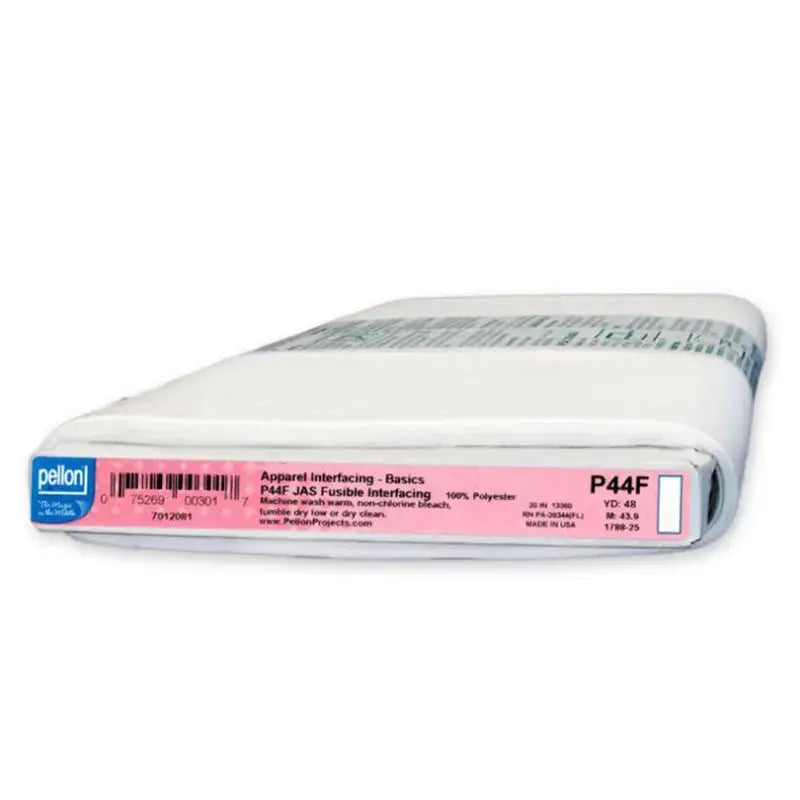
Shop Pellon Lightweight Nonwoven Fusible Interfacing 20" White By The Yard at Linda's Electric Quilters.


