
Quick Summary
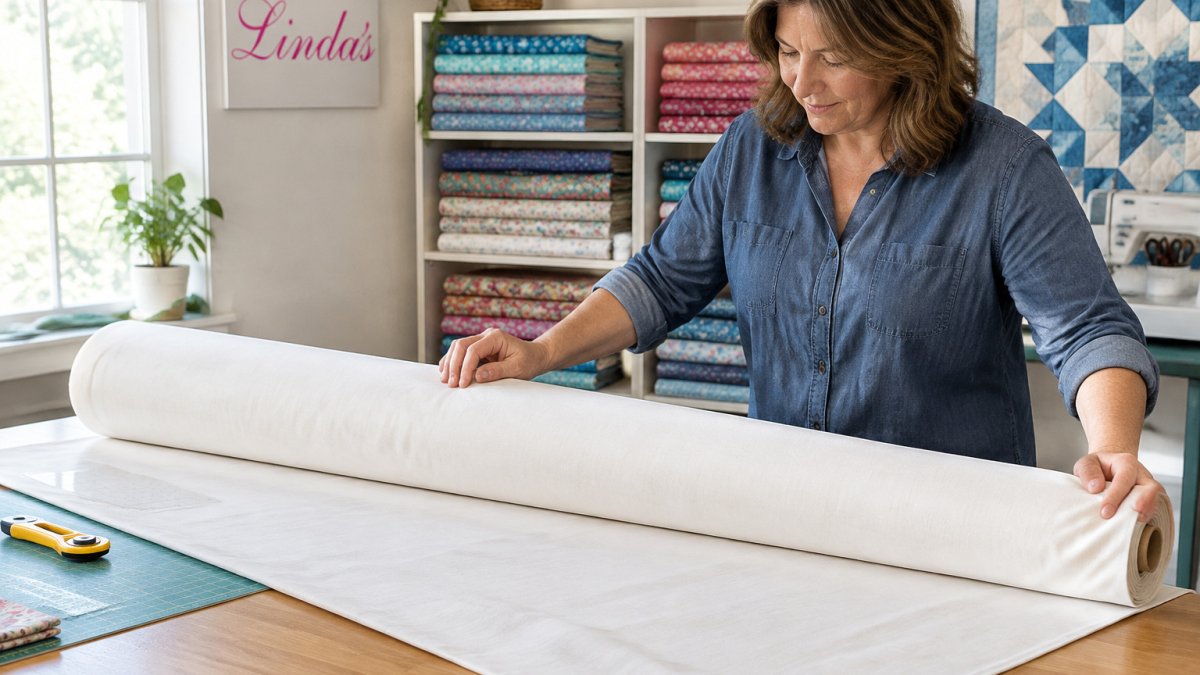
Press the extra-wide backing fabric flat, fold or roll it loosely, and store it in a closed container out of direct light. Refold every two to three months, shifting the fold lines, so no crease sets permanently.
- Press the full width and let the fabric dry completely before storing it.
- Use wide folds in thirds and place acid-free tissue between layers if storing over a month.
- Store folded bundles flat rather than on end to avoid stress on one fold line.
- Refold every two to three months, shifting fold lines by several inches each time.
- Roll fabric on a cardboard tube for long-term storage to avoid sharp creases.
Table of Contents
- Why Extra-Wide Backing Fabric Needs Special Storage
- Preparing 108-Inch Wide Quilt Backing Fabric for Storage
- How to Fold Wide Quilt Backing Without Permanent Creases
- Rolling Versus Folding: Which Method Protects Your Fabric
- Container Sizes and Storage Setups for Large Fabric Cuts
- Fabric Storage Ideas for Small Spaces
- Protecting Your Backing Stash From Dust and Sunlight
- Start Your Wideback Stash the Right Way at Linda's Electric Quilters
- Frequently Asked Questions
Why Extra-Wide Backing Fabric Needs Special Storage
Last Updated: November 9, 2026
Extra-wide backing fabric, often sold as 108-inch wideback, is one of the easiest ways to finish a large quilt without piecing. But that same width makes it awkward to store. A standard fat quarter bin won't hold it, and a bolt that sits on a shelf for months can develop fold lines that show up in your quilting.
The good news is that a few simple habits keep wideback fabric flat, clean, and ready to use. Below, we walk through how to prepare the fabric, fold or roll it, choose containers, set up storage in small spaces, and protect it from dust and light.
Here's the core problem. Fabric that is folded tightly and left in the same spot for a long time can set permanent creases. Those creases are hard to press out, and on light colors they can show through the finished quilt. The fix starts before the fabric ever reaches the shelf.
- Wideback fabric is typically 108 inches wide, far wider than most storage boxes
- Long, tight folds are the main cause of permanent creases
- Dust and direct sunlight can dull color over time, especially on dark prints
Preparing 108-Inch Wide Quilt Backing Fabric for Storage
Start by pressing the fabric. Use a low-to-medium iron setting with steam, and press the full width before you store it. Fabric that goes onto the shelf wrinkled will keep those wrinkles.
Next, check the grain. Lay the fabric flat, fold it selvage to selvage, and gently square the edges so the grainline runs straight. A square piece folds more evenly and is less likely to bunch in storage.
Then measure and label. Note the yardage and the print or color on a card, and tape the card to the outer fold. This helps you find the right backing quickly when a project comes up.
A common mistake is storing fabric that is still damp from washing or steaming. Trapped moisture can cause mildew, so let the fabric dry completely first.
How to Fold Wide Quilt Backing Without Permanent Creases
Folding is where most creases start, and a 108-inch cut gives you far more fabric to manage than a standard 44-inch piece. The goal is to distribute bulk across wide, soft folds and to never let the same line sit under pressure for months. Here is a step-by-step method built for wideback yardage.
- Clear a surface at least as long as your cut. A 3-yard piece of 108-inch fabric is 108 inches wide by 108 inches long, so you need a table, a clean floor, or two tables pushed together. Working on a surface shorter than the fabric forces a fold you did not plan.
- Lay the fabric flat and smooth it selvage to selvage with your hands, not an iron. Pressing at this stage can stretch the bias.
- Fold in half lengthwise so the selvages meet, then smooth the fold line open with your palm. Do not press it down hard.
- Fold in half again, then in thirds, not quarters, so each finished fold is roughly 12 to 18 inches wide. Wide folds spread the bend across more fibers and reduce the sharp line that sets into a crease.
- Slide a sheet of acid-free tissue or clean unbleached muslin between layers every second fold if the piece will sit for more than a month. The tissue acts as a buffer so the fold line never presses directly against the fabric beneath it.
- Store the folded bundle flat, not on end. Standing a folded wideback on its edge puts the entire weight of the piece on one fold line.
Watch out: a fold that stays in the same position for six months or more can set permanently, especially on cotton batiks and dark solids. Refold the piece every two to three months, shifting the fold lines by several inches each time so no single line takes repeated pressure.
Rolling Versus Folding: Which Method Protects Your Fabric
Rolling is often the better choice for long-term storage of wideback fabric. Rolled fabric avoids sharp fold lines entirely, and it takes up less vertical space on a shelf.
Here's how the two methods compare:
| Method | Best For | Main Risk | Space Needed |
|---|---|---|---|
| Folding | Frequent access, pieces you use often | Permanent fold lines if left too long | Flat shelf or bin |
| Rolling | Long-term storage, bolts you rarely touch | Tight rolls can crush edges | Upright tube or cardboard core |
| Folding with tissue | Mixed stash, light colors | Requires extra handling | Flat shelf |
To roll fabric, wind it around a clean cardboard tube or a wide, smooth core. Keep the roll loose, not tight, and cover the end with a fabric cloth so it stays clean.
Watch out: rolled fabric can flatten at the bottom of a deep bin. Store rolls upright or on their side on a shelf.
Container Sizes and Storage Setups for Large Fabric Cuts
A 108-inch wideback will not lie flat in a standard storage bin, so the practical move is to fold or roll it down to a size that fits real containers. Use these measurements as a buying guide.
- Folded to roughly 15 by 18 inches: fits a 20-gallon lidded tote (common exterior footprint around 24 by 18 inches) and most cube organizers with 13-inch or 15-inch fabric bins.
- Folded to roughly 12 by 24 inches: fits under-bed storage bags and shallow sweater boxes, which typically run 24 to 30 inches long and 6 to 8 inches deep.
- Rolled on a core: a 108-inch cut rolled loosely on a 2- to 3-inch cardboard tube finishes around 6 to 9 inches in diameter depending on yardage, which stands upright in a tall laundry hamper, a golf-bag-style canvas tote, or a vertical bin at least 20 inches tall.
- Flat on a shelf: a 3-yard piece folded to 18 inches wide needs a shelf at least 18 inches deep and 24 inches wide to sit without overhang.
For shelf storage, look for units rated for the weight. A single 3-yard cut of 108-inch quilting cotton weighs roughly 3 to 4 pounds; a stack of ten pieces can exceed 35 pounds, so choose a shelving unit rated for at least 50 pounds per shelf rather than lightweight wire racks.
A folder board makes the difference for flat storage. Cut a piece of foam board or acid-free cardboard to about 18 by 24 inches, wrap the fabric around it in wide folds, and slide the board onto the shelf. The board gives the bundle a stiff spine so it does not slump and crease at the front edge.
Label every container on the outside with fabric type, width, yardage, and the project it is intended for. A strip of painter's tape and a marker is enough. When your stash grows past a dozen wideback pieces, a simple index card taped inside the lid, recording width, length, material, and intended quilt, saves you from unfolding three bundles to find the right backing.
Watch out: clear plastic bins without ventilation can trap humidity against the fabric. If you live in a humid climate, choose bins with vented lids or leave the lid slightly ajar, and keep the bin off a concrete floor.
For a king-size quilt, a single 108-inch wideback may not be enough, so check your project plan before you buy the backing. Our blog post "Is a 108 Inch Wideback Enough for a King Quilt?" walks through the math.
Fabric Storage Ideas for Small Spaces
Not everyone has a dedicated sewing room. If space is tight, go vertical and use the back of a closet door, the top of a wardrobe, or under-bed storage. Rolled fabric in a canvas tote can slide neatly under a bed frame. Wall-mounted shelves work well for rolls, as long as they're sturdy enough.
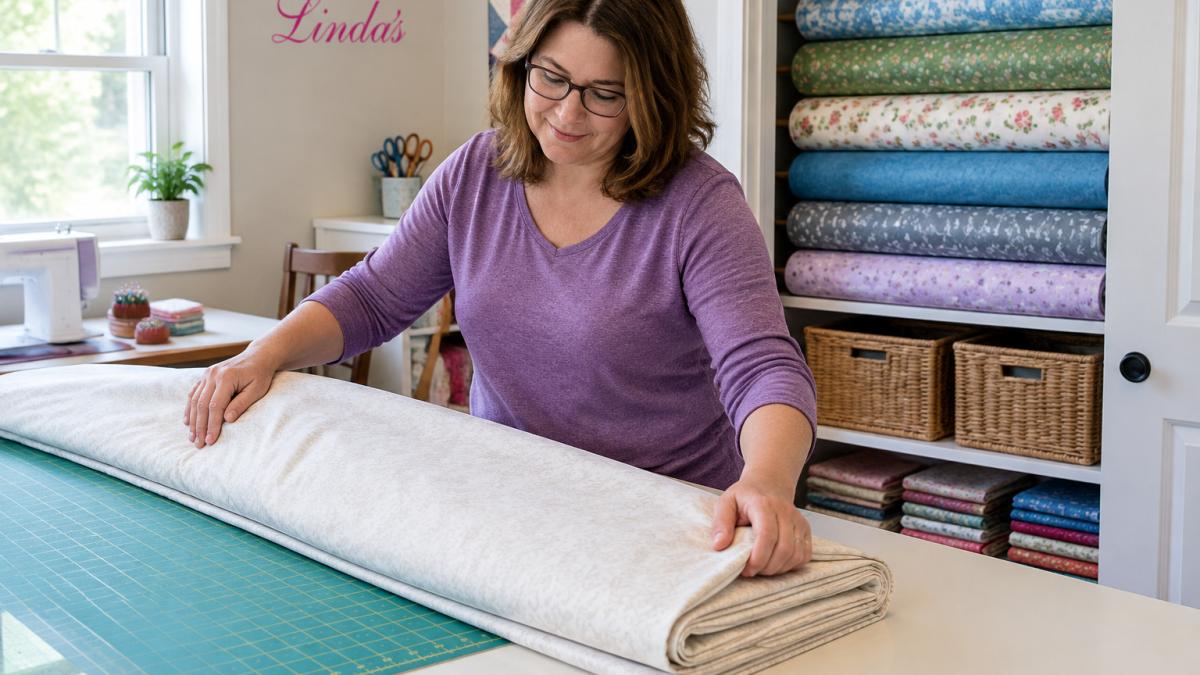
Keep your most-used fabrics at eye level and store the rest higher or lower. Limit how many large pieces you keep, and rotate stock so older fabric gets used first. Small spaces reward a clear plan more than a big budget.
Protecting Your Backing Stash From Dust and Sunlight
Dust settles on fabric and can be hard to remove from tight weaves. Store your stash in closed containers or on shelves with covers. A breathable cotton fabric cover works better than plastic, which can trap humidity.
Sunlight is the bigger threat for color. Keep fabric out of direct light, especially from windows. Dark and bright prints fade faster than neutrals, so store them in the most shaded spot you have.
Control humidity as well. Aim for a dry, stable room, and avoid storing fabric in basements or attics where moisture changes quickly.
Start Your Wideback Stash the Right Way at Linda's Electric Quilters
Building a stash starts with good fabric and a plan for storing it. Browse our wideback fabric per yard selection to find prints and solids that fit your projects, and keep your next backing flat and crease-free from the start. If you're planning a 108-inch backing for a specific quilt, our 108-inch wide quilt backing options are a good place to begin.

For more ideas on pairing backing with batting, read our Quilters Dream Batting Review to find the right fit for finished quilts. And check our guide to the best wideback fabrics for large quilts when you're ready to expand your stash.
At Linda's Electric Quilters, we carry over 50,000 quilting, sewing, and embroidery products, and our library includes more than 700 educational videos. Shop Now for your next backing fabric.
Frequently Asked Questions
What is the best way to store large pieces of quilt fabric?
The best way to store large pieces of quilt fabric is to fold or roll it loosely and keep it in a cool, dry, dark place. Fold 108-inch backing lengthwise into a flat panel, then fold it again so it fits a shelf or bin without tight creasing. Avoid stacking heavy items on top, and check periodically for moisture or pests. Store cuts away from windows to prevent sun fading over time.
How do you keep 108-inch wide backing fabric from wrinkling?
To keep 108-inch wide backing fabric from wrinkling, avoid sharp folds and tight packing. Press the fabric lightly before storing if it has been washed or wrinkled. Rolling on a cardboard tube or a wide folder board reduces permanent creases. Loosen the fabric occasionally so the fibers do not set into the same fold lines over long periods of storage.
Should I fold or roll extra wide quilt backing?
Rolling is generally better for long-term storage of extra-wide quilt backing because it avoids hard fold lines that can leave permanent creases. Folding works well when you have limited vertical space or need quick visual access to specific colors. If you fold, use wide, soft folds and rotate the stack periodically. For most stashes, a mix of rolling for long-term pieces and folding for active projects works well.
Does sunlight damage quilt backing fabric in storage?
Yes, sunlight can fade quilt backing fabric over time, especially brightly dyed prints and solid colors. Store your wideback stash in a closet, cabinet, or opaque bin away from windows. If you must keep fabric in an open shelf, cover it with a breathable fabric cloth. Limiting light exposure protects color and keeps the fabric ready for your next project.



