
One of the biggest misconceptions in quilting is that thicker batting automatically makes a better quilt.
In reality, the best batting depends on where the quilt will live.
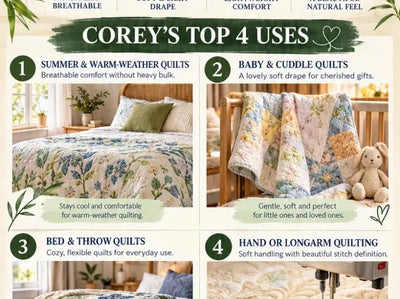
A lightweight summer quilt, a cozy bed quilt, a wall hanging, and a baby quilt all benefit from different batting.
Choosing based on loft alone can leave your quilt feeling too stiff, too warm, or lacking the drape you were hoping for.
Choose Batting By Purpose
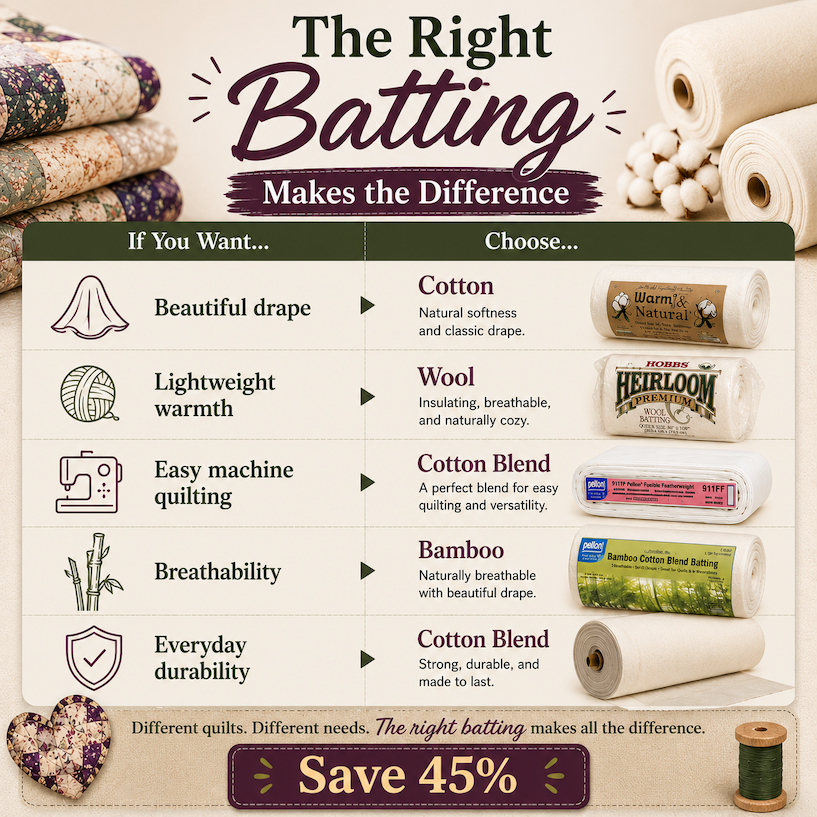
- 🛏 Bed quilts → Soft drape & lasting comfort
- ☀️ Summer quilts → Lightweight, breathable batting
- 👶 Baby quilts → Soft, durable & washable
- 🖼 Wall hangings → Stable batting with structure
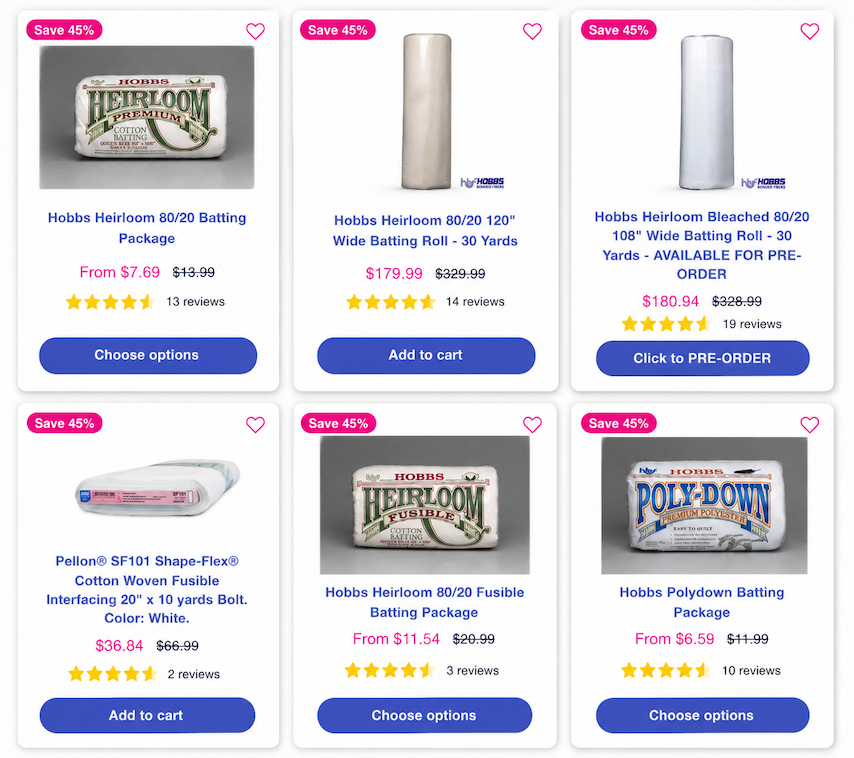
Top Picks For You
Remember
Batting isn't just the layer hidden inside your quilt, it's the foundation that shapes how it feels, drapes, and lasts for years to come.
Before you start your next project, take a moment to think about how your quilt will be used, then choose the batting that's designed for that purpose.
Your fabric may catch everyone's eye, but the right batting is what makes people never want to put your quilt down.
Happy Quilting!
— Corey