Quilt Sandwiches Without the Basting Battle
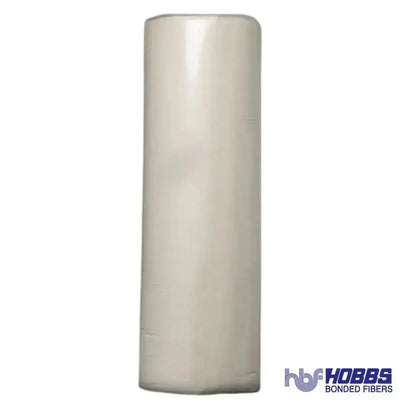
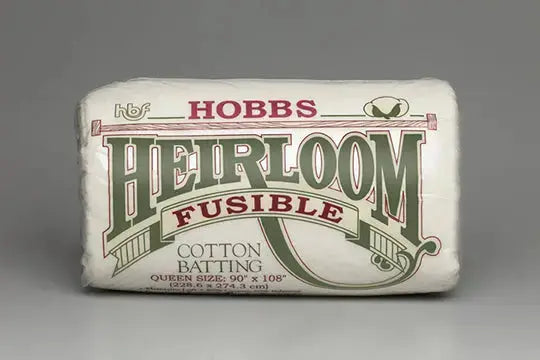
Basting a quilt sandwich -- securing the top, batting, and backing together before quilting -- has historically been one of the most time-consuming and physically demanding parts of the quilting process. Safety pin basting involves hundreds of pin placements and unfastening. Spray basting requires even coverage and ventilation. Thread basting is accurate but slow. Hobbs Heirloom 80/20 Fusible Batting offers an alternative that home machine quilters, QAYG quilters, and small-project quilters have embraced enthusiastically: heat-activated adhesive on both batting surfaces that bonds to your fabric layers with a household iron. It uses the same trusted blend as the standard 80/20 Heirloom roll; for other pre-packaged options see the 80/20 Heirloom package guide, and for quilt-as-you-go workflows the QAYG handbook and templates pair naturally with fusible batting.
What Is Fusible Batting?
Fusible batting is the same 80/20 Heirloom cotton-poly blend construction, but with a fusible adhesive coating applied to both surfaces of the batting. When you press the batting between your quilt top and backing with a warm iron, the adhesive activates and creates a temporary-to-permanent bond that holds all three layers together without pins or spray adhesive. The result is a flat, smooth, shift-free quilt sandwich ready for machine quilting immediately after pressing.
This is not a permanent, rigid bond -- the finished quilt remains soft, flexible, and washable. But the adhesive is strong enough to prevent the layers from shifting during quilting, which is the core problem basting solves.
Top 10 Uses for Hobbs Heirloom 80/20 Fusible Batting
- Home Machine Quilting -- Eliminates the need for safety pins or spray basting for domestic machine quilting, one of the most popular applications.
- Quilt-as-You-Go Projects -- Fuse individual block sandwiches quickly and precisely without pins shifting the layers during block quilting.
- Table Runners and Placemats -- Small project sandwiches bond quickly and stay flat for clean, professional results on small items.
- Wall Hangings -- Fusible batting keeps wall hanging layers stable and flat, especially important for pieces that hang vertically after quilting.
- Bag Panels and Structured Accessories -- Fuse batting to bag panels for body and structure without visible stitching lines.
- Sample and Teaching Quilts -- Fast, reliable basting for classroom and demo projects where setup speed matters.
- Small Gift Projects -- Mug rugs, potholders, and small quilted gifts fuse and quilt quickly in one efficient workflow.
- Quilts With Very Fine or Slippery Fabrics -- Fusible adhesive prevents slippery fabrics from moving during quilting even with slow, careful stitching.
- Lap and Throw Quilts -- Medium-size projects that fit under a domestic machine benefit most from fast, secure basting.
- Projects Where Spray Basting Is Not Practical -- Indoor spaces with limited ventilation or sensitivity to spray adhesives can use fusible batting safely.
How to Use Fusible Batting Correctly
- Layer your backing fabric wrong-side up on a flat pressing surface.
- Place the batting on top of the backing, centered and smooth.
- Press with a dry iron at the cotton setting for 10 to 15 seconds per section, working outward from the center. Do not use steam initially -- check the batting instructions for your specific product.
- Flip the sandwich and place the quilt top right-side up on the batting.
- Press from the top, again working from center outward.
- Allow to cool completely before moving to the machine.
The key mistake to avoid is insufficient pressing time or temperature. An inadequately bonded sandwich will shift during quilting, defeating the purpose. When in doubt, press again.
What It Pairs Well With
Fusible batting is primarily a home machine quilting product. It works best with domestic sewing machines and small to medium projects. For longarm quilting, the standard non-fusible batting remains the better choice since longarms load batting as a floating layer rather than fusing it to the backing before loading.
Frequently Asked Questions
Can I wash a fusible-basted quilt before quilting?
No -- washing before quilting will weaken the fusible bond. Complete the quilting before the first wash.
Is fusible batting safe for all fabric types?
The iron temperature used to activate the adhesive is appropriate for cotton fabrics. Test on synthetic or heat-sensitive fabrics before committing to a full project. Avoid pressing at high heat on acetate, nylon, or other low-heat-tolerance fabrics.
Can I use fusible batting on a longarm?
It is not recommended. Longarm quilting requires the batting to float freely on the frame leaders; fusible batting bonded to the backing creates a compound layer that loads and tensions differently from a free-floating batting. Use standard non-fusible batting for longarm work.
Does fusible batting affect the hand feel of the finished quilt?
The adhesive adds a very slight stiffness that softens significantly after the first washing. Most users find the hand feel essentially identical to standard Heirloom batting after washing.
What sizes are available?
The Fusible Batting Package is available in crib (45x60 inch) and queen (90x108 inch) sizes. Check the product listing for current availability.
Shop Hobbs Heirloom 80/20 Fusible Batting Package
The fastest path from cut quilt top to quilted finish. Iron on, quilt immediately, no pins required.