YLI Threads Titanium-Coated Topstitch Needles
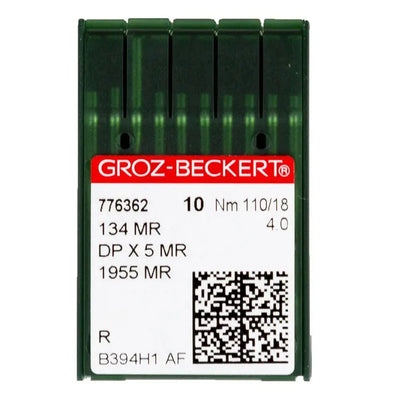
YLI Threads Titanium-Coated Topstitch Needles are the most widely used machine needles in production longarm quilting — the titanium coating provides dramatically extended needle life compared to standard chrome-plated needles, and the topstitch needle design with its enlarged eye and sharp point handles thread weights from 30wt through 100wt without breakage or shredding. Companion consumables are covered in the Magna-Glide bobbin guide and the longarm notions guide; fine-thread pairings in the MicroQuilter 100wt guide.
Why Titanium?
Standard machine needles are plated with chrome — a relatively soft coating that wears down after 6–8 hours of sewing. Titanium is significantly harder; a titanium-coated needle lasts 3–5x longer than its chrome equivalent under the same conditions. For a production longarm studio running 8+ hours a day, this translates directly to fewer needle changes, fewer mid-quilt stoppages, and lower consumable costs over time.
Topstitch Design
The topstitch needle has a slightly larger eye than a standard sharp needle — this extra clearance reduces thread friction and shredding at high machine speeds, particularly important for the specialty threads (metallic, trilobal polyester, fine 60–100wt) used in production longarm work.
Available Sizes
- #70/10 — the finest size; for lightweight threads (80wt–100wt), delicate fabrics, microquilting
- #80/12 — the most versatile mid-range size; works with 40–60wt thread across most standard quilting applications
- #90/14 — for heavier thread weights (30–40wt), multiple fabric layers, and production speed quilting
- #100/16 — the heaviest topstitch size; for thick threads, dense batting stacks, and heavy canvas-weight materials
Needle Change Schedule
Even titanium needles dull — change after every 8–10 hours of longarm run time, or any time you hear a popping sound as the needle enters the fabric (sign of a dull or burred needle point). A fresh needle prevents skipped stitches and reduces thread breakage dramatically.
Shop YLI Titanium Needles at Linda's
Frequently Asked Questions
How do I match needle size to thread weight?
Finer thread, finer needle: 100–80wt takes #70/10, 60–40wt takes #80/12, 40–30wt takes #90/14, and heavy decorative threads take #100/16. Oversizing the needle leaves visible holes; undersizing shreds the thread — the eye should clear the thread with just a little room.
Why topstitch instead of universal or sharp needles?
The elongated eye and deep groove — both reduce friction on the thread at longarm speeds, which is where shredding and breakage start. For metallic, trilobal poly, and fine threads, the topstitch geometry is the difference between running clean and fighting the machine.
Does titanium change how the needle stitches?
No — the coating changes wear life, not geometry. A titanium #80/12 stitches identically to a chrome #80/12; it just still stitches that way many hours later. The change interval stretches, but the popping-sound rule for retirement stays the same.