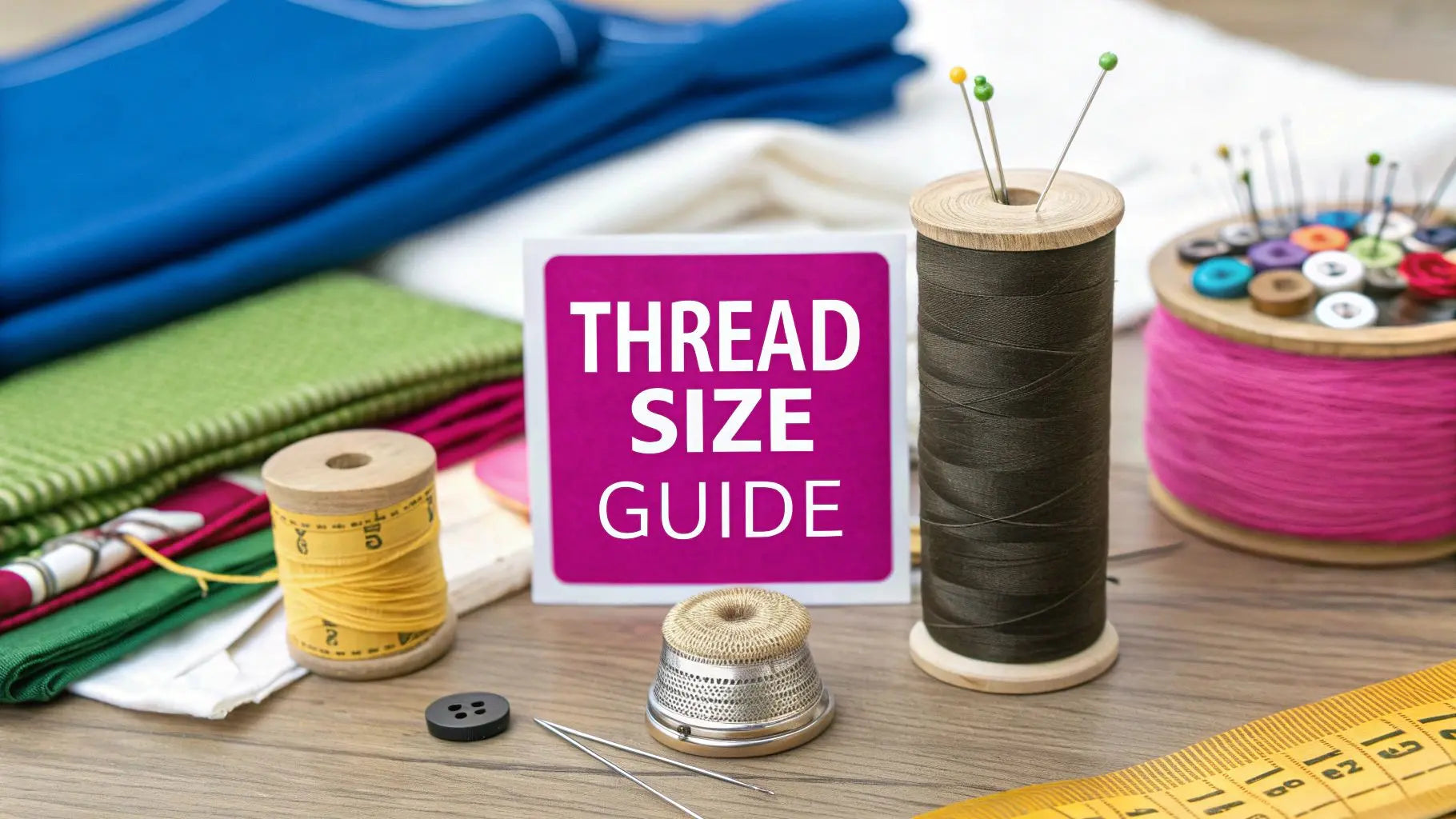
Picking the right sewing thread can feel like trying to crack a secret code, but it's really much simpler than it looks. The golden rule is this: match your thread weight to your fabric weight. Lighter threads for delicate fabrics, heavier threads for tough materials. Once you get that down, you're on your way to creating seams that are strong, beautiful, and totally pucker-free, ready to turn your project idea into a finished masterpiece.
Why Your Thread Choice Is a Big Deal
Ever look at a handmade garment and wonder why the seams look so clean and professional, while another puckers or feels bulky? The secret is almost always the thread.
Using a thread that’s too beefy for a lightweight fabric will cause it to bunch up and look messy. Flip that around, and using a thread that’s too thin for something like denim or canvas will result in weak seams that are practically guaranteed to pop under pressure.
Nailing this balance is what takes your sewing from "homemade" to "handcrafted." The right thread doesn't just hold things together; it becomes part of the fabric, giving your project a polished look that’s built to last. It’s one of those small details that makes all the difference.
The Foundation of a Great Project
Think of your thread as the skeleton of whatever you're making. It’s what gives it structure and strength, holding everything in place for years to come. You wouldn’t build a house with flimsy two-by-fours, right? The same goes for your sewing projects. To make something that stands the test of time, you need to start with a solid foundation.
And speaking of foundations, getting your materials planned out from the start is a huge time and money saver. If you want to get better at estimating your needs, we have a great guide on how to calculate fabric yardage for your projects.
The perfect stitch is a harmonious partnership between the needle, thread, and fabric. When these three elements are correctly matched, your sewing machine can perform at its best, and your creative vision can truly come to life.
Now that you know why thread size is so crucial, we can dive into the how. You’ll mainly run into three different sizing systems: Weight (Wt), Tex, and Denier. They each measure thread thickness in their own way, but don't sweat it—we're about to break it all down for you.
Understanding Three Thread Sizing Systems
The numbers staring back at you from a thread spool can feel a bit like a secret code. But once you crack it, you’ll unlock the key to perfect stitches, every single time. Instead of one universal method, the sewing world actually uses three main systems to measure thread thickness. Getting to know them will completely change how you choose thread for your projects.
You might wonder why there isn't just one simple standard. It all comes down to the history of textile manufacturing across the globe. Systems like Tex, Denier, and the common Weight system grew out of different regional traditions, leading to the mix of labels we see today.
The Weight System (Wt)
The Weight (Wt) system is the one you'll probably see most often, especially if you sew with cotton or all-purpose threads. The trick to remembering this one is that it works like a golf score—the lower the number, the thicker and heavier the thread.
It feels a little backward at first, but it makes sense once you get the hang of it. A 30 wt thread is thick and beefy, perfect for that classic topstitching on jeans or for decorative stitches you really want to pop. Flip that around, and you have a delicate 60 wt or 80 wt thread, which is much finer and ideal for heirloom sewing on lightweight fabrics like silk, where you want your seams to practically disappear.
Here's an easy way to think about it: a lower weight number means you need a shorter length of that thread to equal a specific weight. That tells you it’s a heavier, thicker strand.
The Tex and Denier Systems
While Weight is the go-to for many home sewers, Tex and Denier are direct measurement systems. You’ll typically find these on industrial or synthetic threads like polyester and nylon. Unlike the Weight system, these are more intuitive: the higher the number, the thicker the thread.
- Tex: This system tells you the weight in grams of 1,000 meters of thread. A standard all-purpose thread might be around Tex 27, while a heavy-duty upholstery thread could be Tex 70 or even higher.
- Denier: This works the same way, but it measures the weight in grams of a whopping 9,000 meters of thread. You'll often see this measurement on embroidery and other specialty threads.
These systems give manufacturers a super precise, standardized way to label thread thickness. This is absolutely critical for performance projects—think outdoor gear or durable bags—where every stitch counts. When you need that level of reliability, a thread from our Stitcher's Friend collection is exactly what you're looking for to ensure your project is a success.
This handy chart helps visualize how to match your thread thickness to different fabric types.
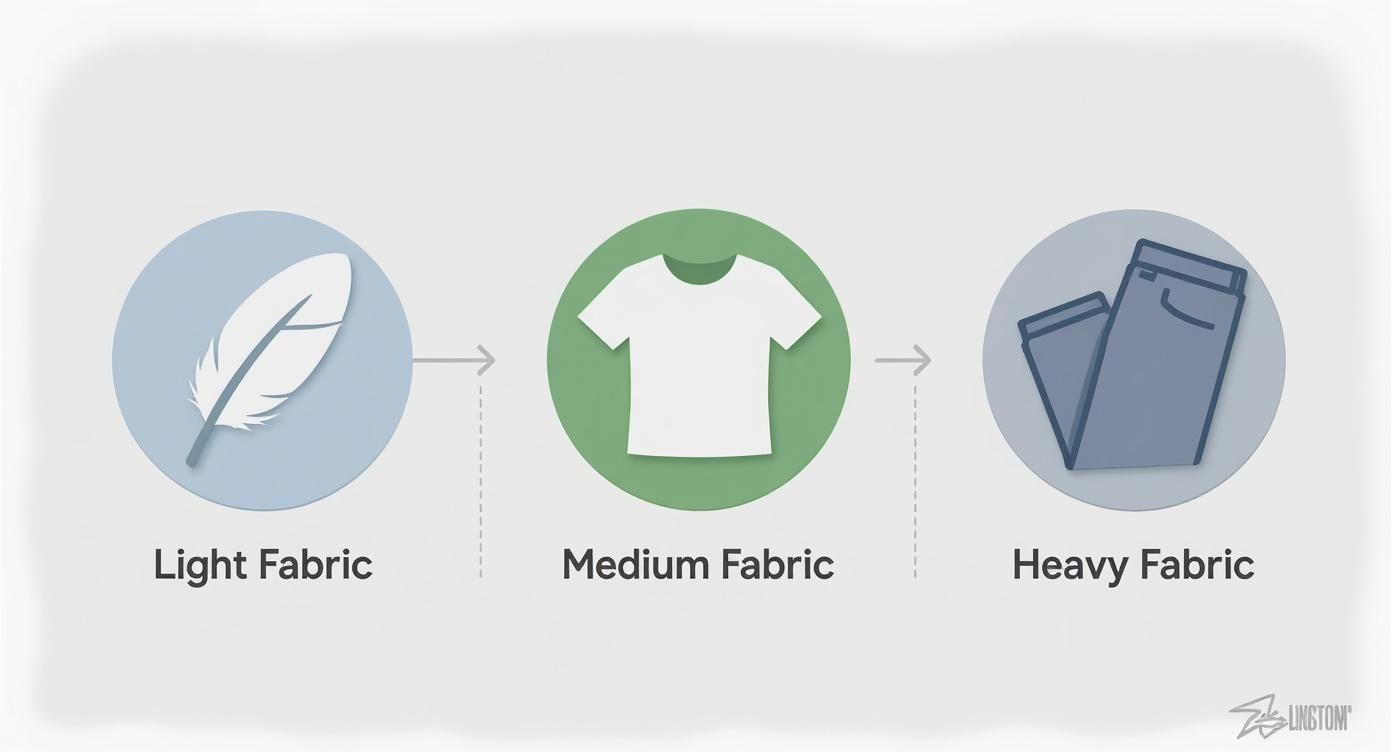
As you can see, it’s a simple progression: fine threads for light fabrics, and heavy-duty threads for dense materials. It all comes back to that core principle of matching your thread to your fabric’s weight.
Once you understand these three systems, you can stop guessing and confidently read any spool, knowing exactly how that thread will behave in your machine and on your project. Whether you need a whisper-thin thread for a delicate blouse or a robust one for a canvas tote, decoding the label is your first step to flawless results. Now that you can interpret the numbers, you're ready to find the perfect thread at Linda's for your next amazing creation.
Matching Thread Size to Sewing Projects
Choosing the right thread is a bit like picking the perfect tool for a job. You wouldn't use a giant paint roller for tiny details, and you wouldn't use a delicate artist's brush to paint a whole wall. Now that you can finally make sense of all those numbers on the spool, let's put that knowledge to work on your next project.
Getting the thread size right is the last piece of the puzzle. It’s what makes your seams strong, nearly invisible, or beautifully bold—whatever your project calls for.
The goal is to find a thread that’s tough enough to hold everything together but fine enough that it doesn't overpower the fabric. Imagine using a thick, heavy thread on a sheer silk blouse. It would be a disaster, creating bulky, puckered seams. On the flip side, using a super fine thread on heavy-duty canvas is just asking for popped stitches down the road. It’s all about finding that sweet spot where the thread and fabric work together perfectly.
Common Sewing Projects and Their Ideal Threads
Let’s walk through a few common sewing situations. Every project has its own needs, whether it's the high-stress seam on a tote bag strap or the gentle drape of a formal dress.
- Quilting and Patchwork: For piecing quilt blocks, a 50 wt cotton thread is the undisputed champion. It’s fine enough to create crisp, flat seams that don’t add extra bulk when you press them. When you’re quilting the layers together, stepping up to a slightly thicker 40 wt thread adds a bit more strength and can create a lovely, subtle decorative stitch.
- Dressmaking and Apparel: Most of the clothes you’ll make from cotton, linen, or similar blends will turn out beautifully with an all-purpose 40 wt or 50 wt polyester thread (which is around Tex 30). But for delicate fabrics like silk, chiffon, or voile, you’ll want to reach for a much finer 80 wt or even 100 wt thread. This ensures your seams are just as delicate as the fabric itself.
- Heavy-Duty Projects (Bags, Upholstery): When you're wrestling with canvas, denim, or upholstery fabric, you need a thread that won't back down. Look for a beefy 30 wt thread or something in the Tex 40 range or higher. These thicker threads provide the serious durability needed for items that are going to get a lot of use.
The real magic happens when your fabric and thread are in perfect harmony. A well-chosen thread doesn't just hold a project together; it enhances its structure, its drape, and how long it will last. It's what elevates your work from homemade to handmade professional.
Project-Based Thread and Needle Recommendations
To make things even easier, I've put together a quick-reference chart. Think of it as your cheat sheet for pairing the right thread and needle to some of the most common projects you'll tackle.
| Project Type | Fabric Examples | Recommended Thread Weight (Wt) | Approximate Tex Size | Recommended Needle Type & Size |
|---|---|---|---|---|
| Quilt Piecing | Quilting Cotton, Batiks | 50 wt Cotton | Tex 20-25 | Microtex or Quilting 75/11 or 80/12 |
| Machine Quilting | Quilt top, batting, backing | 40-50 wt Cotton or Poly | Tex 25-30 | Quilting or Topstitch 80/12 or 90/14 |
| Garment Sewing | Cotton Lawn, Poplin, Linen | 50 wt Polyester | Tex 25-30 | Universal 80/12 |
| Fine & Sheer Fabrics | Silk, Chiffon, Voile, Organza | 80-100 wt Silk or Poly | Tex 12-18 | Microtex 60/8 or 70/10 |
| Knit Fabrics | Jersey, Interlock, Spandex | 40-50 wt Polyester | Tex 25-30 | Ballpoint or Stretch 75/11 or 80/12 |
| Denim & Canvas | Heavy Denim, Duck Canvas | 30-40 wt Polyester | Tex 40-70 | Jeans/Denim 90/14 or 100/16 |
| Upholstery & Bags | Upholstery Fabric, Vinyl | 30 wt or Tex 70+ | Tex 70+ | Heavy Duty or Leather 100/16 or 110/18 |
This table should give you a fantastic starting point. Always remember to test on a scrap piece of your fabric first to make sure everything is playing nicely together! Grab the perfect thread and needles from Linda's to get started on your project today.
From Home Sewing to Industrial Strength
While most of us are happily sewing at home, there's a whole other world of industrial sewing out there. The industrial sewing thread market is a massive global industry, expected to be worth around USD 4 million by 2026. This is the stuff used in everything from sneakers to the seats in your car, engineered for extreme performance.
Don’t be intimidated, though! Your home sewing machine can handle many of these stronger threads, which is great for when you’re taking on an ambitious project. If you're wondering whether your machine is up to the task, have a look at our guide on deciding on a new sewing machine.
Now that you're armed with a clear understanding of your project's needs, you’re ready to pick the perfect thread with confidence.
Impact of Thread Material on Stitch Quality
Okay, we've talked a lot about thread size, but that's only half the story. The material your thread is made from—its fiber content—is just as critical for getting those perfect, flawless stitches.
Think of it this way: if you're baking a cake, the size of your eggs matters, but whether you use butter or oil will completely change the final taste and texture. Thread is the same. The fiber dictates its strength, how much it stretches, and the final look of your stitches. It's a true partnership between size and material.
The global sewing thread market was valued at a whopping USD 2,153.30 million back in 2023, and it's only getting bigger. It's no surprise that synthetics like polyester and nylon are leading the charge because they're both tough and affordable. This really shows you how essential these modern materials have become.

The Great Fiber Debate: Cotton vs. Polyester
When you walk into a fabric store, you'll mostly see two contenders vying for your attention: cotton and polyester. They couldn't be more different, and knowing when to use each one is a game-changer.
-
Cotton Thread: This is the classic choice, especially for quilters. Cotton has a beautiful, soft matte finish and almost zero stretch. That lack of give is exactly what you want for patchwork, as it helps create incredibly crisp, flat seams that lie perfectly. We dive deep into this in our guide on the https://lindas.com/blogs/education/best-thread-for-quilting.
-
Polyester Thread: Meet your all-purpose workhorse. Polyester is ridiculously strong and has a bit of stretch, making it the go-to for sewing clothes. It moves with the fabric (and your body!), which is essential for knits. Its sheer durability also makes it perfect for anything that’s going to get a lot of love and wear.
A fantastic rule of thumb I've always followed is to match your thread fiber to your fabric fiber. Use cotton thread with cotton fabric, and polyester thread with synthetics. They’ll behave the same way when you wash, dry, and press them, preventing any weird puckering down the line.
Exploring Specialty Thread Materials
Once you've mastered the basics, a whole world of specialty threads opens up. These are the threads you turn to for specific, demanding jobs where the stitch has to be perfect, like with professional in-house custom embroidery services.
Nylon is another synthetic powerhouse, often bonded to make it even stronger. It’s what you’ll want for heavy-duty projects like upholstery, outdoor gear, or tough leatherwork.
If you’re aiming for pure elegance, nothing beats silk. It’s incredibly fine yet strong, with a gorgeous natural sheen that’s perfect for heirloom sewing or tailoring delicate, high-end fabrics.
Then there's rayon, which is all about that brilliant, high-sheen pop of color. It glides through fabric and is a long-time favorite for decorative machine embroidery.
Understanding how each of these fibers performs is your secret weapon against puckering seams, broken stitches, and projects that just don't hold up. Now that you’re armed with this knowledge, you’re ready to explore the amazing selection of threads right here at Linda's and find the perfect material to bring your next creation to life.
Common Thread Size Mistakes And How To Avoid Them
Even seasoned sewists stumble when thread, fabric, and needle aren’t in harmony. You might see skipped stitches, fraying, or seams that balloon instead of lying flat.
A truly invisible, sturdy stitch should blend right into your material. When one element outpaces the others, your project loses that polished look.
Below, we’ll walk through two major missteps—then arm you with practical fixes to keep your seams smooth and secure.
Mismatching Thread Weight And Fabric Weight
Imagine pairing 30 wt thread with a chiffon blouse—like slapping snow boots on your toes to dance ballet. The thread fights the fine weave, making puckers and uneven seamlines.
On the flip side, stitching denim with an 80 wt thread resembles towing a trailer with dental floss. It might look elegant, but under strain the seam simply doesn’t hold.
The rule is simple yet critical: Always match the weight of your thread to the weight of your fabric. Think of it as a partnership—the thread should be strong enough to support the fabric without dominating it.
Practical Tips For Matching Thread & Fabric Weight:
- For delicate fabrics like silk, chiffon, or batiste, opt for 60–80 wt threads to glide through fine weaves.
- Quilting cottons and light apparel fabrics pair well with 40–50 wt threads for balanced strength and appearance.
- Heavyweights such as denim, canvas, and upholstery demand sturdy 20–30 wt options to keep seams intact under stress.
Ignoring The Needle And Thread Relationship
Your machine needle acts as the go-between for thread and fabric—so size matters. A mismatch here can derail your project before you even hit the foot pedal.
- Needle Eye Too Small: Forcing a bulky thread through a snug eye is like cramming a plank through a keyhole. The extra friction frays fibers and triggers constant breaks.
- Needle Eye Too Large: Conversely, a loose-fitting eye with fine thread is like dropping a marble down a wide drain. You’ll see tension loss, skipped stitches, and irregular loops every time.
Always perform a quick pull test: let the threaded needle glide down the thread without snagging. If it hesitates, switch to a more suitable needle size.
If tension issues persist, double-check your tension discs and spool placement. For an unbeatable match of needles and threads, browse the curated selection at Linda's and find the perfect combination for your next sewing success.
Bring Projects to Life With Perfect Thread
Every stitch gains new meaning once you master Weight, Tex, and Denier. You’ll never view thread the same way again.
Pairing your thread to both fabric and needle is like finding the perfect key for a lock—it just clicks. Say goodbye to puckers and surprise breakages.
If you’re ready for a fresh twist, try customizing apparel with iron-on transfers. It opens up a whole new canvas for your creativity.
The most satisfying moment? Holding up a finished piece, every seam proving your skill. That flawless line? It’s pure pride on display.
Here are a few experiments to spark your next project:
- Use a thicker Weight when stitching denim or canvas
- Swap in a smooth Denier for silk or lace detailing
- Lean on a sturdy Tex for outdoor gear or heavy-duty bags
Hungry for inspiration? Explore our easy quilt patterns for beginners. From feather-light cotton to rock-solid polyester, Linda’s has you covered. Now go create those pro-level seams!
Common Questions Answered
Even after getting the hang of thread weights and conversions, a few questions always seem to come up. Let's tackle those last-minute uncertainties so you can get to your next project with total confidence.
What Is the Most Common Thread Size?
If you had to pick just one thread for your sewing kit, it would be a 50 wt all-purpose polyester. This is the workhorse of the sewing world.
It's often labeled around Tex 27–30 and hits that sweet spot of being strong enough for seams but fine enough to not be bulky. It's my go-to for everything from piecing quilts to whipping up a quick cotton dress.
Can You Use Machine and Hand Sewing Thread Interchangeably?
In a pinch, absolutely! You can definitely use your standard machine sewing thread for a quick hand-sewn repair.
However, thread made specifically for hand sewing is a game-changer. It's usually waxed or glazed, which is a fancy way of saying it has a special coating. This little detail helps it glide through fabric like a dream, saving you from those frustrating tangles and knots that can ruin your flow.
How Do You Match Needle Size to Thread Size?
Here’s a little trick I’ve used for years—the "pull test." It's the quickest, most reliable way to know if your needle and thread are a good match. Just thread your needle, hold the thread vertically, and see what the needle does.
If the needle slides down smoothly, you’ve found the perfect pair! If it gets stuck, the eye is too small for your thread. If it drops like a rock, the eye is probably too big, which can lead to annoying skipped stitches.
This simple check takes two seconds but can save you a world of headaches from frayed thread and wonky stitches.
Now you're armed with all the thread knowledge you need to choose with confidence! Find the perfect thread, needles, and notions to bring your next idea to life at Linda's Electric Quilters. Explore our incredible collection of over 30,000 craft products today!