
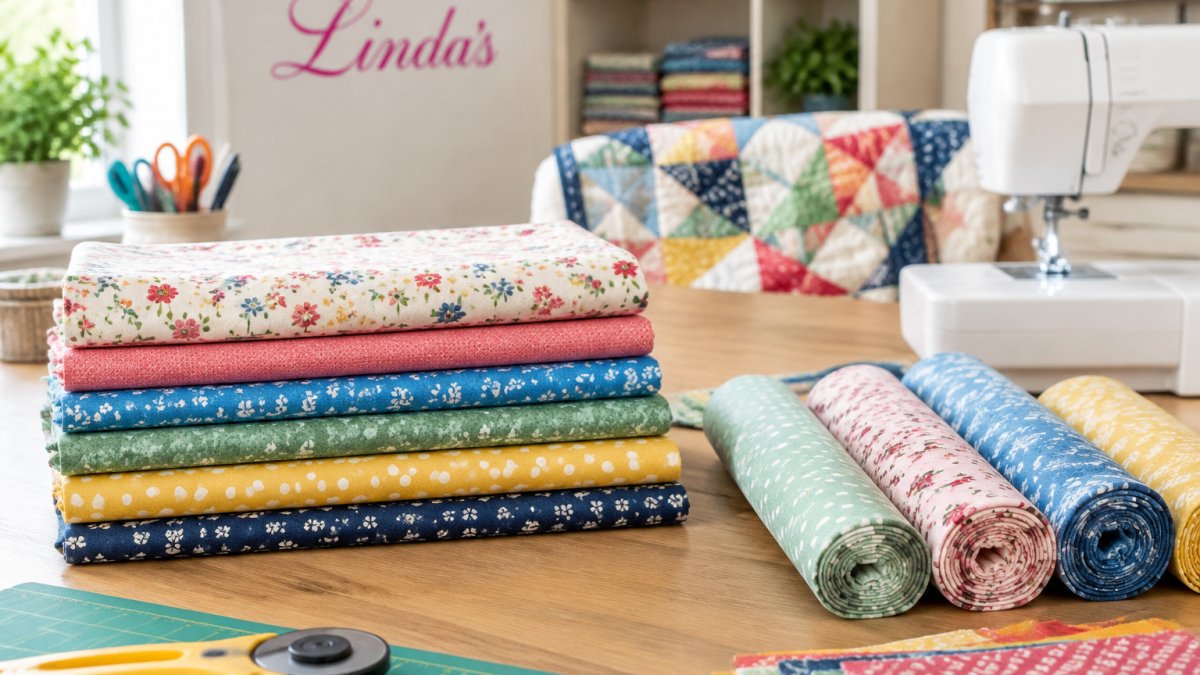
Last Updated: November 7, 2026
Quick Summary
The best quilting fabric for beginners is 100% cotton in a quilter's weight, because it presses flat, feeds evenly under a presser foot, and holds a quarter-inch seam without slipping. Quilting cotton is stable, forgiving of imperfect seam allowances, and available in every color and print. Avoid stretch fabrics and lightweight lawn for a first quilt.
- Quilting cotton is medium-weight with a tight plain weave that resists raveling during piecing.
- Flannel is a close second for cozy projects but sheds lint and shrinks more than quilting cotton.
- Prewash dark or saturated prints in cool water with a color catcher when pairing them with lights.
- A throw quilt needs roughly 4 to 6 yards for the top and 4 yards of 44-inch backing.
- Buy about a quarter yard extra of each fabric to allow for miscuts and grain errors.
Table of Contents
- Why Quilting Cotton Is the Best Fabric for Beginners
- Fabric Types for Quilting, Ranked by How Easy They Are to Sew
- How to Check Fabric Quality Before You Buy
- Prewashing and Preparing Fabric: A Decision Guide
- Choosing Colors and Coordinating Prints for a First Quilt
- Budgeting and Quantity Planning for Beginner Projects
- Best Fabric for Quilt Backing and How to Choose It
- Best Quilting Fabric Brands and What Sets Them Apart
- Frequently Asked Questions
Why Quilting Cotton Is the Best Fabric for Beginners
The best quilting fabric for beginners is 100% cotton in a quilter's weight, and the reason is simple: it behaves predictably. Plain cotton is the usual starting point for first quilts that go smoothly.
The stakes are higher than most new quilters realize. Cotton is the standard because it presses flat, doesn't slip, and keeps its shape through repeated washing, as cotton fiber characteristics from the USDA describes for natural cellulosic fibers.
Below, we'll show you exactly which fabrics to buy, how to spot poor quality before you pay, and how much yardage a first project actually needs.
How Quilting Cotton Differs from Apparel Cotton
Apparel cotton is cut for drape. Quilting cotton is woven for stability. That single difference explains why you can't substitute one for the other without frustration.
- Quilter's weight: lighter and denser than bottomweight apparel cotton, so seams lie flat instead of bulking up.
- Weave: a tight plain weave that resists raveling during piecing.
- Finish: apparel cotton often carries sizing or stretch blends that interfere with a crisp press.
- Print scale: quilting prints are designed for small pieces, so motifs read well inside a 6-inch square.
A common mistake is buying a soft apparel cotton because it feels lovely in the store. It will feel lovely in your machine too, sliding and stretching as you sew.
What Fabric Weight and Weave Tell You
Fabric weight and weave determine how a fabric handles under the needle. Quilting cotton sits in the medium-weight range with a firm, close weave, which is why it feeds evenly and holds a pressed seam.
Weight is usually listed in ounces per square yard on a bolt or product page. Beginners should stay in the medium range and avoid lightweight lawn or heavy canvas. A tight plain weave keeps edges from fraying while you piece; a loose weave ravels before you finish a block.
Fabric Types for Quilting, Ranked by How Easy They Are to Sew
1. Quilting cotton (100% cotton). The easiest option and the one most first quilts should use.
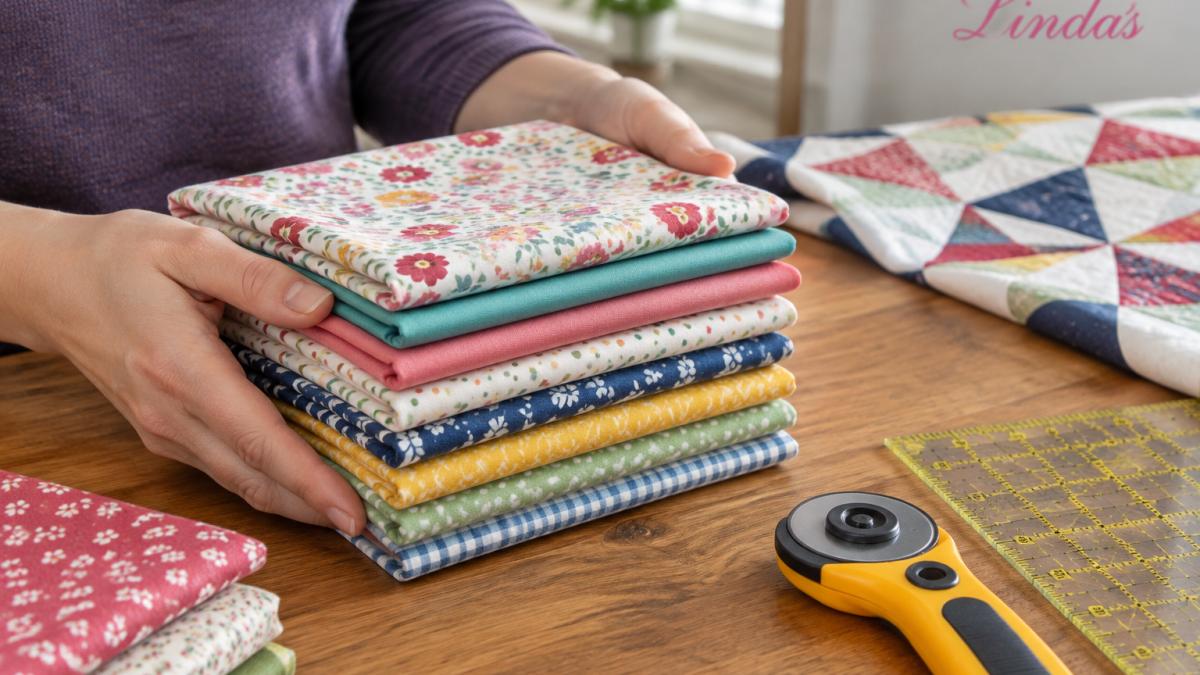
2. Flannel. Soft and warm, with a brushed surface that clings slightly to batting and to itself.
3. Batik. Tightly woven and generally colorfast because of the dye process, with a hand-dyed look.
4. Linen and linen blends. Beautiful texture, but they wrinkle and shift, and the loose weave ravels while you piece.
5. Lawn and other lightweight cottons. Too thin for piecing a standard quilt top.
6. Stretch fabrics. Avoid entirely.
How to choose by your priority. For ease of sewing, choose quilting cotton.
How to Check Fabric Quality Before You Buy
Quality checks take about thirty seconds per bolt and save hours of rework. Most beginner frustration traces back to a fabric that looked fine on the shelf but was loosely woven, off-grain, or prone to bleeding.
- Check the hand. Good quilting cotton feels smooth and slightly firm, not papery or limp. A thin, slick fabric will likely slip and fray under the needle.
- Hold it to the light. A dense plain weave shows little light through it. A clear grid of light means the weave is loose and edges will ravel while you piece.
- Check the thread count and weight if listed. Listings that give fabric weight or thread count are easier to compare, and when neither is given, feel the fabric in person or ask before ordering.
- Scrunch a corner. Quality cotton springs back with few deep creases; a fabric that stays crumpled will distort when you press seams.
- Look at print registration. Motifs should be sharp, with no color bleeding at the edges. Fuzzy edges often signal a cheap screen-printing process that will fade faster.
- Rub the surface with a white cloth. A residue of dye or sizing signals a cheap finish or a dye that may bleed in the wash.
- Check the grain and selvage. Tug gently along the lengthwise and crosswise grain; it should resist evenly, and a fabric that stretches easily on the crosswise grain will bow when you cut strips. The selvage shows the manufacturer's name and collection, which helps you match dye lots later.
- Ask about shrinkage and dye lot. Quilting cotton shrinks somewhat in the first wash. If you are mixing brands, ask whether the fabrics were dyed in the same lot; different lots of the same print can vary enough to show in a finished quilt.
For a deeper walkthrough of these checks, see our guide on how to choose high quality quilting fabric. It covers weave density, dye fastness, and what to ask before ordering online.
Prewashing and Preparing Fabric: A Decision Guide
Prewashing is optional, but the decision should be deliberate. The general rule: prewash if you plan to wash the finished quilt, skip it if you want the crisp hand of new fabric and will dry-clean or spot-clean instead.
Prewash if:
- You're using dark, red, or saturated prints next to light fabrics
- The quilt will be washed often
- You're mixing fabric brands in one quilt
Skip prewashing if:
- Every fabric in the quilt comes from the same manufacturer and collection
- You want maximum body for piecing
- The fabric is a precut like a charm pack or jelly roll, which will fray badly in the wash
When you do prewash, use cool water and a color catcher, dry on low, and press before cutting. Skipping the press leaves wrinkles that distort your cuts by a visible margin.
Choosing Colors and Coordinating Prints for a First Quilt
The most reliable beginner formula is one focus print, two or three supporting prints, and a solid or two to give the eye a rest. Solids hide small piecing errors and let the prints carry the design.
A few practical rules we give new quilters:
- Pick a palette from one fabric you love. Pull its colors out as solids and small-scale prints.
- Vary print scale. One large motif, one medium, and one small blender keeps the quilt from looking flat.
- Watch value, not just color. Squint at your stack; if everything reads the same shade, add a light and a dark.
- Limit the palette. Three to five colors reads cleaner than eight.
Ready to put the palette to work? Browse beginner-friendly geometric quilt patterns that suit simple fabric groupings.
Budgeting and Quantity Planning for Beginner Projects
A first quilt's fabric cost depends mostly on size and how many prints you use. Plan yardage before you fall in love with a bolt.
Use this planning table to size your project:
| Quilt Size | Approximate Quilt Top Yardage | Backing Yardage | Best For |
|---|---|---|---|
| Baby (36" x 52") | 2 to 3 yards total | 1.5 yards of 44" | First project |
| Throw (50" x 65") | 4 to 6 yards total | 4 yards of 44" or 2 yards wideback | Most common first quilt |
| Twin (70" x 90") | 8 to 10 yards total | 5.5 yards of 44" or 3 yards wideback | Second or third project |
Buy a little extra of each fabric, roughly a quarter yard, to allow for miscuts and grain errors. If you're planning several projects, our guide on buying quilting fabric and batting in bulk online explains how to combine orders and store the surplus.
Precuts stretch a budget further than yardage for a first quilt. A single fat quarter at Linda's, like the 435 Metropolis Fog Moda Grunge Fat Quarter at $4.32, measures 18" x 22". Build a scrappy palette with a handful of Grunge Basics fat quarters, such as 360 Grey Paper and 303 Key Lime, for variety without committing to full yards.


Best Fabric for Quilt Backing and How to Choose It
A wideback cotton in the same weight as your quilt top is one option for quilt backing, since it can avoid a seam down the middle of a large quilt. Standard 44" fabric works for small quilts but requires piecing for anything wider than about 40 inches.
Backing choices come down to three options:
- Wideback cotton: 108" width, one seam-free piece for most quilts, and the simplest choice for large projects.
- Standard 44" quilting cotton: economical for baby quilts, but you'll piece a seam for throws and larger.
- Flannel backing: warmer and cozier, with a brushed hand that grips the batting well.
For a full comparison of wideback options, read our roundup of the best wideback fabrics for large quilts. One insider note: order backing after your top is finished, so you're measuring the real dimensions rather than an estimate.
Best Quilting Fabric Brands and What Sets Them Apart
Brand matters less than weave and hand, but a few names consistently deliver the quality beginners need. Linda's Electric Quilters carries the brands below.
Moda Fabrics offers Grunge Basics by BasicGrey, a 100% cotton line in coordinated colorways.
Maywood Studio fabrics are sold by the yard at 43"/44" width. The Green Lace Leaf Cotton and Blue Large Floral Cotton both run $9.74 per yard and suit a range of palettes.
Best for: quilters who want brand-name quality with coordinated collections. Skip if: you need specialty fibers like linen or silk, which sit outside the beginner range.
You can browse the full quilting and sewing fabric by the yard selection to compare colors and brands side by side.
Choosing your first quilting fabric shouldn't feel like a gamble.
Frequently Asked Questions
Is 100% cotton the best fabric for quilting?
For most beginners, yes. Quilting cotton is a medium-weight woven fabric that holds a crease, feeds through a machine without slipping, and presses flat, which makes piecing far more forgiving. It also shrinks predictably and wears well over years of washing. The trade-off is that it wrinkles and has little stretch, which is exactly why it stays stable on the cutting mat. If you want a softer drape, a cotton-linen blend works, but save it for a second or third quilt.
What is the difference between quilting cotton and regular cotton?
Quilting cotton is woven tighter and slightly heavier than apparel cotton, so it does not fray apart as quickly and holds its shape during piecing. Apparel cotton is often lighter, drapes more, and may contain stretch fibers, all of which make it harder to cut and sew accurately on a first quilt. Check the bolt label or product listing for a 100% cotton fiber content and a 43 to 44 inch width, which are the standard markers of quilting cotton.
How much quilting fabric should a beginner buy?
Buy for the pattern, then add a little extra. A baby quilt typically needs 3 to 4 yards of total fabric across the top, a throw takes roughly 5 to 7 yards, and backing adds another 3 to 4 yards at 43 to 44 inches wide. Precuts are a lower-risk starting point: a single fat quarter at $4.32 covers small blocks and lets you test a color palette before committing to yardage. Always round up rather than down.
Should I prewash quilting fabric before cutting?
It depends on the look you want. Prewashing removes sizing and most shrinkage, so the finished quilt stays the size you planned and colors are less likely to bleed into each other. Skip it if you want the crisp, slightly stiff hand that makes precise cutting easier and prefer the puckered texture that appears after the first wash. If you do prewash, use cold water and a color catcher, then press with starch before cutting.
What is the best fabric for quilt backing?
Choose a 100% cotton in the same weight as your quilt top for backing. Wideback fabric saves you from piecing a seam down the middle, while standard 43 to 44 inch yardage works for smaller quilts if you piece it. Avoid stretchy or slippery fabrics on a first backing, since they shift during basting and can pucker in the quilting.



