
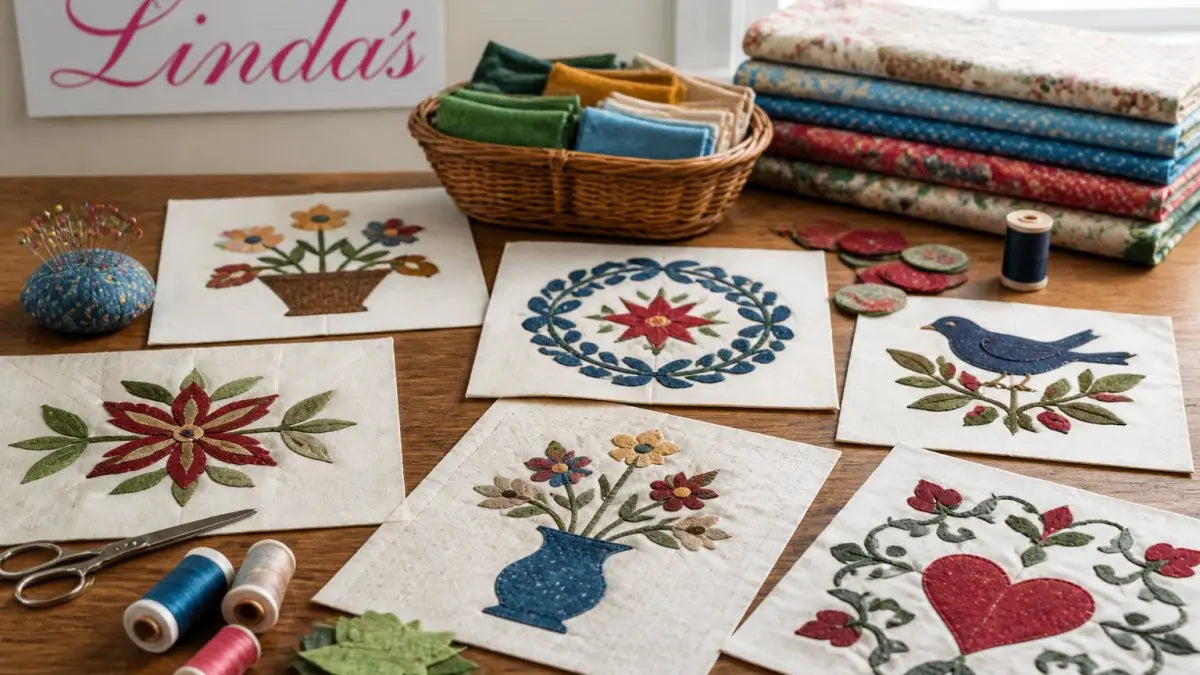
Last Updated: October 24, 2026
Quick Summary
Traditional appliqué design ideas range from beginner-friendly penny rugs and orange peel patterns to advanced Baltimore album designs and Hawaiian appliqué, each offering different skill levels and aesthetic possibilities for quilters of all experience.
- Penny rugs and folk art motifs are ideal beginner projects using simple shapes like circles, stars, and hearts.
- Baltimore album quilts represent advanced American appliqué traditions featuring ornate florals and patriotic symbols as multi-year projects.
- Tulip and stem designs teach curved stitching without overwhelming complexity, suitable for beginner-intermediate quilters.
- Hawaiian appliqué uses bold, symmetrical large-scale motifs with the fold-and-cut method, typically in two contrasting colors.
- Feathered wreaths represent the pinnacle of traditional appliqué artistry, demanding advanced skills and careful attention to complex curves.
Table of Contents
- Quick Comparison of Traditional Appliqué Design Ideas
- How We Selected These Traditional Appliqué Quilt Patterns
-
10 Traditional Appliqué Design Ideas Worth Stitching
- 1. Floral Medallion Blocks
- 2. Baltimore Album Designs
- 3. Penny Rugs and Folk Art Motifs
- 4. Wreath and Swag Patterns
- 5. Oak Leaf and Acorn Blocks
- 6. Tulip and Stem Designs
- 7. Hawaiian Appliqué Patterns
- 8. Orange Peel and Geometric Shapes
- 9. Appliquéd Hexagons and Flowers
- 10. Feathered Wreaths and Borders
- Beginner Appliqué Quilt Projects to Start With
- Hand Appliqué Techniques for Traditional Designs
- Appliqué Quilt Mistakes to Avoid
- Choosing Your First Traditional Appliqué Project
- Frequently Asked Questions
Quick Comparison of Traditional Appliqué Design Ideas
| Design Type | Skill Level | Best Project Size | Best For |
|---|---|---|---|
| Floral Medallion Blocks | Intermediate | Large quilt | Statement quilts |
| Baltimore Album Designs | Advanced | Large quilt | Heirloom projects |
| Penny Rugs | Beginner | Small accessories | First projects |
| Wreath and Swag Patterns | Intermediate | Medium quilt | Wall hangings |
| Oak Leaf and Acorn Blocks | Intermediate | Large quilt | Nature themes |
| Tulip and Stem Designs | Beginner-Intermediate | Medium quilt | Spring quilts |
| Hawaiian Appliqué | Advanced | Large quilt | Bold statements |
| Orange Peel and Geometric Shapes | Beginner | Small projects | Quick finishes |
| Appliquéd Hexagons and Flowers | Intermediate | Medium quilt | Geometric blends |
| Feathered Wreaths and Borders | Advanced | Large quilt | Borders and frames |
How We Selected These Traditional Appliqué Quilt Patterns
Choosing traditional appliqué design ideas depends on your skill level, available time, and creative vision. Traditional appliqué combines fabric layers with careful stitching for dimensional effects.
10 Traditional Appliqué Design Ideas Worth Stitching
1. Floral Medallion Blocks
Floral medallion blocks center a bold flower or botanical element surrounded by decorative borders, creating striking focal points for large quilts or wall hangings.
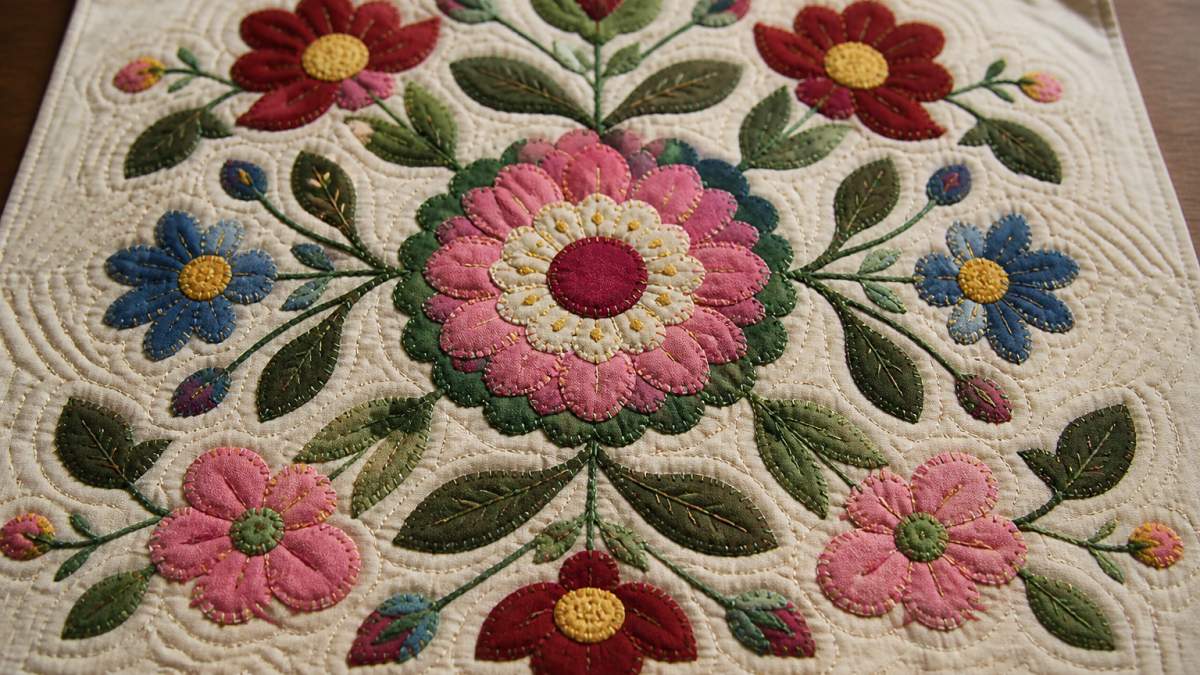
Medallion blocks are flexible: use one large flower or arrange smaller blooms in a circle, and the borders let you practice different stitching techniques; hand or fusible appliqué both work well.
For beginners looking for structured floral projects, the Just Flowers Traditional Applique Embroidery Patterns (Classic Series) offers fourteen appliqué designs with paper templates included.

2. Baltimore Album Designs
Baltimore album quilts represent one of America's most celebrated appliqué traditions, with ornate blocks of intricate florals, patriotic symbols, and decorative motifs in a grid format that become personal heirlooms.
Fine stems, delicate leaves, and dimensional flowers demand precision and patience; most quilters tackle these as multi-year projects, one block at a time.
This style demands advanced hand appliqué skills and careful fabric selection; background-to-appliqué contrast creates the visual drama these quilts are known for.
3. Penny Rugs and Folk Art Motifs
Penny rugs started as a practical craft using fabric scraps for small rugs and wall hangings, named for their circular shape resembling stacked pennies.
Folk art motifs include simple shapes like circles, stars, and hearts, which work wonderfully for beginners. The aesthetic celebrates imperfection, so stitches don't need to be flawless to look authentic.
Penny rug patterns often feature wool appliqué, which forgives small mistakes better than cotton. The Sweet & Simple Wool Applique book includes nineteen charming wool-felt projects spanning traditional penny rugs to contemporary embellishments.

4. Wreath and Swag Patterns
Wreath and swag designs frame your quilt with circular or draped motifs of leaves, berries, and flowers. They work exceptionally well as borders and can also serve as central medallions or grid arrangements.
Wreath designs are versatile: spring wreaths burst with cherry blossoms, autumn wreaths showcase oak leaves and acorns, and holiday wreaths bring festive energy.
Swag patterns drape like fabric garlands, adding elegant movement; combined with wreaths, they create sophisticated borders that teach curved stems and flowing lines.
5. Oak Leaf and Acorn Blocks
Oak leaf and acorn designs celebrate nature's quiet beauty, featuring realistic leaves with visible veining and acorns in various stages of ripeness, suiting autumn-themed quilts or nature lovers seeking organic compositions.
Oak leaf blocks teach valuable skills for curved edges and realistic detail.
This traditional appliqué design idea works across project sizes: single blocks make excellent wall hangings, while multiple blocks in a grid create stunning bed quilts.
6. Tulip and Stem Designs
Tulip and stem patterns are among the most recognizable traditional appliqué designs, featuring upright tulips with curved stems and leaves that are ideal for beginners while color play keeps experienced quilters engaged.
Traditional tulip designs often feature three blooms per block in a row or triangle. The Flaming Tulips Pantograph With Blocks By Linda V Taylor provides a reference design for tulip and stem patterns to guide your stitching. The gracefully curved stems teach you to handle curves without overwhelming complexity, and the blocks work beautifully in repeating patterns or as single focal blocks.
Color choice transforms tulip designs dramatically: red tulips on white create classic, patriotic quilts, while pastels or jewel tones bring contemporary energy.
7. Hawaiian Appliqué Patterns
Hawaiian appliqué brings tropical elegance to traditional quilting with bold, symmetrical, large-scale motifs inspired by island flowers, leaves, and ocean themes, often using just two colors for striking contrast.
Hawaiian appliqué typically employs the fold-and-cut method, folding fabric and cutting designs like paper snowflakes to create perfectly symmetrical patterns with intricate details, producing bold, graphic results quite different from smaller traditional appliqué.
These patterns demand advanced skills and patience. The large-scale stitching and bold shapes require precision, but the finished quilts become statement pieces that command attention.
8. Orange Peel and Geometric Shapes
Orange peel designs feature curved, interlocking shapes resembling orange segments. These geometric patterns create mesmerizing optical effects through color and value contrast, and their simple repeating shapes make them more accessible than many traditional designs.
Geometric shapes like circles, diamonds, and curved segments offer wonderful opportunities to explore color theory. Arranging warm and cool tones creates visual movement, and these patterns reward thoughtful fabric selection.
The Willow Rose Quilt Pattern features appliquéd orange peel blocks combined with traditional piecing.
9. Appliquéd Hexagons and Flowers
Hexagon designs combine geometric precision with floral beauty, featuring hexagonal shapes filled with flower motifs or surrounded by decorative borders to create structure with organic charm.
Hexagon appliqué teaches precise angles and multiple fabric layers; each hexagon becomes a small project, making the overall quilt feel manageable for quilters who prefer working on smaller pieces.
Just Flowers Traditional Applique Embroidery Patterns (Classic Series) →
The Hexie Garden Quilt from Piece O' Cake Designs offers nine appliquéd bloom blocks that blend traditional and modern sensibilities. Individual templates for each appliqué shape make prep work fast and easy. You can stitch one block per month as a take-along project, with a bonus one-block pattern included for additional creativity.
10. Feathered Wreaths and Borders
Feathered wreaths represent the pinnacle of traditional appliqué artistry, with delicate feather shapes arranged in circular patterns that create stunning borders or medallions and demand advanced skills and careful attention.
Feathered designs teach you to handle complex curves and create seamless transitions. These patterns work beautifully as borders framing simpler centers or as standalone medallions. Feathered Quilt Angels Pantograph By Linda V Taylor offers reference designs for feathered wreaths and borders, helping you explore this elegant traditional appliqué design idea.
Beginner Appliqué Quilt Projects to Start With
Starting your traditional appliqué journey means choosing projects that build confidence without overwhelming frustration. Simple designs with clear instructions and manageable timelines work best, and many beginners find success with small projects before tackling large quilts.
Penny rugs and folk art motifs make excellent starting points. The Beginners Choice Block provides simple patterns perfect for your first appliqué projects.
The Pocket Full of Posies Quilt Pattern offers traditionally pieced backgrounds with appliquéd flowers, designed as a confident beginner project.
Hand Appliqué Techniques for Traditional Designs
Hand appliqué involves stitching fabric pieces onto a background by hand for dimensional effects and fine detail. Learn how to read quilt patterns to understand the designs you'll be stitching.
Needle-turn appliqué is a traditional hand method: you fold the seam allowance under as you stitch, using the needle to create clean edges.
Fusible appliqué offers a faster alternative, using heat-activated adhesive to bond fabric pieces before stitching. The Flower Show Quilt uses simple fusible appliqué with hand embroidery embellishment, making it incredibly portable.

Raw-edge appliqué skips the turned-under seam allowance entirely, stitching fabric pieces with raw edges exposed. This modern approach offers speed and a contemporary aesthetic, with machine stitching securing the edges.
Reverse appliqué flips the traditional process: you layer fabrics and cut away top layers to reveal contrasting colors beneath, creating striking effects for geometric patterns.
Appliqué Quilt Mistakes to Avoid
Learning from common pitfalls accelerates your progress. Many mistakes stem from rushing or skipping preparation steps.
Watch out: Using fabric that's too thin or loosely woven for appliqué. Lightweight fabrics fray excessively and distort during stitching.
Inadequate seam allowances create problems when stitching curves.
Poor preparation wastes time and creates frustration.
Over-handling fabric during stitching stretches it out of shape. Minimize unnecessary handling and avoid pulling stitches too tight.
Choosing Your First Traditional Appliqué Project
Your first traditional appliqué project should match your skill level, available time, and creative interests. Honest assessment prevents disappointment and builds confidence.
Start with a project you can complete within three months; longer timelines risk losing momentum. Explore beginner quilting tutorials for small projects to build your skills and confidence. Smaller projects like wall hangings or table runners offer achievable goals that keep you engaged.
Choose designs with shapes you find visually appealing. If you love florals, start with tulip or floral medallion designs.
Consider your stitching environment and available time.
The Modern Wool book offers twelve beginner-friendly wool appliqué projects with two colorway options each. These projects include helpful step-by-step commentary and work perfectly for first attempts. The forgiving nature of wool appliqué makes it ideal for building confidence before tackling cotton projects.
Linda's Electric Quilters carries over 50,000 quilting, sewing, and embroidery products including premium batting, fabrics, threads, and notions from top industry brands.
Frequently Asked Questions
What are some traditional appliqué quilt patterns that work well for beginners?
Floral medallions, simple wreath designs, and basic tulip patterns are excellent starting points. Patterns with larger shapes are easier to manage than intricate details. The Pocket Full of Posies Quilt Pattern is specifically designed for confident beginners and uses appliquéd flowers on a traditionally pieced background. Look for patterns labeled "beginner-friendly" that use fusible appliqué, which eliminates the need for complex hand-stitching techniques.
What are the different types of quilt appliqué techniques for traditional designs?
Traditional appliqué methods include hand appliqué (needle-turn), fusible appliqué, raw-edge appliqué, and reverse appliqué. Needle-turn appliqué involves folding fabric edges and hand-stitching them down, the most authentic traditional method. Fusible appliqué uses heat-activated web to bond shapes to the quilt top, making it faster and ideal for beginners. The Flower Show Quilt demonstrates how fusible appliqué works beautifully with traditional designs, combining it with hand embroidery for embellishment.
How do you keep appliqué shapes from fraying during hand stitching?
Proper fabric preparation is critical. Use a running stitch or appliqué stitch that catches the fold of the fabric edge, not just the surface. Traditional hand appliqué techniques involve folding the seam allowance under as you stitch, which naturally protects raw edges. For wool appliqué projects, fraying is less of a concern due to wool's natural properties. Templates like the Prim Quilt Sew Simple Shapes include center marks that help you position fabric accurately, reducing stress on edges during stitching.
What fabrics work best for traditional quilt appliqué?
High-quality cotton is the standard for traditional appliqué quilts because it holds a crisp fold, stitches cleanly, and ages beautifully. Wool is excellent for folk-art and penny-rug appliqué styles, as shown in the Sweet & Simple Wool Applique book, which features 19 projects using wool felt. Avoid low-quality or heavily processed fabrics that fray excessively or lose their shape. The weight and weave of fabric matter, tightly woven cotton resists fraying better than loosely woven alternatives.
What is the best way to choose a traditional appliqué design if I'm new to quilting?
Start with designs that have larger, simpler shapes rather than intricate details. Consider the finished size you want, wall hangings or small projects are less intimidating than bed-sized quilts. Choose a design that genuinely excites you; enthusiasm carries you through the learning curve. Look for patterns with step-by-step instructions and full-size templates included. The Just Flowers Traditional Applique Embroidery Patterns offers 14 intermediate-level designs with two finished-size options, letting you scale your project to match your confidence level.



