
Hi Bestie,
Here’s the thing about minky:
It’s a knit fabric, which means it naturally has some give.
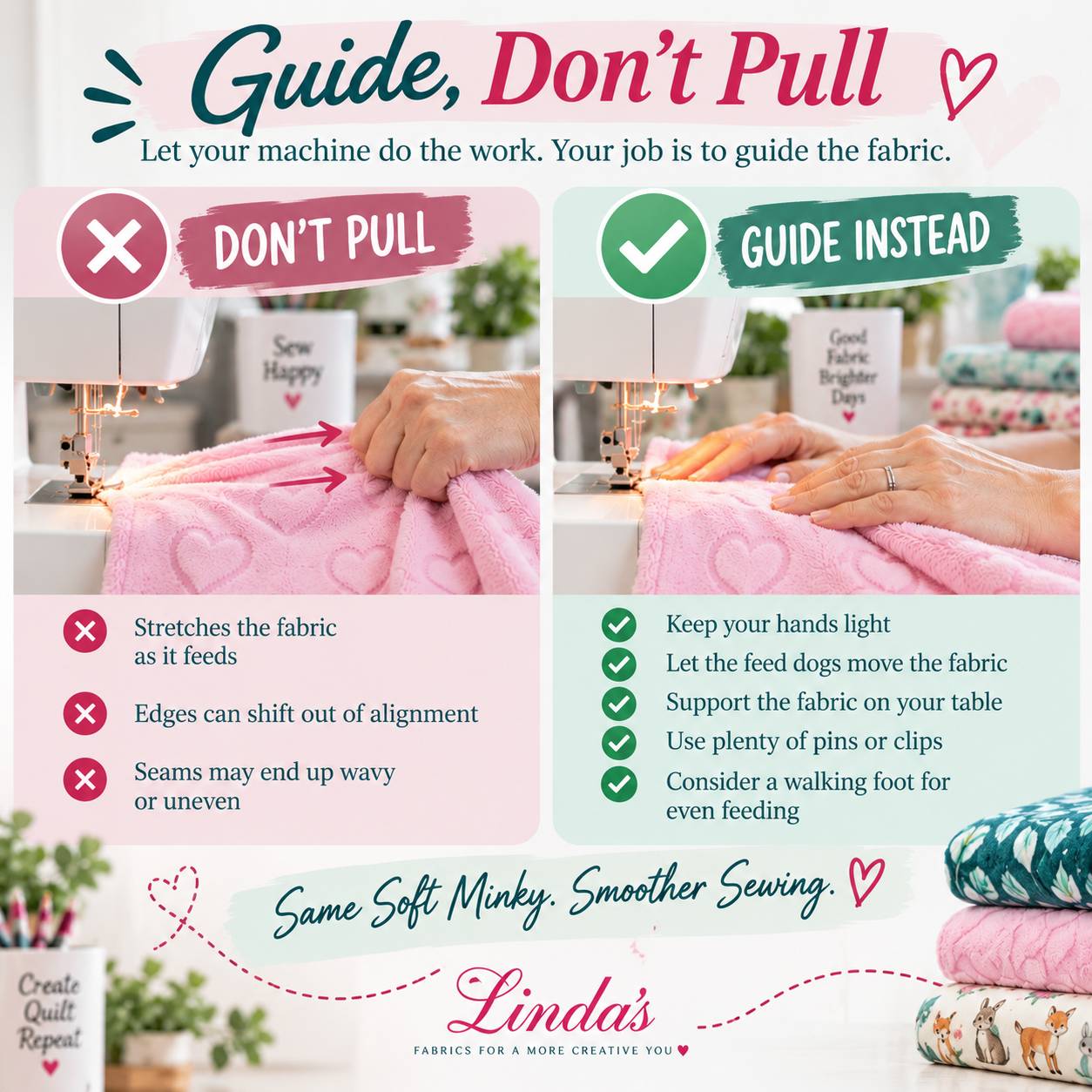
So when you pull from behind the machine to “help” it along, you can stretch the fabric as you sew.
The result?
Your once-perfect edges can creep out of alignment, your seam can distort, and one layer may suddenly seem longer than the other.
The better approach: guide, don’t pull
Let your machine’s feed dogs move the fabric while your hands simply keep everything aligned.
Why pulling stretches minky (and cotton doesn’t care)
Quilting cotton is a woven, so it barely moves when you tug it. Minky is a knit backed with a soft pile, and knits are built to stretch. The feed dogs are timed to move fabric exactly one stitch length at a time. When you pull from behind, you move the fabric faster than the feed dogs do, so the knit stretches between the needle and your hands and the stitches lock that stretch in place. That’s why the seam ripples and one layer ends up “longer” than the other: it isn’t longer, it’s stretched.
And if your layers still want to wander?
Give them a little more help before reaching for more force.
Use plenty of pins or clips to keep the layers together, and consider a walking foot to help the top and bottom layers feed more evenly.
The goal isn’t to overpower stretchy fabric.
It’s to give it fewer opportunities to stretch in the first place.
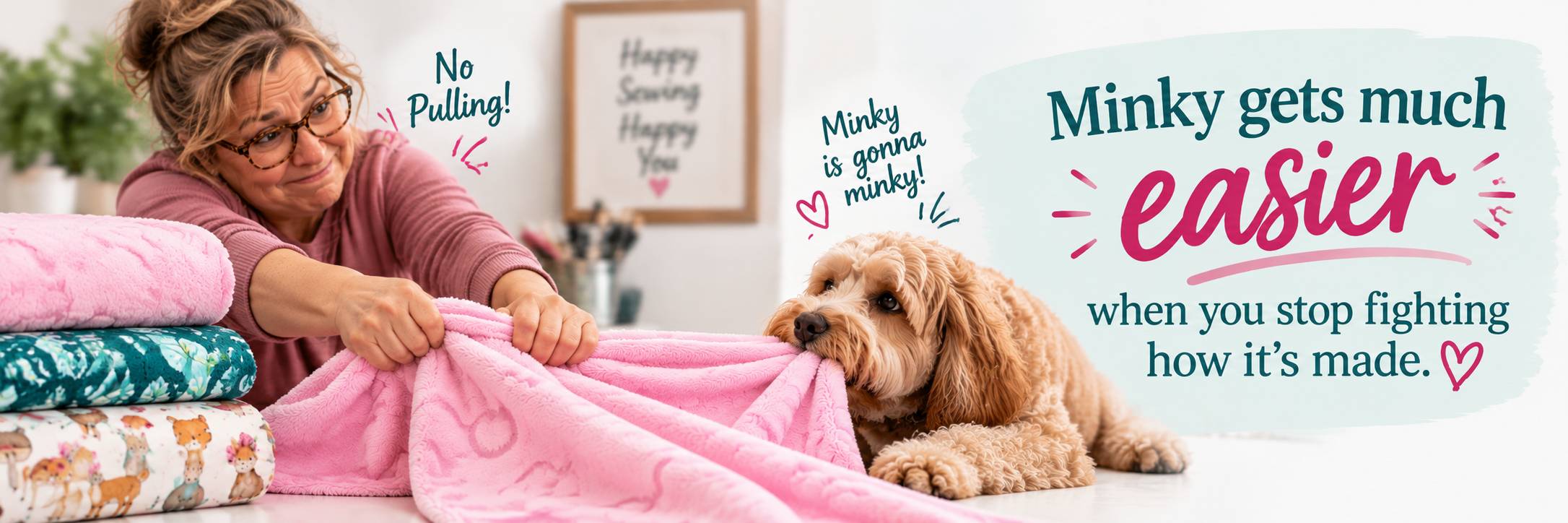
Remember,
Minky gets much easier when you stop fighting how it’s made.
Soft, plush and naturally flexible, that little bit of give is part of what makes minky so wonderful in the finished project.
Handle it accordingly, and sewing it becomes a whole lot less frustrating.
If you’re still building your minky confidence, start with the right thread for minky, check what your needle numbers mean, and read why seams fight you in the first place.
Happy Quilting!
From Corey.
Ready to sew with it? Shannon Cuddle 3 Extra Wide minky comes in 100+ solid colors at 88"/90" wide, so you can back a whole quilt with no seam to fight. See the Shannon Cuddle deal, browse the full Shannon Cuddle Minky collection, or use the 3-step way to buy Cuddle if you’re not sure where to start.
Frequently Asked Questions
Why does minky stretch when I sew it?
Minky is a polyester knit, and knits are made to stretch. Pulling it from behind the machine moves it faster than the feed dogs, so the fabric stretches between your hands and the needle and the stitches lock that stretch in. Let the feed dogs do the moving and keep your hands as guides only. The complete Cuddle minky guide covers what makes the fabric behave this way.
Do I need a walking foot to sew minky?
You don’t strictly need one, but a walking foot (also called an even-feed foot) grips the top layer and moves it in step with the feed dogs underneath, which is the single biggest fix for one layer ending up longer than the other. If you sew minky often, it’s worth it. If not, plenty of pins or Wonder Clips, a longer stitch length, and not pulling will get you most of the way there.
Should I use pins or clips on minky?
Clips are usually easier on minky because they hold the thick pile firmly without distorting it, and they don’t leave holes. Pins work too if you use plenty of them and place them perpendicular to the seam. Either way, the point is to hold the layers together so you never feel the urge to pull. If you baste larger minky projects, spray basting vs. pin basting walks through both options.
Why is one layer of minky longer than the other after I sew?
Almost always because the top layer was pushed or pulled while the bottom layer was carried by the feed dogs, so the two travelled at different speeds. Clip or pin every few inches, sew with the minky on the bottom when you can, and stop pulling from behind. Get Cozy with Cuddle has a full list of tools that make this easier.
What stitch length and thread should I use for minky?
A slightly longer stitch (around 3.0–3.5 mm) puts less thread into a stretchy seam and reduces puckering. A good polyester thread stretches a little with the knit instead of snapping. Don’t Let the Wrong Thread Ruin Your Minky Project explains which threads hold up and which don’t.