
Hi Bestie,
You carefully choose your fabric, match the perfect thread color, and set up your sewing machine.
But when your project is done, where does that spool go?
On a sunny windowsill? In an open sewing basket? Or tucked into a drawer with loose pins, scissors, and fabric scraps?
Here's something worth knowing: Even quality thread can deteriorate when exposed to the wrong conditions over time.
And sometimes, the effects only become noticeable when you're halfway through a project.
The 30-Second Habit Your Thread Will Thank You For
You don't need an elaborate sewing studio to care for your thread.
Just remember these three things:
COVER IT — Keep dust and lint away.
KEEP IT DRY — Protect it from excess moisture.
KEEP IT SHADED — Avoid prolonged exposure to sunlight.
A simple thread organizer or covered drawer can help preserve your spools between projects. If you've built up a cone collection, a lidded box like the RNK 2-drawer, 30-cone storage box keeps everything covered, dry, and easy to grab (there's a full guide to that box in Corey's Product Guides).
If you've found an old spool and aren't sure whether it's still usable, gently pull a short length of thread to check for unexpected snapping, brittleness, or visible damage before using it on an important project. That's the same quick check I walk through in The One Thread Test Worth Doing Before Every Project.
Why Sunlight, Moisture and Lint Actually Damage Thread
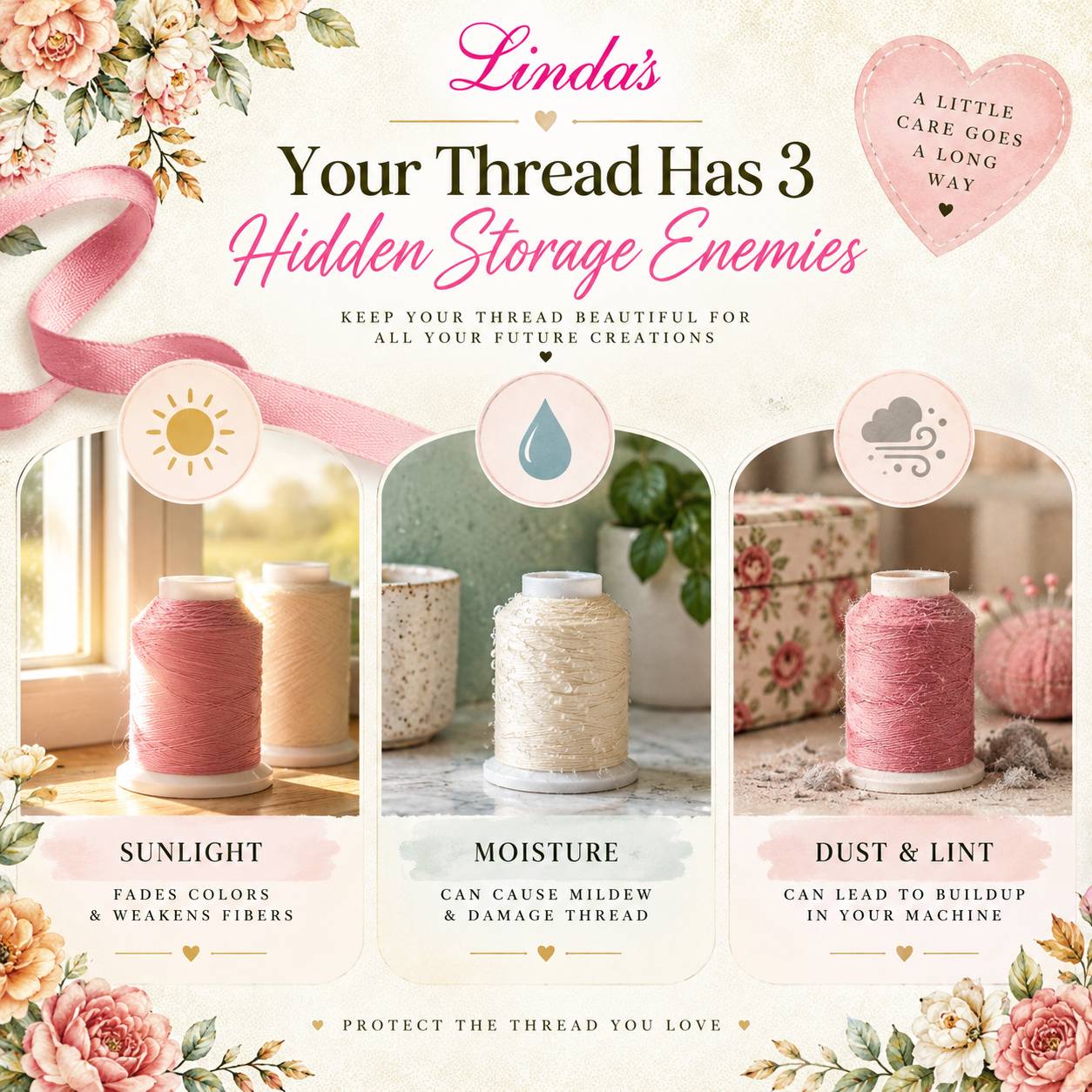
Here's the "why" behind the three rules. Sunlight does two things: the UV breaks down the dye, so colors fade unevenly along the outside of the spool, and it slowly weakens the fiber itself, which is why an old windowsill spool snaps when you tug it. Moisture is hardest on cotton thread — damp spools can mildew, pick up a musty smell, and lose strength, and a humid sewing room is enough to do it over a season. Dust and lint don't hurt the thread much, but they ride along with it into your tension discs and bobbin area, which is one of the quiet reasons behind tension trouble and thread that keeps breaking. Covered, dry, shaded storage removes all three problems at once.
Remember,
Your thread does more than hold fabric together. It helps bring every seam, detail, and creative idea to life. Taking a few seconds to store it properly can help protect its color, condition, and performance for future projects. Because the thread you carefully chose today deserves to be just as ready for the project you start tomorrow.
And while you're at it — the same thinking applies to your fabric. If your stash lives in the open, read The Hidden Problem With a Perfectly Folded Fabric Stash and The Craft Stash Problem Nobody Talks About.
Happy Quilting!
From Corey.

Restocking your thread drawer? Browse all quilting threads, the longarm-favorite OMNI by Superior and Glide King spools, or grab a wooden thread rack for the spools you reach for daily. And this week, Moda fabrics are 30% off.
Frequently Asked Questions
How should I store sewing and quilting thread?
Keep it covered, dry, and out of direct sunlight. A closed thread organizer, a lidded storage box, or a drawer away from a window all work. Open racks are fine for the spools you use every week, but long-term storage should be enclosed so dust and lint can't settle on the thread.
Does thread go bad or expire?
Thread doesn't have a printed expiry date, but it does age. Sunlight weakens fibers and fades color, moisture can cause mildew (especially on cotton), and very old thread can turn brittle. Stored properly, good polyester thread stays usable for many years; cotton is more sensitive to humidity and light.
How can I tell if old thread is still good?
Pull off a short length and give it a firm tug. If it snaps easily, feels dry or fuzzy, or the color on the outside of the spool is noticeably lighter than the inside, retire it from important projects. The full check is in The One Thread Test Worth Doing Before Every Project.
Why does old thread keep breaking in my machine?
Usually because the fibers have weakened from light or age, or because lint on the spool is building up in the tension discs and changing the tension. Cleaning the machine and switching to a fresh spool solves most of it — see The #1 Reason Your Thread Keeps Breaking.
Is it OK to store thread on an open rack near a window?
For spools you use constantly, an open thread rack is convenient, but keep it out of direct sun. Anything you won't touch for a few months belongs in a covered box like the RNK 30-cone storage box, where it stays shaded, dry, and lint-free.


