Why Some Quilts Last Generations and Others Don't – Morning with Corey

A beautiful quilt can take weeks, or even months, to create.

But what determines whether that quilt is still cherished 20, 30, or 50 years from now?

Most quilters assume it's the fabric. Others point to stitching.

The truth? The foundation of a long-lasting quilt is often something nobody sees.

The batting.
Quilt batting quality

Why Batting Matters More Than Most Quilters Realize

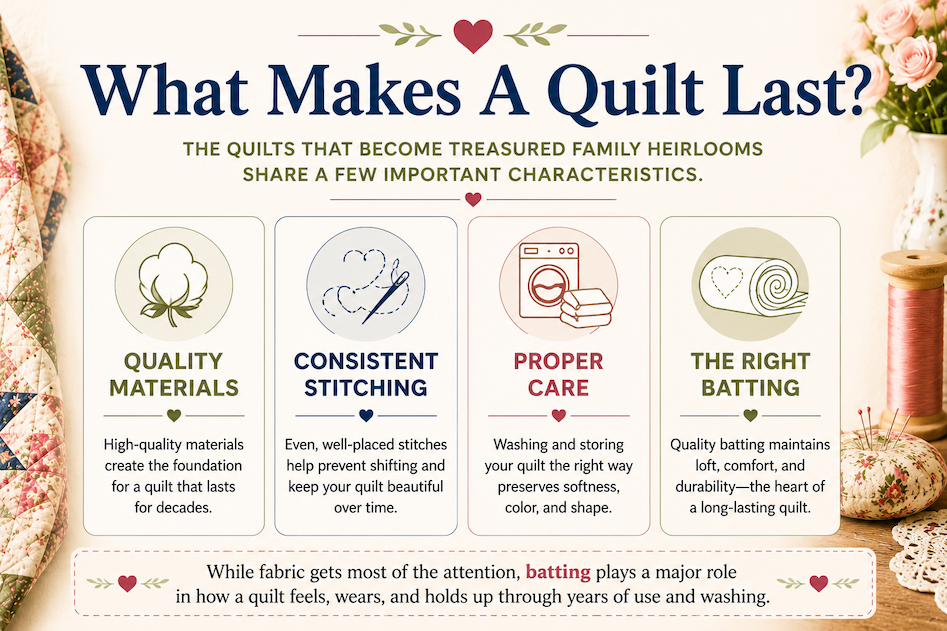
Batting is the heart of your quilt. It's what gives your project softness, structure, warmth, and durability.

Over time, lower-quality batting can flatten, shift, or lose its shape.

Quality batting helps preserve:

  • ✓ Loft and softness
  • ✓ Stitch definition
  • ✓ Overall durability
  • ✓ The comfort people fall in love with

The difference might not be obvious on day one. But years later, it's often what separates a treasured heirloom from a quilt that shows its age too soon.
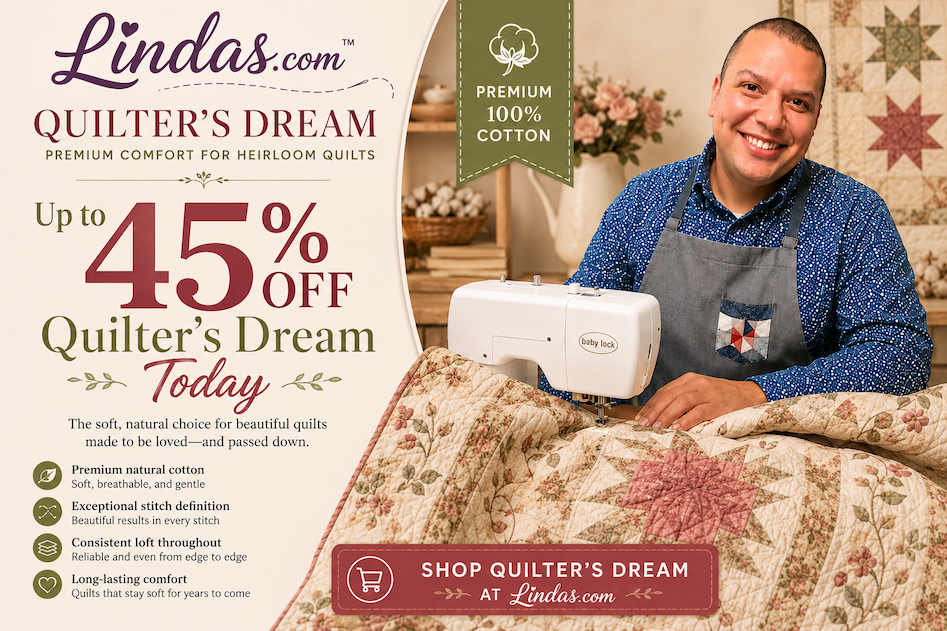
Quilter's Dream Cotton batting

Frequently Asked Questions

Why do some quilts last generations while others fall apart?

Longevity comes from materials and construction: quality quilting cotton, strong thread, batting that holds up to washing, consistent seam allowances, and secure binding. Quilts fail at their weakest component, not their prettiest one.

How should I wash a quilt so it lasts?

Wash cold on gentle with a mild detergent, and skip the high-heat dryer. Air drying flat or tumbling on low protects fibers, batting loft, and seams from the stress that ages quilts fastest.

Does quilting density affect how long a quilt lasts?

Yes. Quilting lines anchor the batting so it can't shift or bunch in the wash. Follow the minimum quilting distance printed on your batting package - going too far apart is one of the most common causes of early wear.

Related on Lindas.com:Shop Batting →