
Choose rayon challis in this order: weight first, opacity second, season third. On weight, challis barely varies — it is a lightweight plain weave by definition, and every rayon or viscose challis in Linda's collection is listed as Light. What actually changes your result is opacity: the challis fabrics stocked here are listed as semi-sheer, so a pale solid will need a camisole, lining or slip, while a busy print or a dark ground reads as far more covered. Season comes last: rayon challis is a warm-weather and layering fabric — cool and fluid in spring and summer, useful under cardigans in autumn, and not an insulating fabric for winter on its own.

Weight: a narrow range, judged by what it does
Unlike denim or canvas, challis does not come in light, medium and heavy grades. It is one weight class: a fine, lightweight plain weave with no stretch, a soft hand and very good drape. That has three practical consequences when you are choosing:
- It will not hold structure. Any challis you buy behaves the same way here — collars soften, waistbands need interfacing, and tailored shapes collapse. If your pattern needs body, the answer is a different fabric, not a heavier challis.
- Seams carry less load. A lightweight weave frays and can slip at stressed seams, so flowing, gathered and loose-fitting patterns suit every challis in the range; close-fitting garments that strain their seams suit none of them.
- Drape is the point. Weight is what makes challis pour rather than stand. If a listing describes a challis as crisp or firm, read the full specification carefully — that is not how this fabric class behaves.
Because the listings give weight as a class (Light) rather than a number, judge a specific fabric by its listed width, hand and drape instead: the verified options below run 54 to 58 inches wide, all soft, all with very good drape. Width matters more than weight when you buy — a 58-inch challis lays out wide-leg trousers and full skirts more economically than a 54-inch one.
Opacity: the decision that actually changes
Every verified challis below is listed as semi-sheer, but semi-sheer is a range, and three things move a fabric within it:
- Ground color. Pale solids show the most. A light green or white challis worn as a single layer will show undergarments and body outline in daylight. Deep grounds — navy, black, Aegean blue — read as effectively opaque in most indoor light.
- Print coverage. A dense print breaks up what shows through. The black-and-white daisy viscose challis below is listed semi-sheer like the solids, but its all-over print disguises show-through far better than a plain pale fabric of the same weight.
- Texture. A slub or dobby texture scatters light slightly and softens show-through; a perfectly smooth solid shows the most.
Test any challis you are considering the same way: hold a single layer over your hand against a window or bright light. If you can clearly see your fingers, plan a lining, a camisole or a slip for tops and dresses, and lined or fuller cuts for trousers and skirts. If your hand is a vague shadow, the fabric will usually work unlined in a loose fit. Then match the answer to the garment: a blouse over a camisole and a gathered dress over a slip tolerate semi-sheer fabric easily; an unlined white skirt does not.
Season: where challis earns its place
Spring and summer are challis's home ground. Rayon and viscose feel cool against the skin, breathe in heat, and the fluid drape keeps fabric moving rather than clinging. Blouses, tiered dresses, wide-leg trousers and scarves in challis are warm-weather staples.
Autumn works as a layering season: a challis blouse or dress under a cardigan or jacket, where the challis supplies color and movement and the layer supplies warmth.
Winter is the honest limit. Challis has no insulation and no wind resistance, so on its own it is a poor winter garment fabric; it still works as a lined dress or a layer under knitwear, but if warmth is the requirement, choose a fabric built for it.
One year-round caution: rayon challis shrinks, mostly in length. Whatever the season, pre-wash your cut before cutting, using the care method you intend for the finished garment.
A five-step choosing sequence
- Name the garment and check it suits challis at all — flowing and gathered, yes; tailored and structured, no.
- Read the listing's transparency field. If it says semi-sheer, assume a lining or layering plan until a light test proves otherwise.
- Weigh color and print: dark grounds and busy prints for unlined wear; pale solids only with a camisole, lining or slip in the plan.
- Match the season: unlined warm-weather wear, layered transitional wear, or lined winter use only.
- Check the width against your pattern layout — 54 to 58 inches in the options below — and convert to yardage before you buy.
Verified challis options at Linda's
The main collection for this module is the rayon challis collection. Four verified options show how the choices above play out:
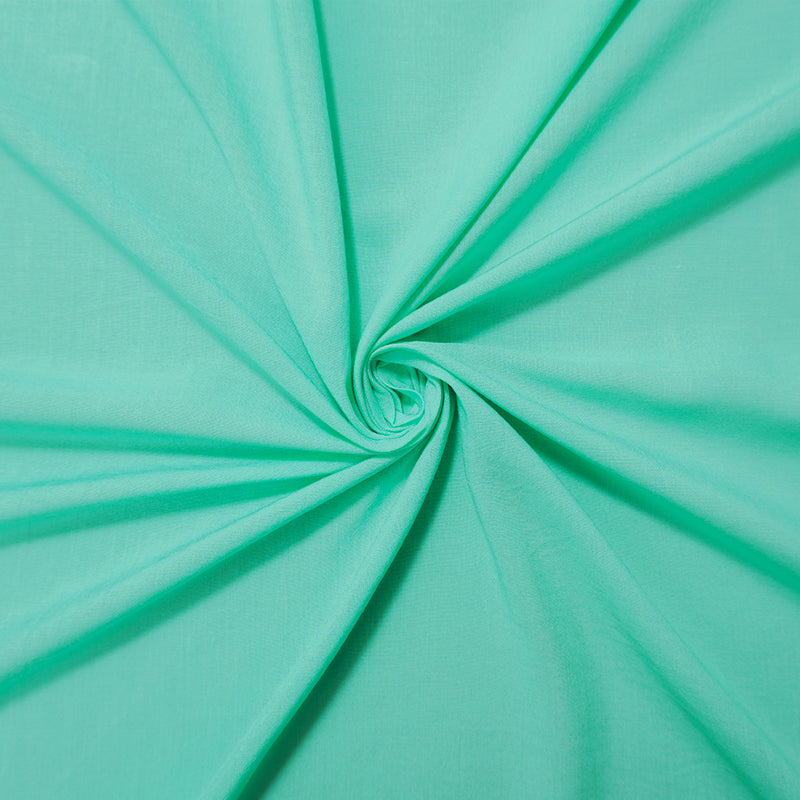
- Light Green Rayon Solid Challis Woven Fabric — 100% rayon, 55 inches wide, Light, Semi-Sheer. The pale-solid case: beautiful drape for a blouse or gathered dress, bought with a camisole or lining in the plan.
- Aegean Blue Rayon Solid Challis Woven Fabric — 100% rayon, 54 inches wide, Light, Semi-Sheer. The deeper solid: the same specification, but the saturated ground reads as far more covered — the easier unlined blouse or tunic choice.
- Pink Rayon Stripe Slub Challis Woven Fabric — 100% rayon, 58 inches wide, Light, Semi-Sheer, matte. The textured case: slub and stripe soften show-through, and the extra width helps tiered dresses — with stripes to keep consistent from piece to piece.
- Black-White Famous Designer Viscose Daisy Printed Challis Fabric — 100% viscose, 56 inches wide, Light, Semi-Sheer, matte. The print case: viscose is the same fiber family as rayon, and the all-over daisy print is the most forgiving option here for show-through.
Prices in this collection are per fractional-yard cut, so check the product page for the exact cut increments before comparing cost per yard.
Care and limitations
Follow the care guidance on the specific product page. In general, rayon and viscose challis are washed gently in cool water and dried flat or on a line; expect shrinkage and allow for it by pre-washing. This guide is a specification- and product-data-based comparison: no fabrics were sewn, worn or photographed for it, and the opacity guidance follows the fabrics' listed transparency ratings plus the standard light test described above, which you can repeat on any swatch before committing to a garment.
Keep reading
More from Apparel Fabric School. The prerequisite read is which garments suit rayon challis's structure and drape — choose the garment first, then the fabric. Before you buy, work through the fabric yardage guide so the width you choose converts to the right yardage. Next in this module: seams and edge finishes for rayon challis.


