
Table of Contents
- Why Large Quilts Demand a Different Batting Standard
- Top 5 Best Quilting Batting for Large Quilts
- Best Batting for Machine Quilting: What the Pros Use
- Quilters Dream Batting: A Premium Alternative for Large Projects
- How to Join Quilt Batting for Oversized Tops
- Weight, Washability, and Cost: The Hidden Factors
- Which Batting Should You Choose?
- Frequently Asked Questions
Last Updated: September 9, 2026
When you move from lap-size projects to a king or queen quilt, the rules for choosing batting change completely. A large quilt top can weigh 10 pounds or more once layered, and a batting that behaves at 60 inches wide can shift, drag, or bunch when feeding 108 inches through a longarm. The best quilting batting for large quilts must resist that drag, hold its shape, and survive years of heavy use. Below, we break down the five best options we stock, what the pros use, and hidden factors like weight and washability.
Why Large Quilts Demand a Different Batting Standard
The physics of a large quilt work against you. A king-size quilt sandwich with cotton batting can weigh 12 to 15 pounds, creating friction against the machine's throat plate. The batting needs structural integrity, usually from needle-punching or a scrim layer, to resist shifting. This is why the best quilting batting for large quilts is rarely pure 100% cotton with no reinforcement.
According to Missouri Star Quilt Co.'s 2026 guidance on batting for machine quilting, the polyester content in an 80/20 cotton-poly blend "reduces drag and prevents shifting" during machine quilting, making it the most efficient choice for large projects. Pure cotton can grab and stick against a metal frame, while the smooth polyester fibers let the batting glide. You also need to think about the quilt's long-term life: a large quilt gets folded, washed, and dragged off beds constantly, so the batting must resist creasing and hold its loft for decades, not just through the quilting process.
Top 5 Best Quilting Batting for Large Quilts
These five options represent the best quilting batting for large quilts that we stock and recommend. Each one solves a specific problem, from covering an oversized top in a single piece to delivering maximum loft without adding excessive weight.
1. Hobbs Heirloom 80/20 120" Wide Roll: The King-Size Champion
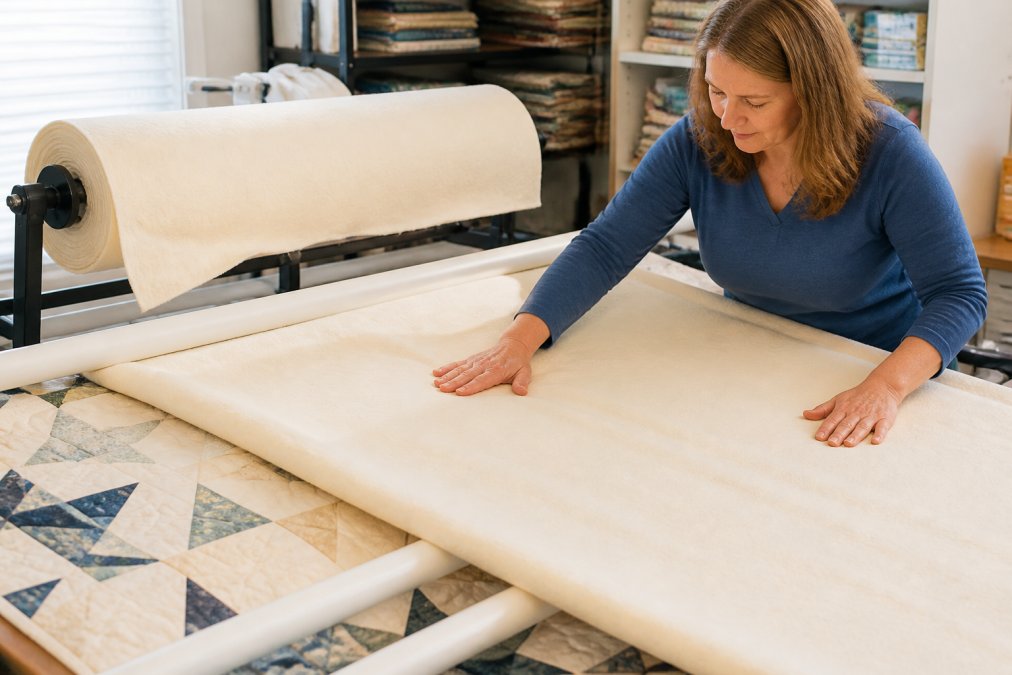
For oversized and king-size tops that need full coverage in a single pass, the Hobbs Heirloom 80/20 120" Wide Batting Roll is the definitive choice. At 120 inches wide by 30 yards, this is the widest roll Hobbs makes, eliminating the need to piece batting together for even the largest quilts. The 80% cotton and 20% polyester blend is needle-punched and lightly resin-bonded, giving it the strength to resist shifting on a longarm frame while maintaining a low, flat loft of about 1/8 inch.

What works: The 120-inch width covers king-size tops with room to spare, and the resin bonding adds stability for dense quilting across a massive surface.
What to watch: This unbleached batting can slightly shadow through light fabrics; choose a bleached option for pastels. At $229.16 per roll, it is an investment, but one roll yields multiple king-size quilts.
2. Hobbs 80/20 Heirloom 96" Roll: The Longarm Favorite
The Hobbs 80/20 Heirloom Batting 96" Wide Roll is our shop's best-selling batting for longarm and machine quilters. At 96 inches wide, it covers most queen and king tops in a single piece while offering the same soft, low-loft drape as the 120-inch version. The needle-punched construction resists bunching under the needle, and the cotton-poly blend delivers crisp stitch definition on both light and dark fabrics.

The 96-inch width is the sweet spot for most home quilters with a domestic machine or mid-arm frame. It is easier to handle than a 120-inch roll and costs less at $199.99. The limitation: if you regularly quilt tops wider than 96 inches, you will need to piece the batting or step up to the 120-inch version.
3. Warm & Natural 90" Cotton Roll: The Purist's Choice
Quilters who insist on 100% natural cotton should look at the Warm & Natural 90" x 20 YD Cotton Batting Roll. This batting uses a thin polypropylene scrim layer that the cotton fibers are needle-punched into, providing the stability that pure cotton lacks on its own. You can quilt or tie it up to 10 inches apart, giving you tremendous freedom with your quilting design.
Industry analysis from B Sew Inn's 2026 review of preferred batting materials notes that approximately 65% of home quilters prefer cotton or cotton/poly blends for their projects, citing breathability and ease of use as primary factors. Warm & Natural delivers that breathability while the scrim prevents the shifting that plagues unbonded cotton. The tradeoff is that cotton shrinks about 3% to 5% on the first wash, which gives that crinkled, antique look many quilters love but which can distort a precisely measured large quilt if you do not account for it.
4. Soft & Bright 90" Polyester Roll: Maximum Loft, Zero Drag
If you want a plush, high-loft finish on a large quilt without fighting the weight of cotton, the Soft & Bright 90" x 25 YD Polyester Batting Roll is the answer. Polyester batting is significantly lighter than cotton, reducing the overall weight of your quilt sandwich and making it easier to feed through a longarm machine. The even, consistent loft holds up beautifully across large projects, and it is fully machine-washable.
The main advantage of polyester on a large quilt is the complete absence of drag. The smooth synthetic fibers glide over a metal frame without catching, which means less strain on your machine's motor and fewer tension issues. At $161.33 for a 25-yard roll, it is also the most economical option for covering large quilts. The downside is that some quilters find polyester does not suit the aesthetic of traditional quilting, as noted in discussions among active quilters on Reddit's r/quilting community. Polyester also does not breathe as well as cotton, which matters if the quilt will be used for warmth.
5. Linda's Deluxe 60/40 96" Roll: The Plush Middle Ground
Our house blend, Linda's Deluxe Cotton/Poly Blend Batting 96" Roll, made for us by Hobbs, fills the gap between a flat 80/20 and a lofty pure polyester. The 60% cotton and 40% polyester mix delivers a plush, even body of about 1/4 inch loft, giving your quilt a fuller, softer drape while still quilting like a cotton blend. The higher polyester content also improves the batting's resilience, helping it bounce back after washing and folding.

At $198.99 for a 96-inch by 30-yard roll, this is the best value for quilters who want more loft than a standard 80/20 without the weight and shrinkage of pure cotton. The needle-punched construction resists shifting, and the blend handles beautifully on both domestic machines and longarms. The one consideration is that the 60/40 blend has a slightly less traditional, less flat appearance than an 80/20, so it is not the best choice if you want that antique, closely-quilted look.
| Batting | Width | Fiber Content | Loft | Price | Best For |
|---|---|---|---|---|---|
| Hobbs Heirloom 120" | 120 in | 80/20 cotton-poly | 1/8 in | $229.16 | Oversized king tops, single-pass coverage |
| Hobbs Heirloom 96" | 96 in | 80/20 cotton-poly | 1/8 in | $199.99 | Longarm and machine quilting, queen/king |
| Warm & Natural | 90 in | 100% cotton | Low | $217.24 | Pure cotton purists, needle-punched stability |
| Soft & Bright | 90 in | 100% polyester | High | $161.33 | Maximum loft, lightweight, zero drag |
| Linda's Deluxe 60/40 | 96 in | 60/40 cotton-poly | 1/4 in | $198.99 | Plush drape, extra loft without pure poly |
Best Batting for Machine Quilting: What the Pros Use
The best batting for machine quilting on a large scale is consistently an 80/20 cotton-poly blend, and the reason comes down to how the batting behaves under a fast-moving needle. When machine quilting, the batting needs to resist bearding, where fibers pull through the fabric to the surface, and it needs to hold its shape without stretching or distorting as the machine feeds it through. The 20% polyester content in an 80/20 blend provides exactly that stability.
Quilters Dream Batting: A Premium Alternative for Large Projects
For quilters who want the absolute highest quality and are willing to pay for it, Quilters Dream batting deserves serious consideration. The Quilters Dream Select White Cotton Batting Package stands out because it uses no scrim, resin, or glue, just 100% pure natural cotton that is mechanically cleaned and needle-punched for strength. This construction means your needles glide smoothly through the batting, and it can be quilted as far apart as 8 inches, giving you remarkable freedom in your design.
Quilters Dream is also the brand to explore if you want an eco-friendly option for a large quilt. The Quilters Dream Bamboo Batting Package blends bamboo, silk, botanic Tencel, and cotton into a batting that is soft, breathable, and naturally antibacterial. As noted in Thread Sketching in Action's 2026 analysis of bamboo batting, bamboo batting is increasingly recognized for its soft drape, breathability, and natural antibacterial properties, making it ideal for lightweight summer quilts. The bamboo blend also has minimal shrinkage, which removes a major variable when you are working with a precisely measured king-size top.
How to Join Quilt Batting for Oversized Tops
If you cannot find batting wide enough for your quilt top, or if you are working with narrower rolls you already own, you will need to join quilt batting pieces together. The method you choose depends on whether you want a flat, invisible seam or you plan to quilt heavily over the join. The key is to create a butt joint rather than an overlapping seam, which would create a visible ridge under your quilt top.
To join two pieces of batting, lay them side by side with the edges just touching, not overlapping. Use a wide zigzag stitch on your sewing machine to stitch across the seam, or use a specialized batting joining tool that felts the fibers together. For hand joining, you can use a needle and thread to whipstitch the edges together, but this takes considerably longer. The most reliable method for large quilts is to use a fusible batting tape, which you iron into place to create a strong, flat bond. Whichever method you choose, make sure the join falls in an area where you will quilt densely, which will help disguise the seam and add extra stability.
Weight, Washability, and Cost: The Hidden Factors
Three factors rarely discussed make a huge difference on large quilts: total weight, washability, and cost per square inch. A king-size quilt with 100% cotton batting can weigh several pounds more than one with a cotton-poly blend, affecting drape and whether your longarm can handle the load. For elderly quilters or those with limited mobility, a lighter polyester or blend may be the practical choice.
Large quilts get washed in commercial machines and dried on high heat, which can shrink cotton dramatically and melt or flatten polyester. An 80/20 blend offers the best compromise: cotton provides breathability and drape, while polyester resists shrinkage and holds shape. When comparing cost per square inch, the wide rolls at Linda's Electric Quilters offer better value than pre-cut packages, since you cut exactly the size you need without waste.
Which Batting Should You Choose?
Start with the size of your quilt top, then match the batting to your quilting method and desired finish. For a king-size quilt on a longarm wanting full coverage without piecing, the Hobbs Heirloom 80/20 in 120-inch width is the best quilting batting for large quilts. For a domestic machine or mid-arm frame, the 96-inch Hobbs roll gives the same quality at a lower price and is easier to handle.
For pure cotton lovers, Warm & Natural in the 90-inch width delivers the traditional aesthetic with scrim stability. For maximum loft and minimal weight, Soft & Bright polyester is the economical choice. For a plush middle ground that quilts like cotton but drapes fuller, Linda's Deluxe 60/40 is the house favorite. Buying a full roll gives you flexibility to cut exact sizes for multiple projects.
Choosing the best quilting batting for large quilts comes down to balancing width, weight, and washability against your project needs. A 120-inch roll eliminates piecing, an 80/20 blend offers the best all-around machine-quilting performance, and understanding shrinkage and cost per square inch prevents surprises after the first wash. At Linda's Electric Quilters, we stock all of these premium batting rolls with free shipping on all batting rolls, and our team can help you match the right batting to your project.
Frequently Asked Questions
What kind of batting do most quilters use for large quilts?
Most quilters prefer an 80/20 cotton-poly blend for large quilts. The 20% polyester content reduces drag on the machine and prevents shifting, while the cotton keeps a traditional drape. Industry data shows 65% of home quilters choose cotton or cotton/poly blends. Hobbs Heirloom 80/20 in a 96" or 120" roll is a top pick for king-size projects.
Is 100% cotton batting better than 80/20 for large quilts?
Not always. For hand quilting, 100% cotton offers that traditional flat, antique look. But for large machine-quilted projects, an 80/20 blend is often better. The polyester content reduces drag and prevents shifting during machine quilting, making the process smoother on a big quilt. Pure cotton can also shrink up to 5%, which adds a crinkled texture some quilters love and others find hard to control on a king-size scale.
What size batting do you need for a king size quilt?
A king-size quilt top typically measures around 108" x 104". You need batting at least 4" larger on each side for the quilt sandwich, so look for a 120" x 120" pre-cut package or a wide roll. A 120" wide batting roll gives you full coverage in one piece without needing to join batting. If you use a 96" roll, you will need to piece the batting for a standard king.
How do you prevent batting from shifting in a large quilt?
Use a needle-punched batting with a scrim, which resists shifting and bunching under the needle. Hobbs Heirloom 80/20 is needle-punched for stability. You can also use batting spray or safety pins to baste the quilt sandwich. On a longarm, keep the take-up roller tension even and advance the quilt in small increments to prevent drag and distortion.