Table of Contents
- Why Buy Premium Quilting Batting by the Roll
- Quick Comparison: Premium Batting Rolls at a Glance
- Hobbs Heirloom 80/20: The Longarm Standard
- 100% Cotton Batting Rolls: Natural Fiber Performance
- Specialty Options: Fusible, Black, and High-Loft Polyester
- Quilters Dream Batting: What to Know Before You Buy
- Cotton vs Wool Batting for Quilts: Which Fiber Wins?
- How to Store Quilt Batting Rolls Without Creasing
- Frequently Asked Questions
Last Updated: September 10, 2026
Why Buy Premium Quilting Batting by the Roll
According to the 2026 Quilting Industry Consumer Survey, 97% of dedicated quilters still purchase their essential supplies in person at retail locations, yet the market for quilt batting is projected to grow at a 5.3% CAGR from 2026 to 2033. That gap tells you something important: quilters want to touch and feel batting before committing, but the economics of buying premium quilting batting by the roll have never been more compelling. At Linda's Electric Quilters, we stock rolls because the math works in your favor once you commit to large-scale projects.
The core argument here is simple. Pre-cut packages are convenient, but they quietly cost you more per square inch and limit the size of quilt you can build without piecing. A roll changes both variables at once.
Roll vs. Pre-Cut Packages: Cost and Coverage
A roll wins on cost-per-square-inch and eliminates mid-project piecing. Retail pricing for bonded polyester batting rolls ranges from $191.95 to $321.95 according to Marshall Dry Goods Co. bulk roll inventory, while standard premium roll lengths often reach 40 yards. A king-size quilt top can consume 108 inches of width in a single pass. Pre-cuts force you to seam two or three pieces together, which introduces lumpy ridges and weak points that show up after the first wash.
| Format | Typical Coverage | Cost Efficiency | Best For |
|---|---|---|---|
| Pre-cut package | Crib to throw size | Higher per square inch | One-off small projects |
| By the yard | Custom lengths | Moderate | Testing a new fiber |
| Full roll | Queen to king, multiple projects | Lowest per square inch | High-volume and large quilts |
Quick Comparison: Premium Batting Rolls at a Glance
The right roll depends on fiber, width, and loft. Here's how the main options stack up before we dig into each one.
| Product | Fiber | Width | Loft | Price |
|---|---|---|---|---|
| Hobbs Heirloom 80/20 | 80% cotton / 20% poly | 96" | ~1/8" | $219.99 |
| Hobbs Heirloom 80/20 | 80% cotton / 20% poly | 120" | ~1/8" | $249.99 |
| Hobbs Bleached 80/20 | 80% bleached cotton / 20% poly | 108" | ~1/8" | $249.99 |
| Hobbs Heirloom Black 80/20 | 80% black cotton / 20% poly | 108" | ~1/8" | $249.99 |
| Hobbs 100% Cotton with Scrim | 100% natural cotton | 96" | ~1/8+" | $261.99 |
| Hobbs 100% Cotton with Scrim | 100% natural cotton | 120" | ~1/8+" | $306.99 |
| Hobbs Fusible Heirloom | 80% cotton / 20% poly | 96" | ~1/8" | $237.99 |
| Hobbs Poly 16oz | 100% polyester | 96" | ~1" | $165.99 |
| Linda's Deluxe Cotton/Poly | 60% cotton / 40% poly | 96" | ~1/4" | $219.99 |
Hobbs Heirloom 80/20: The Longarm Standard
Hobbs Heirloom 80/20 is the benchmark blend for longarm and machine quilters because it balances cotton's breathability with polyester's strength. The 80/20 cotton-polyester blend is a primary industry benchmark, widely cited for resistance to bearding and minimal shrinkage according to Hancocks of Paducah batting guide.

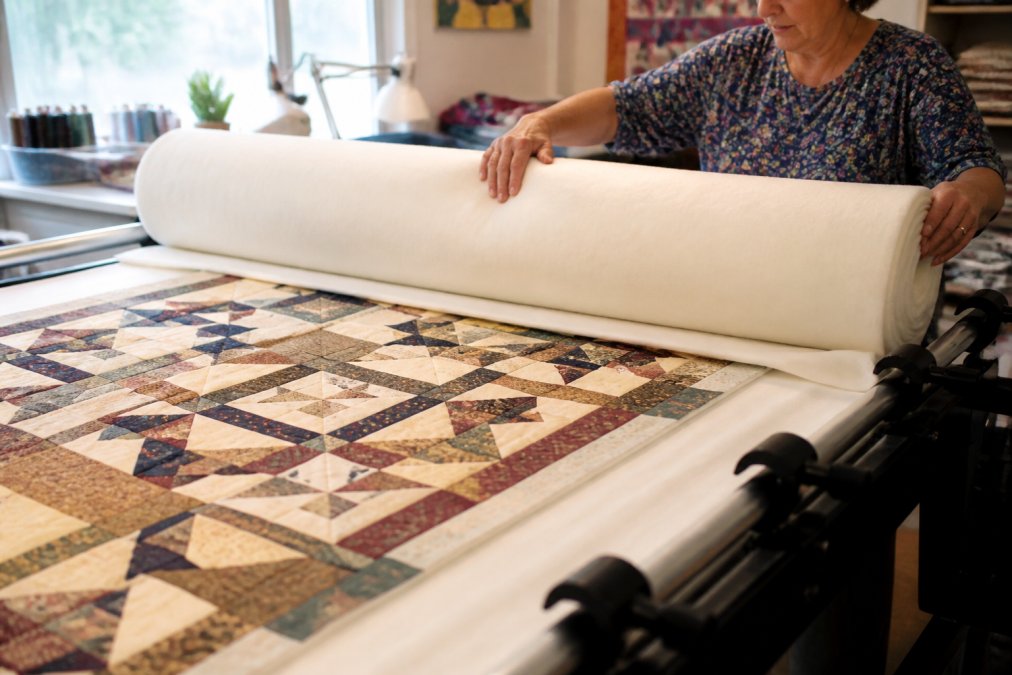
The 96-inch roll at $219.99 covers most queen and king tops in one piece. Need full coverage on an oversized top? The Hobbs Heirloom 80/20 120" roll handles king-size quilts without piecing the batting.
96" vs. 108" vs. 120" Widths
Width determines whether you piece or not. Common roll widths for large-scale quilting include 96, 108, and 120 inches according to Missouri Star Quilt Co. roll sizing guide, sized specifically to accommodate king-sized projects. A 96-inch roll covers a queen top with room for backing overhang. A 108-inch roll handles most king tops. The 120-inch format exists for oversized and custom quilts where any seam would be visible. If you're unsure, measure your widest quilt top and add 8 inches for overhang before choosing.
100% Cotton Batting Rolls: Natural Fiber Performance
Cotton batting delivers an antique drape and a soft hand that synthetics can't match, but it shrinks more and requires closer quilting to hold its shape. The Hobbs Heirloom 100% Natural Cotton with Scrim 96" roll at $261.99 pairs long-staple virgin cotton with a thin polyester scrim needle-punched into the fibers. That scrim prevents stretching and distortion during manipulation, which matters enormously on a longarm frame.
For king-size projects, the 120" cotton with scrim roll at $306.99 gives full coverage in one pass. The tradeoff: 100% cotton can shrink more than synthetic blends, requiring careful consideration for specific project types, as noted by quilters discussing cotton batting limitations.
Specialty Options: Fusible, Black, and High-Loft Polyester
Specialty batting solves specific problems that general-purpose rolls can't. The Hobbs Fusible Heirloom 96" roll at $237.99 is double-sided and iron-on, which eliminates pin- or spray-basting entirely.

Dark quilts need Hobbs Heirloom Black 80/20 at $249.99, made with color-fast dyed cotton that won't leave light fiber lint on the quilt top. White and pastel quilts need the opposite: Hobbs Bleached 80/20 at $249.99, bleached to a bright white so it won't shadow through light fabrics.

Quilters Dream Batting: What to Know Before You Buy
Quilters Dream batting is a well-known name in the category, and it's worth understanding where it fits before you commit to a roll. The brand is frequently compared against cotton, wool, and bamboo options in technical breakdowns like the Quilt Batting Comparison Chart for 2026, which helps quilters match material properties to project type.
Here's the honest take. Quilters Dream makes solid products, but if you're buying by the roll for large-scale projects, the width and fiber availability matter more than the label. Bamboo batting, for instance, is frequently composed of a 50% bamboo and 50% organic cotton blend according to I See Stars Quilting bamboo batting guide, and it's marketed as a breathable, high-performance alternative for machine quilting. That's a genuine eco-friendly option worth considering if sustainability drives your purchase.
Cotton vs Wool Batting for Quilts: Which Fiber Wins?
Cotton wins for washability, drape, and cost; wool wins for warmth, resilience, and loft recovery. Neither is universally better, and the choice depends entirely on how the finished quilt will be used. But the standard comparison leaves out the two questions that actually decide the purchase for large quilts: how the fiber holds up after dozens of machine washes, and how much weight it adds to a bed-size project.
Wash Durability: What Actually Happens Over Time
Cotton batting gives you that traditional crinkled texture after the first wash and, in most cases, continues to hold its shape through repeated machine washing. The crinkle is a one-time event, cotton shrinks 3 to 5 percent on the first wash and then stabilizes. After that, a well-quilted cotton batt generally maintains its loft and drape for years of regular laundering, which is why cotton remains the default for bed quilts that get washed monthly.
Wool behaves differently. Wool resists creasing and springs back after compression, so it recovers loft better than cotton over time. But wool is more sensitive to wash temperature and agitation. Hot water and heavy agitation can cause wool to felt and shrink unpredictably, and a felted wool batt loses its soft hand permanently. Most practitioners find that wool quilts last longest when washed cold on a gentle cycle and dried flat or on low, a routine that is harder to maintain on a quilt that is used as a daily bedspread.
The 80/20 cotton-poly blend sits between them and is the pragmatic middle ground for large quilts. The polyester content adds resilience and reduces the shrinkage and bearding that pure cotton can develop, while the cotton keeps the breathability and drape. For a king quilt that will be washed frequently, 80/20 is the most forgiving choice of the three.
Weight and Warmth on a Bed-Size Quilt
Warmth per unit of thickness is where wool clearly leads. Wool traps more air per inch of loft than cotton, so a thinner wool batt delivers the same warmth as a thicker cotton one. On a large quilt, that matters because thickness translates directly to weight. A king quilt with a high-loft cotton batt can feel heavy and stiff on the bed, while a comparable wool batt provides similar warmth with less bulk.
Cotton, by contrast, is denser and flatter. It gives a quilt a traditional, low-loft hand and a heavier drape that many quilters prefer for a bedspread because it lies flat and does not slide off the mattress. The trade-off is that a dense cotton king quilt is genuinely heavy to lift, both on the bed and during quilting.
A Note on Eco-Friendly and Sustainable Options
Most guides focus on performance and skip sustainability entirely. If that matters to you, the fiber landscape has shifted. Organic cotton batting is available in rolls and avoids the conventional cotton growing and processing inputs that concern many buyers. Bamboo batting, frequently composed of a 50% bamboo and 50% organic cotton blend according to I See Stars Quilting bamboo batting guide, is marketed as a breathable, high-performance alternative for machine quilting and is a genuine eco-friendly option worth considering. Recycled polyester batting is another route, it diverts plastic from landfills and performs similarly to virgin polyester for general-purpose quilting, though it may loft slightly differently.
The honest caveat: eco-friendly fibers often cost more per square inch and may have narrower roll-width availability than the standard cotton and 80/20 options. If sustainability drives your purchase, verify the fiber content and width before committing to a roll, because the eco-friendly segment is less standardized than the conventional one.
How to Store Quilt Batting Rolls Without Creasing
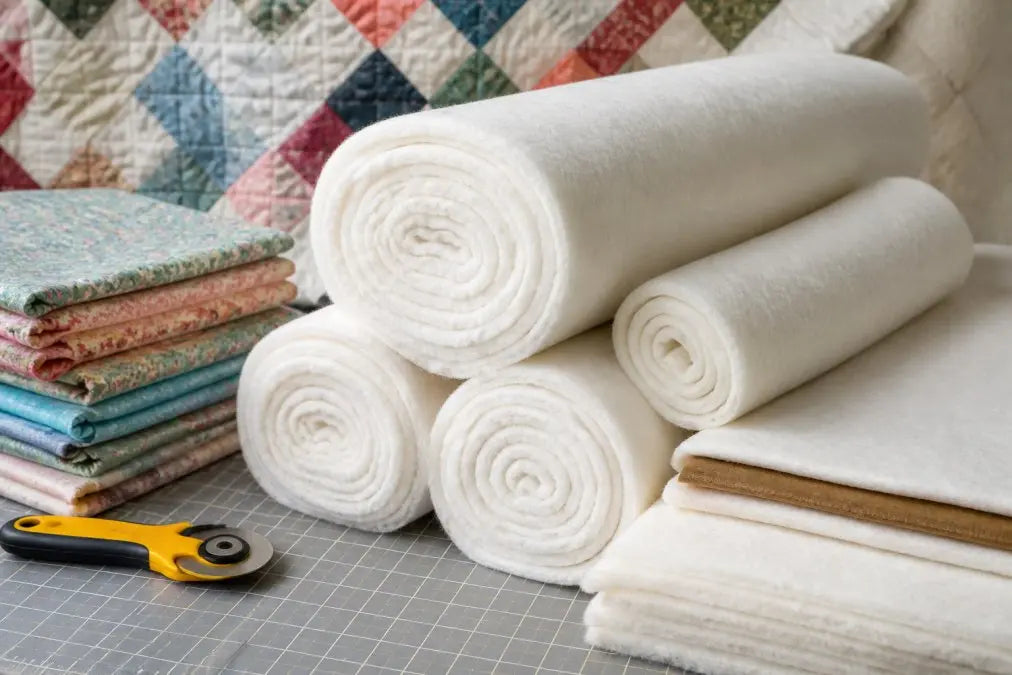
Store batting rolls upright or loosely rolled, never folded, in a dry space away from direct sunlight. Creases that set into batting are nearly impossible to remove without steam, and steam can damage fusible varieties. Legacy standardized batting packaging on fabric boards to double 96-inch widths down to 24-inch widths, which improved storage efficiency and handling according to APQS forum discussion on batting storage. You can replicate that approach at home.
- Keep the roll in its original box or wrap to prevent dust and light exposure
- Store vertically on a shelf or in a clean bin, not compressed under other supplies
- Avoid attics and garages where temperature swings cause condensation
- Let a compressed roll relax for 24 hours before cutting if it's been stored tightly
Batting that's stored correctly can sit for months without losing loft or developing permanent creases. The storage method matters more than the storage duration.
Buying batting by the roll is a commitment, and getting it wrong costs both money and a ruined project. The challenge is matching fiber, width, and loft to the way you actually quilt, not to what's on sale. Linda's Electric Quilters stocks the full range of Hobbs Heirloom rolls in 96, 108, and 120-inch widths, with free shipping on all batting rolls and more than 700 educational videos to help you choose. Whether you need the longarm standard in 80/20 or a specialty fusible for a no-baste workflow, you'll find it in one place. Get started with Linda's Electric Quilters and stop piecing your batting.
Frequently Asked Questions
What kind of batting do most quilters use?
The 80/20 cotton-polyester blend is the most widely used batting in the quilting industry. It resists bearding, minimizes shrinkage, and holds up well for both heirloom quilts and everyday throws. Hobbs Heirloom 80/20 is a popular choice because it balances the soft drape of cotton with the durability and stability of polyester.
What size batting roll do you need for a king-size quilt?
A king-size quilt typically requires a batting width of at least 108 inches. Standard roll widths include 96, 108, and 120 inches. For king tops, choose a 108-inch or 120-inch roll so the batting covers the entire quilt sandwich in one piece without piecing.
What are the benefits of buying quilt batting by the roll versus pre-cut packages?
Rolls offer significant cost savings per square inch and eliminate the piecing that pre-cut packages often require for large quilts. Rolls also provide consistent quality across an entire project, which matters for longarm quilters working on king-size quilts.
How do you store quilting batting rolls to prevent creasing?
Store batting rolls upright or on a horizontal rod to avoid folding and compressing the fibers. Keep them in a dry, temperature-controlled space away from direct sunlight. If you must fold batting, use large loose folds rather than sharp creases, so proper storage before use preserves the loft and prevents permanent crease lines that can show through finished quilts.
Is 100% cotton batting better than 80/20 for large quilts?
It depends on your priorities. Cotton batting offers a natural feel and excellent breathability but can shrink 3-5% on the first wash, creating a crinkled antique look. The 80/20 blend resists bearding, holds shape better, and produces less lint. For large quilts that get heavy use and frequent washing, the 80/20 blend is often the more practical choice.