Hi Bestie,
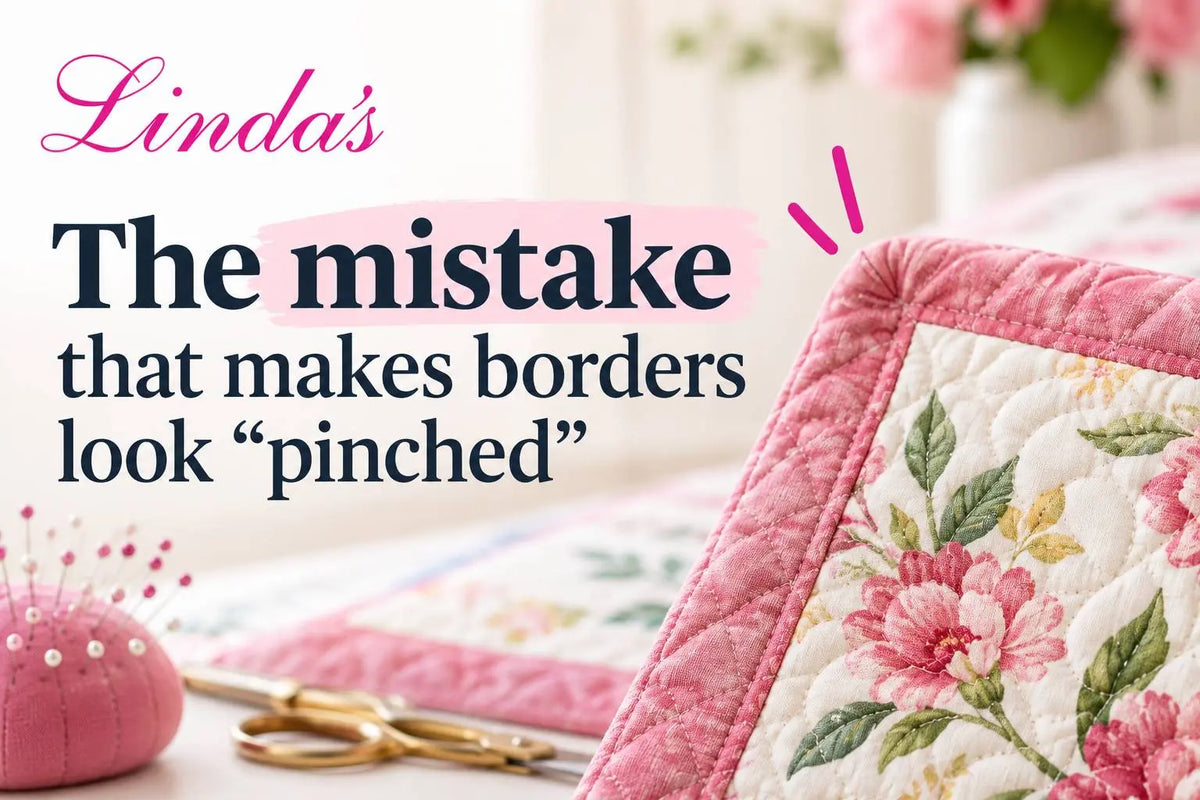
When a border starts looking pinched or pulled inward, the natural instinct is to tighten things up.
After all, tighter fabric should mean a flatter, cleaner finish… right?
Not always.
Why More Tension Can Make Borders Worse
When too much tension is applied, the fabric can begin pulling against itself. Instead of keeping the border smooth, that extra pressure can encourage puckering, distortion, and edges that look drawn inward.
The goal isn’t to stretch your quilt perfectly flat.
It’s to create even, consistent support so the fabric stays stable while still sitting naturally.
Think of it this way,
You want to control the quilt, not force it into position.
(If this sounds familiar, it’s the same lesson from the “perfectly tight” backing mistake — tight isn’t the same thing as flat.)
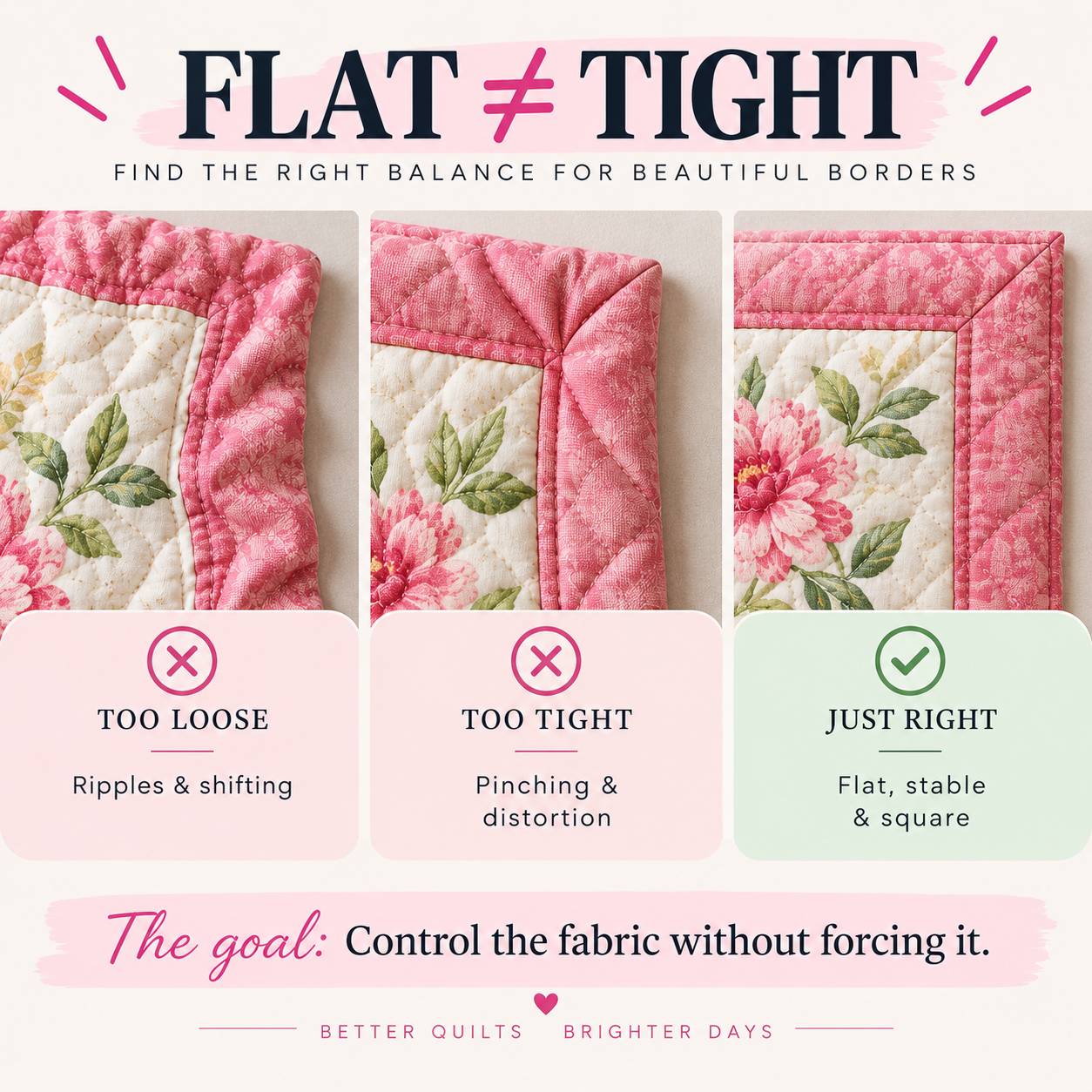
What’s Actually Happening When a Border Pinches
Here’s the part nobody tells you. When a quilt is stretched too tight on the frame, you’re quilting the fabric while it’s stretched. Every stitch locks in that stretched length.
Then you take the quilt off the frame, the fabric relaxes back to its natural size… but the stitches don’t. The quilted areas get held in while the fabric around them tries to spring back, and the outer edge is where you see it most. That’s the pinched, drawn-in, “gathered” look along your border.
Borders are extra sensitive because they’re long, narrow strips with seams and grain running in different directions from the quilt center. Heavy pull from the side clamps concentrates that stress right at the edge — sometimes you can even see little scallops where each clamp was grabbing. Side clamps like the Red E Edge Snapper Clamp are there to support the edge, not to crank it tight.
Quick Check
Not sure if you’re overdoing it?
Take a look at your border before you continue quilting.
If the edge looks like it’s being pulled inward, gathering, or fighting against the rest of the quilt, more tension may not be the answer.
Ease back, check your support, and make small adjustments until the border lies naturally.
Remember, a beautiful border comes from balance, not brute force.
Your quilt should be supported well enough to stay flat and stable, but not pulled so tightly that the fabric begins fighting back.
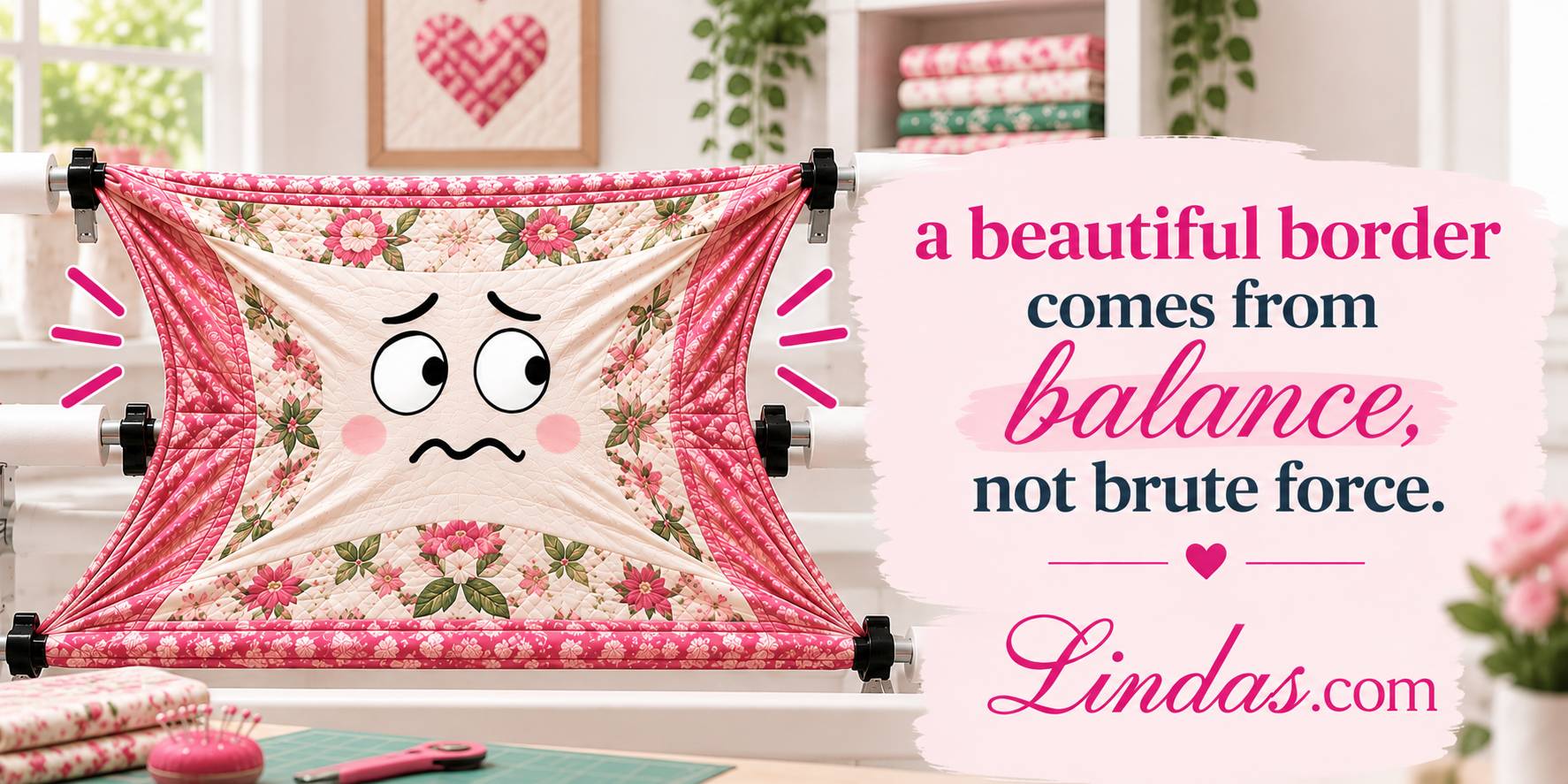
Remember,
The goal is to give the fabric enough stability to stay flat and square without forcing it into position. A little less tension can make the difference between a border that looks pinched and one that lays beautifully.
And if you’ve been chasing tension problems at the machine, too, read the tension fix that creates another problem — it’s the same “one adjustment masks the real cause” trap.
Happy Quilting!
From Corey.

Keep your cutting and trimming tools as sharp as your borders — shop Famoré scissors and cutting tools at Linda’s, and check the current sales and deals.
Frequently Asked Questions
Why does my quilt border look pinched or pulled in after quilting?
Usually the quilt was loaded or clamped too tightly. When fabric is quilted while stretched, the stitches lock in that stretched length; once the quilt comes off the frame and relaxes, the quilted areas hold the fabric in and the border looks drawn inward or gathered. Easing back on frame and side-clamp tension so the quilt is supported, not stretched, prevents it. The same principle applies to backings — see the “perfectly tight” backing mistake.
How tight should a quilt be on a longarm frame?
Snug and even, not drum-tight. The quilt should lie flat without sagging, but you should be able to press the surface gently and feel some give. Loading systems like Renae’s Red Snappers make it easier to load evenly across the width so you don’t have to over-tighten one area to compensate for another.
How do I keep side clamps from distorting my quilt border?
Use side clamps for light, even support, not pulling. Space them evenly, check that the border edge stays straight rather than scalloped between clamps, and loosen them as you advance the quilt. Our guide to quilt hangers, Red E Snapper clamps and side grips covers setup options.
What’s the difference between a wavy border and a pinched border?
A wavy or rippled border usually means there’s too much fabric in the border — it was cut longer than the quilt center measures. A pinched border is the opposite: the edge is being held in, often from too much tension during quilting. Measuring through the center before cutting borders solves the first problem (see Before You Add a Border, Try This), and a wide ruler like the Quilters Select 8.5" x 24" Non-Slip Ruler keeps long border strips accurate.
Can stretchy fabrics like minky make border distortion worse?
Yes. Fabrics with stretch — minky, Cuddle, or anything cut on the bias — distort much more easily under tension, so the “support, don’t stretch” rule matters even more. Read Stop Pulling Your Minky for handling tips, and see our backing fabric and loading tips for choosing and loading backings that stay stable.