Hi Bestie,
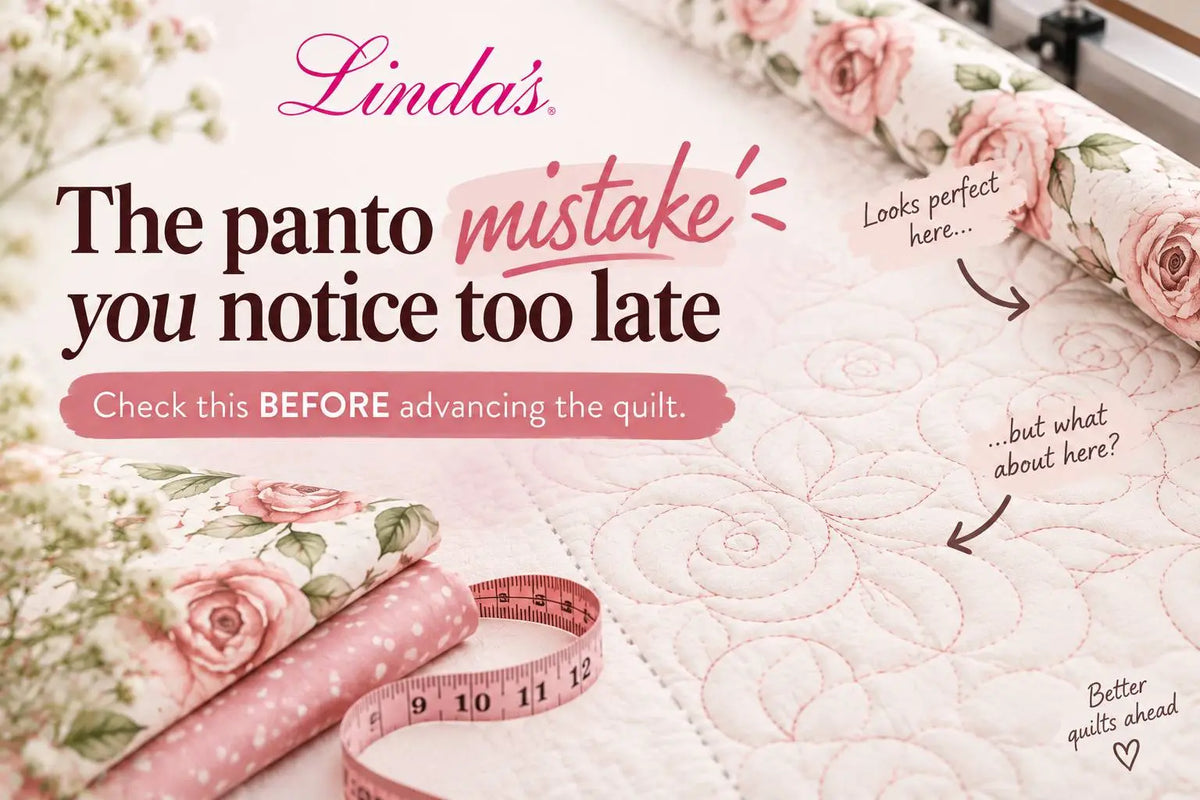
You finish a row. It looks great. Time to advance the quilt…
Not so fast.
The 3-Point Check Before Every Advance
Before stitching the next pass, check how your new row lines up with the previous one at three points: left, center, and right.
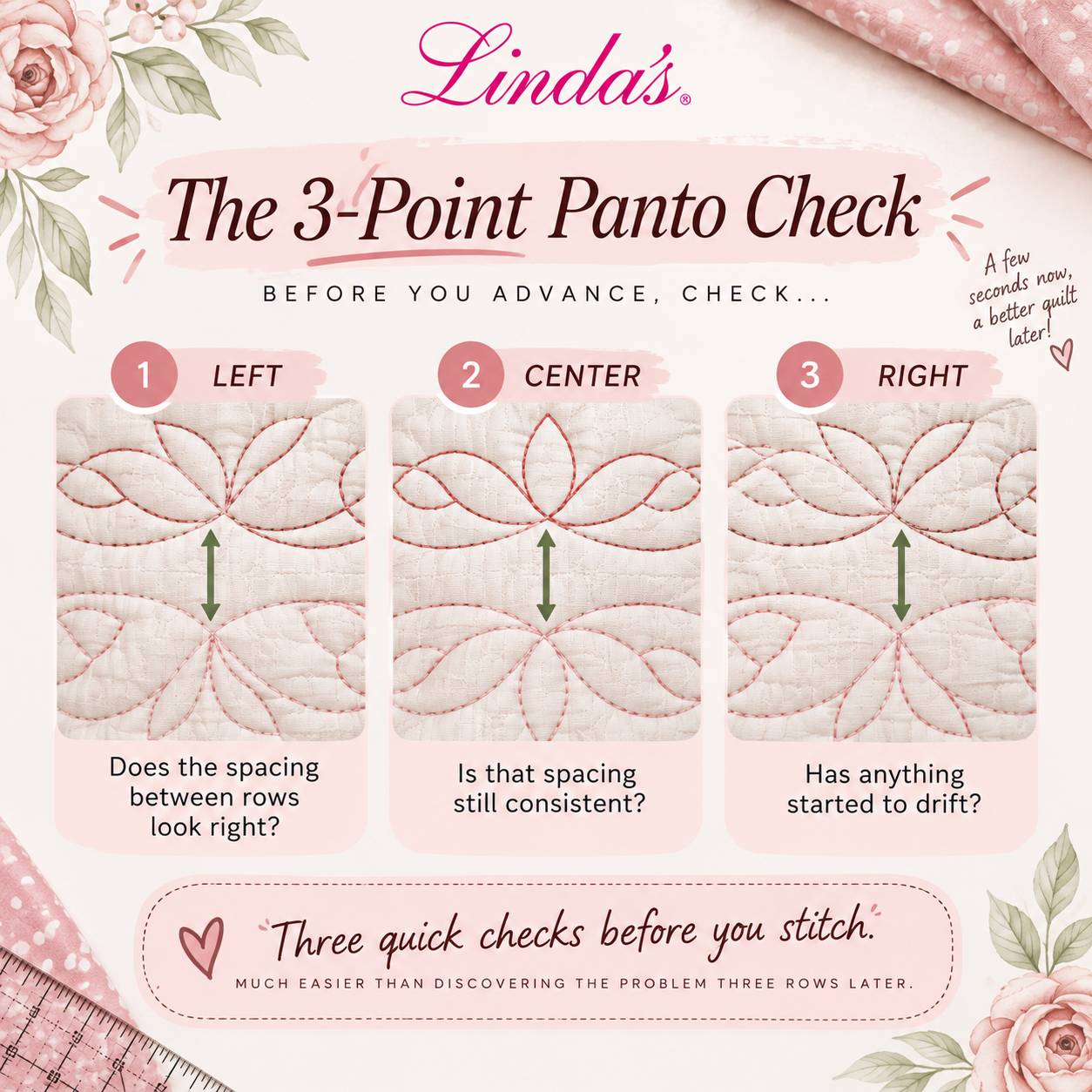
Why All Three?
Because checking just one spot can hide small spacing or alignment issues, and once you repeat that issue row after row, then you notice it.
Usually several rows too late.
Why the Middle Can Look Perfect While the Edges Drift
When you advance a quilt on a longarm frame, it doesn't always roll forward evenly across its full width. A backing that's a little tighter on one side, extra fullness in the quilt top, or edges that aren't held straight can let one side creep farther than the other. So your center can line up beautifully while the left or right edge has already opened a gap or started to overlap.
And because a pantograph is the same design repeated row after row, that small drift compounds. An eighth of an inch per row doesn't sound like much, but across ten rows it's more than an inch, and that's the gap (or crowding) your eye catches the moment the quilt comes off the frame. It's the same way a tiny cutting mistake gets worse with every block.
A few things help keep every row honest: loading with even tension (see the “perfectly tight” backing mistake), keeping your edges straight with side grips, and using a visual reference like a longarm laser guide or centering tape with sliding markers.
Now for the Fun Part…
Once everything is lined up, all that's left is finding a pantograph you’ll love watching come to life.
From flowing florals to feathers, geometrics, and beginner-friendly designs, find the pattern that belongs on your next quilt.

The right pantograph can completely change the personality of a quilt.
And don’t be afraid to try something new. Sometimes the pattern you wouldn’t normally pick becomes the one you can’t stop admiring once it’s stitched out.
Whatever your next quilt calls for, find a pantograph that makes you excited to advance to that next row.
Remember,
A tiny alignment issue is easy to miss on one row, but repeat it across the quilt, and suddenly it’s impossible to unsee. Take those few extra seconds to check the left, center, and right before advancing. Your future self (and your quilt!) will thank you.
Happy Quilting!
From Corey.
Loading your next quilt? Our Hobbs 80/20 Heirloom 96" batting roll is a longarm favorite. Learn why in the complete Hobbs 80/20 96" guide.
Frequently Asked Questions
How do I keep pantograph rows lined up on a longarm?
Before you advance the quilt and stitch the next row, check how the new row meets the previous one at three points: left, center, and right. Checking only the center can hide drift at the edges, and because a pantograph repeats, a small misalignment compounds row after row. A laser guide or centering tape gives you a consistent reference.
Why does my pantograph have gaps or overlaps between rows?
Usually the quilt advanced unevenly across its width. Uneven backing tension, fullness in the quilt top, or edges that aren't held straight can let one side roll farther than the other. Load with even (not drum-tight) tension, as covered in the “perfectly tight” backing mistake, and keep the sides steady with side grips.
How often should I check alignment when quilting a pantograph?
Every time you advance the quilt. A quick left, center, and right check takes a few seconds per row and catches drift while it's still an eighth of an inch, instead of after it has grown across several rows.
What pantograph designs are good for beginners?
Open, flowing designs such as loose florals, meanders, and simple loops are more forgiving than tight geometrics, because small spacing differences are harder to spot. Browse beginner-friendly options alongside feathers and geometrics in our patterns and pantographs collection. For motif-shape troubleshooting, see why that echo feels wrong.
What thread works well for pantograph quilting?
A smooth, strong quilting thread helps an edge-to-edge design stitch out consistently at longarm speeds. Many quilters love the look of cotton thread like King Tut cones for pantographs. Estimate how much you need with the thread math every quilter should know.