


Description
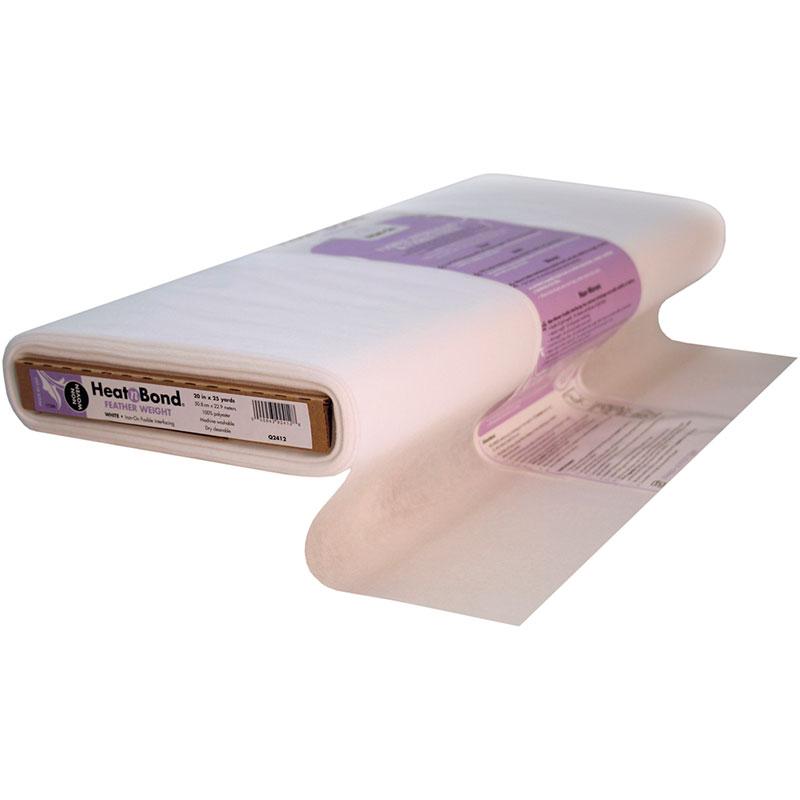
HeatnBond Feather Weight is the lightest non-woven fusible interfacing in the HeatnBond line. It is for lightweight and delicate fabrics that need a whisper of support rather than body: collars, cuffs, plackets, button bands and seams on blouses and dresses, and it doubles as a lining. Fused along a cut edge it also stops fraying. The adhesive is on one side, so it irons straight onto the wrong side of the fabric with no basting or pinning.
Because it is non-woven there is no grain line; cut and apply it in any direction, which saves fabric. Shrinkage is minimal, so it does not need pre-washing. It is 100% polyester, white, 20" wide, machine washable and dryable. Choose the 2-yard cut for a garment or two, or the 25-yard bolt if you sew regularly. For fabrics with a little more weight, such as silk, chambray, crepe or challis, step up to HeatnBond Light Weight.
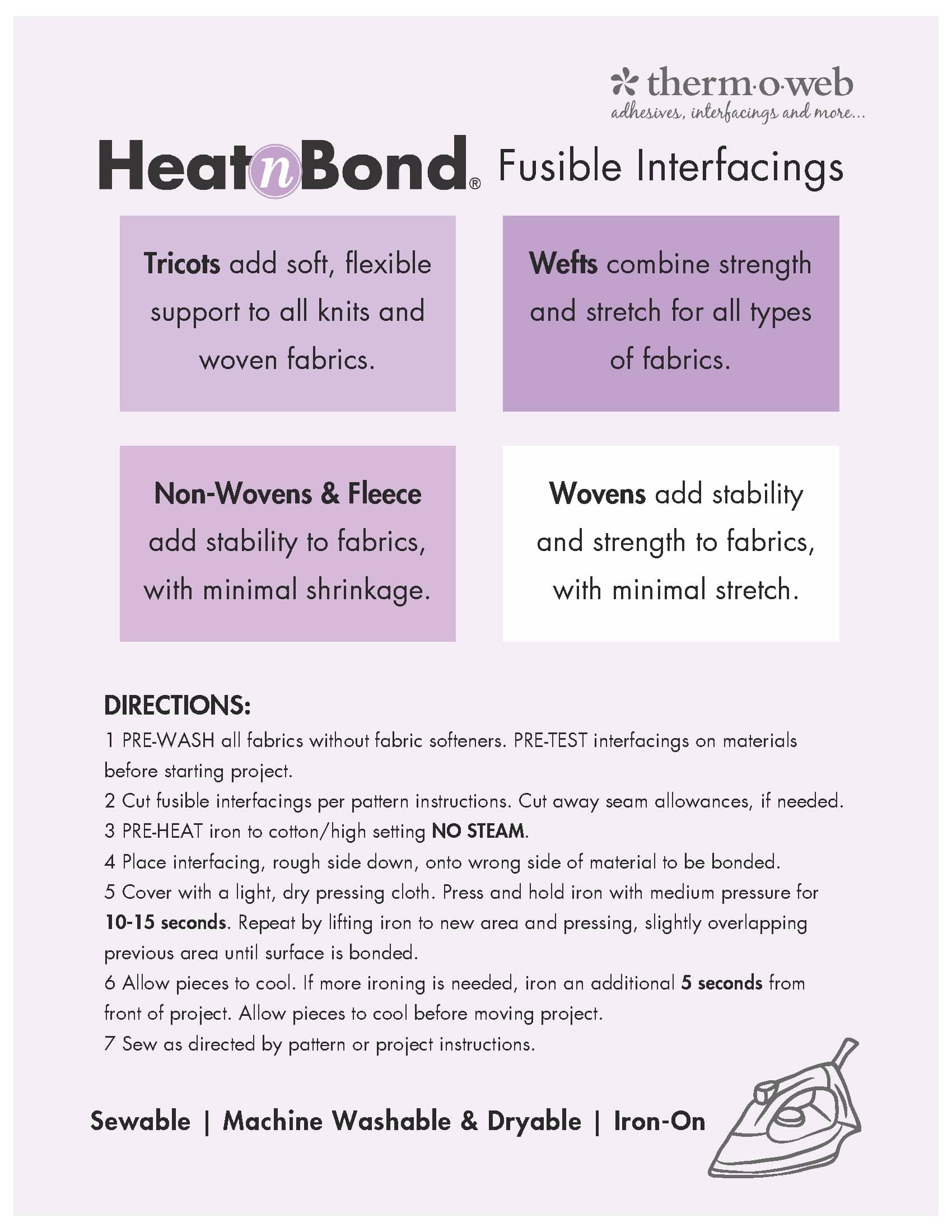
Pre-test on a scrap and follow the package directions for iron setting; HeatnBond interfacings are pressed with a dry iron and a press cloth, holding rather than sliding the iron.
Specifications
| Type | Non-woven fusible interfacing |
|---|---|
| Weight | Feather weight (lightest in the HeatnBond range) |
| Fusible | Yes, one side |
| Width x length | 20" wide; 2 yard cut or 25 yard bolt |
| Fiber content | 100% Polyester |
| Color | White |
| Grain | None; cut in any direction |
| Care | Machine washable and dryable; minimal shrinkage, no pre-washing needed |
| Best for | Lightweight and delicate fabrics; collars, cuffs, plackets, buttons, seams; lining; edge-fray prevention |
| Also available as | HeatnBond Light Weight 20" |
| SKU | TWDS-Q2412.Y (2 yd cut) · TWDS-Q2412 (25 yd bolt) |
Compare and choose
- Feather Weight vs Light Weight HeatnBond: which do I need?
- Feather Weight is the lighter of the two. Use it on sheer and very light fabrics, as a lining, or anywhere you want the fabric to look un-interfaced while gaining a little stability. Light Weight is the next step up and is meant for silk, chambray, crepe, calico and challis in skirts, dresses and blouses, giving a bit more support while keeping the drape. If the fabric has any body of its own, Light Weight is usually the better match. HeatnBond Light Weight 20"
- HeatnBond Feather Weight vs Pellon 911FF: is there a difference?
- They are the same class of product: a 20" wide, 100% polyester, ultra-light non-woven fusible with no grain. Pellon 911FF comes on 10-yard bolts in white and black; HeatnBond Feather Weight comes as a 2-yard cut or a 25-yard bolt in white only. If you need black, buy 911FF; otherwise pick whichever quantity suits you. Pellon 911FF Fusible Featherweight 20" x 10 yd
- Non-woven or woven fusible for quilting and bags?
- For bags, t-shirt quilts and anything that gets handled hard, use a woven cotton fusible such as Pellon SF101 Shape-Flex; it sews like fabric and will not tear. Feather Weight non-woven is a garment and craft interfacing for light support. It is fine inside a lightweight pouch lining, but it is not a bag stabilizer. Pellon SF101 Shape-Flex woven fusible
- 2-yard cut or 25-yard bolt?
- A 2-yard cut (20" x 72") interfaces the collar, cuffs and facings of several blouses or a couple of dresses. The 25-yard bolt is the same interfacing for anyone who sews garments regularly or wants a lining on hand; it stores flat and does not age. Both are the same width and weight.
- Which side is the fusible side, and how do I apply it?
- The adhesive side feels slightly textured or bumpy; the other side is smooth. Place the textured side against the wrong side of the fabric, cover with a press cloth and press with a dry iron per the package directions, lifting and overlapping rather than sliding. Let it cool before handling. Pre-test on a scrap of your fabric first.
- Do I need to pre-wash the interfacing?
- No. Shrinkage is minimal, so it goes on as is. Do pre-wash the fabric you are fusing it to, without fabric softener, so the two do not shrink at different rates after the garment is made.
Same product, other sizes


Honest alternatives
 Pellon® 911FF Fusible Featherweight Interfacing 20" x 10 yards Bolt. Color: White.
$22.45
Pellon® 911FF Fusible Featherweight Interfacing 20" x 10 yards Bolt. Color: White.
$22.45
 Pellon® 911FF Fusible Featherweight Interfacing 20" x 10 yards Bolt. Color: Black.
$22.50
Pellon® 911FF Fusible Featherweight Interfacing 20" x 10 yards Bolt. Color: Black.
$22.50
 Pellon® P44F Lightweight One-Sided Fusible Interfacing 20" x 48 yards Bolt. Color: White.
$64.25
Pellon® P44F Lightweight One-Sided Fusible Interfacing 20" x 48 yards Bolt. Color: White.
$64.25
 Pellon® 910 Sew-In Featherweight Interfacing 20" x 10 yards Bolt. Color: White.
$19.50
Pellon® 910 Sew-In Featherweight Interfacing 20" x 10 yards Bolt. Color: White.
$19.50