
Hi Bestie,
You've spent hours choosing fabrics, matching points, and piecing everything together.
Now comes the moment that can change how the entire quilt looks: deciding what to quilt, and where.
Here's something experienced quilters understand: not every part of your quilt needs equal attention.
Where Should the Eye Go First?
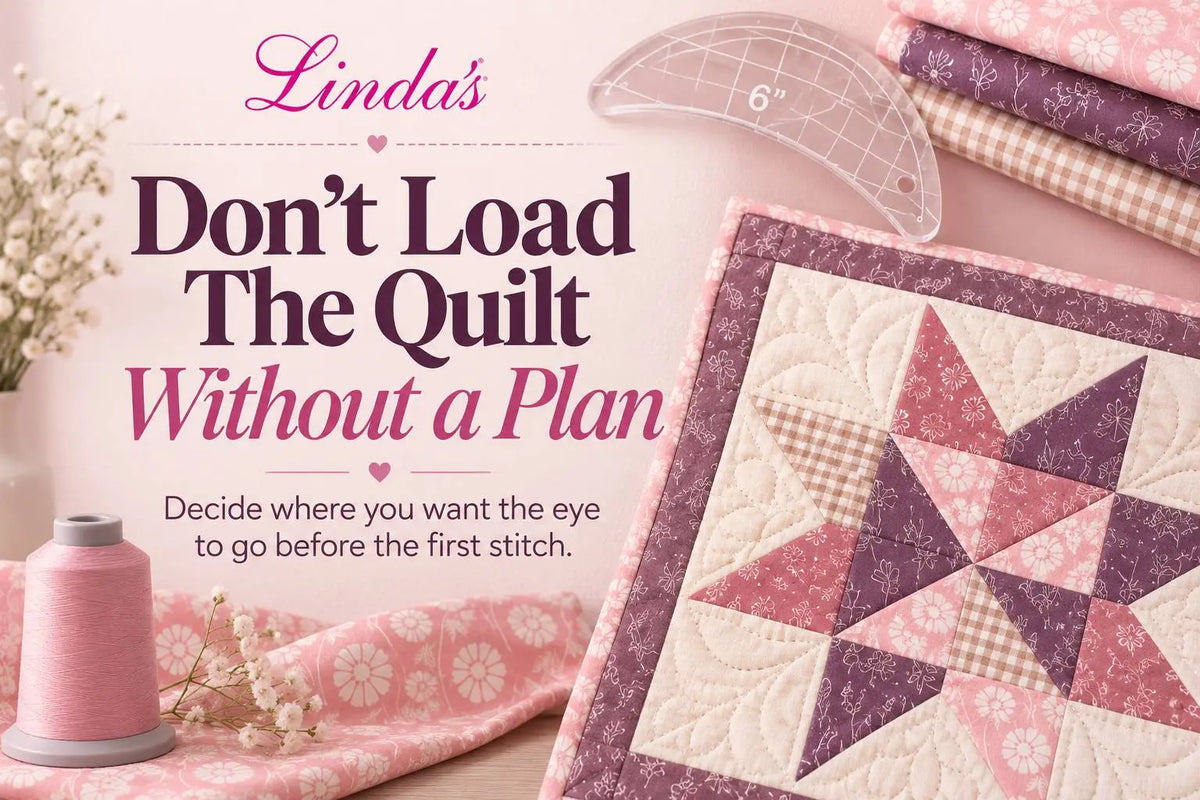
Imagine a quilt with a stunning star in the center, surrounded by intricate blocks and a beautiful border.
If you quilt every area with equally bold, busy designs, that star might get lost in the details.
But what if you used simpler quilting around the star, added texture to the background, and chose a complementary design for the border?
Suddenly, the star becomes the focal point it was meant to be.
That's the power of planning your quilting before you start.
Why Simpler Quilting Makes the Star Pop
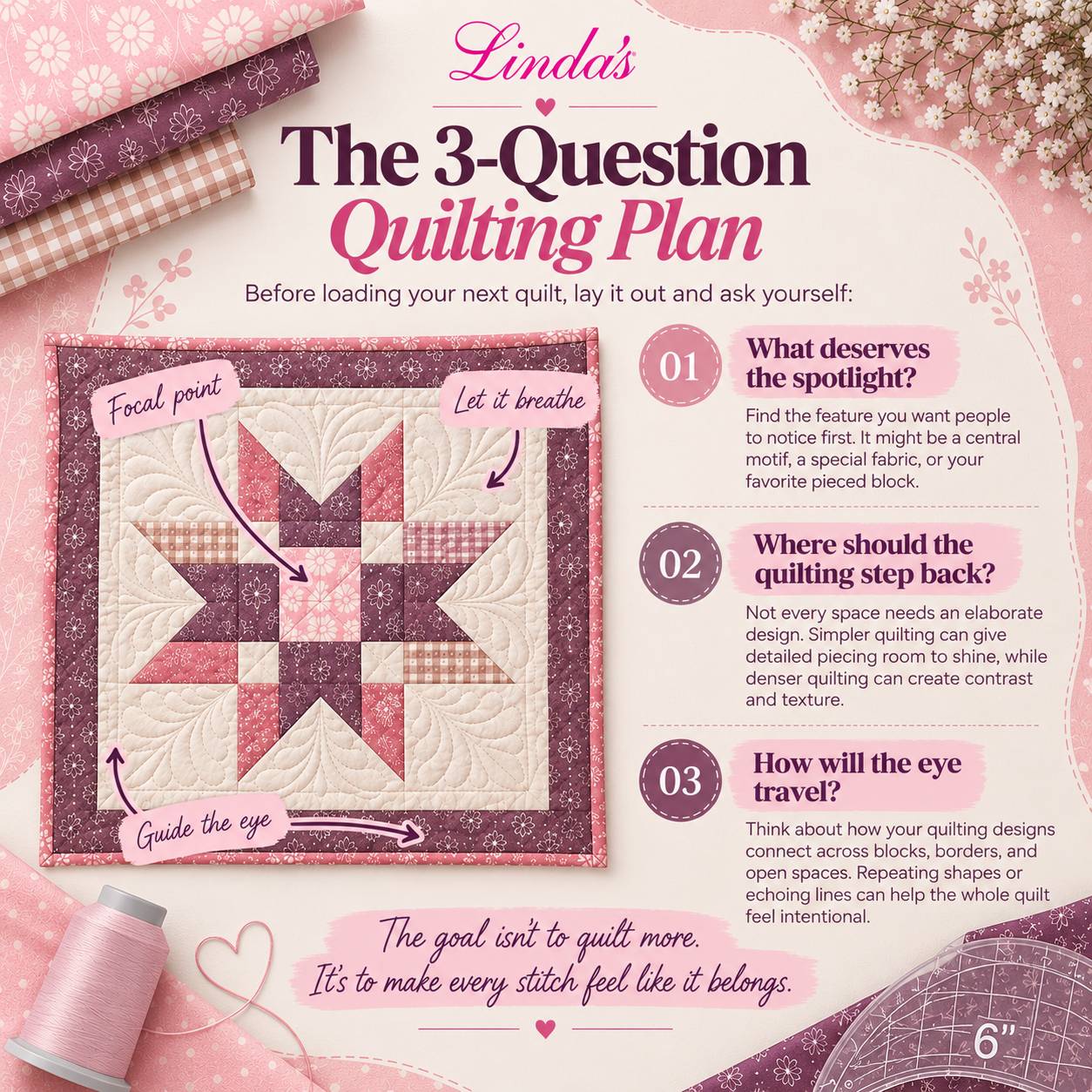
It comes down to contrast. Dense quilting compresses the batting and visually pushes an area back, while open or minimal quilting leaves the loft alone so that area stays puffy and comes forward. When the background is stitched down tightly and the star is left to breathe, your eye reads the star as the "raised" shape and goes straight to it. Quilt everything at the same density and there's no contrast left to point the way. That's also why your batting choice matters so much to how the quilting shows.
The same thinking applies to borders. A border design that echoes the center frames the quilt; one that fights it steals the show. And if you're working from a pantograph, the scale of the pattern relative to your blocks is doing the same job: smaller, tighter patterns recede, larger open ones stand out.
Remember,
Before you load your next project, take a moment to see the bigger picture. Because the best quilting doesn't compete with your piecing, it brings out the beauty that's already there.
If you want more on this, start with why your quilting might not be landing the way you hoped, then how echo spacing changes the feel of a design. And once the plan is stitched, know when to stop.
Happy Quilting!
From Corey.
Planning custom quilting around a focal point is exactly what templates and rulers are for: clean echoes around the star, crisp ditch work, and curves that repeat on purpose. Right now you can save up to 20% on non-slip rulers and more in the Templates & Rulers collection.
Frequently Asked Questions
How do I decide what quilting design to use on a quilt?
Start by picking the one element you want people to notice first (a central block, a special fabric, an appliqué), then plan the rest of the quilting to support it. Keep quilting simpler and denser in the areas you want to recede, and give the focal point open space or a design that follows its shape. Our essential quilting tools guide walks through the rulers and templates that make that kind of custom work easier.
What is a focal point in quilting?
A focal point is the part of the quilt your eye lands on first. It's created by contrast: the focal area is quilted differently (usually more openly, or with a design that outlines it) than the areas around it. If every section is quilted with the same busy pattern, there is no contrast and the eye wanders instead of settling. Tightly stitched backgrounds, as we covered in why batting flattens your quilting, are the classic way to make a motif rise.
Should I use the same quilting design across the whole quilt?
You can, and an all-over edge-to-edge design is a perfectly good choice for many quilts, especially busy prints or scrappy tops where no single block is meant to star. But if the top has a clear centerpiece, a single all-over pattern will treat it the same as everything else. In that case, custom or semi-custom quilting (an all-over in the background with the focal block treated separately) usually serves the piecing better. If you go edge-to-edge, choose the pantograph scale carefully; pattern size relative to your blocks changes how the quilt reads.
Why does dense background quilting make the piecing stand out?
Dense stitching compresses the batting, so that area sits lower and reads as background. The unquilted or lightly quilted shape next to it keeps its loft, so it reads as raised. The greater the difference in density, the stronger the effect. Higher-loft battings, like wool or an 80/20 blend, show this more dramatically than thin cotton; see selecting batting for quilting for how loft changes the look.
How do I plan quilting before loading the quilt on a longarm?
Lay the finished top flat (or hang it) and look at it from across the room. Ask the three questions: what deserves the spotlight, where should the quilting step back, and how will the eye travel from block to border? Sketch your plan on a photo of the top or a piece of tracing paper, and decide thread color at the same time; a matching thread keeps dense background quilting quiet, while a contrasting thread puts the design itself on display. For ruler work and curved echoes around a focal block, a template system such as the Dot to Dot curves and grid system keeps the repeats consistent once you're at the frame.


