I quilt on Gammills every week, and the question I get more than any other is some version of: I am buying (or just bought) a longarm - what do I actually need? This is the complete answer. The first half is the honest buying guidance nobody selling you a machine will give you. The second half is the studio setup list - the supplies that turn a machine on a frame into a working longarm studio - because the machine is only half the purchase.
Part 1: Choosing the Machine
Throat Size Is the Real Decision
Longarm machines are named by throat depth - 18", 22", 26", 30" - and that number sets your maximum quilting row before you roll the quilt. Bigger throat means fewer rolls, larger pantograph designs, and easier custom work on big blocks. For hobby quilting, 18-22" is comfortable; for customer work and dense custom quilting, 26" is the professional sweet spot; 30" is production territory. Buy the largest throat your space and budget allow - nobody has ever wished for a smaller throat.
Hand-Guided vs Computerized
Hand-guided machines (like the Gammill Vision series) are the pure craft: you drive every stitch, freehand or following a paper pantograph. Computerized systems (like Gammill's Statler) stitch digital designs automatically with per-stitch precision - the choice for edge-to-edge production businesses. Many quilters start hand-guided and add computerization later; retrofit paths exist for exactly that reason. If your dream is a quilting business, the computer pays for itself in throughput. If your dream is the quilting itself, hand-guided keeps you in the driver's seat.
Frame Length and the Room It Lives In
Frames run 8 to 14 feet. A 10-foot frame handles queens comfortably; kings want 12 feet. Measure your room before you fall in love - you need the frame length plus 3 feet of walking clearance on the working side, and you will walk miles along that frame every year, so think about flooring too.
Buying New vs Used
Longarms hold value, and a well-maintained used Gammill is one of the best buys in quilting - these machines run for decades. On any used machine, check the same three things a dealer would: hook assembly wear, smooth carriage tracking, and stitch quality at speed. We service and supply Gammill and Innova machines daily; if you are weighing a specific machine, message us through chat and we will give you a straight opinion. And whatever you buy, the consumables below fit every brand.
Part 2: Outfitting the Studio - The Complete Checklist
Batting: Buy It on the Roll
The single biggest ongoing cost of longarm quilting is batting, and rolls cut the per-quilt cost 30-40% versus packages. The studio standard is a 96" x 30 yard roll of Hobbs 80/20 - roughly 10-12 quilts per roll - with a 120" roll added when kings are regular work. The full fiber decision tree is in the Batting Hub, and the Hobbs sample pack lets you feel the options before committing to 30 yards.
Thread: Three Cones and a Jar of Bobbins
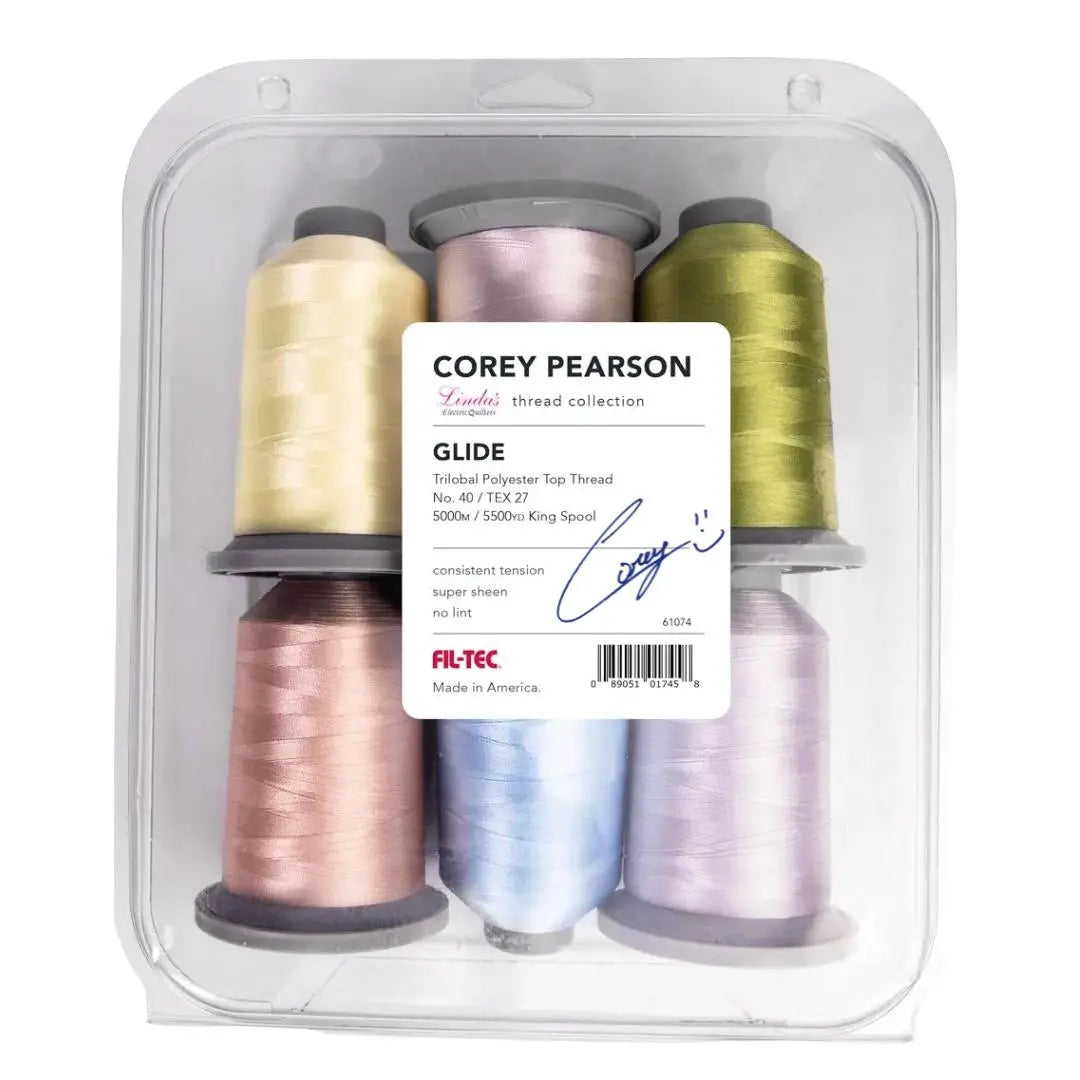
Start with Glide White, Cream, and Cool Grey 3 on king spools - that trio blends into 80% of customer tops - plus a jar of matching Magna-Glide pre-wound bobbins, whose magnetic cores eliminate backlash on longarm machines. The full brand comparison (Glide vs Omni vs So Fine vs cotton) is in the Longarm Thread Hub.
Needles: A Box of 18s and the Selection System
Longarms take 134MR needles, and the Groz-Beckert #18 MR 4.0 is the default pairing for 40wt thread. Stock a box, change every 8-10 hours of stitching, and learn the size-and-point system in the Longarm Needle Hub. The alignment magnet makes every needle change perfectly oriented.
Tension: The Towa Gauge Ends the Guesswork
The Towa bobbin tension gauge turns tension from folklore into a number - it is the tool that separates frustrated new longarmers from confident ones. Add a spare M-size bobbin case (one stays gauged for Glide, one for specialty threads) and a stock of M-size metal bobbins.
Loading: Red Snappers Change Your Life
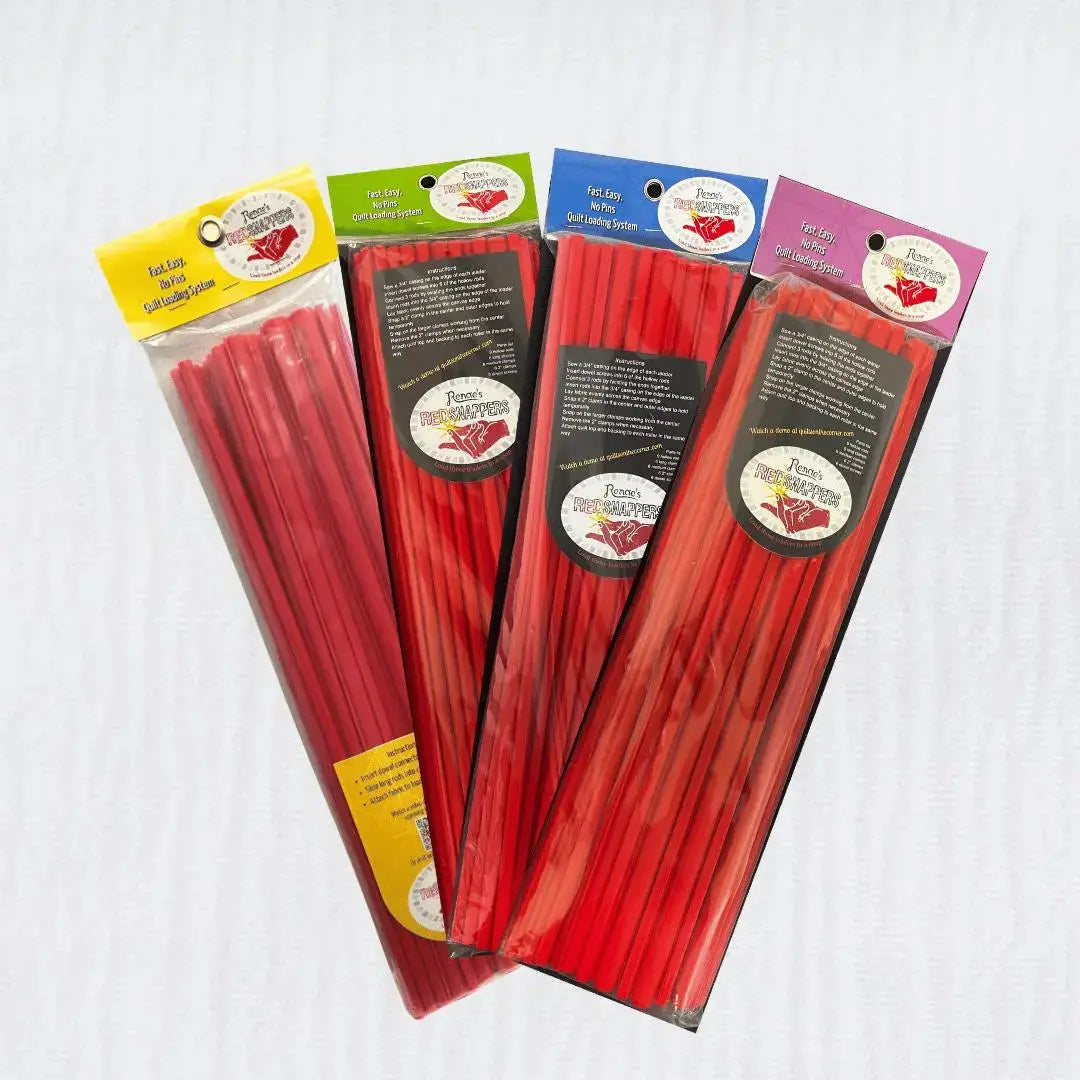
Ask any longarmer their favorite accessory and most say Renae's Red Snappers - the snap-on loading system that replaces pinning quilts to leaders, cutting load time from 30 minutes to 5. Size the set to your frame (10-foot and 12-foot sets in stock), and add side grips to keep edges taut.
The Supporting Cast
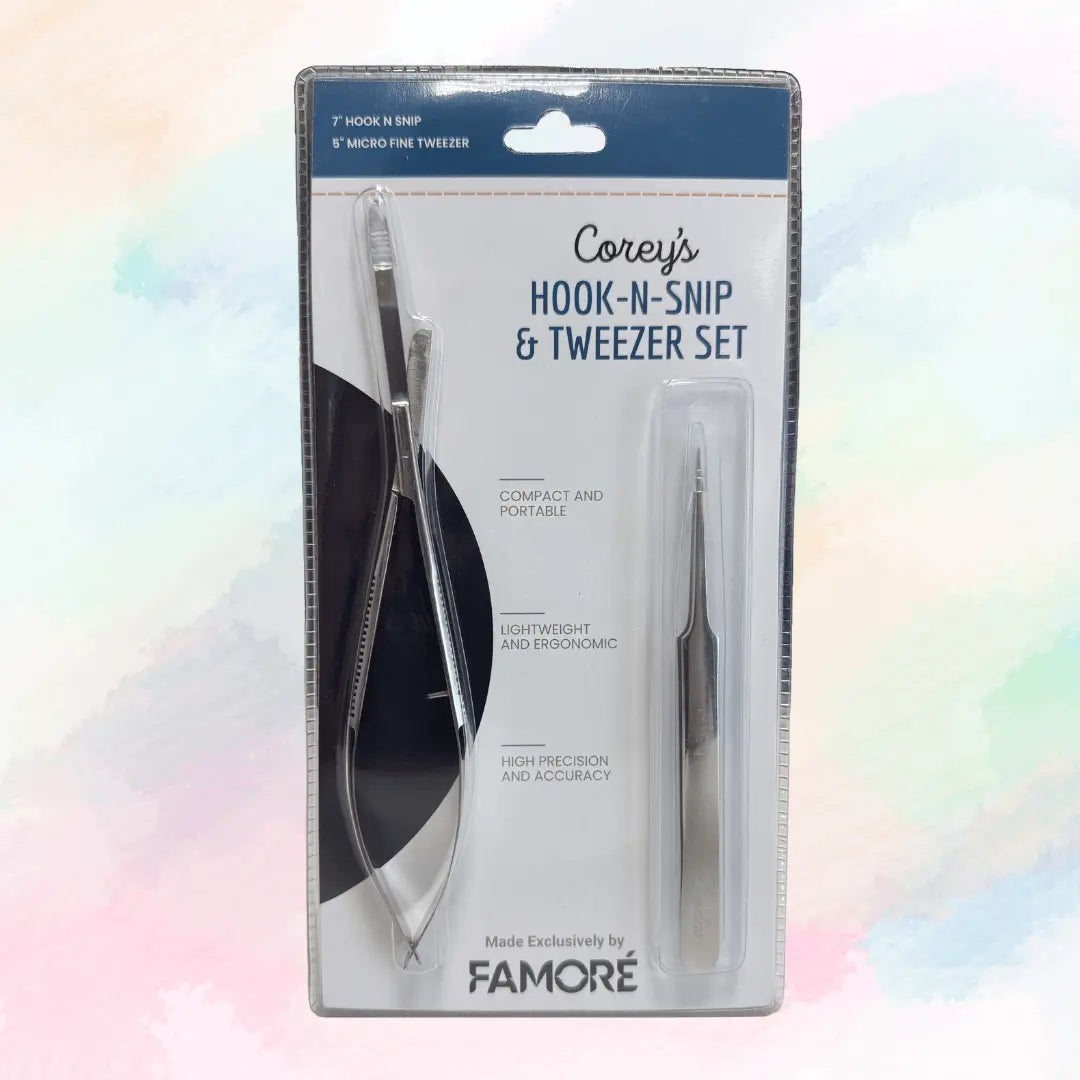
Round out the studio with batting scissors (purpose-built for trimming at the frame), my Hook-N-Snip and tweezer set for thread tails and burying, centering tape for loading straight, thread lubricant for stubborn threads, and machine-specific spares from the longarm parts guide. When you graduate to ruler work and pantographs, the ruler guide and pattern hubs are waiting, and the longarm notions overview covers everything else.
The First-Order Shopping List
If you want it in one list: a 96" roll of Hobbs 80/20, Glide in White, Cream, and Cool Grey 3, a jar of Magna-Glide bobbins, a box of Groz-Beckert #18s, the Towa gauge, Red Snappers sized to your frame, batting scissors, and the alignment magnet. That order makes any longarm - new, used, any brand - a working studio on day one.
Frequently Asked Questions
- How much does it cost to set up a longarm studio beyond the machine?
- Plan on a few hundred dollars for the full consumables kit above - batting roll, thread trio, bobbins, needles, Towa gauge, and Red Snappers. It is a small fraction of the machine price and determines most of your day-to-day experience.
- What throat size do I need to quilt a king?
- Any throat size quilts any quilt - the throat sets your row height between rolls, not the quilt size. Kings need frame length (12 feet), not throat. Bigger throats just mean fewer rolls and bigger design freedom.
- Do these supplies fit every longarm brand?
- Yes - 134MR needles, M-size bobbins, king-spool thread, wide batting rolls, and Red Snappers are universal across Gammill, Innova, APQS, HandiQuilter, and the rest. Only machine parts are brand-specific.
- Is a longarm quilting business actually profitable?
- Edge-to-edge quilting commonly runs 2-3 cents per square inch, so a queen returns $150-250 for a couple hours of machine time once you are proficient. Batting bought on the roll and thread on king spools is where the margin lives - which is exactly why this supply list matters.
- I just bought a used longarm - what should I replace first?
- Needle, bobbin case (gauged with a Towa), and thread. Old thread and a worn, mis-tensioned bobbin case cause 90% of used-machine frustration and cost almost nothing to fix.
Bought a machine, or about to? Message us through chat with the model - we will build you the exact supply order for it. And if you are still deciding, the honest answer to most buyers is: pick the biggest throat you can afford, hand-guided unless you are building a production business, and spend the difference on the studio around it.